

Three middle school students from Dimona are placing Israeli education at the forefront of global innovation with a solar-powered project aimed at tackling malnutrition in developing countries.
Lihi Azulay, Yasmin Millman and Hodaya Kamari, students in grades eight and nine at the Darca Lehman High School in Dimona, developed POWERLENS, a mobile, solar-powered mini-factory designed to provide a sustainable solution to undernutrition. The project earned first place in the United Nations-backed ISDG program.
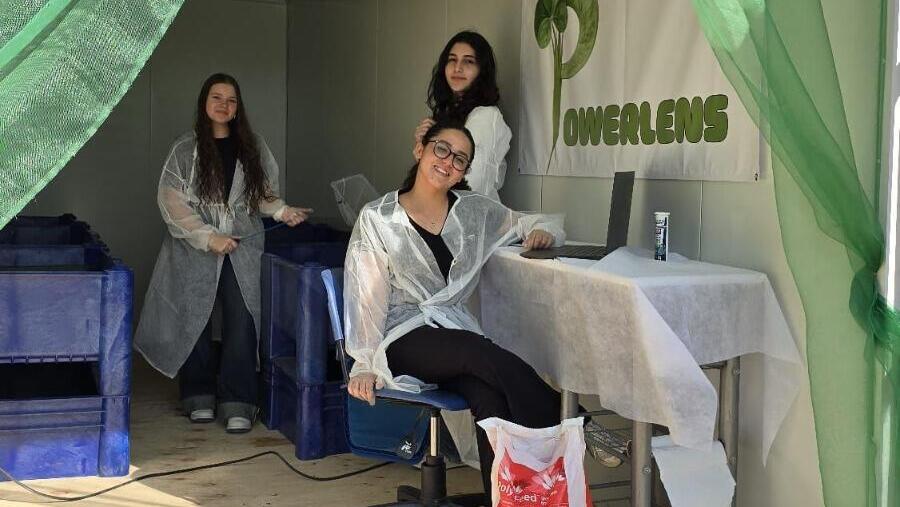
Developed at the Dimona Agricultural Farm for Environmental and Agricultural Sciences, the initiative enables the cultivation of a highly nutritious aquatic plant known as duckweed. The plant serves as a dietary supplement rich in protein, omega 3 and 6 fatty acids, iron and antioxidants.
The facility operates independently, 24 hours a day, seven days a week, and is designed to provide nutritional support for about 300 residents in Nigeria for at least six years.
POWERLENS was developed as part of the ISDG program, an international educational initiative run by the United Nations in cooperation with Israel’s Education Ministry and the Jewish National Fund. About 100 student projects from across Israel took part in the program, all aimed at advancing UN goals including zero hunger, food security, economic growth and responsible consumption and production.
Over a year and a half, the students refined the project with professional guidance from Efrat Shahar, director of the agricultural farm, agronomist Yossi Sofer of the Haifa Group and researcher Eli Ayash of Gannos.
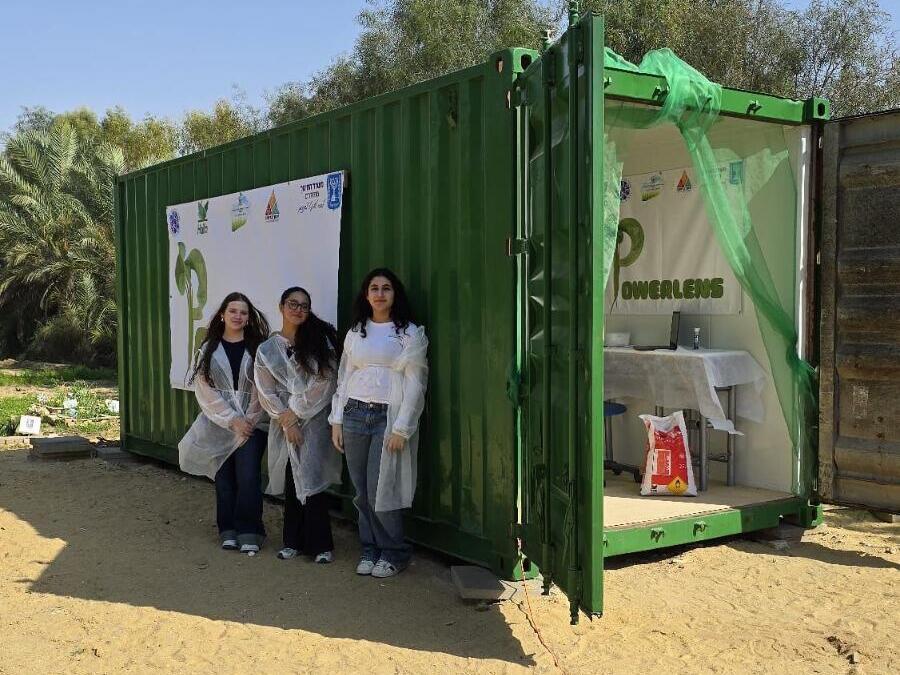
(Photo: Hava Haklit Dimona)

Common duckweed
(Photo: Marie Shark/Shutterstock)
Out of roughly 100 projects nationwide, POWERLENS was selected as one of 32 finalists and ultimately won first place. This week, the students were invited to the President’s Residence, where they presented their work to President Isaac Herzog.
“One of the main issues we focused on from the beginning was food security in developing countries,” the students said. “After extensive research, we discovered that duckweed, a type of aquatic plant, is rich in essential vitamins that are often lacking in populations suffering from food shortages. Through the mobile factory we built, the plant can provide all the nutrients people need.”
The factory is housed inside a container and uses solar-powered systems to grow the plant. It can be set up easily with minimal resources almost anywhere in the world. At the end of the process, the plant is processed into a dietary supplement that can help address vitamin deficiencies in developing countries.
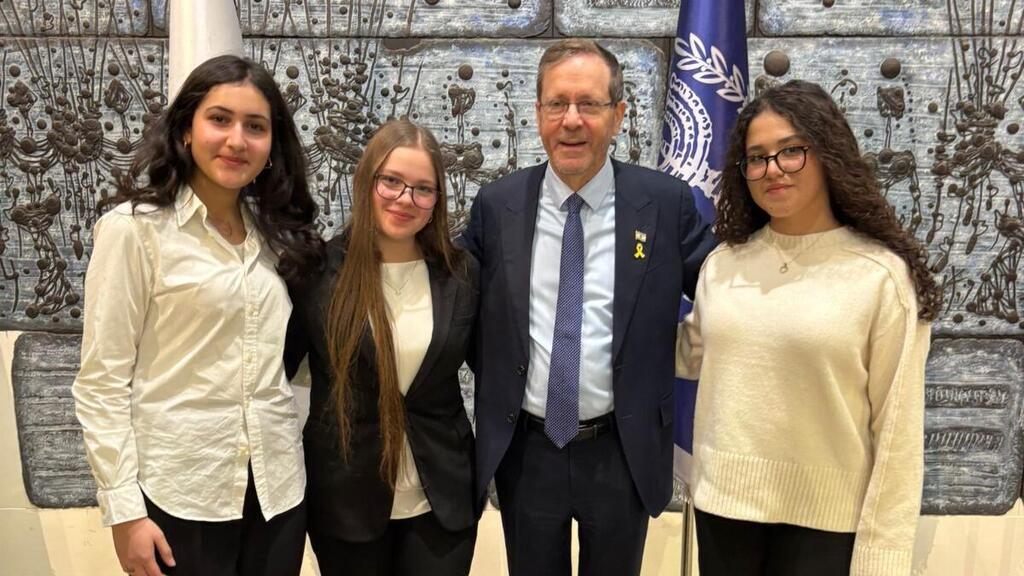
Meeting President Isaac Herzog
The students are expected to present the project soon to Nigeria’s ambassador to Israel, with the aim of launching a pilot and assessing the feasibility of establishing additional facilities in Nigeria.
“Our dream is to see the factory we created operating in Nigeria and in other developing countries where people suffer from food and water shortages,” the students said. “The factory is simple and inexpensive to set up, making it possible to establish hundreds of similar facilities and help large populations facing severe malnutrition. We hope this is just the first step toward improving lives in developing and impoverished countries.”
Dr. Gil Perg, CEO of the Darca education network, praised the students’ achievement.
“Darca is proud of the students of Darca Lehman,” he said. “They embody our vision of academic excellence, scientific innovation, entrepreneurship and leadership in the service of humanity.”
First published: 10:36, 02.03.26