

After Moira Cathleen Delaney was diagnosed with a terminal illness, her thoughts focused on one thing: what she wanted done with her body. Her love of gardening, birds and wooded areas led her to decide to “return to nature,” literally, through a process known as human composting, an environmentally friendly burial method that accelerates the body’s natural decomposition into fertile soil within about 30 to 60 days.
It is a sustainable alternative to conventional burial or cremation, reducing carbon emissions and returning nutrients to the soil. The practice is now legal in several places, including parts of the United States, where 14 states allow the process and 15 more have introduced bills to legalize it. Delaney’s family used some of the fertile soil created from her remains to fertilize a tree, and divided some of it among her closest friends and relatives in glass jars so they could use the material in a similar way or plant with it.
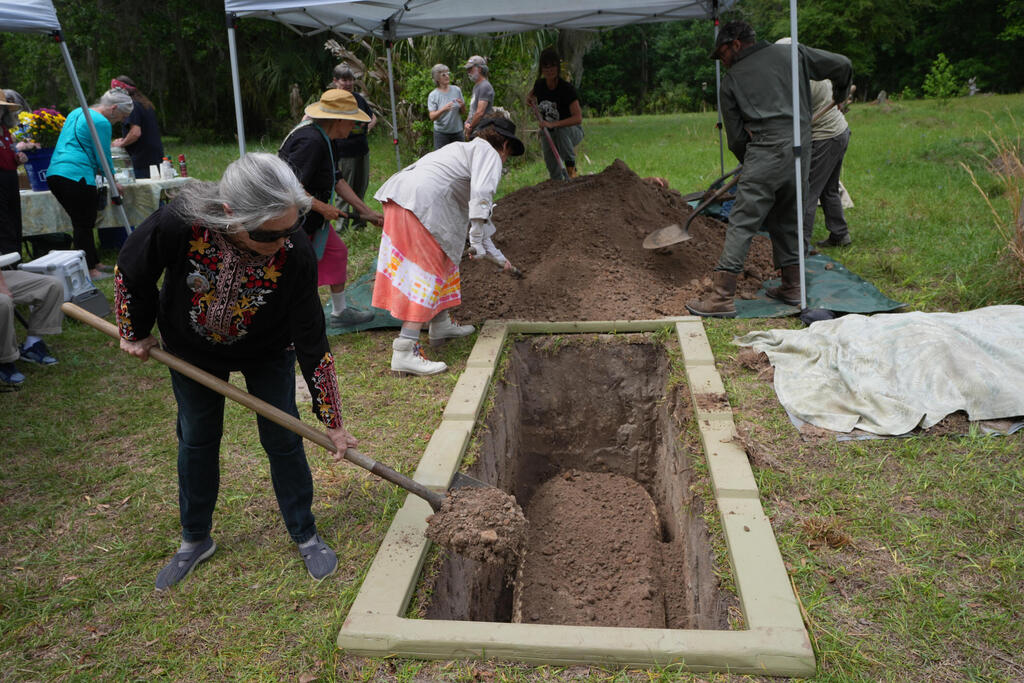
The burial of human bodies for natural decomposition in the soil is a practice that has gained momentum and popularity in recent years. More people are concerned about how conventional methods such as embalming, cremation or casket burial affect the climate, the environment and human health. Others simply want their final resting place to be in the natural surroundings they loved.
“How we die does lead to a substantial impact on not only the people around us and our communities, but the earth itself,” said Mark Shelvock, a psychotherapist and lecturer at Western University in Ontario, Canada, who co-authored a study on the subject published in the journal “Illness, Crisis & Loss", according to AP.
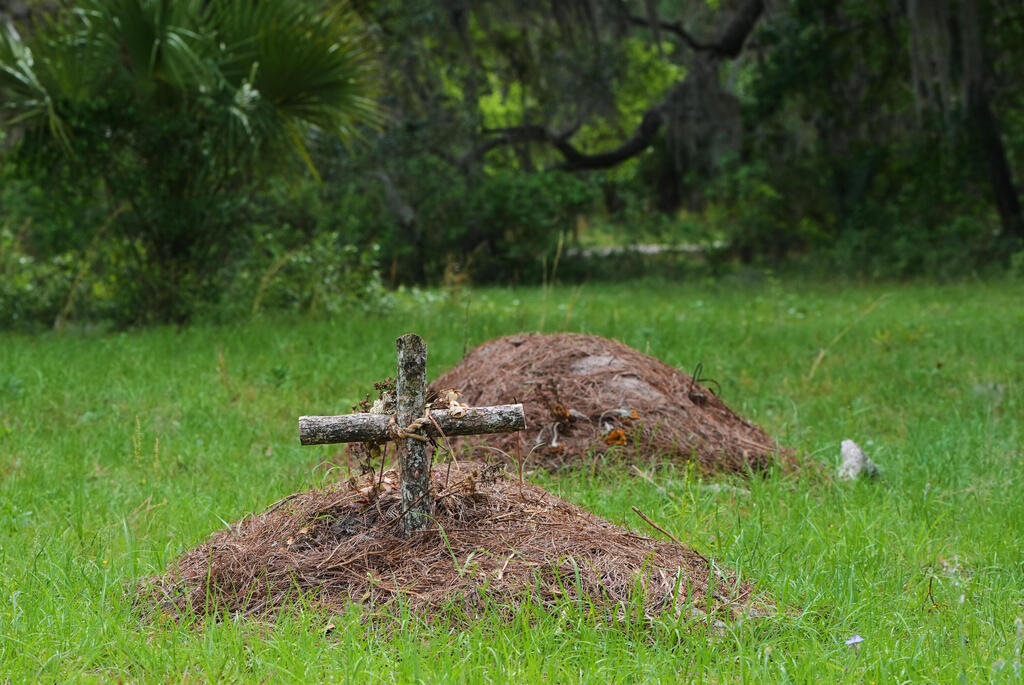
A grave marked with a cross at Prairie Creek Conservation Cemetery
(Photo: Marta Lavandier/AP)
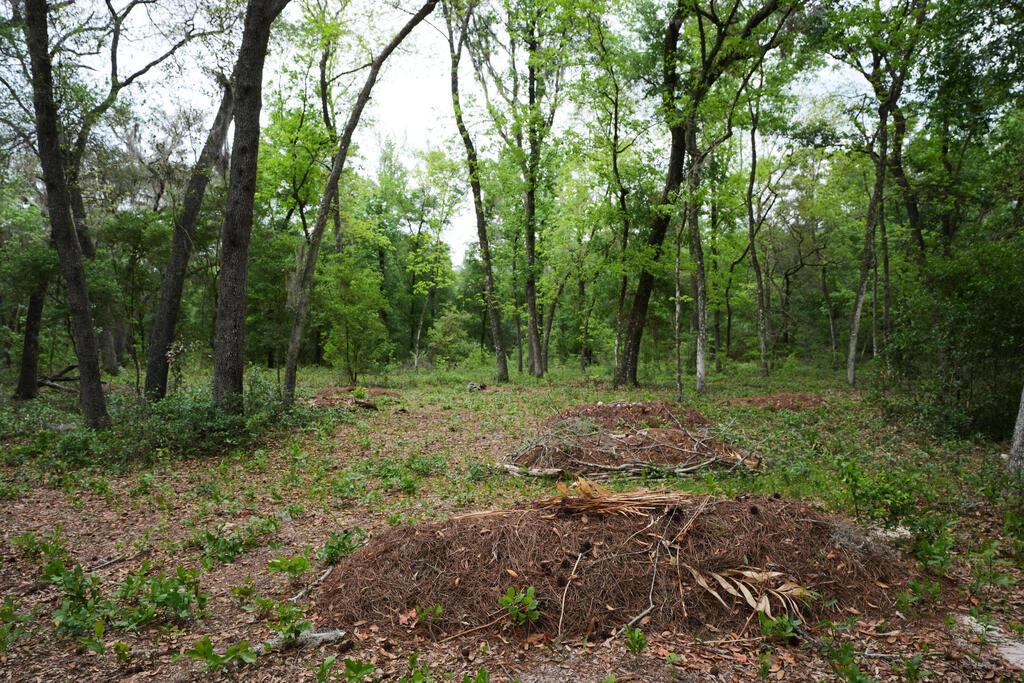
Graves in the wooded section of Prairie Creek Conservation Cemetery
(Photo: Marta Lavandier/AP)
Embalming is primarily intended to preserve the body, prevent natural decay and protect it from decomposition. But the process involves carcinogenic chemicals such as formaldehyde, a gas the U.S. Environmental Protection Agency has classified as dangerous to public health.
Cremation is the most popular option in the United States, but according to the Cremation Association of North America, the energy used in the process is equivalent to powering a 2,000-square-foot home for a week.
Caskets and burial vaults are often made of wood, metal or concrete, whose production requires mining or logging and enormous amounts of energy. Concrete, for example, is responsible for about 8% of global carbon dioxide emissions and 2% in the U.S., most of it from cement production and processing.
Cemeteries also take up space and require maintenance, including energy and resources for mowing, watering or fertilizing grass. At Prairie Creek Conservation Cemetery in Florida, by contrast, burial is natural and integrated with land conservation.
Graves are dug by hand, and bodies are buried only in caskets or shrouds made of biodegradable materials such as bamboo or cotton. Embalmed bodies and burial vaults are not permitted, and cremated remains must be placed in biodegradable urns free of chemicals. The idea is to allow the body to decompose naturally.
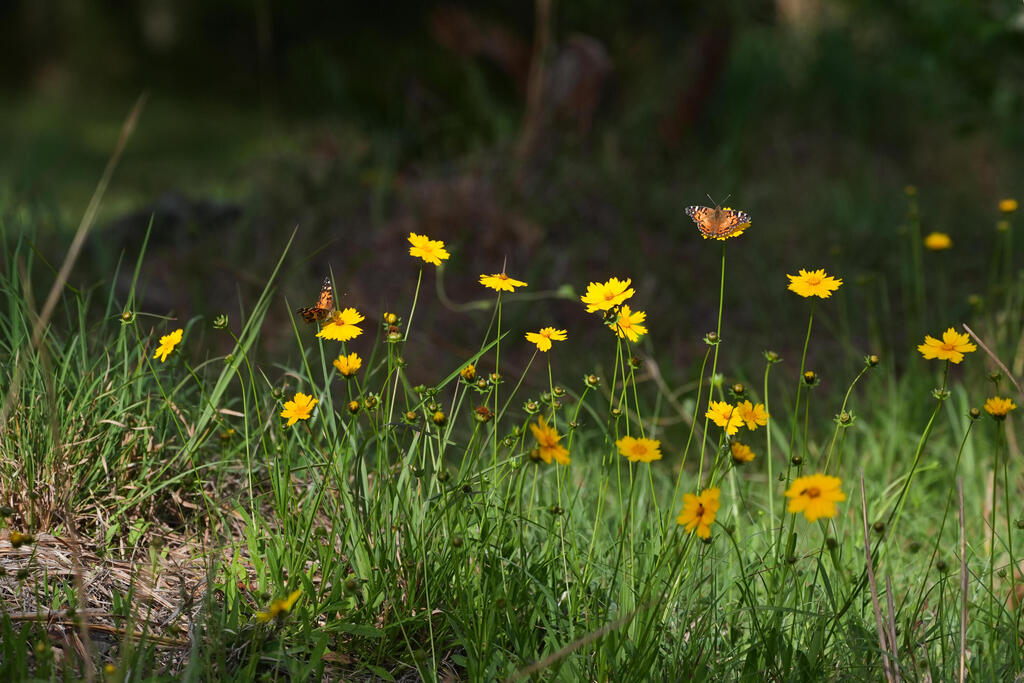
Painted lady butterflies at Prairie Creek Conservation Cemetery
(Photo: Marta Lavandier/AP)
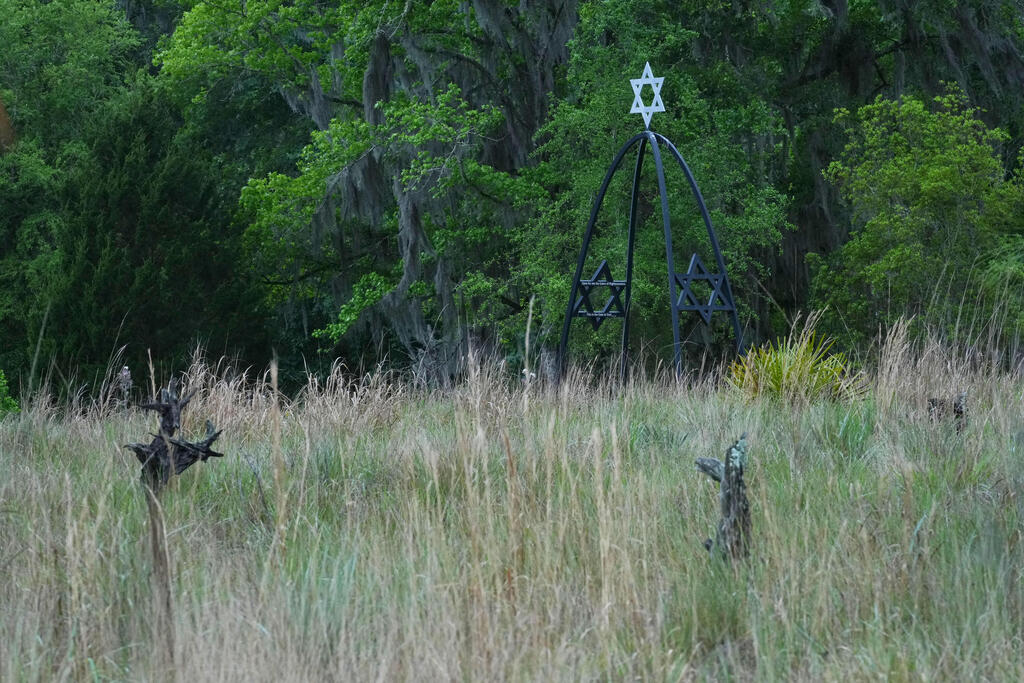
A gate leads to the Jewish burial section at Prairie Creek Conservation Cemetery in Florida
(Photo: Marta Lavandier/AP)
It was an idea Scott King was skeptical of when his mother, Linda, said she wanted to be buried that way. But the more he researched it, the more he understood the beauty in its simplicity. She was buried in a meadow at Prairie Creek in October last year, and King recently buried his brother, Kenneth, nearby.
“Through death, life begets life,” King told AP. “She really liked that idea, too, that she can, in her passing, help give life to something else."
According to the Green Burial Council, a nonprofit educational organization that works to raise awareness and promote environmentally friendly burial practices, this type of burial sequesters about 25 pounds of carbon.
Elena Slominski, a researcher at the University of California, Irvine’s School of Ecology, said a conservation burial “is by far the best thing you can do because it’s actually, technically a carbon sink. It actually restores ecological habitat and protects the land.”
“What we are fundamentally doing is using science and technology to accelerate a completely natural process using renewable energy sources," Tom Harries, the company’s co-founder and CEO of Earth Funeral, a company specializing in human composting, told AP. "Some of the soil is given to loved ones, and the rest is donated to conservation or reforestation projects."
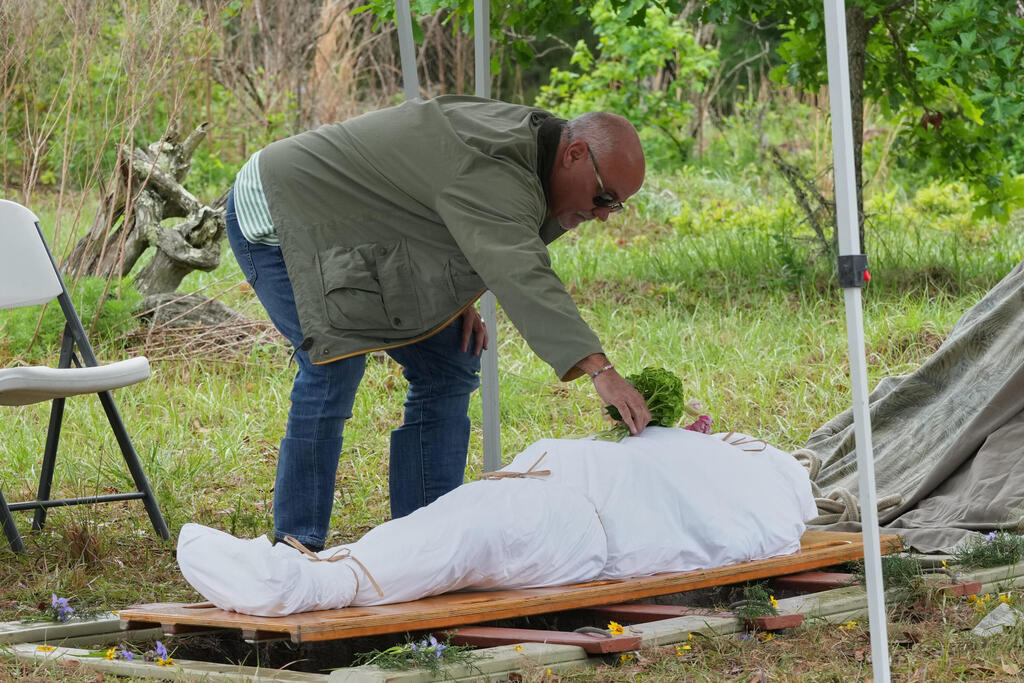
Scott King places flowers on the body of his brother, Kenneth, at Prairie Creek Conservation Cemetery
(Photo: Marta Lavandier/AP)
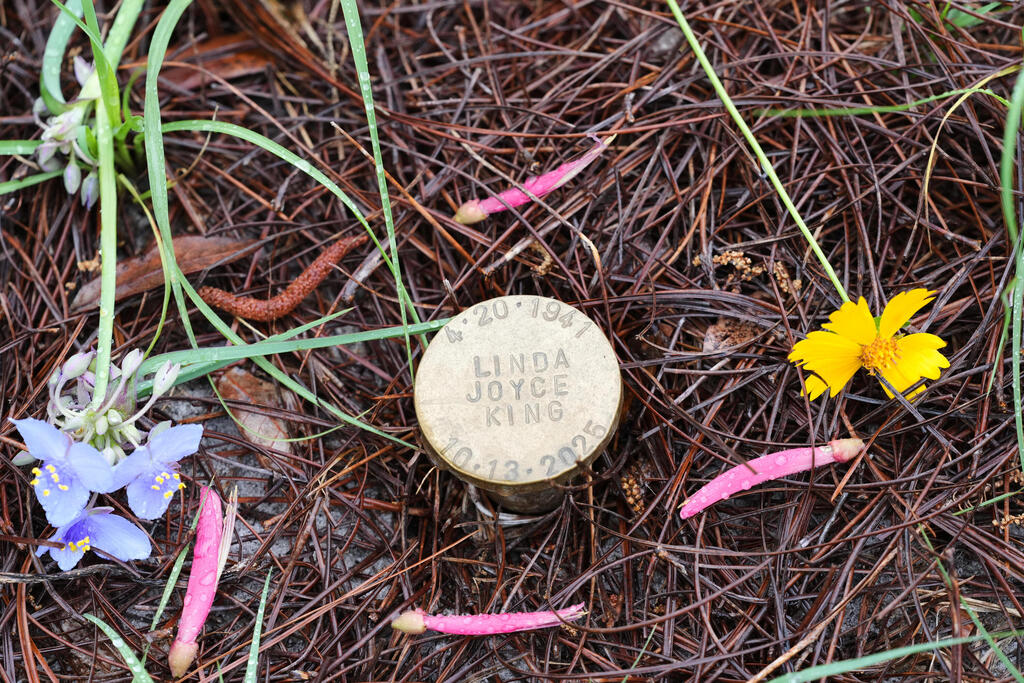
Fresh flowers adorn the grave of Linda Joyce King, Scott King’s mother
(Photo: Marta Lavandier/AP)
Another process meant to reduce the environmental damage associated with common burial methods is “water cremation,” or alkaline hydrolysis, a method designed to mimic and accelerate natural decomposition.
At Be a Tree, a Colorado-based water cremation company, bodies are placed in a vessel containing 95% water and 5% potassium hydroxide, heated to about 200 degrees Fahrenheit for roughly 18 hours. The skeletal remains are air-dried, processed and returned to relatives, who choose what to do with the material, either as powder in an urn or shaped as stones. The process uses about 90% less energy than cremation.