


About a month after Shavuot, traditionally known as the harvest festival, Israel is beginning to see the fruits of an unusually successful wheat season.
After a winter that began with serious concerns among growers and forecasts of an exceptionally poor yield, a favorable pattern of rainfall has produced what may become Israel’s best wheat harvest in a decade.
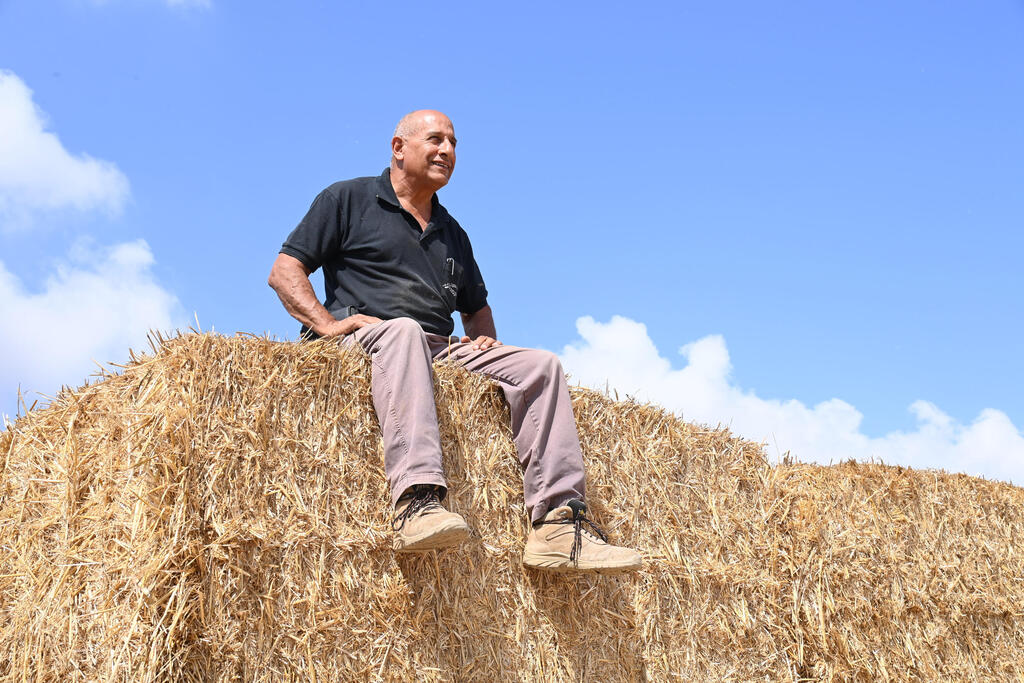
A review by the Agriculture and Food Security Ministry’s Extension Service found that the current season is on track to deliver unusually high yields and particularly good grain quality. The harvest is still underway, but preliminary figures and assessments from farmers and industry professionals point to an exceptional crop.
Officials estimate that about 140,000 tons of wheat will be harvested this year. In an average season, Israel produces between 80,000 and 100,000 tons, while the previous record, set around three years ago, reached approximately 126,000 tons.
The key factor was not necessarily the total amount of rain, but how it was distributed throughout the season. Around 70% of Israel’s wheat-growing areas are located south of Gedera, and farmers there benefited from what officials described as nearly ideal rainfall timing.
Early-season rains allowed much of the crop to become established, while rainfall in late March gave a major boost to fields that otherwise might have suffered from water shortages.
Wheat generally requires about 350 to 400 millimeters of rain to develop under optimal conditions. This year, the main growing areas in the Negev received between 400 and 450 millimeters, with the rain arriving at stages that allowed the crop to make effective use of the water.
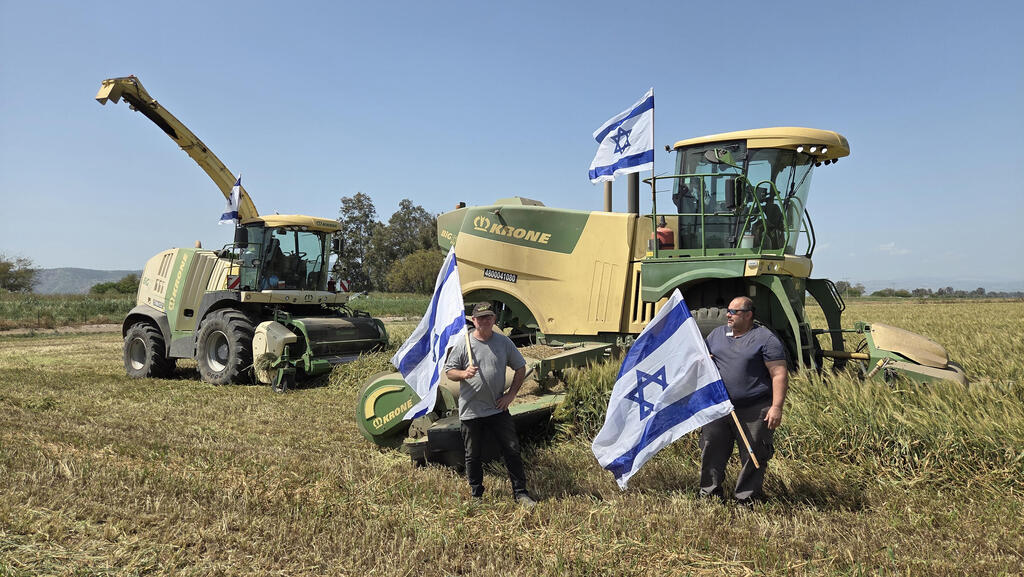
Wheat harvested for silage in the Hula Valley fields
(Photo: Faisal Heib, Galilee Development Company)
As a result, many fields originally intended to be harvested only for animal feed managed to produce grain suitable for human consumption. That significantly increased the amount of wheat available for Israel’s national emergency reserves.
Ministry experts said Israeli wheat also has an advantage when it comes to long-term storage. In many European countries, wheat is harvested with relatively high moisture levels and requires prolonged drying and ventilation. In Israel, it is harvested during the dry summer.
Those conditions make storage more efficient, reduce the risk of pests, disease and mold, and help preserve grain quality over time.
“Wheat is one of the most strategic crops for Israel’s food security,” said Yuval Lipkin, head of the Agriculture Ministry’s Food Security Administration. “This is very good news for Israeli agriculture.”
‘This is Zionism, without slogans’
Ben Gross of Givat Yoav grows wheat across about 4,000 dunams, roughly 1,000 acres, in the Golan Heights. Like many farmers, he faced significant economic uncertainty and difficult questions about whether to continue investing in the crop.
Despite those concerns, he chose to maintain his regular planting plans, and conditions improved as the season progressed. He said the uncertainty did not disappear until harvest time because so many factors affecting yield remain beyond farmers’ control.
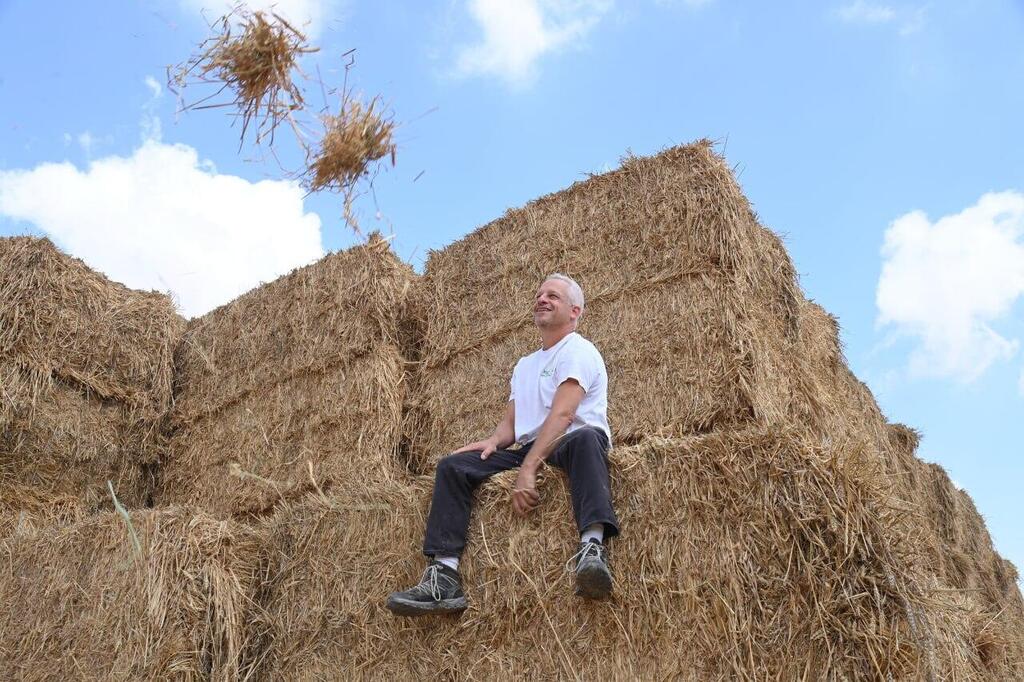
Tom Koren
(Photo: Herzl Yosef)
“In my view, growing wheat and other crops, and keeping agricultural land active, is Zionism,” Gross said. “No slogans. I truly believe that. It does not matter whether it is one dunam or 1,000.”
Tom Koren has grown wheat and barley at Kibbutz Shoval for the past decade as part of a farming operation covering 18,000 dunams, around 4,450 acres.
He said the early rains gave farmers greater confidence in the condition of their fields. Beyond the agricultural success, he said the harvest also had national security significance.
“The wheat we grow enters the State of Israel’s emergency reserves,” Koren said. “I would like more people to know that and understand how meaningful it is.”
Yaniv Blushtein of Kibbutz Beit Kama has grown wheat for about 30 years in partnership with the Shikma regional farming operation and Mishmar HaNegev.
“This season was a reminder of how dependent agriculture is on nature,” he said. “It is also a major achievement compared with last year, when there was almost nothing to harvest in the Negev.”
First published: 12:33, 07.12.26