


Despite concerns that Israeli produce could face boycotts in Europe, the country’s avocado industry is heading for a record season, with exports forecast to reach about 170,000 tons, up from 150,000 tons last year.
A review by agricultural exporter Galil Export ahead of the 2026-27 avocado harvest estimates that Israel’s total crop will exceed 280,000 tons for the first time, compared with about 230,000 tons last season.
Gallery
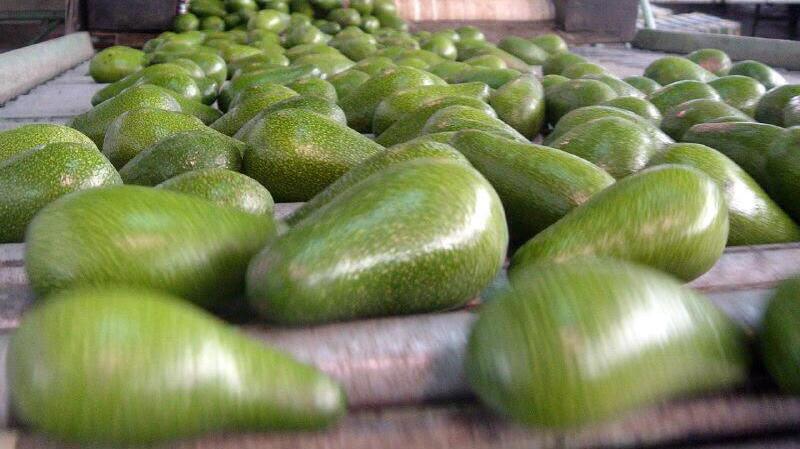
Israel’s avocado harvest set to break records as exports surge to 170,000 tons
(Photo: Amir Bahar)
Dark-skinned varieties such as Hass, BL and GEM accounted for roughly 58% of Israel’s avocado exports. Green-skinned varieties such as Pinkerton and Ettinger are particularly popular in Russia and Eastern Europe, while demand for the darker varieties is concentrated in Western Europe.
Germany was the largest destination for those varieties last year, taking about 44% of exports, followed by Britain with approximately 27%.
The record outlook comes after years of disruption for farmers in northern Israel, where communities near the Lebanese border were heavily affected by the war.
Amir Bachar, CEO of the Avocado-Gal packing and marketing facility in Kiryat Shmona, said the plant expects to receive a record 18,000 tons of fruit from Upper Galilee orchards this season, compared with 15,000 tons last year.
About 13,000 tons are destined for export, up from 11,300 tons the previous year.
“The war period was very challenging,” Bachar said. “Our staff includes Druze women from Maghar, Bedouins from Tuba, residents of Kiryat Shmona and people from surrounding communities. Some were evacuated, while others had to travel to the packing house every day. But we worked and did not stop for a single day.”
He said avocados had become particularly attractive to farmers because of their profitability and relatively straightforward cultivation.
“Avocados are a very profitable crop economically, especially those intended for export,” he said. “They are relatively convenient to manage compared with crops such as peaches and apples.”
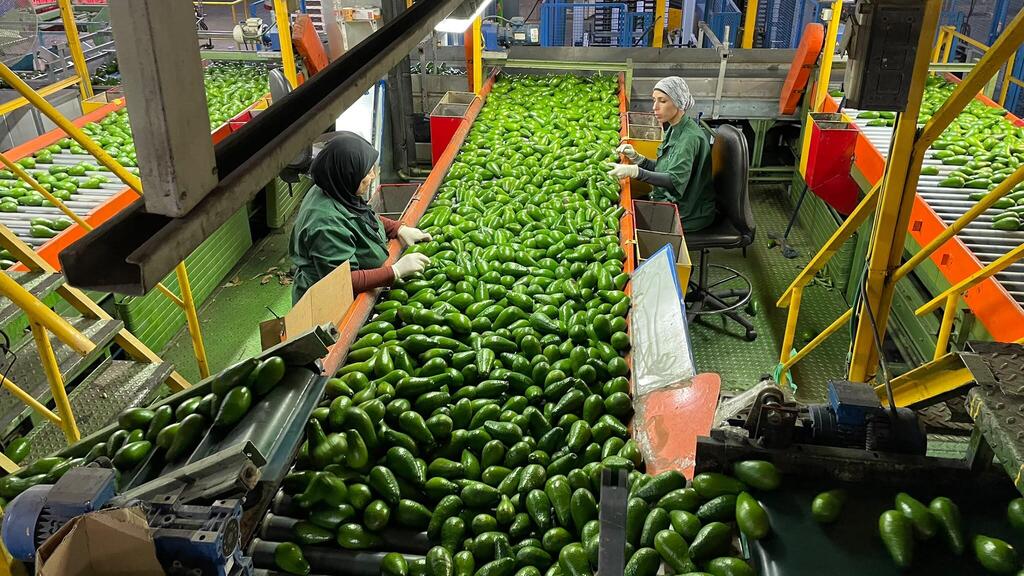
(Photo: Amir Bahar)
Israelis themselves consume an average of about 10 kilograms, or 22 pounds, of avocado per person each year.
Production is also expected to continue expanding. Industry estimates suggest the amount of avocado handled by the Kiryat Shmona packing facility could increase by about 50% by 2030.
The Upper Galilee currently has about 12,000 dunams, roughly 3,000 acres, of avocado orchards. Their economic success has encouraged farmers to plant the crop in areas where they once avoided doing so, including the Hula Valley, where growers had feared that frost could damage the trees.
Harvesting also began this week at Kibbutz Dafna, where about 900 dunams, or roughly 220 acres, are devoted to avocados.
Magen Shenhav of Kibbutz Dafna said growers there plan to expand to 1,000 dunams and have increasingly planted varieties suited to export markets.
“We planted avocado varieties that are better suited for export, and today we are among the regional leaders in Hass, BL and GEM,” he said.
Shenhav said the crop has increasingly replaced fruits traditionally associated with northern Israeli agriculture.
“In the past, apples, other deciduous fruit and citrus were grown here,” he said. “The Hula Valley no longer has many advantages, whether in climate or soil, so we needed crops in which we could have an advantage.”
He said apples, peaches and other deciduous fruit were among the first crops to decline because higher-elevation areas enjoy better growing conditions, while citrus cultivation has also contracted, particularly amid boycott pressures, years of war and weak foreign currencies.
“As far as our resources allow, we are expanding avocado cultivation,” Shenhav said.
“The Upper Galilee is thriving and taking off in avocado production despite the years of war and difficulty,” he added, crediting “dedicated and professional growers,” including some who were killed during the conflict, among them Ofer “Pushko” Moskowitz and Omer Weinstein.