

A rare albino female viper was discovered in recent days in a community near Hadera, in what snake catcher Raz Biran described as an extraordinary encounter with a phenomenon rarely seen in the wild.
In an interview with the ynet studio, Biran, who was called to capture the venomous snake, said albinism is highly unusual among snakes.
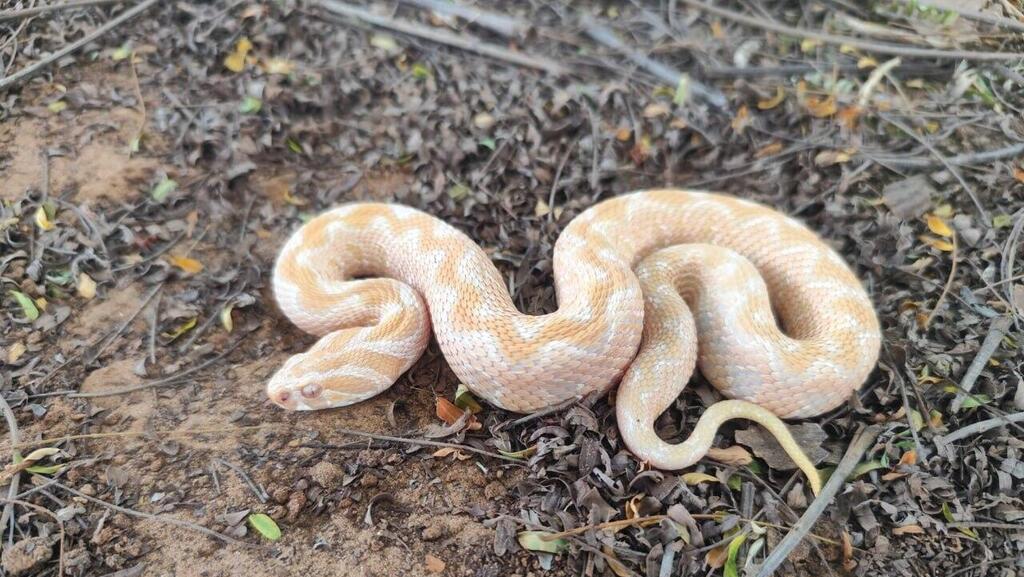
Biran, a snake catcher, animal rescuer, biologist and tour guide, explained that the female albino viper is the result of a rare mutation that causes a lack of melanin, the pigment responsible for body color.
“This is a very rare phenomenon,” he said. “Although there have been several sightings in recent years, we almost never see snakes like this. Anyone involved in snake catching or research encounters only a tiny fraction of what exists in nature, so this was an exceptional sight.”
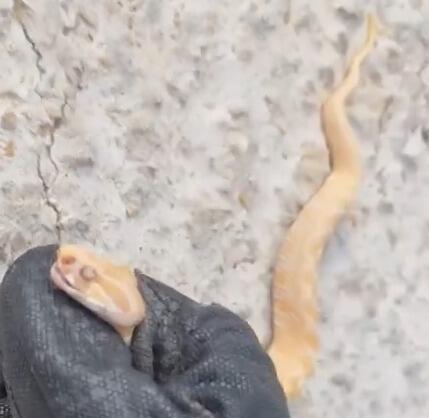
The female viper after capture
(Photo: Raz Biran)
(Photo: Raz Biran)
Biran said the incident was especially unusual because of its timing. The previous evening, a friend had sent him a photo of another albino viper, documentation he had not seen before.
“He told me, ‘Look what a beautiful picture,’ and the next day I found myself standing in front of a real albino viper. It was an amazing coincidence,” Biran said.
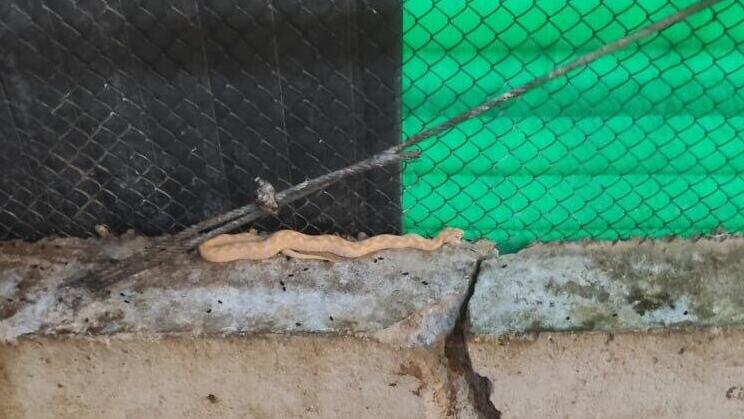
Biran was called in the morning to a chicken coop in one of the communities near Hadera. He declined to disclose the exact location in order to protect the snake.
When he arrived, he initially struggled to spot the viper because he was looking for the usual colors of the venomous snake.
“The owner pointed toward the fence and asked if I could see the snake,” Biran recalled. “I looked and searched for a viper in its regular colors, and then I noticed a pale patch. I immediately understood that this was something unusual. When I got closer, the identification was unequivocal. I have worked with vipers for years, and the excitement was enormous.”
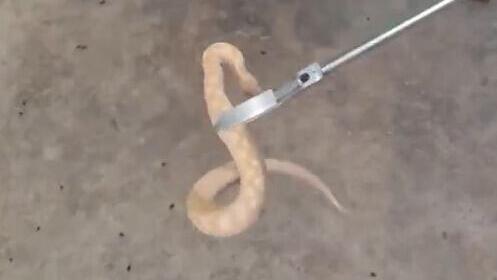
(Photo: Raz Biran)
Biran said that while some pale snakes may have escaped from private captivity, in this case there was no doubt that it was an albino female Palestinian viper.
“I am still excited about this encounter,” he said. “I did not expect the story to gain such momentum, but it spread like wildfire.”
Before Biran had a chance to publish the footage himself, the owner of the property uploaded photos to a Facebook group. Biran said he then began receiving calls from other snake catchers and colleagues.
“Suddenly people started calling me who already knew about the case, and I did not understand how it had happened,” he said.
Because of the viper’s rarity, the decision was made to document it thoroughly, in cooperation with academics and nature photographers, before releasing it back into its natural habitat. Biran estimated that the female viper is about two years old.
Still, he noted that albino snakes usually face lower survival chances in the wild.
“They generally have vision problems, and their light color also makes it harder for them to camouflage themselves from predators,” he said. “Despite that, it seems this female has managed to survive until now.”
Biran stressed that even when encountering an unusual or rare snake, the public must not approach it.
“All snakes in Israel are protected by law, and only licensed snake catchers are allowed to capture them,” he said. “Do not try to kill, catch or drive the snake away. Keep your distance, maintain eye contact with it and call a snake catcher or the local authority. Most snakes that are captured are returned safely to nature.”