

Plug-in hybrid vehicles (PHEVs) deliver far smaller fuel savings and emissions reductions than advertised, according to new findings from Transport & Environment (T&E), a European environmental advocacy group. The research adds to a long series of real-world studies showing that, beyond manufacturers' specifications and showroom promises, plug-in hybrids are far from the ultimate green solution they are marketed as: a vehicle that is both inexpensive to run and environmentally friendly, without the range anxiety associated with fully electric cars.
Before examining the findings in detail, it is worth recalling how plug-in hybrids work. These vehicles typically combine a gasoline engine that drives the wheels with an additional electric motor powered by a relatively large battery. In some range-extender configurations, the gasoline engine serves only to recharge the battery and is not directly connected to the wheels. In those vehicles, the electric motor provides the main driving power, supported by batteries that are considerably larger than those found in conventional hybrids.

When charged from the electrical grid, plug-in hybrids offer an electric driving range of at least several dozen kilometers, with some current models claiming ranges of up to 200 kilometers. Accordingly, the batteries they carry are particularly large and heavy.
The warnings are nothing new. Back in 2020, we reported findings from an environmental organization showing that plug-in hybrids produced several times more pollution in real-world driving than manufacturers claimed. In 2024, we reported another extensive study based on data from the European Environment Agency (EEA), which found that plug-in hybrids emitted 3.5 times more than their official figures suggested. In 2025, another study, this time examining hybrids equipped with range-extender engines, also revealed emissions several times higher than advertised.
And the numbers
According to T&E's analysis of real-world driving data, plug-in hybrids reduced CO2 emissions by just 14% compared with conventional combustion-engine and non-plug-in hybrid vehicles. That is a far cry from the roughly 80% reduction suggested by official figures, which are based on standardized laboratory testing rather than everyday driving conditions.
The findings are based on real-world fuel consumption and emissions data collected by the European Environment Agency and analyzed by T&E. The figures expose a substantial discrepancy between the performance manufacturers promote and what drivers actually experience on the road.
The findings emerged as European lawmakers were considering a highly controversial move to weaken the European Union's vehicle emissions requirements, despite strong objections from environmental organizations, including T&E.
On October 22, the European Parliament's transport and industry committees backed proposed changes that would significantly relax the emissions reduction requirements for new vehicles. The proposed revisions would leave room for automakers to continue selling new gasoline, diesel and hybrid vehicles beyond 2035.
Under the regulations adopted previously, 2035 was supposed to mark the effective end of sales of new conventional combustion-engine cars in the European Union, through a requirement for a 100% reduction in fleet-average tailpipe CO2 emissions. The proposed relaxation would allow combustion-engine vehicles, including conventional and plug-in hybrids, to remain on the market beyond the middle of the next decade. The changes, however, have not yet become final EU law.
And it's only getting worse
Despite continuing improvements in the electric capabilities of plug-in hybrids, including larger batteries and longer electric driving ranges, T&E found that the gap between manufacturers' official emissions figures and real-world performance is actually widening.
For plug-in hybrid vehicles registered in 2023, real-world CO2 emissions were approximately five times higher than official figures. For 2024 models, that discrepancy grew to nearly six times.
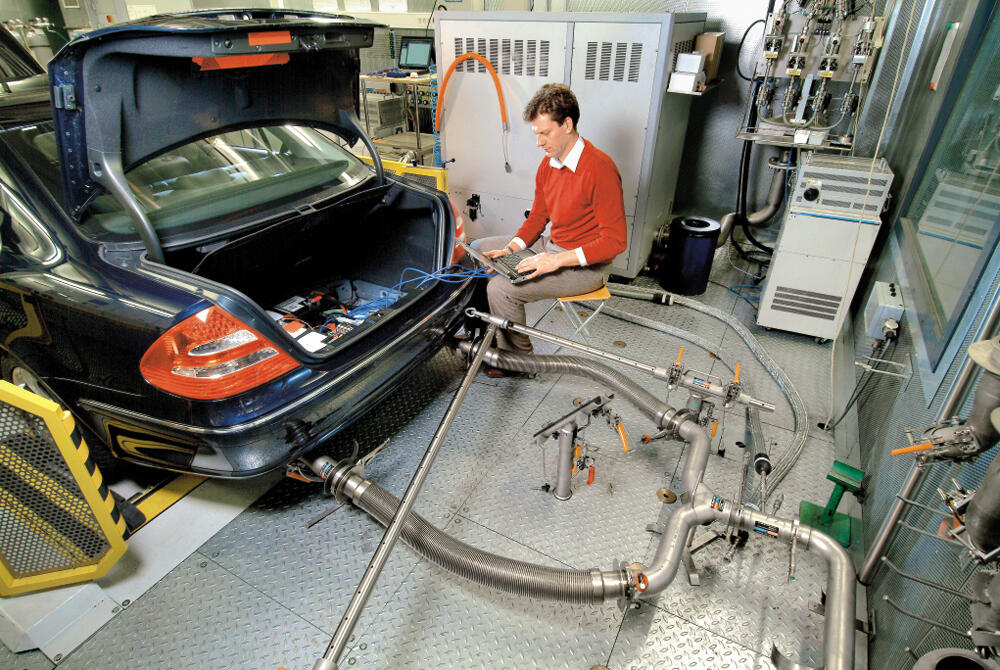
In other words, the fuel consumption and emissions figures presented to buyers in showrooms are increasingly disconnected from what happens under normal driving conditions. The sixfold difference refers to actual CO2 emissions compared with official test results, not necessarily a sixfold increase in every driver's fuel bill. Nevertheless, the discrepancy means that drivers can end up spending considerably more on fuel than they were led to expect.
According to T&E researchers, just 27% of the total distance traveled by plug-in hybrids is covered in fully electric mode, with no tailpipe emissions. The rest involves at least some reliance on the combustion engine.
One explanation is that many owners do not charge their vehicles frequently enough, leaving them to rely heavily on gasoline or diesel power. Even when the battery is supplying energy, the combustion engine may still operate under certain driving conditions.
One possible solution, according to the researchers, is to encourage manufacturers to install even larger batteries, offering a better balance between use of the polluting combustion engine and the electric motor, which produces no tailpipe emissions while operating alone.
But there is a catch here, too. The researchers found that plug-in hybrids with longer electric ranges did not necessarily produce lower emissions in real-world driving.
Vehicles with electric ranges exceeding 70 kilometers showed a greater discrepancy between actual and official emissions than models with shorter ranges. Even under the updated emissions calculation scheduled for late 2026 and 2027, the gap was estimated at 52% for longer-range models, compared with 35% for shorter-range vehicles.
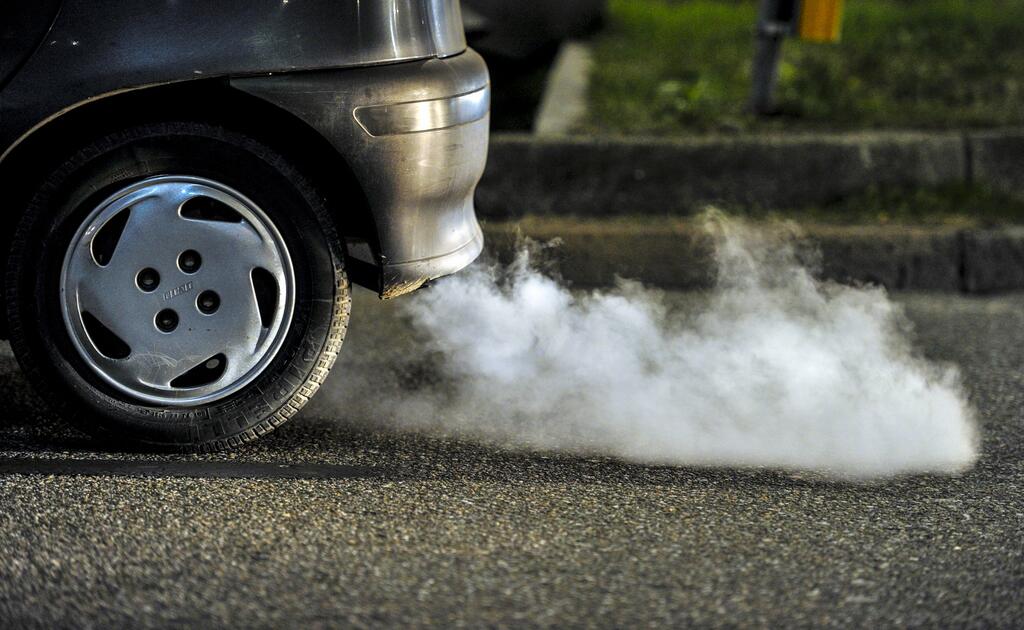
The problem becomes particularly apparent when the battery is depleted. Longer-range plug-in hybrids, which tend to be heavier and equipped with more powerful combustion engines, emitted an average of 200 grams of CO2 per kilometer in that mode, compared with 182 grams for models offering an electric range of 50 to 70 kilometers.
(Photo: Shutterstock)
The researchers also found a connection between the power of the electric motor and emissions performance. Plug-in hybrids equipped with electric motors at least 25% more powerful than their combustion engines emitted an average of about 108 grams of CO2 per kilometer. By contrast, plug-in hybrids with electric motors producing less than half the power of their combustion engines emitted an average of 227 grams per kilometer.
These findings suggest that, at least in certain categories, there are substantial environmental benefits to a properly designed plug-in hybrid system. Vehicles equipped with sufficiently powerful electric motors and relatively large batteries can make far greater use of electric propulsion and narrow the gap between advertised and actual emissions.
The researchers argue that stronger electric motors could therefore provide another way to address the discrepancy between manufacturers' promises and reality. Combined with larger batteries, they could significantly improve the performance of plug-in hybrids under everyday driving conditions.
But that raises another question: If manufacturers are already installing relatively large batteries and substantial electric powertrains, would it not make more sense to return to promoting the more complete solution, fully electric vehicles?
Following its findings, T&E is urging European lawmakers to reconsider relying on plug-in hybrids instead of fully electric cars to meet the bloc's emissions reduction targets. The organization is particularly concerned about efforts to weaken planned changes to the way official plug-in hybrid emissions are calculated.
Those changes are intended to make laboratory figures better reflect actual driving habits, including the proportion of journeys completed using electric power. Without them, T&E warns, manufacturers could continue relying on unrealistically low official emissions figures while delaying the transition to fully electric vehicles.
Under one scenario examined by the organization, freezing the planned corrections could reduce the projected share of battery-electric vehicle sales in 2030 by 13 percentage points, undermining the transition needed to meet Europe's longer-term climate goals.
For drivers, the message is equally clear: A plug-in hybrid may promise the best of both worlds, but whether it delivers depends on far more than the numbers printed in the brochure.