


More than two decades after the government recognized the need to formulate a policy for dealing with the falling level of the Dead Sea, Israel still has no orderly plan for one of the country’s most important natural resources, according to a new State Comptroller report published Tuesday.
The report warns that without action, the water level in the Dead Sea’s northern basin is expected to continue falling by about 1.15 meters a year. Although the Environmental Protection Ministry already estimated in 2022 the cost of stabilizing the sea level by channeling water into the Dead Sea, it only began calculating the economic benefits of such a move in 2025. The government has still not made a fundamental decision on whether and how to intervene.
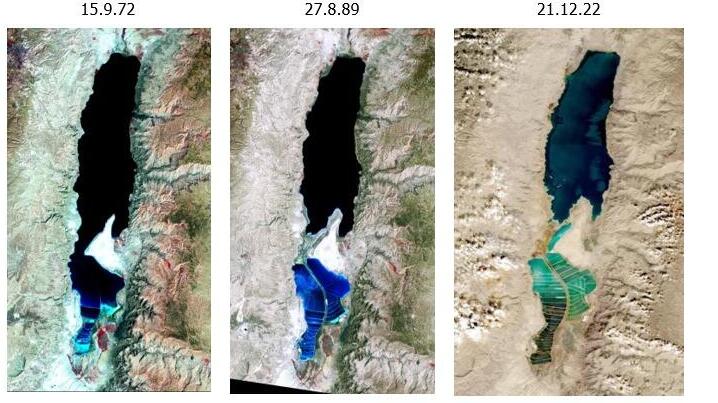
State Comptroller Matanyahu Englman also pointed to a failure to advance tourism development in the area. Of 12 projects intended to strengthen the Dead Sea’s northern basin, 11 have not been completed, even though 10 were budgeted in 2018 under a government plan totaling about 98 million shekels ($26 million).
The risks created by the falling water level also remain only partially addressed. According to the report, efforts have been made for about 25 years to create an insurance mechanism for damage caused by sinkholes in the area, but as of August 2025 no such mechanism had been implemented. Two of four projects designed to reduce damage to Route 90 caused by sinkholes and other natural phenomena have also not been completed.
Englman stressed that the Dead Sea is a national and international asset in the fields of tourism, environment, culture and medicine, and warned that continued delays in decision-making could worsen environmental, economic and infrastructure damage in the area.
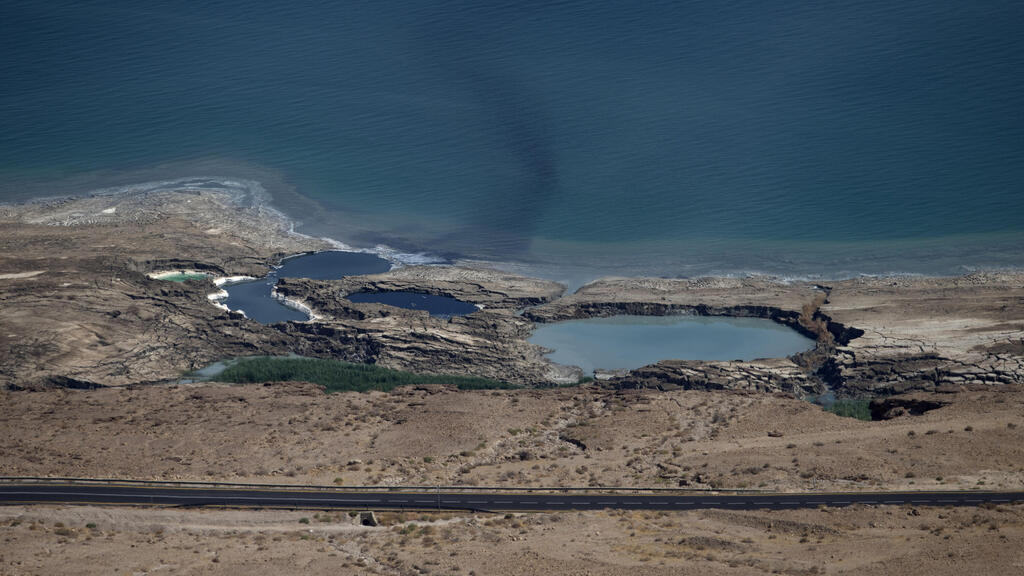
Sinkholes along the Dead Sea shoreline
(Photo: Amit Shabi)
“The Dead Sea is a unique national and international asset whose level is falling by 1.15 meters a year,” Englman said. “The falling level creates sinkholes and infrastructure damage, but also opportunities. The audit findings point to a large gap between the vision and plans the government set and budgeted for rehabilitating and preserving the area, and their actual implementation.”
He called on Environmental Protection Minister Idit Silman to bring her ministry’s recommendations before the government, including whether to intervene in the falling water level, how to develop tourism, how to maintain transportation continuity along Route 90 and how to advance settlement development in the area.
Englman also urged the bodies responsible for developing and preserving tourism in the northern Dead Sea basin, including the Tourism Ministry, the Megilot Dead Sea and Tamar regional councils, the Israel Nature and Parks Authority, the Civil Administration, the Capital Market Authority and the Finance Ministry, to complete the development and regulatory processes assigned to them. He also recommended that the Prime Minister’s Office monitor implementation.
The report also found that despite two previous audits published over the past five years, the Israeli government is still not sufficiently prepared to deal with the climate crisis, and most of the failures previously flagged by the comptroller have not been fixed.
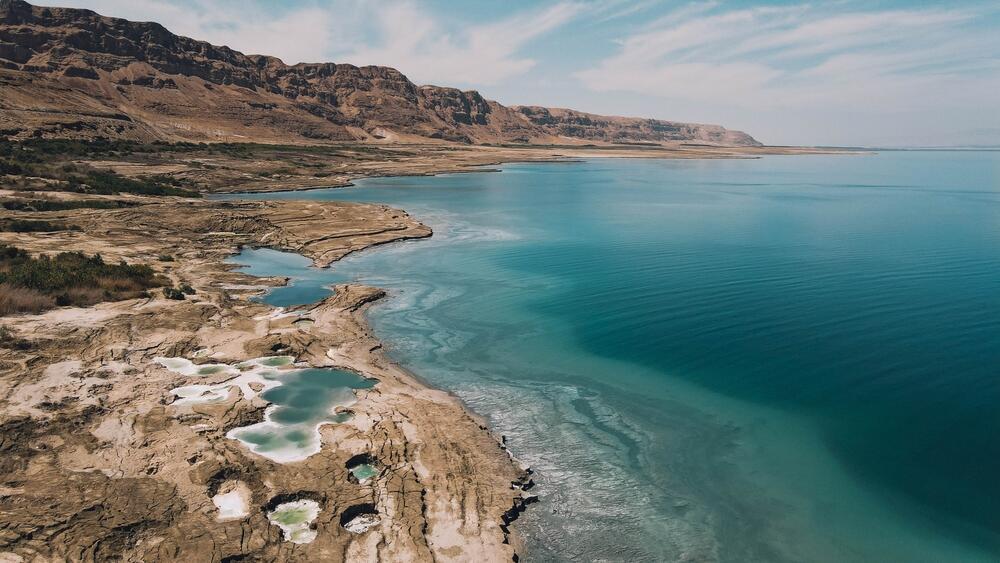
The Dead Sea
(Photo: World-Footage / Shutterstock)
According to the follow-up report, 25 of 28 relevant government ministries and public bodies, or 89%, still have not drafted practical preparedness plans that include budgets, timetables and performance indicators. The Ministerial Committee on Climate Affairs, established in April 2023 to improve government action in the field, has not held a single meeting since it was created.
The comptroller also found a severe manpower shortage. The climate change preparedness administration at the Environmental Protection Ministry currently has only two staffed positions, despite being responsible for advancing the national strategy and action plans in the field.
The report further found that the government has not carried out a national assessment of the long-term macroeconomic effects of climate change on Israel and has not established a government mechanism to oversee and monitor cumulative budgets of about 8.8 billion shekels ($2.35 billion) allocated over the years to address the climate crisis.
Israel is also far from meeting its own greenhouse gas reduction targets. According to the report, emissions are expected to fall by only 19% by 2030, compared with the government target of 27%.
Englman said that even amid the ongoing war since October 7, 2023, Israel must not neglect climate preparedness. Recent emergencies, he said, have underscored the importance of strengthening the country’s energy security by advancing renewable energy, as part of the response to both climate and security challenges.
“The climate report again raises a red flag for the government and the person at its head, making clear that the writing is on the wall,” Englman said. “This is a third report on the issue, based on the understanding that even during war, climate is important for our future.”
He added that consistent review in recent years shows that government activity on the issue is still “limping” and that its performance is deficient.
“The government is dragging its feet,” he said, adding that when it comes to systemic action and increasing government attention to the issue, the steps being taken amount at most to “patchwork” decisions that do not create meaningful change.
Englman said Silman, who is responsible for advancing Israel’s national climate strategy, must act to institutionalize climate governance in a way that can drive action, increase government attention and provide a response suited to the systemic and multidimensional risks involved.