

On land too contaminated for human life, one of the world’s rarest horse species is roaming free.
In the Chernobyl exclusion zone, Przewalski’s horses — stocky, sand-colored animals with a compact, almost toy-like build — graze across a radioactive landscape larger than Luxembourg.
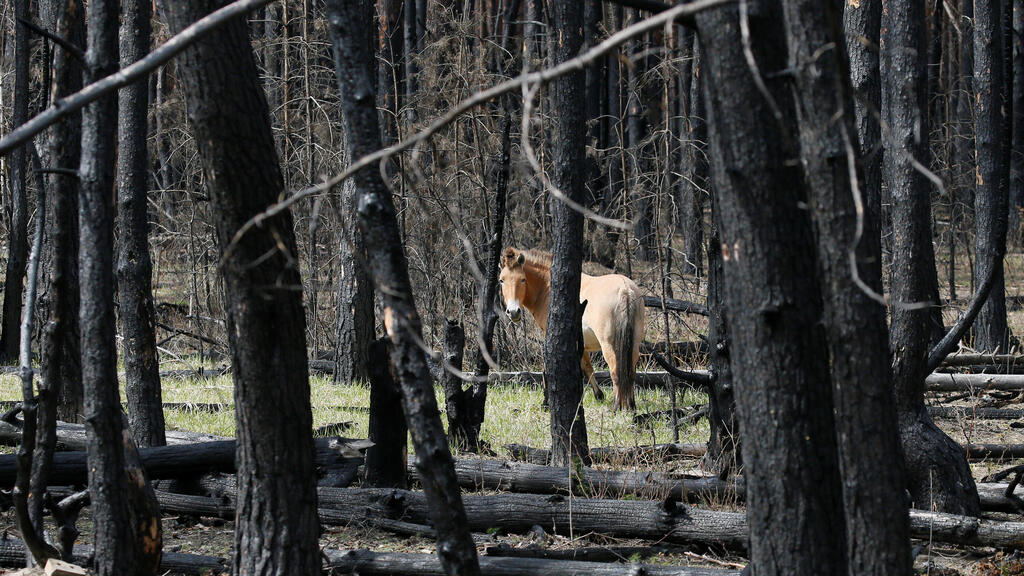
Chernobyl
(Photo: AP\ Evgeniy Maloletka)
An explosion at the nuclear power plant on April 26, 1986, sent radiation across Europe and forced the evacuation of entire towns in what is widely considered the worst nuclear disaster in history. Tens of thousands of people were displaced.
Nearly four decades later, Chernobyl — transliterated as “Chornobyl” in Ukrainian — remains largely uninhabitable for humans. Wildlife, however, has returned in force.
Wolves roam the vast no-man’s-land spanning parts of Ukraine and Belarus. Brown bears have reappeared after more than a century. Populations of lynx, moose and red deer have rebounded, along with packs of free-roaming dogs. Przewalski’s horses, a species native to Mongolia that once faced extinction in the wild, were introduced to the zone in 1998 as part of a conservation experiment.
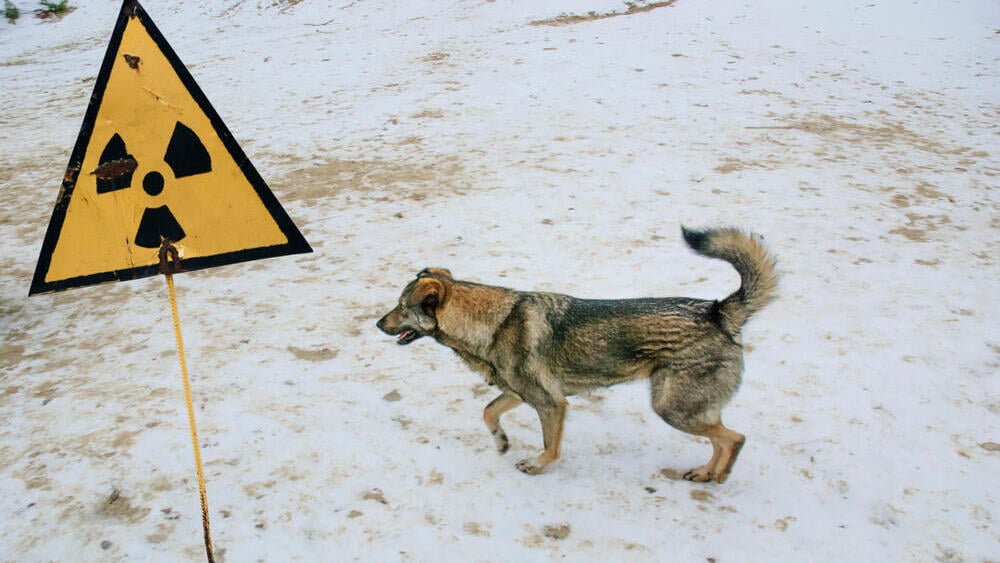
A dog near an abandoned city, close to Chornobyl
(Photo: Shutterstock)
Known in Mongolia as “takhi,” meaning “spirit,” the horses are genetically distinct from domesticated breeds, with 33 chromosome pairs compared with 32 in domestic horses. The species is named after the Russian explorer Nikolai Przhevalsky, who first documented it.
“The fact that Ukraine now has a free-ranging population is something of a small miracle,” said Denys Vyshnevskyi, the exclusion zone’s chief nature scientist.
With human activity absent, parts of the zone now resemble European landscapes from centuries past, he said. “Nature recovers relatively quickly and effectively.”
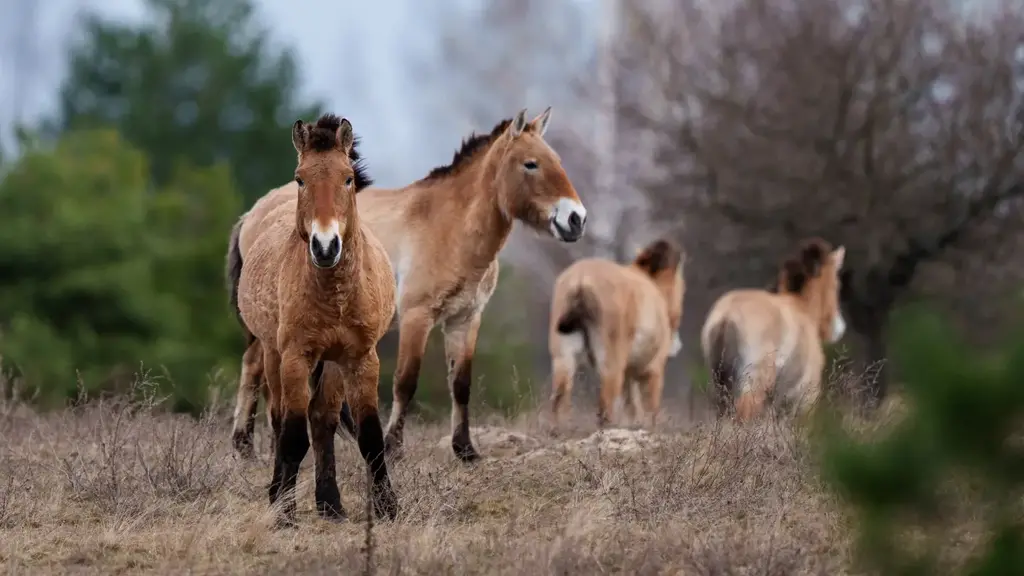
Przewalski horses
(Photo: AP\ Evgeniy Maloletka)
The transformation is visible throughout the area. Trees grow through abandoned buildings, roads are overtaken by forest and weathered Soviet-era signs stand beside leaning crosses in overgrown cemeteries.
Camera traps show the horses adapting in unexpected ways. They shelter in crumbling barns and deserted homes to escape harsh weather and insects, sometimes bedding down inside.
The animals live in small social groups, typically consisting of one stallion, several mares and their offspring, alongside separate groups of younger males. While many died after their introduction, others adapted to the environment.
Tracking them requires patience. Vyshnevskyi often drives alone for hours, placing motion-sensitive cameras in camouflaged casings attached to trees.
Despite lingering radiation, scientists have not observed widespread die-offs. Some subtler effects have been documented: frogs in the area have developed darker skin and birds in higher-radiation zones show higher rates of cataracts.
New threats have emerged in recent years.
Russia’s 2022 invasion of Ukraine brought fighting through the exclusion zone as troops advanced toward Kyiv, digging trenches in contaminated soil. Fires linked to military activity have swept through forests.
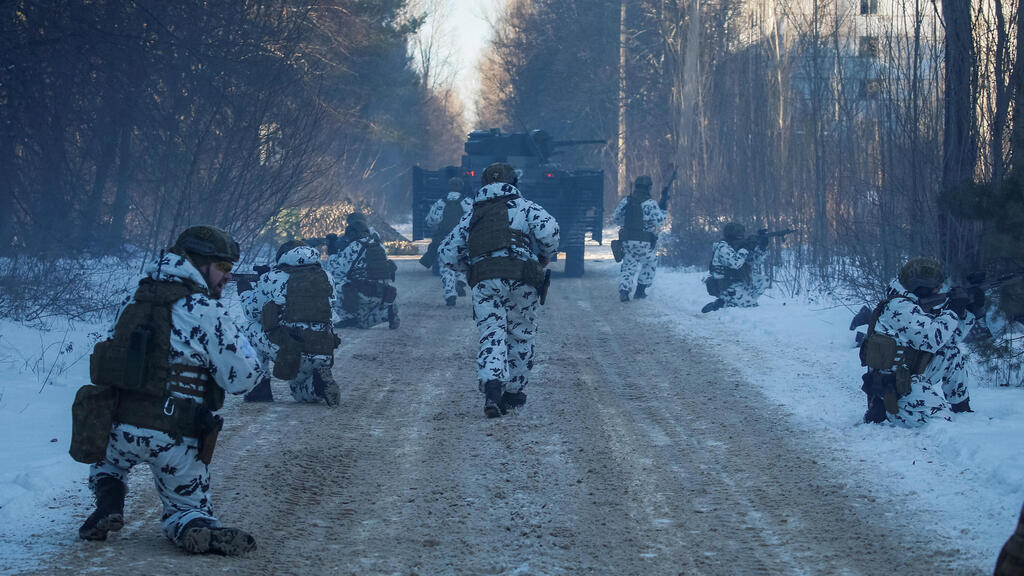
Ukrainian soldiers train in the abandoned town of Pripyat near the Chernobyl reactor
(Photo: Reuters)
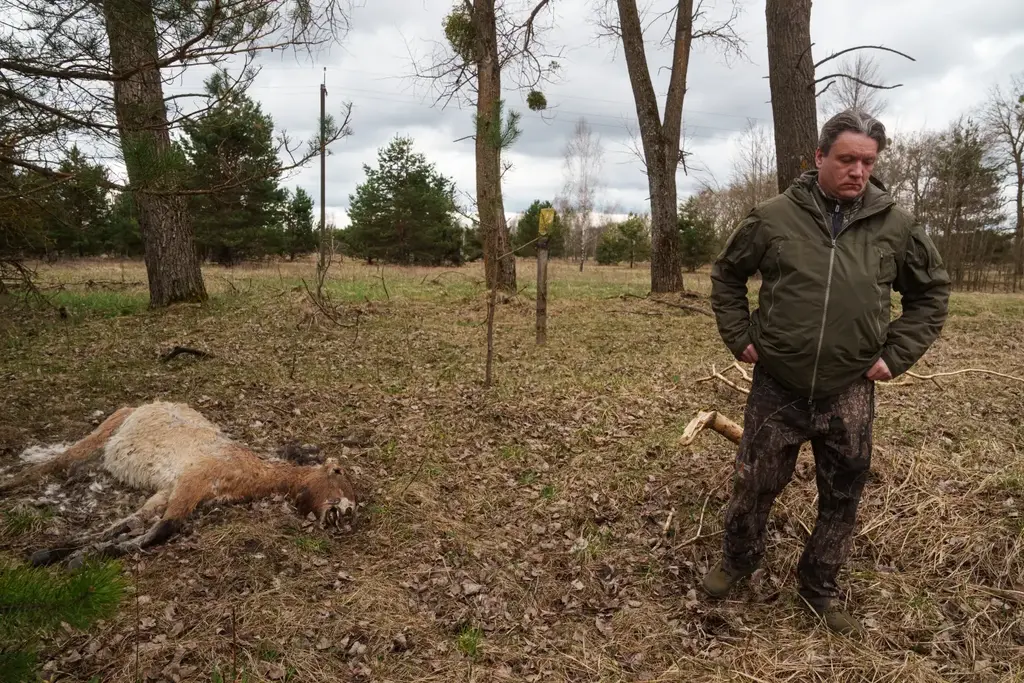
Harsh wartime winters have also taken a toll. Damage to the power grid has strained nearby managed areas, and scientists report increases in fallen trees and dead animals tied to extreme conditions and hastily built fortifications.
“Most forest fires are caused by downed drones,” said Oleksandr Polischuk, who leads a firefighting unit in the zone. “Sometimes we have to travel dozens of kilometers to reach them.” Such fires can release radioactive particles back into the air.
Today, the exclusion zone is not only an accidental refuge for wildlife but also a heavily monitored military corridor, marked by concrete barriers, barbed wire and minefields — a landscape some describe as starkly beautiful.
Personnel rotate in and out to limit radiation exposure. The area is expected to remain off-limits to the public for generations.
“For those of us in conservation and ecology, it’s kind of a wonder,” Vyshnevskyi said. “This land was once heavily used — agriculture, cities, infrastructure. But nature has effectively performed a factory reset.”