

The shoreline of Ayetoro, a town in southern Nigeria, shrinks a little more every year. What remains is littered with the ruins of homes swallowed by the Atlantic Ocean.
“We are walking on people’s homes,” said 35-year-old resident Thompson Akingboye as he made his way along a narrow strip of sand accessible only by boat.
Gallery
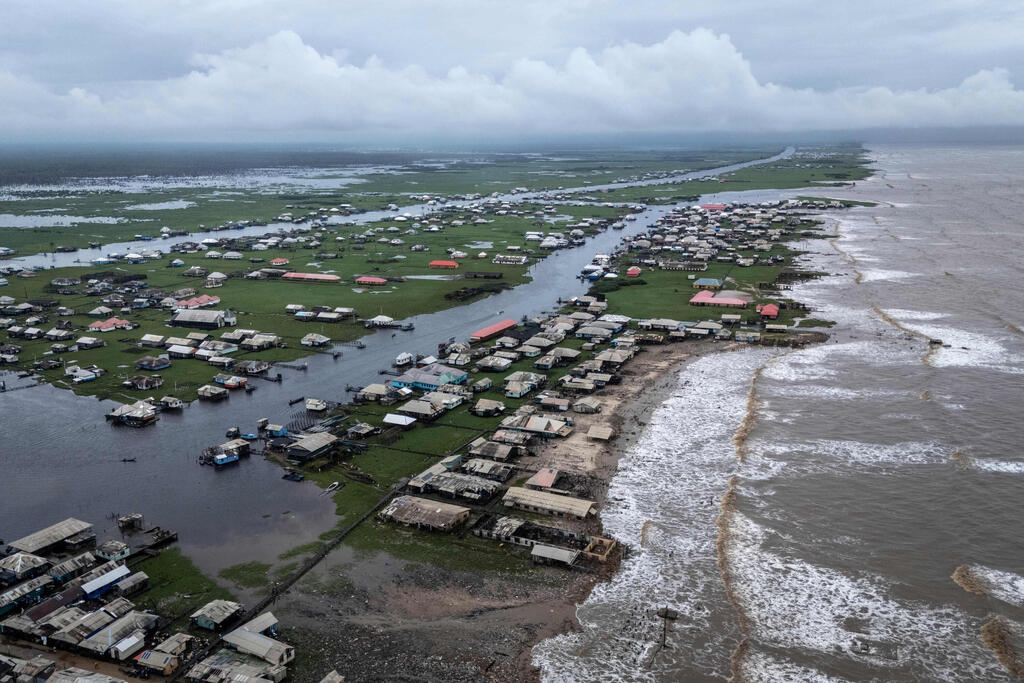
Atlantic Ocean waves washing over the town of Ayetoro in Nigeria
(Photo: Olympia de Maismont/AFP)
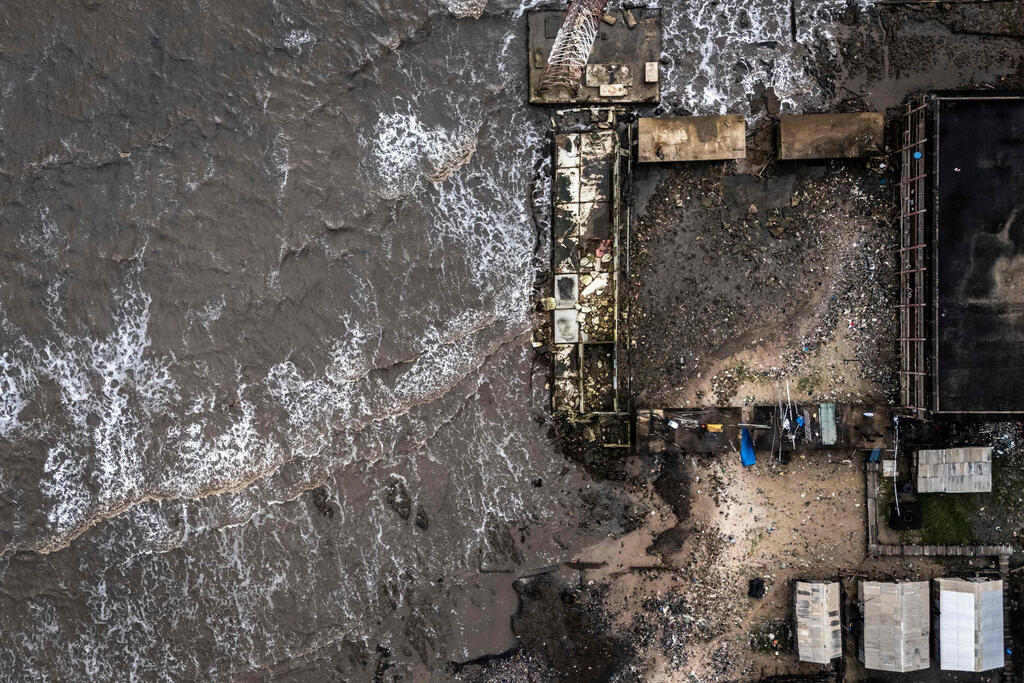
Aerial view of some of the damaged buildings along Ayetoro’s coastline
(Photo: Olympia de Maismont/AFP)
Ayetoro, home to about 10,000 people and long known as the “Happy City,” was founded in 1947 by a group of Christians with communist ideals who sought to build a community based on collective living, equality and unity.
Today, the community itself appears increasingly threatened by the sea. Families whose homes are destroyed rebuild farther inland, sometimes repeatedly. But the Atlantic keeps reaching them. Coastal erosion in Ayetoro has steadily worsened since the early 2000s, a pattern affecting 19 other communities in southwestern Nigeria as well.
Driven in part by climate change, the Atlantic is pushing farther inland and carrying away whatever stands in its path. Between 1987 and 2022, Ayetoro’s shoreline retreated by an average of 15 meters, or about 49 feet, a year, according to research by spatial planning expert Barnabas Ogirima James.
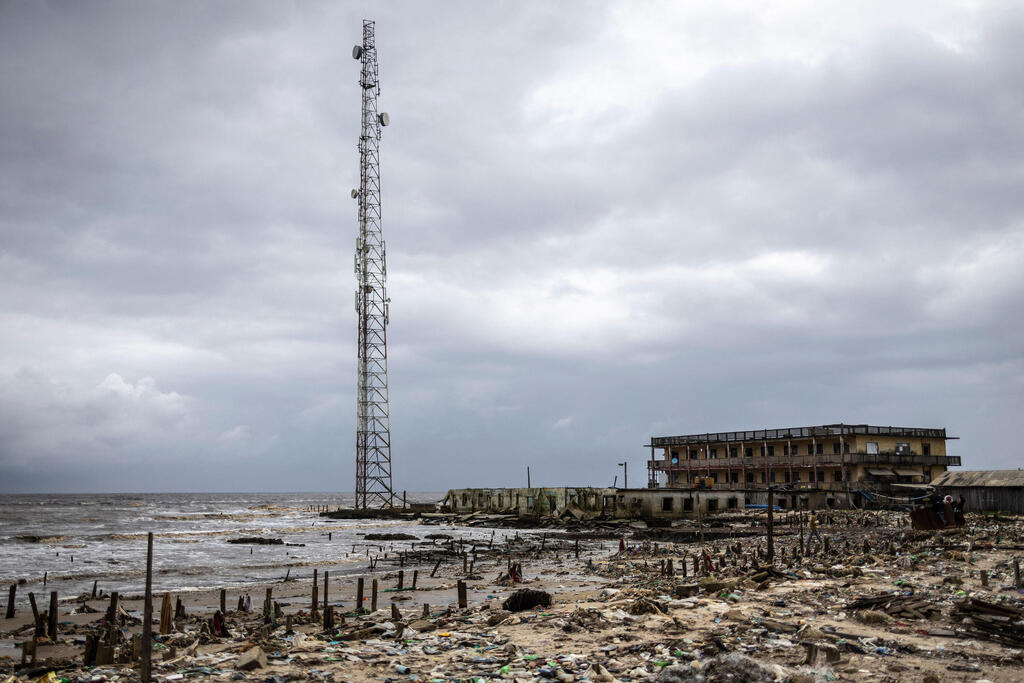
The destruction caused by the Atlantic Ocean in the Nigerian town of Ayetoro
(Photo: Olympia de Maismont/AFP)
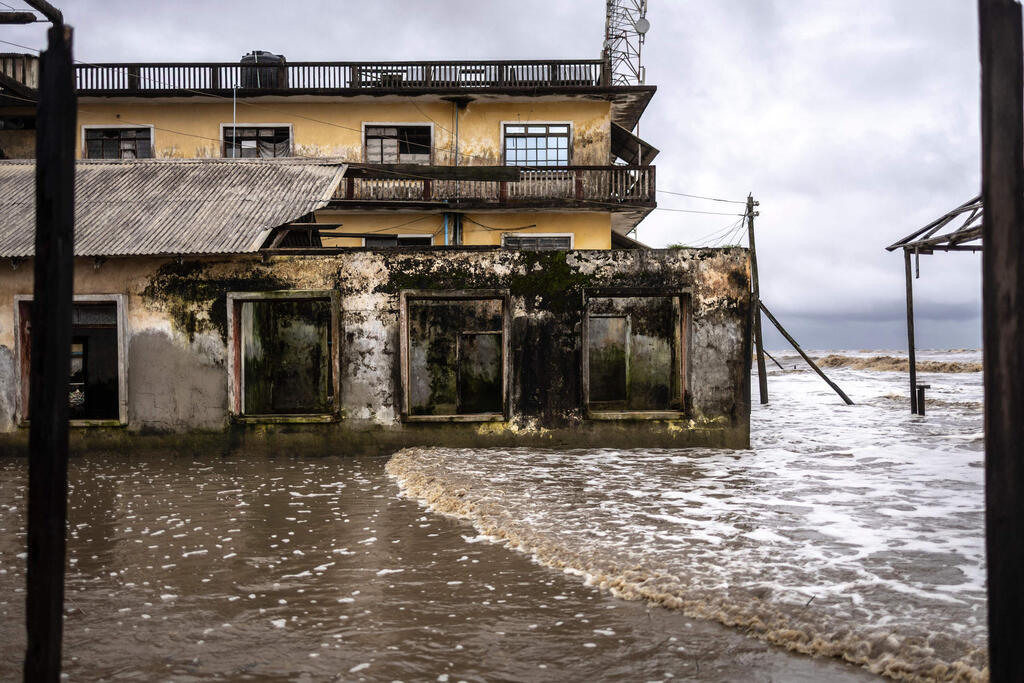
Atlantic Ocean waves reaching the homes of Ayetoro
(Photo: Olympia de Maismont/AFP)
Studies published in Scientific Reports in 2024 estimated that sea levels along the Gulf of Guinea, which borders Nigeria and other parts of West Africa, are rising by about 3.9 millimeters a year, roughly 10.5% faster than the global average. The destruction is visible everywhere.
Oluwambe Ojagbohunmi, Ayetoro’s traditional and community leader, stood outside his damaged palace and looked across flooded and ruined homes. “My palace used to have 100 rooms. Only 12 remain,” Ojagbohunmi, dressed in a white tunic, told AFP.
His bedroom is now located in the section closest to the ocean. At night, the sound of waves crashing against the walls disturbs his sleep. “This is our land. Where can we go? It is complicated,” he said.
In April, a storm pushed sea levels higher and trapped residents of the palace inside for a week. “I became a refugee in my own community,” said Akingboye Thompson, a fisherman and personal assistant to the king. “Since I lost my father’s house in 2019, a house that was swallowed and destroyed by the ocean, the only thing I managed to save was my university degree certificate,” he said.
“There are families that have moved more than three times.” He spoke while standing in Ayetoro’s streets, where waves have deposited piles of plastic waste.
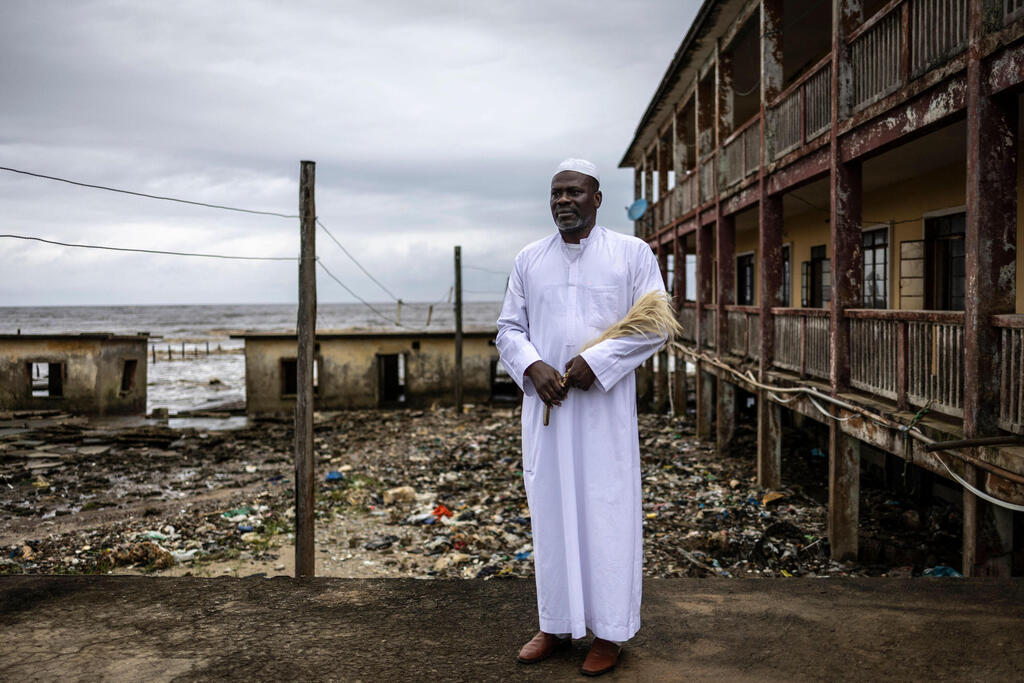
Oluwambe Ojagbohunmi
(Photo: Olympia de Maismont/AFP)
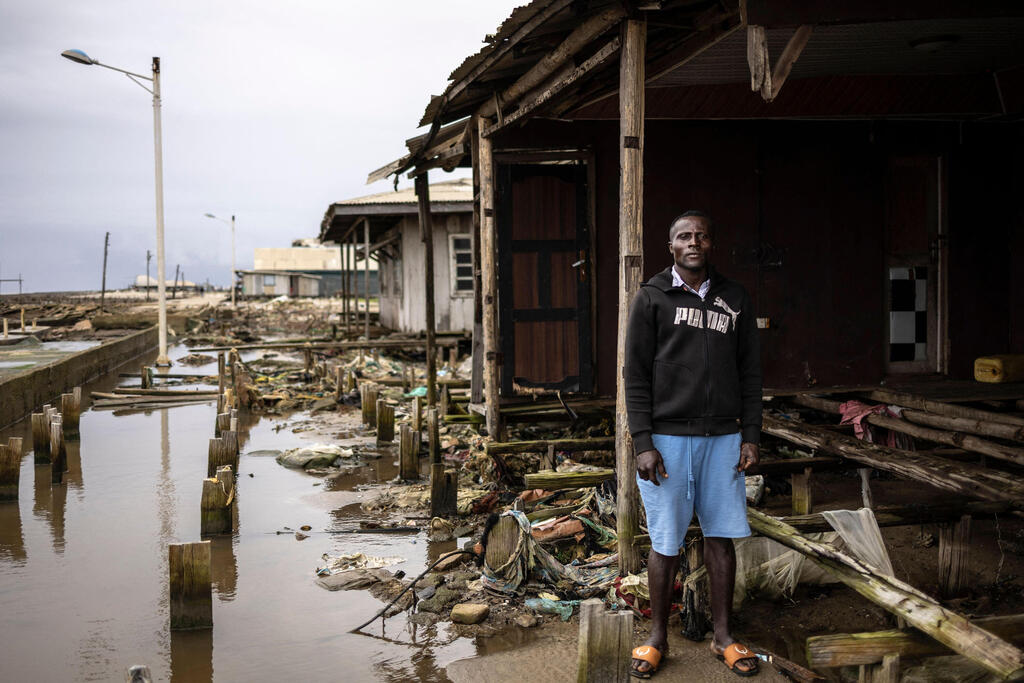
Augustine Edward, a 30-year-old carpenter, poses in front of his home, which was destroyed by coastal erosion in Ayetoro
(Photo: Olympia de Maismont/AFP)
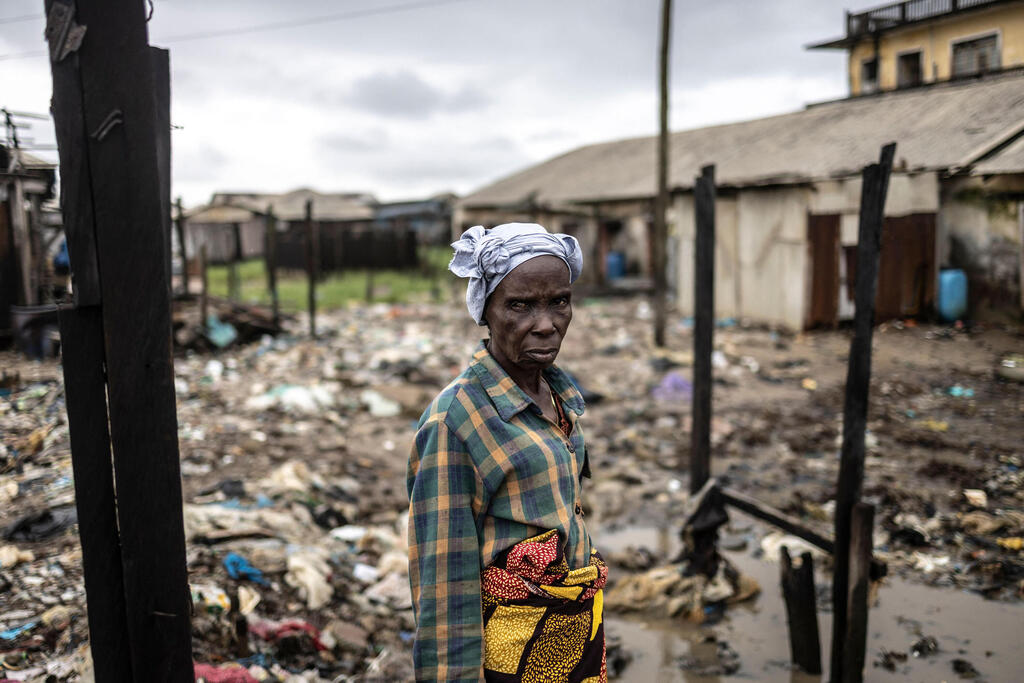
A resident of Ayetoro, Nigeria, stands against the backdrop of homes destroyed by rising Atlantic Ocean levels
(Photo: Olympia de Maismont/AFP)
Many homes are built from wood and corrugated metal sheets and are often connected by elevated wooden walkways.
Dr. Olusegun Babatunde Hassan, a landscape architecture researcher at the University of Lagos who collaborates with Harvard University, said rapid urbanization in Nigeria is one of the factors worsening erosion along the country’s roughly 850-kilometer coastline.
“There is growing demand for land, whether for housing or industrial activity,” Hassan said. “It should be strictly regulated, and more natural barriers should also be created by planting mangroves and coconut palms.”
Ayetoro regularly receives relief supplies from government agencies and nongovernmental organizations, although residents say the assistance is insufficient. The ocean has also completely destroyed the community’s only health center.
“Sometimes the water reaches window level, and yet we still have to keep working,” said 26-year-old health worker Omomiye Oluwaseun. “We help women give birth in these conditions. We have no choice.” Residents, she said, suffer from high blood pressure as well as waterborne illnesses including typhoid and diarrhea because of the poor quality of the water they are forced to use.
The ocean has not only destroyed homes and public buildings. It has also severely disrupted education. “Schools have been relocated several times, just like residents’ homes,” said 45-year-old teacher Sunday Akinjoye.
The repeated upheaval, he said, takes a psychological toll on students and sharply harms their ability to concentrate on their studies. No matter what residents do to hold back the water, he said, the Atlantic appears determined to keep taking more.