

On the deck of his fishing boat in the Greek port of Ierapetra, on the southeastern coast of Crete, Alexis Charalampakis pries open the mouth of a freshly caught pufferfish and exposes two large teeth on each jaw.
“If one of them bites you, it will simply cut off your finger,” the 43-year-old fisherman told AFP. “They destroy the sea. They don’t leave anything behind.”
The damage is visible on a nearby boat. A stingray, a gilt-head bream and another fish caught that day lie half-torn apart, evidence of the destruction caused by one of the Mediterranean’s most troubling invaders.
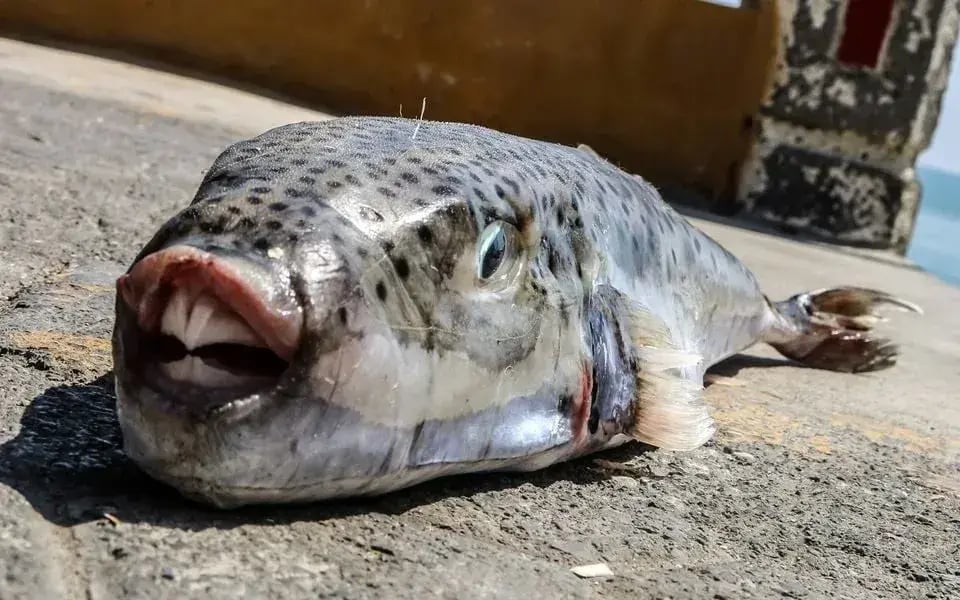
The fish behind the alarm is the silver-cheeked toadfish, Lagocephalus sceleratus, an aggressive, toxic pufferfish that can grow to more than a meter in length. First documented in the Mediterranean about two decades ago, it has since spread westward as far as the Strait of Gibraltar and into the Black Sea.
Like other pufferfish, it can rapidly inflate when threatened, making it harder for predators to swallow. It also carries a toxin that can be deadly.
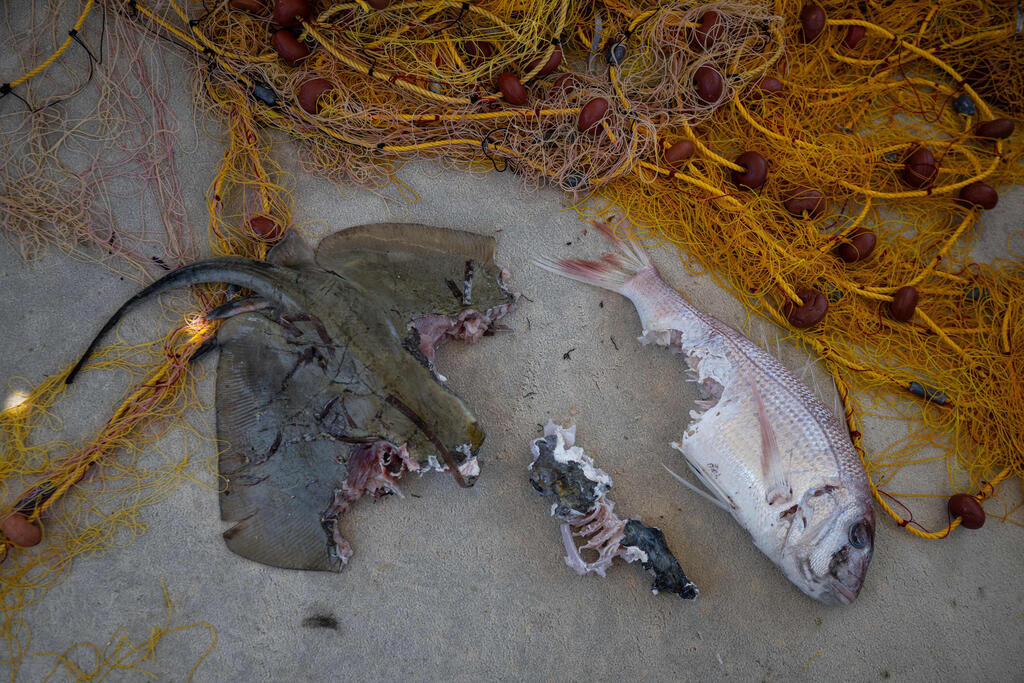
Marine animals eaten by silver-cheeked toadfish
(Photo: Angelos Tzortzinis/AFP)
Off Crete, Greece’s largest island, fishermen say the species is sharply reducing their daily catch and destroying their equipment.
“It is an omnivorous fish that eats anything it comes across,” said 65-year-old fisherman Yiannis Giankakis. “Nothing really threatens it, because it has no natural predators among other fish.”
Earlier this week, an elderly Greek woman was bitten by the fish and required stitches, according to The Telegraph. She was injured while swimming near the beach in the resort town of Varkiza, near Athens.
An invader from the south
The silver-cheeked toadfish is a Lessepsian species, one of the marine organisms that entered the Mediterranean from the Red Sea through the Suez Canal over the past 150 years. The term refers to Ferdinand de Lesseps, the French engineer who developed the canal.
The canal created a new route between marine ecosystems, allowing fish, crustaceans, mollusks and algae from the Red Sea to enter the Mediterranean. More than 100 fish species are now considered invasive in the region, surviving and thriving outside their natural range because of human activity.
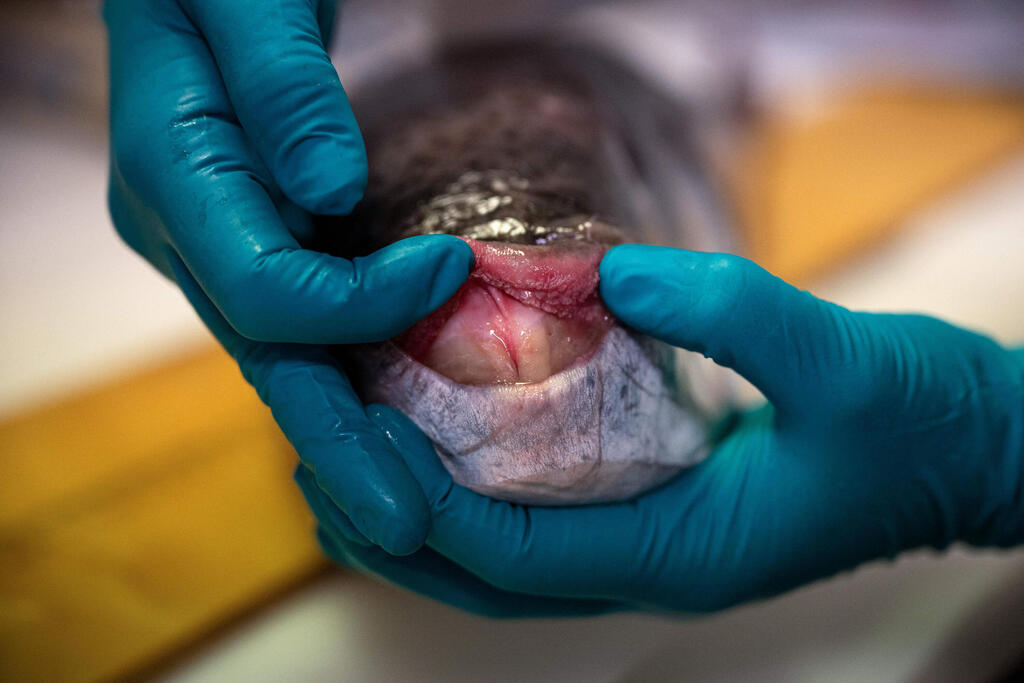
Marine biologist opens the mouth of a silver-cheeked toadfish (Lagocephalus sceleratus) before collecting a sample for analysis
(Photo: Angelos Tzortzinis/AFP)
A Tel Aviv University researcher previously described the silver-cheeked toadfish as an apex predator in the Mediterranean, both because of its size and because of the danger it poses to other species. Adult fish appear to have no known predators in the region, and the species sometimes preys on its own young.
Studies of its diet found that 97% of the species identified in its stomach contents were also invasive species, mainly invertebrates but also fish, including another pufferfish species. Researchers believe the toadfish may recognize these species from its original habitat, making them familiar and safe prey.
The spread of pufferfish in Greek waters is the latest example of how warming seas are reshaping ecosystems and disrupting the economies that depend on them. Of nearly 200 pufferfish species living in warm waters worldwide, three are now found in the eastern Mediterranean.
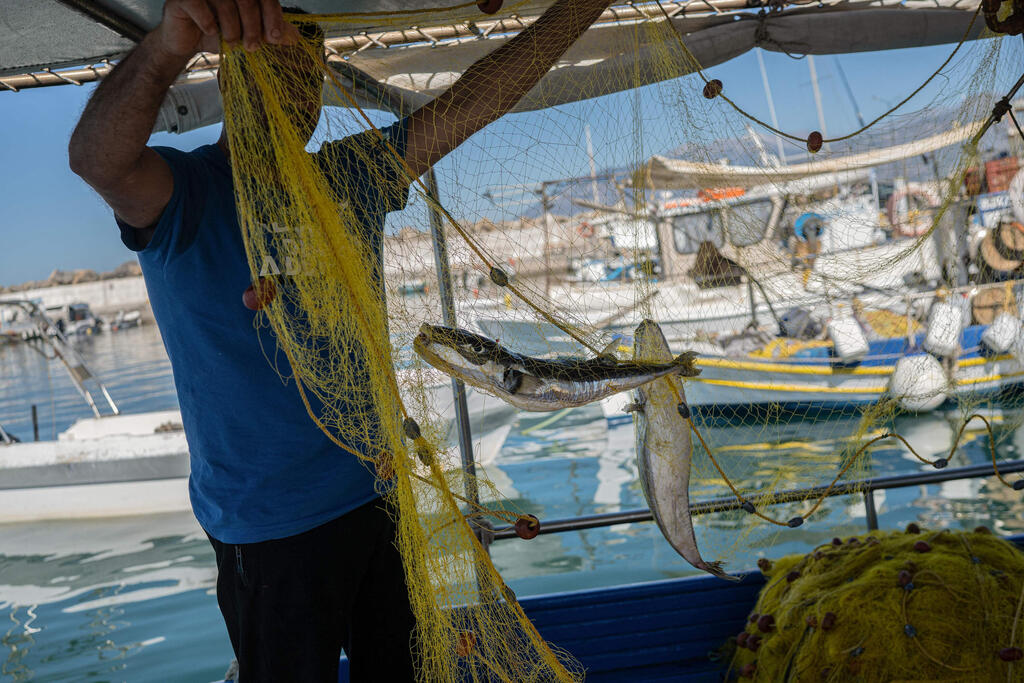
Silver-cheeked toadfish caught in a net
(Photo: Angelos Tzortzinis/AFP)
Scientists first documented the silver-cheeked toadfish in Greece in June 2005, said Nota Peristeraki of the Hellenic Centre for Marine Research. The species, native to the Red Sea and the Indian and Pacific oceans, entered the Mediterranean through the Suez Canal, according to data from Université Côte d’Azur, which tracks non-native species in the region.
It was first recorded around Crete and the Dodecanese islands, Peristeraki said, but has since spread farther.
Beyond the powerful toxin that makes eating it dangerous and potentially fatal, pufferfish have a beak-like mouth strong enough to bite through wood and metal. They consume fishermen’s daily catches and leave nets shredded.
“If it weren’t my boat, I would have left this profession a long time ago,” Charalampakis told AFP. “The situation is serious. You can’t make a living like this.” After five days at sea, he said, his nets become unusable and extremely difficult to repair.
“It took me two days to fix these nets. I pulled them out of the sea this morning, and there were already another 20 holes,” he said.
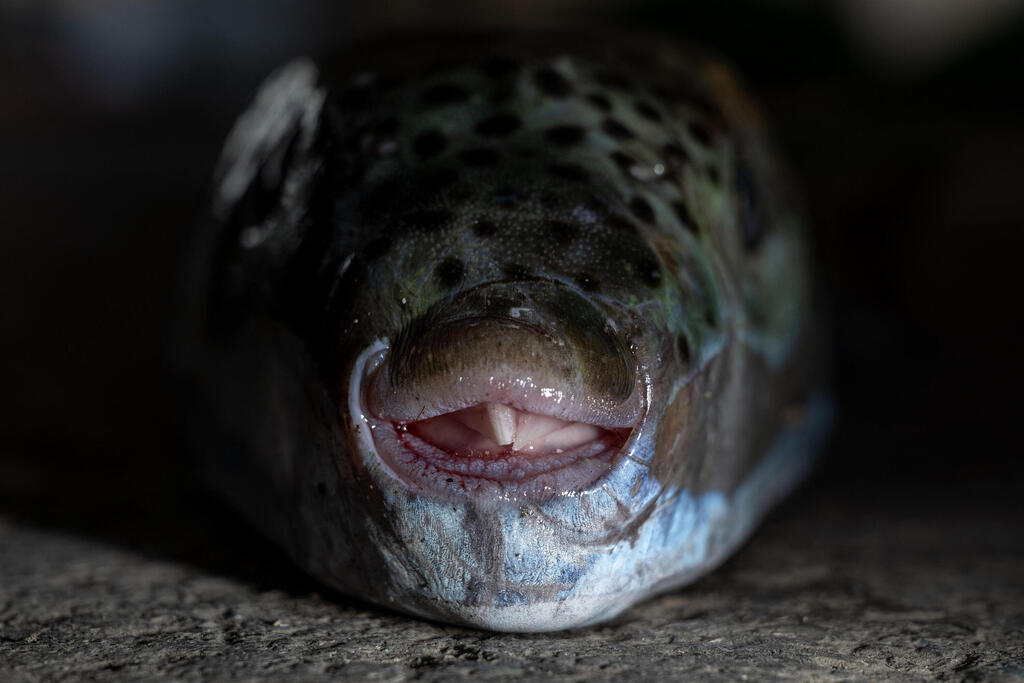
Silver-cheeked toadfish caught in Crete
(Photo: Angelos Tzortzinis/AFP)
According to Peristeraki, a marine biologist at HCMR, the invasive fish feed on fish, crabs and squid, causing damage and lost income of about 8,500 euros a year for each fishing boat.
The predator also contains tetrodotoxin, a powerful toxin that is highly dangerous if swallowed, warned Thekla Anastasiou, a marine biologist at HCMR. It can cause cardiac failure and paralyze lung function, she said.
‘Worse every year’
“It is essential to reduce the population of these fish,” Peristeraki said. For fishermen, however, that is easier said than done.
“The work gets harder every year,” said 53-year-old fisherman Kostis Zavlakakis.
He said the state is not doing enough to help fishermen deal with the species. With the right mechanism, he said, the population could be controlled by targeted fishing.
The World Wildlife Fund published a guide in April for responsible seafood consumption in Greece, listing more than 100 species sold in Greek markets. The guide included 13 invasive species that did not appear in the previous edition, published in 2015.
Among the newly listed species are the Atlantic shrimp, Penaeus aztecus, and the blue crab, Callinectes sapidus, in the northern Aegean, as well as the lionfish, Pterois miles, in southern waters. Greek fishermen are demanding that the state subsidize the capture of pufferfish, a program already operating in neighboring Cyprus.
“The state needs to give us an incentive to collect and catch them,” said 25-year-old fisherman Babis Douriakis. “I took over my father’s fishing boat, but I won’t be able to continue without help.”
Former Greek deputy agriculture minister Christos Kellas told parliament in February that authorities were examining an assistance plan for fishermen.
Turning waste into a resource
Scientists are also trying to find a way to neutralize the fish’s deadly toxin, which can cause paralysis, respiratory failure and death, so the species can be turned into a commercially useful product.
“At present, these fish are classified as Category 1 waste,” said chemist Manolis Mandalakis of the HCMR research institute, describing a classification comparable to potentially hazardous industrial waste.
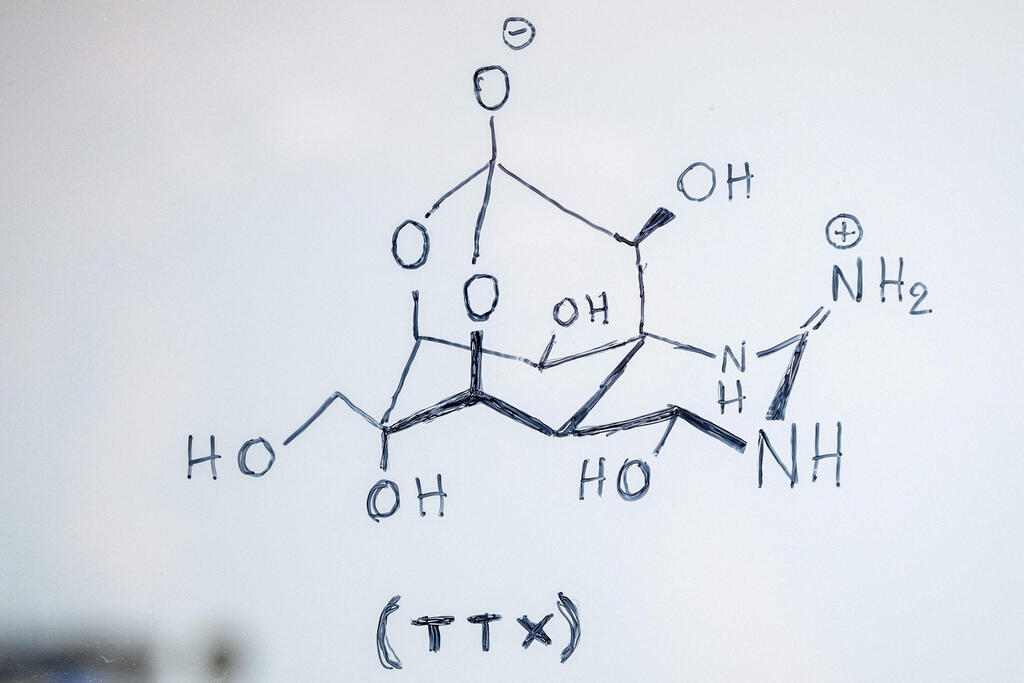
Chemical structure of tetrodotoxin, a toxin found in the flesh of the silver-cheeked toadfish
(Photo: Angelos Tzortzinis/AFP)
Under European Union rules, the standard way to deal with such waste is incineration in a dedicated facility.
“We are trying to find alternatives that require less energy,” Mandalakis said.
Possible uses after treatment include turning the fish into fertilizer or fish feed.