

A small caramelized cookie has become a very big financial asset.
Global sales of Biscoff have helped propel shares of Belgian company Lotus Bakeries up 49% this year. It is hardly a one-off surge: Lotus shares have risen roughly 600% over the past decade, a period in which many food companies struggled with the fallout from the COVID pandemic, the energy crisis, higher raw-material costs and logistics disruptions.
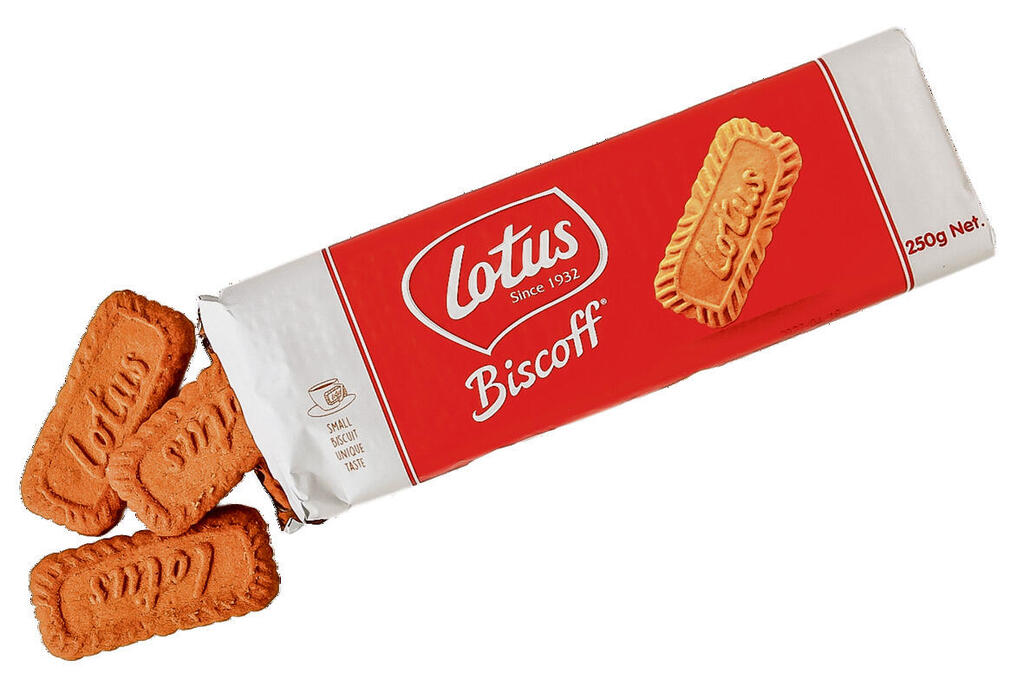
(Photo: Fashley, Shutterstock)
The biggest force behind that rise is Biscoff, known in Israel simply as Lotus.
The crisp, sweet caramel-flavored cookie, made with brown sugar and cinnamon, has long been associated with coffee, but it has increasingly become much more than something served beside a hot drink. Biscoff has spawned spreads, ice creams, cakes and countless desserts, including a so-called Japanese cheesecake version that became a social-media hit.
Its original strength, however, remains its simplicity. Few cookies are better suited to being dipped into coffee.
Biscoff is now described as the fifth-best-selling cookie in the world, with much of that success coming from its status as one of the most recognizable biscuits served alongside coffee. Like leading global brands such as Oreo and Chips Ahoy!, its appeal is no longer geographically limited.
Lotus has partnership agreements with major airlines including Delta, helping turn the individually wrapped cookie into a familiar sight for millions of travelers. The company has also expanded production into Thailand as it seeks to tap the enormous potential of Asian markets.
‘An alternative to chocolate’
Lotus Bakeries was founded in 1932, in the aftermath of the Great Depression. Its expansion into new markets and its decision to expose consumers to Biscoff through an increasingly wide range of products have helped transform what was once a relatively local Belgian cookie into an international growth engine.
Between 2014 and 2024, the company recorded average annual sales growth of 17%.
That performance is notable not only because of the broader difficulties facing the food industry, but because Biscoff appears to run against another major consumer trend. It is a sugary, processed indulgence that has flourished during an era dominated by talk of healthier diets, organic products and reduced sugar.
The answer may be that a familiar sweet cookie is a tradition stronger than many food trends.
So how did a product once largely confined to Belgian cafés turn into a global phenomenon?
Social media is part of the answer. Biscoff received an enormous boost from TikTok and Instagram, where food influencers began demonstrating how the humble coffee biscuit could be transformed into a central ingredient in cakes, milkshakes and a growing assortment of other dishes.
One food influencer described it as an almost ideal ingredient: an alternative to chocolate that works in a huge variety of recipes while still having a distinctive flavor of its own.
That adaptability helped Biscoff move beyond the saucer beside the coffee cup. A product that once had a single obvious role became an ingredient consumers could endlessly reinvent.
In 2020, as the cookie gained momentum in the United States and its popularity spread internationally, the company moved toward the global Biscoff name for a product originally known as speculoos.
The name itself combines “biscuit” and “coffee,” neatly packaging the association that helped build the brand in the first place.
The catchy name, warm spice profile, nostalgic flavor, accessibility and ability to work in everything from desserts to drinks made Biscoff particularly appealing to younger consumers. Last year it became the fastest-growing brand in the biscuit category.
Recipes featuring Biscoff repeatedly attracted millions of views online, giving the brand an unusual advantage during and after the COVID lockdowns, when home baking and social-media food trends exploded.
The modest Belgian biscuit developed something approaching a cult following.
“If I could,” one British teacher named Raj told The Guardian, “I would smoke it.”
Israel has been particularly enthusiastic. The country is among the leading consumers of Lotus cookies per capita outside Belgium. The products are imported to Israel by Diplomat, and the strength of the local market led Lotus to choose Israel as one of the first countries in which it launched its Biscoff spread before expanding it more widely elsewhere.
The goal: Conquer the world
Lotus has been careful to listen to the consumers who turned its cookie into a phenomenon.
The change in branding was intended to create a stronger international identity and a closer connection with younger customers. The company also embraces the thousands of social-media clips featuring its products, using viral consumer-created recipes and ideas to further promote the brand.
The relationship has become self-reinforcing: more Biscoff videos create more interest in the product, which produces more recipes, more videos and more sales.
Half of the increase in the company’s revenue in 2025 came from Biscoff sales.
“We want to conquer the world,” says Jan Boone, who shares the name of his grandfather, the company’s founder.
The company’s new manufacturing operations in Thailand, alongside production in the United States, are another stage in that international expansion.
There is another, less dramatic reason for the cookie’s success: its size.
Consumers may be more conscious than ever of what they eat, but few people maintain a perfectly healthy diet all the time. Most still want an occasional indulgence. Biscoff may be calorie-heavy for its size, but psychologically it can feel like a relatively minor treat.
One small cookie, roughly the size of a domino, does not necessarily feel like a major dietary transgression.
That gives the product an advantage at a moment when consumers are simultaneously seeking healthier lifestyles and unwilling to give up sweets entirely. Biscoff offers an indulgence that feels controlled.
There may also be a deeper psychological explanation for its appeal.
The cookie is vegan and lactose-free, giving it relevance to modern dietary preferences, but its taste is anything but futuristic. Brown sugar, caramel and especially cinnamon evoke old-fashioned baking, holidays, family traditions and familiar winter foods.
Those associations matter.
Comfort foods often become especially attractive during periods of uncertainty because familiar flavors can evoke stability and positive memories. Cinnamon and other warming spices are strongly associated with the kind of food consumers perceive as comforting and nostalgic.
That may mean Biscoff’s greatest advantage is not innovation at all.
It is familiarity.
In an industry constantly searching for the next new flavor, format or trend, Lotus Bakeries has built one of the fastest-growing cookie brands in the world around something that feels as though it has always been there: a small, crisp, caramelized biscuit beside a cup of coffee.