

For years, anyone in central Israel looking for a serious meal instinctively headed to Tel Aviv. But lately, with endless construction, blocked streets, parking headaches and a growing desire to eat well closer to home, another culinary map has begun to take shape: Ono Valley.
The area around Kiryat Ono, Ganei Tikva, Savyon and Yehud has become one of the most energetic dining zones in Gush Dan. Successful brands such as Delicatessen, Giraffe, Aharoni’s and Nono Mimi have opened branches there. Chefs including Moti Titman and Tomer Agay have launched local projects. Jagger, the Kiryat Ono hamburger spot, has become a social media phenomenon, with lines forming outside.
The pace is almost impossible to keep up with. Just as one round of visits ends, another place opens. The latest arrival is Sideways, an elegant, carefully designed wine bar by Einat Neumark in the new Ramat Ef’al. That means older local institutions such as Ester, Lechem Yayin and Kisu are no longer alone.
For the people behind the new restaurants, the explanation is clear. Ono Valley has a solid middle-to-upper-middle-class population, many of them former Tel Avivians who moved east in search of larger homes without giving up their expectations of good food.
“Many former Tel Avivians moved to Ono Valley so they could have bigger apartments. This is a knowledgeable crowd, with Tel Aviv culinary roots, that is thirsty for new experiences,” says Sagi Razmovich, one of the owners of the new Mojo San in Ganei Tikva.
Gadi Granot, CEO of La Table Group, which runs Vinni, the Italian restaurant at Big Yehud mall, agrees. “This is a very developing area, within a reasonable distance from Tel Aviv. Many families are upgrading their homes and young people are moving here.”
Another explanation comes from the city everyone once rushed into. Tel Aviv has become harder to access, especially for diners who no longer want to gamble on traffic, roadworks and parking. “Tel Aviv has become a difficult city,” says Nini Noff, one of the owners of Makom Shel Basar in Neve Tzedek, who recently opened a diner in Kiryat Ono. “Getting into Neve Tzedek, for example, is a daily roulette. Even with Waze. Every day, another street gets blocked. Once, everyone wanted to open a place in Tel Aviv, and now, everyone wants to open in the Ono Valley. Many of our customers no longer come to Neve Tzedek. They come to our new place and enjoy it.”
Thailand in the middle of Savyon
At Savyon’s G complex, Surin brings Thai food, nightlife energy and Tel Aviv-style hospitality to the suburbs. The restaurant was opened by Gal Cohen and Assaf Cohen, part of the Thai 148 group, whose roots are in Dizengoff Street and Tel Aviv nightlife.
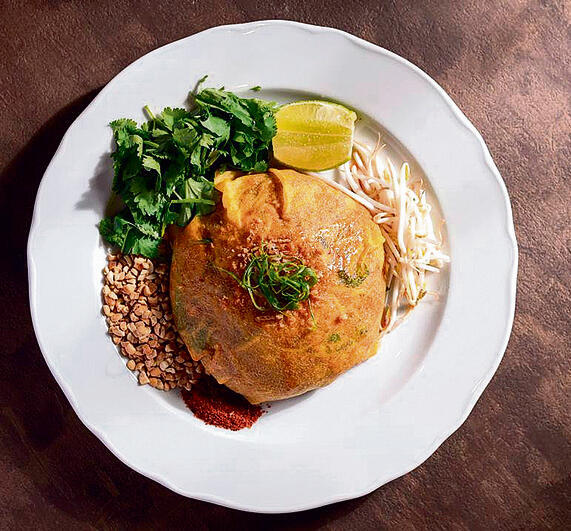
Thai interpretations of familiar dishes. Surin
(Photo: Asaf Karela)
“We are a group of people who grew up in bars and nightlife and in the hospitality experience, and we want to convey a Tel Aviv atmosphere here, including loud music and low lighting,” they say.
The group had offers to open elsewhere, but after researching the market, Ono Valley made the most sense. “There is a crowd here that wants to enjoy itself, and at Surin we offer it a lot of color, noise and flavor.”
The menu is excellent and full of punch. It is led by chef Omi, who has lived in Israel for 20 years and is known from Nam and Thai 148. Surin is the name of the Thai province where he was born, and also a common boys’ name in Thailand.
“The food in the area where I grew up is very spicy and dry. Fewer coconut sauces,” Omi says. “But at Surin, we wanted to serve food that both Israelis and Thais could eat.”
Alongside familiar Thai restaurant favorites, Surin offers dishes that are harder to find elsewhere, including pla pad phet, fried fish with red curry and coconut milk, tuna prepared in the style of Omi’s childhood region, and an original take even on the well-worn pad Thai. Omi also gives Thai interpretations to familiar dishes such as beef tartare. As befits a place that combines dining and nightlife, the drinks menu is developed and creative.
The average check ranges from about 170 to 220 shekels per diner, depending on alcohol. “It is important to us that customers feel comfortable coming back again and again, and that they get value for money,” the owners say. “We want a night out at Surin not to be a one-time experience.”
Surin, G complex, Savyon
Upgraded skewers and a jewel-box gelateria
The G complex in Savyon has also become the kingdom of restaurateur and businesswoman Liza Cohen. Her Taurus is a meat restaurant built around fire, grill and smoke. It recently launched a lunchtime skewer business meal, served with an opening set of salads.
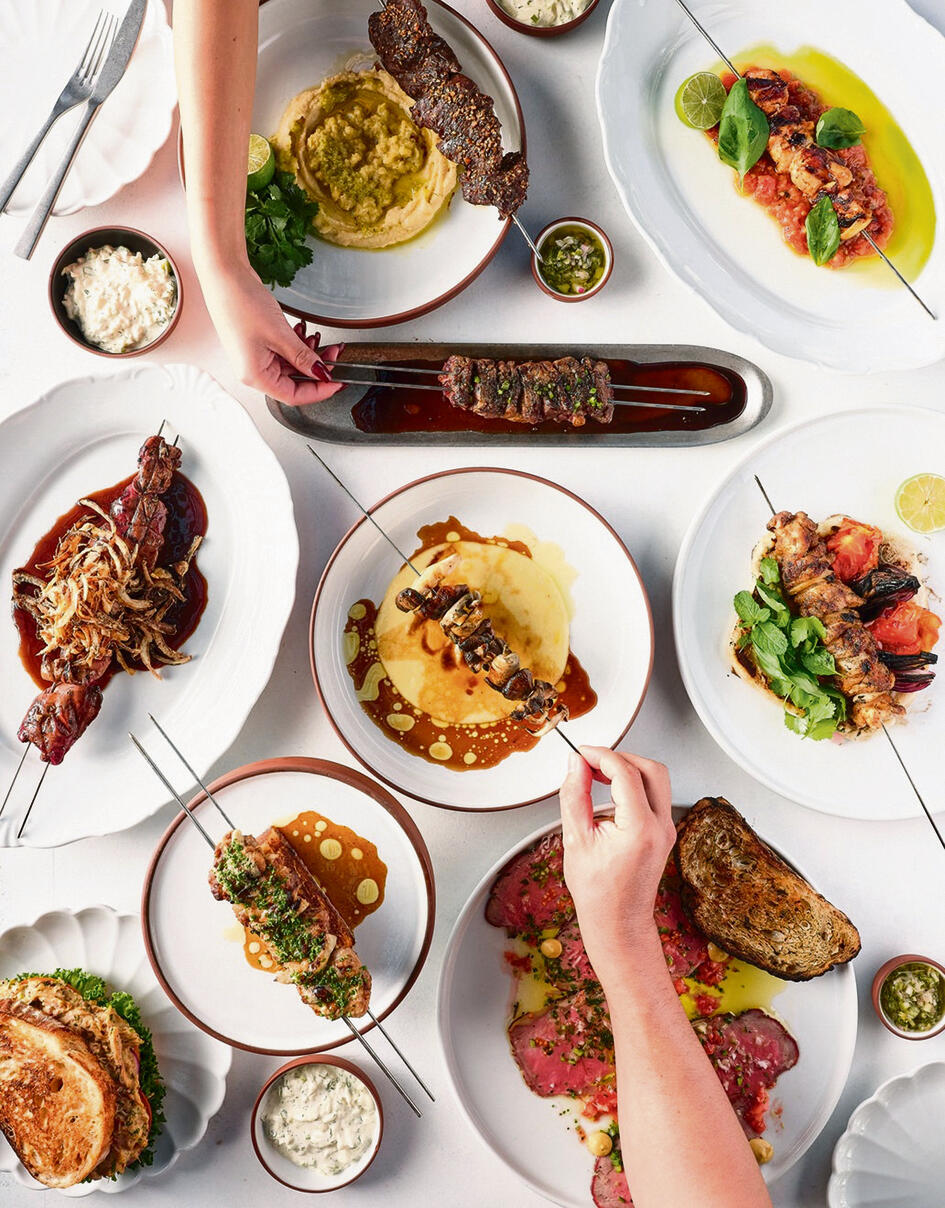
Fire, grill and smoke. Taurus
(Photo: Gil Aviram)
“Taurus is a smokehouse that offers aged and smoked meats. The direction is Mediterranean, and that is reflected in the seasoning as well. People in the area have already seen and eaten everything, so we do what is best, fresh and tasty,” Cohen says. “Appearance, hospitality and service are also very important to us.”
For Cohen, the flagship dish is the butcher’s cut skewer. The veal sweetbread skewer is also especially popular, and the restaurant serves what she describes as an excellent lamb salad. “We even make sausages,” she says. In the evening, she recommends the steaks. At lunch, diners can leave for around 120 shekels, while dinner can reach about 300 shekels.
Across from Taurus, Cohen opened Dolce Mila, a charming gelateria designed like a bonbonniere. “The design inspiration is a jewelry store,” she explains. The display includes tiramisu sold in a tin box, carrot cake, apple tart, unusual seasonal gelato flavors, including guava and olive oil, chocolate chip cookies, crackers, chocolates shaped like truffles and pralines. Cohen intentionally avoids crack pie. “Everyone is making crack pie today,” she says. The shop also produces sugar-free cookies and ice cream, “so there is something here for everyone.”
Taurus, 1 Hashikma St., Savyon
A diner by professionals
At Diner Makom Shel Basar, near Ono Academic College in Kiryat Ono, lunch is one of the strongest and most rewarding business meals I have had recently. The place is a model of professionalism, which is not surprising given the people behind it: veteran restaurateurs Rimon Ben-Yakir and Nini Noff, the former owners of Giraffe, which they sold, and of Makom Shel Basar in Tel Aviv’s Neve Tzedek.
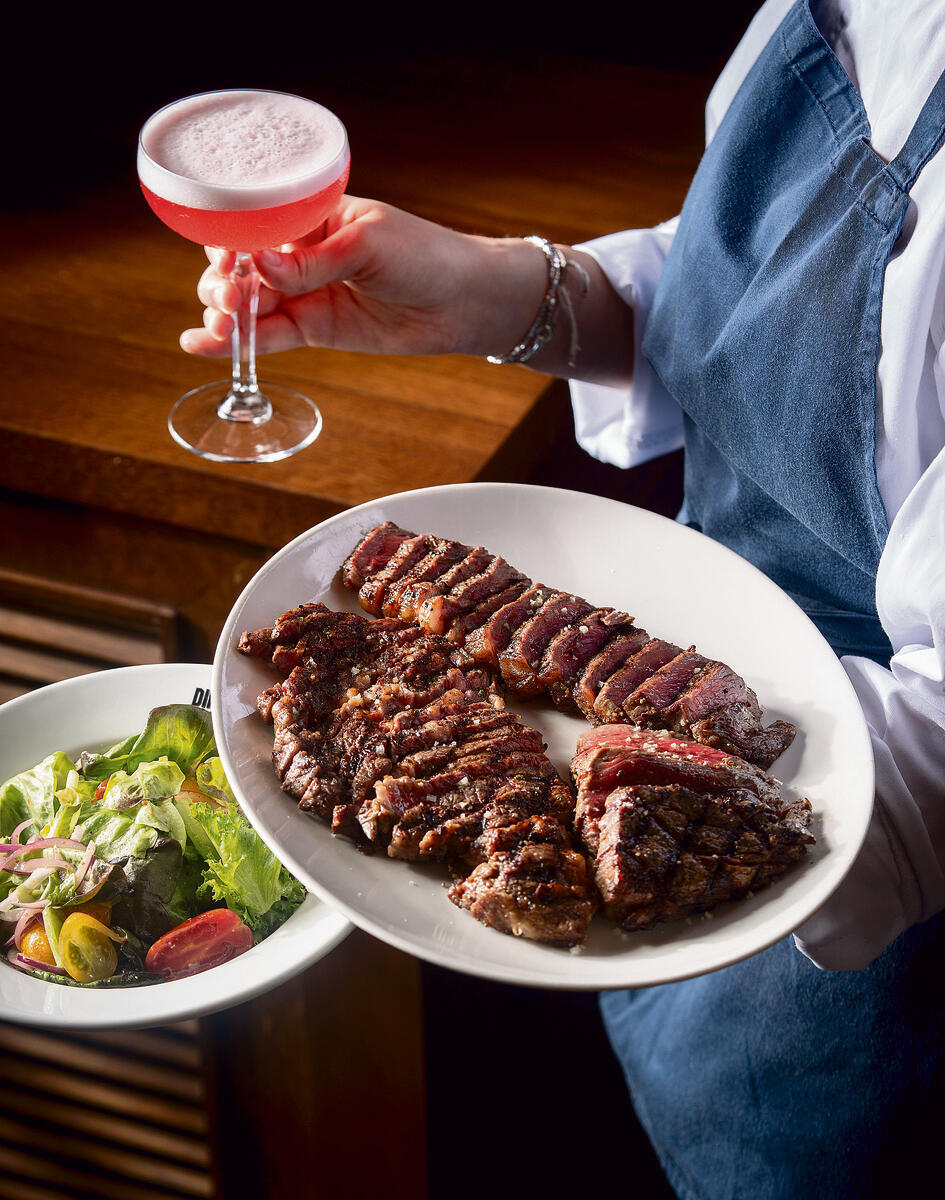
Local meat only. Diner Makom Shel Basar
(Photo: Guy Ashkenazi)
The diner’s menu is different from that of the Tel Aviv mother restaurant. “At Diner we serve only fillet, entrecôte and sirloin. One size, one weight. There are no bone-in cuts and no large steaks,” Noff says. “The meat is the same, but the price is different. By the way, we work only with local meat, from mature dairy cows, aged for a month.”
Then he insists on the schnitzel. “You have to try the schnitzel. Come, see what a schnitzel is.” He was right. It was crisp and delicious. The comforting spaghetti meatballs were also satisfying, and the side dishes are excellent: potato gratin, creamed spinach and roasted potatoes.
Dan Ben-Yakir, partner and manager, says the signature dishes include sirloin tataki, carpaccio, ceviche taco, entrecôte steak and truffle hamburger. They are all worthy. Dessert options include strawberry crêpe, bread pudding with banana and whipped cream, chocolate mousse and biscuit cake.
Main courses cost 97 to 124 shekels, steaks cost 165 shekels and hamburgers range from 86 to 96 shekels.
Diner Makom Shel Basar, 9 Shamira Imber Gadish St., Kiryat Ono
Asian food with a new concept
At Mojo San in the Zim Urban complex in Ganei Tikva, the first thing that catches the eye is a large wall that is actually a charming shop, filled with items from Japan and Israel, including figures designed especially for the place. After that, it is time to eat.
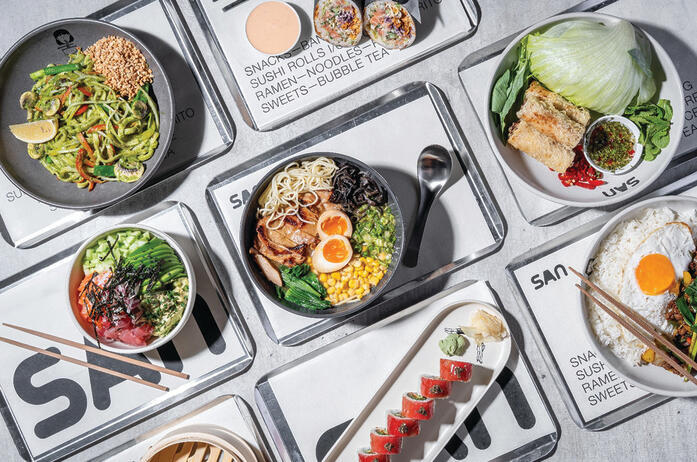
Concierges like at a hotel. Mojo San
(Photo: Asaf Karela)
Mojo San is a cool, stylish dining and hangout spot built around a new concept created by childhood friends Sagi Razmovich and Amir Avidar, who founded the Mojo Asian Foodbar in Netanya 15 years ago.
“During COVID, I understood that the future was to create a restaurant without service, but not in the style of Aroma,” Razmovich says. “The result is Mojo San, which we chose to open in Ganei Tikva. The user experience is that of a restaurant in every sense, while we eliminate burdensome service. So we have no hostess, no waiters, no tips, no need to reserve a table and no need to wait for the bill. We are not a casual restaurant, but we are also not fast food.”
Instead of waiters, the restaurant has concierges. “Like in a hotel,” he says. They help customers with everything, from placing orders and collecting dishes and drinks to finding the teriyaki. “After a few times, grandparents and people who are not technologically savvy already do everything themselves.”
The menu, created by chef Vasily Serga, includes 45 dishes. Recommended options include sushi burrito, noodle dishes and ramen soups. “Our sushi is at the cutting edge,” Razmovich says. Desserts are supplied by pastry chef Barak Cohen, and include chocolate mousse, lemon pie and tiramisu.
Mojo San, Zim Urban complex, Ganei Tikva
An Italian-style bakery
Shimi Schwartz’s Pomo Group, which specializes in Italian food, identified Ono Valley’s potential three years ago and opened Café Napo in Kiryat Ono’s Duvdevan complex. The stylish, tasty restaurant became a success. Schwartz has since expanded in the same complex, opening Milano bakery opposite Café Napo last September.
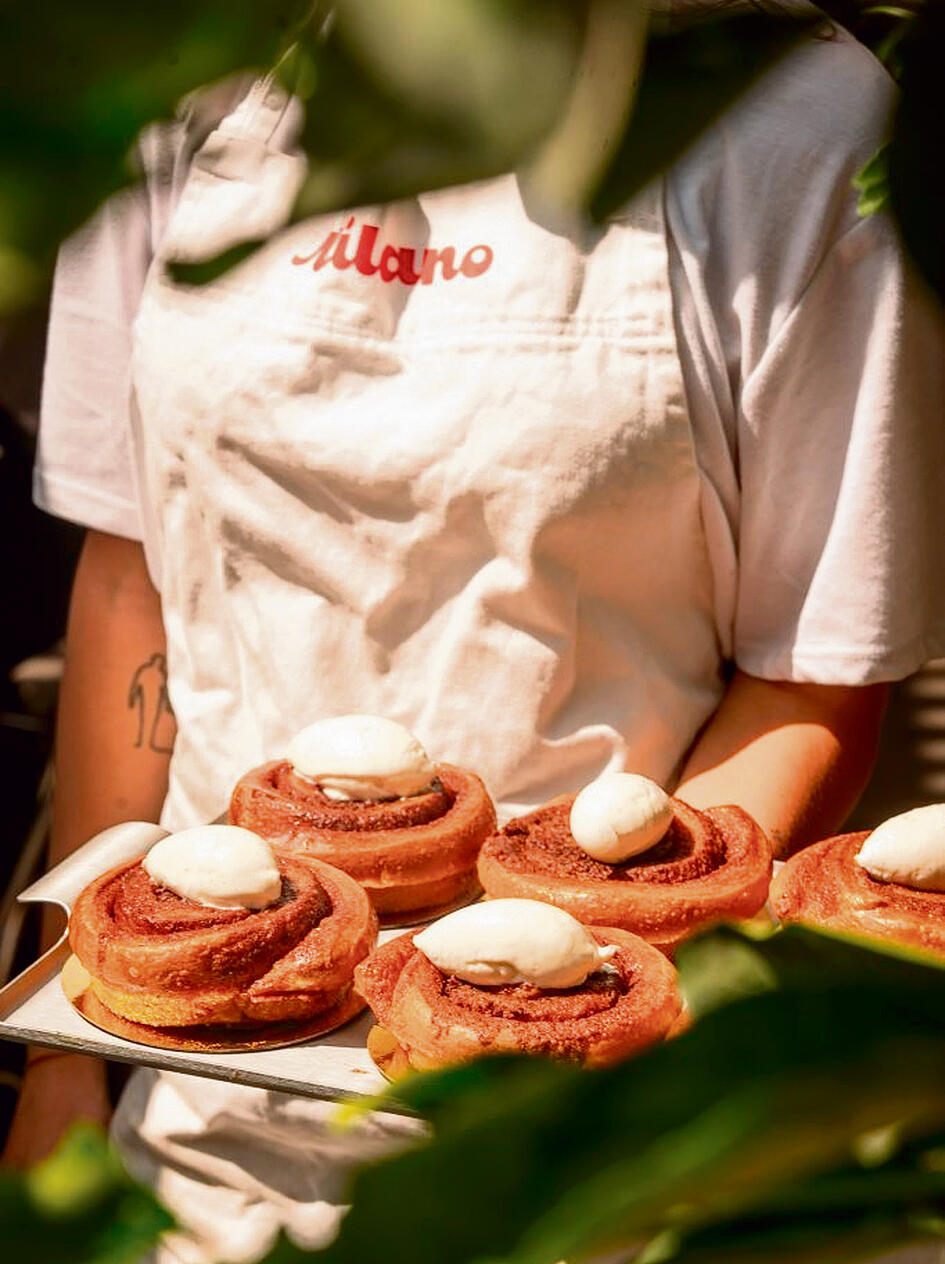
The pastries are arranged like jewelry boxes. Milano Bakery
(Photo: Guy Ashkenazi, Karela Agency)
“This is a bakery that is much more than coffee and pastry,” says Shahar Barnea, the group’s chef. “There is a need for this kind of place in the area. People want something finer, at a Tel Aviv standard. We insist on quality, the selection is large and everything is made here.”
Barnea leads a tour through the bakery’s different sections, and the selection is dizzying. “It is a slightly different bakery with more of an Italian feel. The display case is flat, not layered. Things are not shown in piles, but like in jewelry boxes,” he says.
The offering includes sweet and savory pastries, upgraded sandwiches made with house-baked breads, including sabich and Sicilian sandwiches, focaccias, borekas with Manchego cheese, panna cotta and a polenta pastry. There is also a wide selection of croissants, including one with scrambled egg and truffle.
Customers can also buy cakes, chocolate balls and tiramisu by Tal Mamlya, Milano’s pastry chef, as well as wines, olive oil and attractive tableware. Seating is outside, and as befits a place that is essentially a love letter to Italy, the coffee is taken seriously.
Milano, Duvdevan complex, Kiryat Ono, kosher without certification