

Israel’s cocktail scene has undergone a dramatic transformation in recent years. What was once shorthand for sugary, pre-mixed drinks and bars with basic menus has become a golden age of creativity, knowledge and unprecedented quality. The change is visible across the board: bartenders’ professional expertise, the depth and complexity of menus, the caliber of drinks and ingredients, the range of flavors and even the aesthetics of presentation.
“Until a decade or two ago, the average Israeli bartender’s knowledge was fairly limited. Bars focused mostly on standard drinks like beer, wine and simple cocktails such as a basic mojito or a Sex on the Beach,” said Adia Lange, former vice president at a beverage company and now a consultant for leading Israeli bars.
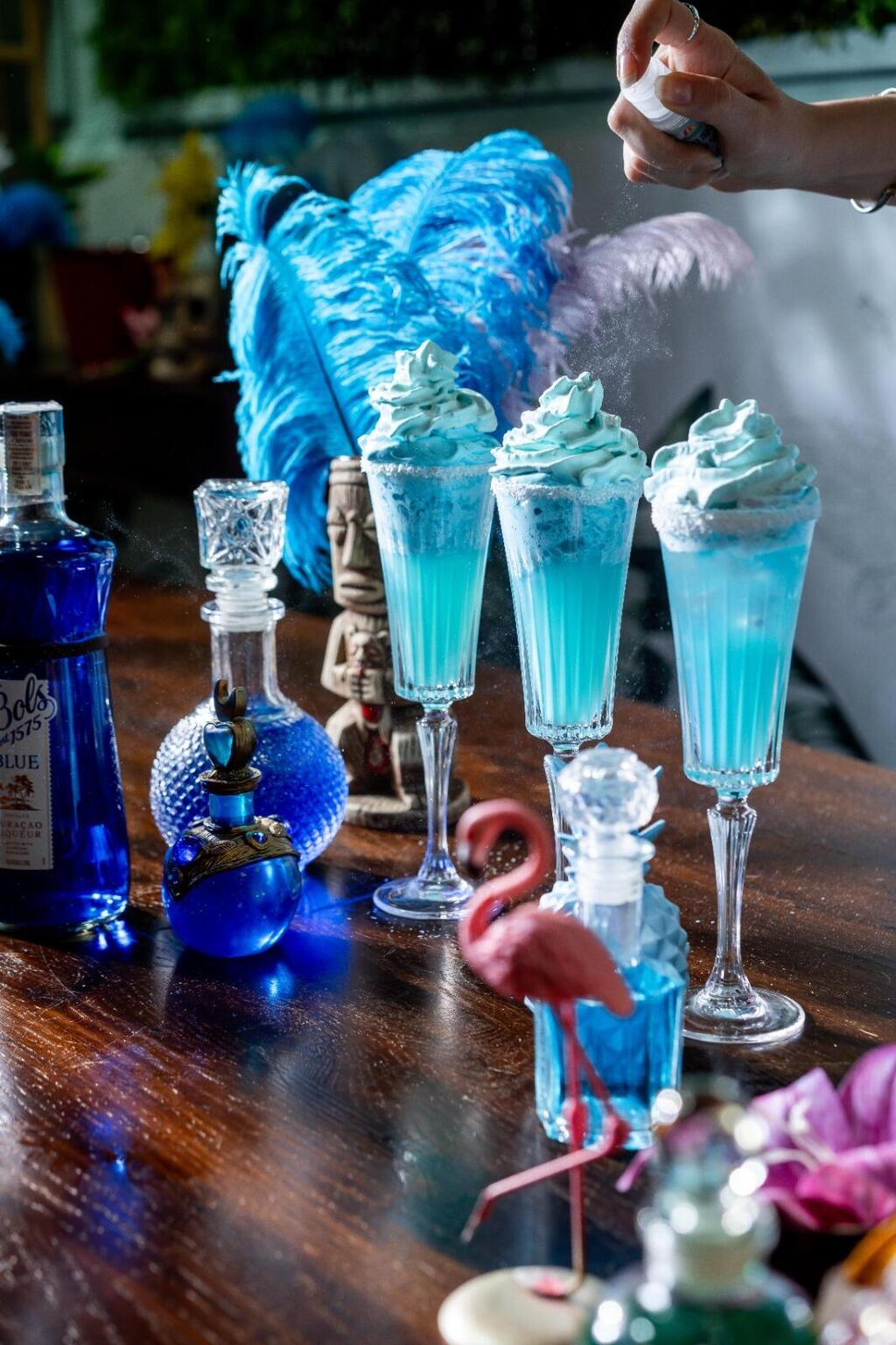
“Bartenders back then were masters at ‘lifting the mood’ and pouring shots, but their cocktail knowledge was minimal. Today it’s completely different. Bartenders study, experiment, travel and bring back new ideas.”
No longer the ’90s: Israeli customers want innovation
The journey began modestly. In the disco era of the 1980s and ’90s, cocktails were mostly sweet mood-setters. By the early 2000s, bars such as 223 in Tel Aviv introduced slightly more sophisticated menus, and bartenders began looking beyond the basics.
The real breakthrough came in the last decade. Dedicated cocktail bars — including the Imperial Cocktail Bar, Bellboy and Jasper Johns in Tel Aviv, the Polí in Jerusalem and the Beer Bazaar in Haifa — won international recognition while exposing Israeli drinkers to an entirely new world. These bars didn’t just serve cocktails; they educated their audiences, hosted workshops and promoted a more refined drinking culture.
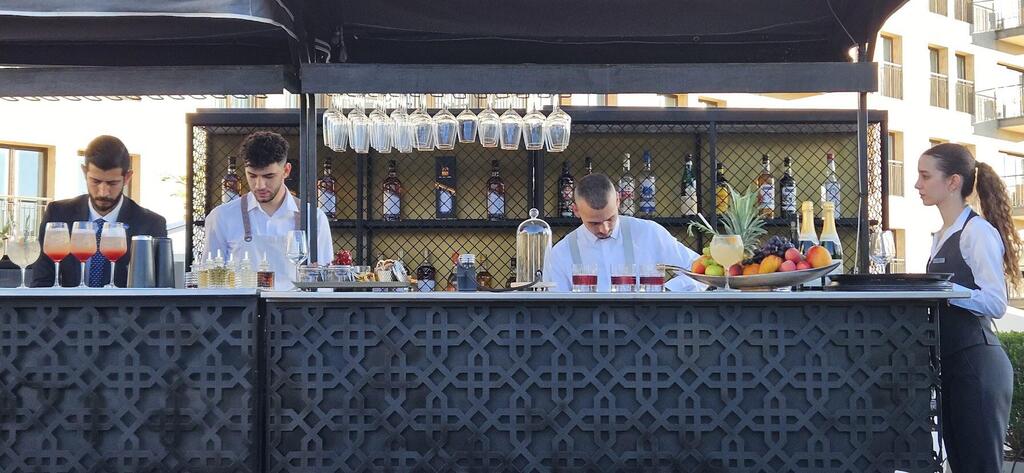
Waldorf Astoria Hotel in Jerusalem
(Photo: Mirit Segev)
Where cocktail menus in Israeli bars were once a single printed page with a few familiar options, today many are works of art in their own right, carefully designed and offering backstories for each drink. Some bars specialize in classics, others in original creations, and many blend the two.
Menus now include a wide array: modern and classic cocktails, low-alcohol “spritzes,” mocktails enjoying a boom of their own, and seasonal drinks made with fresh fruits and vegetables.
“The Israeli customer has evolved. They no longer settle for what used to be. They’re looking for innovation, depth and a full experience. That’s why we invest so much in menus — both in content and design,” said Hadar Mazumash, food and beverage director at the Waldorf Astoria Hotel in Jerusalem. “Many bars even offer personalized cocktails — the bartender asks about the customer’s preferences and creates a unique drink just for them.”

Vova Shulman
(Photo: Courtesy)
Vova Shulman, a mixologist at Jewel cocktail bar in Tel Aviv, said bartending has become “a sought-after and respected profession. Bartenders see themselves as artists, dedicating long hours to study and improvement. Today you have to know not only the classics, but also global trends, local ingredients and how to create new and original drinks.”
As he spoke, Shulman prepared original cocktails made from locally grown produce such as sweet corn and Maggie tomatoes, giving them foreign-sounding names: Smith the Bellhop, made with Tanqueray gin, basil cordial, Benedictine and Moroccan mint; Golden Key, made with Angostura rum, sweet corn cordial and salted caramel; and Lobby Whisper, crafted from Milagro Silver tequila infused with purple cabbage, Cointreau and lemon agave.
'Infusions of flavor'
One of the most significant changes in Israel’s cocktail culture is the dramatic rise in the quality of both spirits and ingredients. In the past, the brand of vodka or rum mattered little — price was the main concern. Today, bartenders and bar owners invest heavily in premium labels, importing rare spirits and relying on fresh, high-quality ingredients.
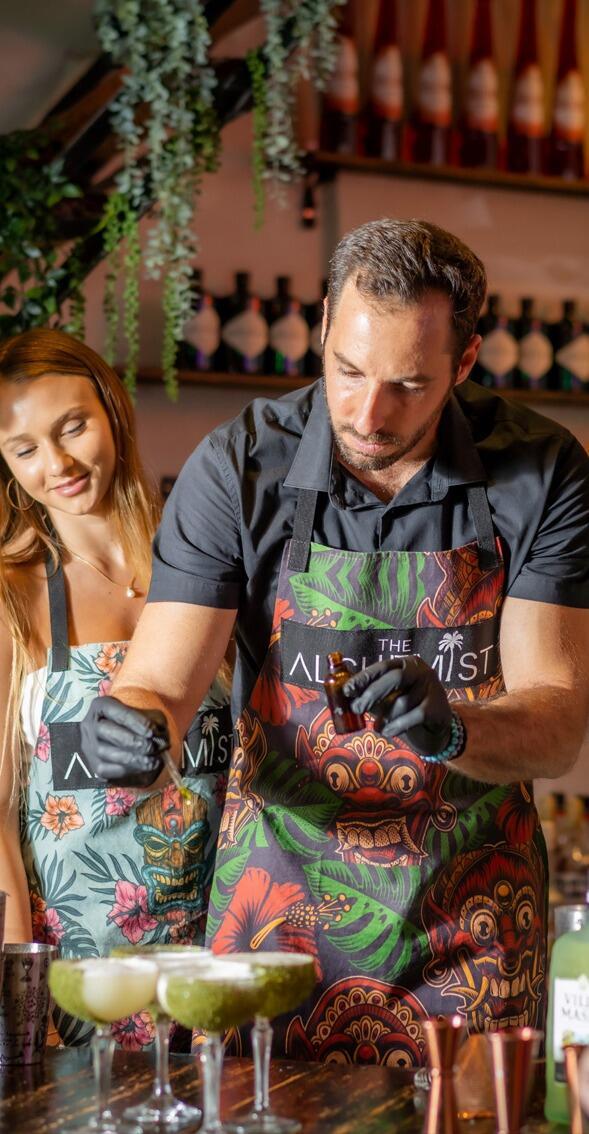
The Alchemist Noam Or in action
(Photo: Courtesy)
“We used to settle for basic bottles,” said Noam Or, known as the Alchemist. “Now, no cocktail bar worth its name skips super-premium vodka, a wide range of gins, quality rums from around the world and carefully distilled tequilas. Customers recognize the difference, and they’re willing to pay for it.”
Alongside the spirits, attention to fresh ingredients has become essential: seasonal fruit, herbs, homemade syrups, quality sodas and tonics, and carefully crafted ice. “Using these kinds of ingredients allows bartenders to create cocktails with far richer and more complex flavor profiles, avoiding artificial additives,” Or noted. “The difference between a cocktail made with a store-bought syrup and one made with a homemade syrup is enormous. Today, we make everything ourselves — from specialty syrups to house-made liqueurs.”
This abundance of fresh ingredients, combined with bartenders’ growing expertise, has led to an unprecedented variety of flavors. Israeli cocktails are no longer confined to sweet, sour or bitter. They now include umami, salinity, spiciness and aromatic complexity. Bartenders employ a wide range of techniques: flavor infusions, smoking drinks, using exotic spices and even blending culinary ingredients.
“The Israeli market is very open to experimentation,” Or said. “We’re seeing combinations that didn’t exist here before — cocktails with tahini, with arak, with chili peppers, with Middle Eastern ingredients. It shows the creativity and courage of today’s bartenders.”
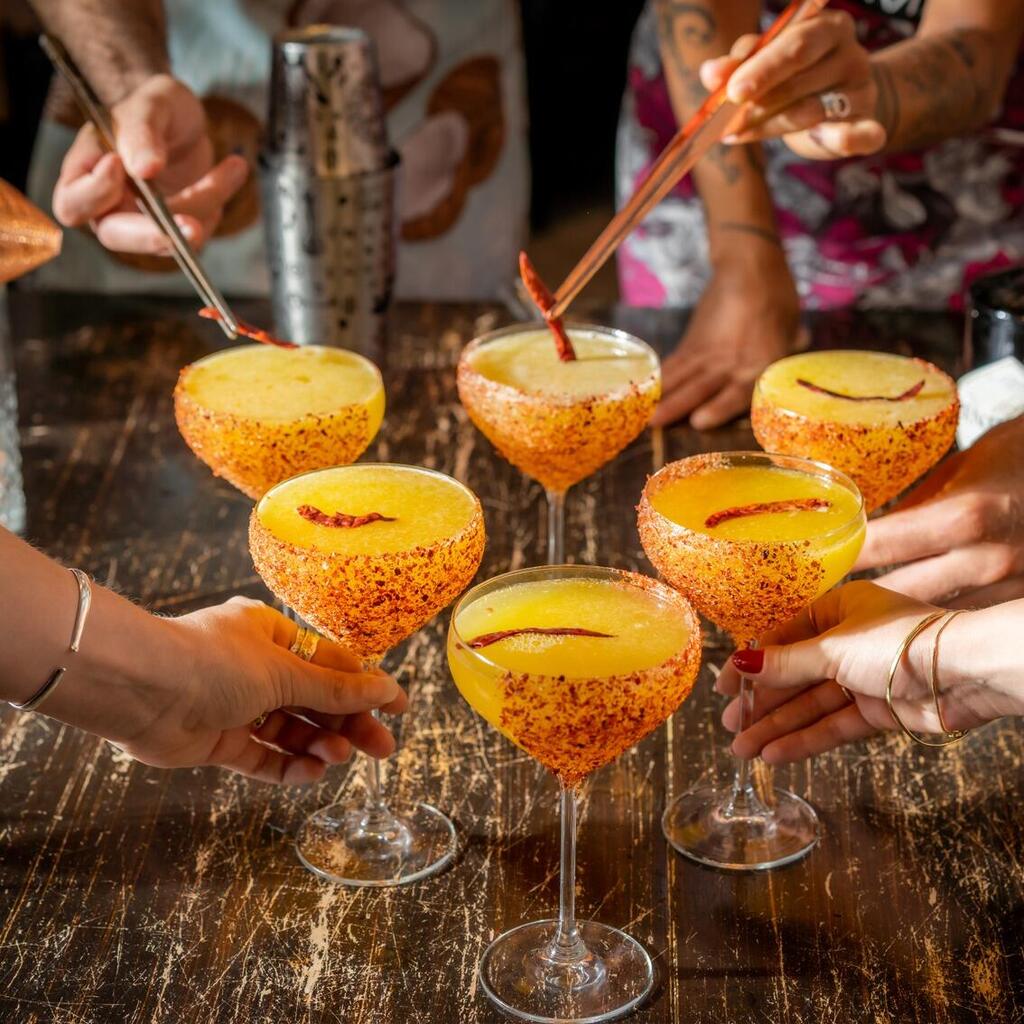
Cocktails by the Alchemist
(Photo: Courtesy)
A notable example is the growing use of local produce and Israeli culinary styles. Many bartenders are incorporating Mediterranean spices, fruits like figs and pomegranates, and even cheese or yogurt into their creations.
Beautiful — and expensive
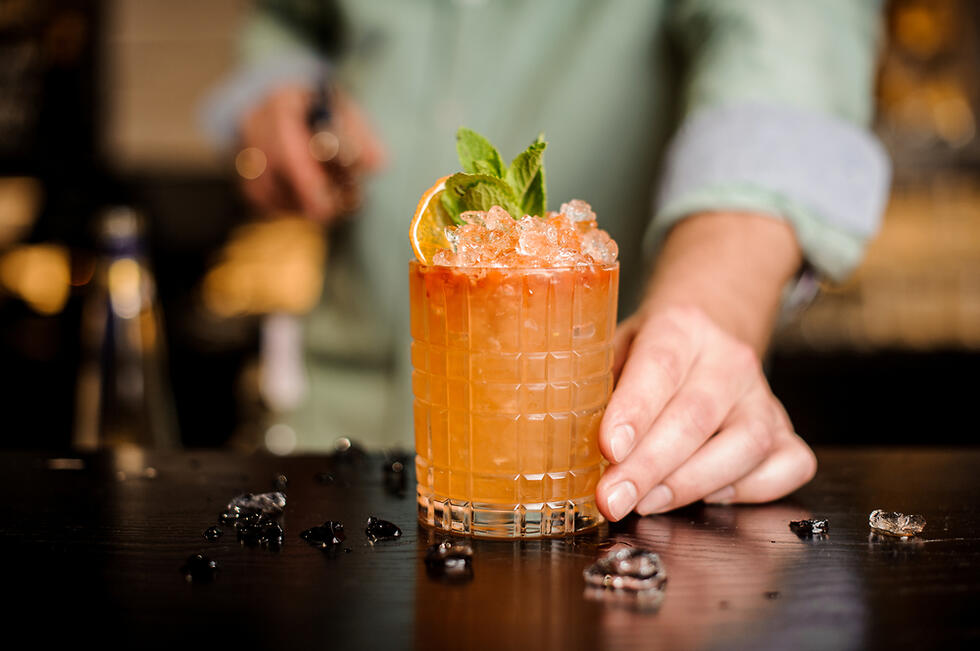
Beyond taste, the aesthetics of cocktails in Israel have undergone a major transformation. In the past, most were served in simple, standard glasses. Today, presentation is an inseparable part of the experience. Bars invest heavily in designer glassware, specialty ice cubes — from slow-melting spheres to oversized blocks — and creative garnishes.
“The modern world is visual,” explained Adia Lange. “A beautiful cocktail sells better. Today bars invest in crystal glasses, vintage glassware, colorful cups — anything that adds to the overall experience and encourages the customer to take a photo and share it on social media.” Garnishes, too, have become an art form. No longer just a generic lemon slice, but intricately cut citrus peels, edible flowers, sprigs of herbs or even miniature decorations.
(Photo: Shutterstock)
But what about the price? Israeli cocktail lovers are often met with steep tabs, frequently surpassing 70 shekels ($19) for a single drink — even relatively simple ones. In the early 2000s, the most expensive cocktail in Israel cost around 50 shekels and was considered outrageous at the time.
Today’s pricing is driven by several factors: relatively high costs of raw ingredients, including imported specialty spirits, handmade syrups and exotic components, all subject to heavy taxes; growing emphasis on professional bartending, requiring training, specialized tools and equipment; and high operating costs in Israel, from rent to wages. All are reflected directly in the final price of a drink.
Still, when compared internationally, Israel stands out. In many European cities, elaborate cocktails can be found at far more modest prices (7–10 euros). Israeli pricing more closely resembles that of New York or London, where cocktails typically run $15–25 — and where the cost of living is also high.
The Israeli cocktail has become more than just a drink. It is a statement, an experience, and a central part of the country’s culinary culture. For 70 shekels, of course.