

Eggs are among the most basic and widely used ingredients in the kitchen, appearing in countless forms in cuisines around the world. Of all the ways to prepare them, Israeli-style omelets and French omelets are among the most classic and popular choices for breakfast or a light dinner, from a golden, crispy omelet cooked in a skillet to a soft, silky French version folded neatly into shape.
Although both dishes begin with beaten eggs, their preparation techniques are entirely different. Some prefer a flat, unfolded omelet with crispy edges, while others favor a delicate French omelet with no browning on the outside and a creamy interior. Precisely because these are everyday dishes, it's easy to assume there is little to know about preparing them. But the intensity of the heat, how much the eggs are moved around in the pan and the folding technique can completely transform their texture and the final result.
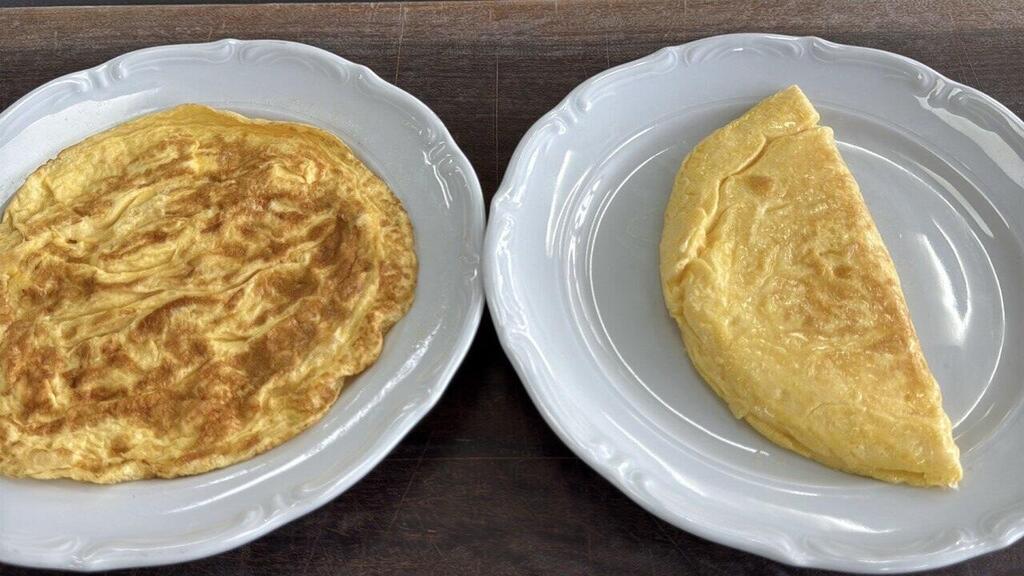
From the beloved Israeli-style omelet to the refined French version
So how do you achieve exactly the texture you prefer? We asked chef David Sadi, head of the culinary program at Israel's Bishulim cooking school, to explain the techniques, point out common mistakes and share the small trick that can make all the difference.
According to Sadi, the main differences between an Israeli-style omelet and a French omelet are the cooking temperature and how much the eggs are handled. In both cases, the process begins by cracking and beating the eggs. Whisking, he explains, breaks down the structure of the proteins and brings them back together, while also incorporating a little air into the mixture, helping create a lighter, fluffier texture. The goal is a smooth, uniform mixture without lumps. Adding salt to season the eggs is also recommended.
For an Israeli-style omelet, the pan should be very hot, and the eggs should be left almost entirely untouched. "I'll add the eggs and won't touch them at all. On the contrary, I'll let the heat do the cooking. That gives you a flatter, more open omelet with crispy, slightly charred edges."
The French omelet requires a different approach. "Here, we work at a lower temperature and stir the eggs at the beginning of the process to create a soft, even texture. The goal is to prevent the eggs from browning and keep them soft and silky."
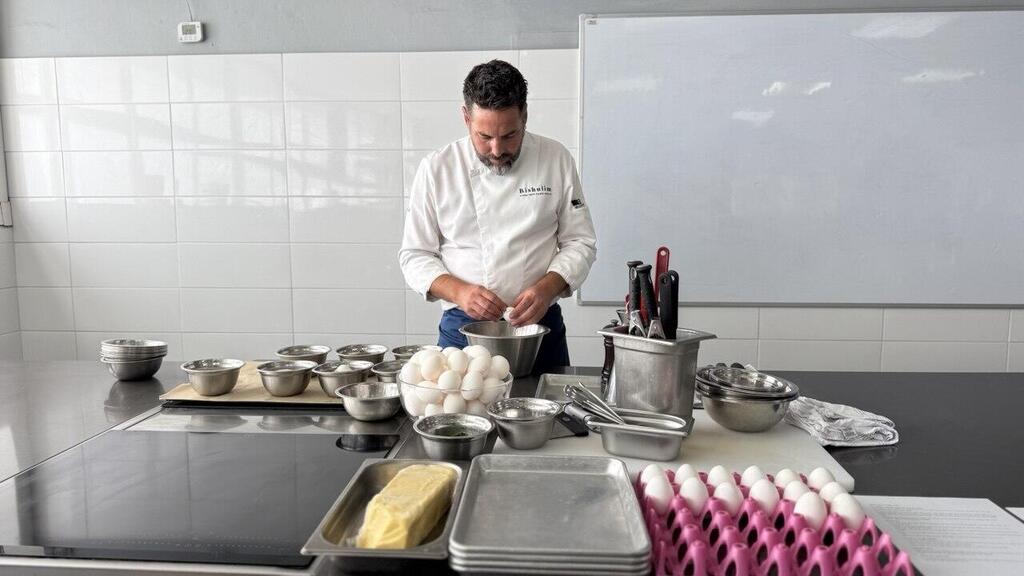
Chef David Sadi; the secret lies in the pan's temperature
(Photo: Sapir Gordo)
At this stage, Sadi also uses the movement of the pan to control the temperature. Rather than constantly adjusting the heat, he lifts the pan off the burner and returns it as needed.
Once the eggs begin to set, he stops stirring and starts folding. This creates a cooked outer layer that surrounds the softer center.
The distinction between the two techniques, he says, is clear. "An Israeli-style omelet needs very, very high heat, and you barely touch the eggs." A French omelet, by contrast, requires lower heat, with stirring at the beginning of cooking followed by folding.
Sadi also has a small tip for serving: "Spread a little cold butter over the top, rubbing it across the surface. It will give the omelet a glossy finish and added richness."