

In an era where restaurants open and close at a dizzying pace, it’s hard not to tip your hat to the culinary institutions that have maintained a loyal clientele for decades.
Amir Kaminer set out on a journey from north to south, visiting some of Israel’s most legendary eateries, some dating back to the British Mandate, and discovered a great deal of soul simmering in their kitchens.
Israel’s culinary scene is particularly volatile. Restaurants launch with fanfare, excessive PR, and million-shekel investments, only to shutter within months. A decade of survival is considered a miracle.
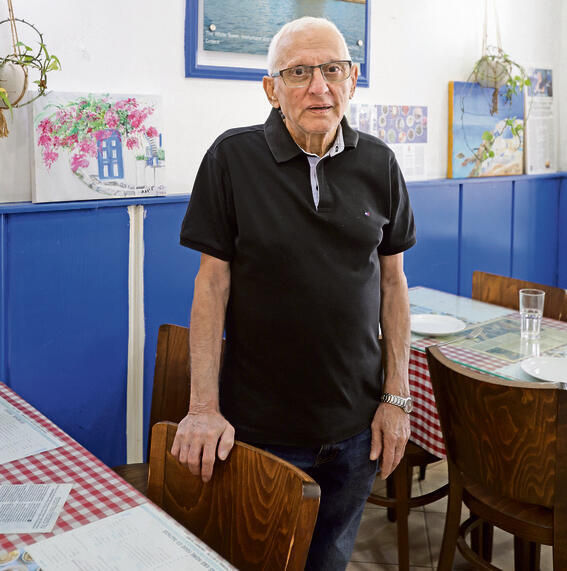
The dining industry must constantly adapt to Israel’s complex reality, shaped by terror attacks, wars, military operations, frequent elections, and economic crises. Yet some iconic restaurants continue to withstand the upheavals.
A few have even been serving diners since the days of the British Mandate. Here are a dozen such institutions, from north to south, that have become culinary landmarks with no intention of disappearing.
Olympus, Tel Aviv // Since 1932 — Balkan charm that hasn’t faded
South Tel Aviv and nearby Jaffa were once home to a thriving Balkan dining scene, with Turkish, Greek, and Bulgarian eateries dotting the area. Most have vanished, but Olympus has endured for 93 years and is still drawing a devoted clientele.
It was founded in 1932 at the corner of Kishon and Levinsky Streets in Tel Aviv by Shlomo Stromza, who immigrated from Thessaloniki, Greece. It started as a "workers' restaurant" which served simple and traditional Greek food. Over time, the menu expanded and refined.
In the 1950s, Stromza’s nephew, Yosef (Papo) Nachman, joined the business. Papo Nachman and his wife, Dora, who met during the Death March, survived Auschwitz, immigrated to Israel in 1946, and joined Olympus.
“In the ’50s, my father became a partner in Olympus,” recalls his son, Yona. “He handled the shopping; my mother ran the bar. I helped out as a child, and after my army service, I joined the kitchen."
During the Gulf War in 1991, Yona and his wife, Malka, were forced to sell the original property and relocate the restaurant to Carlebach Street. Today, their son Gadi runs the kitchen, while his wife Eva manages the front of house.
Signature dishes: Leek patties, apio (pickled celery root and carrots), savory pies, moussaka, stuffed vegetables, Greek-style kebab, lamb ossobuco, and unique desserts like Sambatyon (a chocolate-nut whipped cream dessert atop cake).
Clientele: Bankers, media figures, and businesspeople. “We never disclose who eats here,” says Yona.
Survival secret: “Olympus never had hired chefs; the owners did the cooking,” Yona explains. “The most important thing is that the taste never changes.”
Olympus, 7 Carlebach St., Tel Aviv. Tel. 03-5621658
Coffee Glida Yonak // Since 1948 — Better kebab than in Romania
Founded the same year the State of Israel was established, Coffee Glida Yunak in Haifa is now 77 years old and still going strong. It was started by Holocaust survivors Yehuda and Yocheved Milstein, who brought an ice cream machine with them when they immigrated.
“They settled in a building on Kibbutz Galuyot Street, aptly named, since it was home to refugees from North Africa and Eastern Europe,” says Aryeh Levitan, their son-in-law. “They opened an ice cream factory in part of the building and a grill restaurant in the other.” The name “Yonak” was Yehuda’s nickname when he fought as a Partisan in Poland.
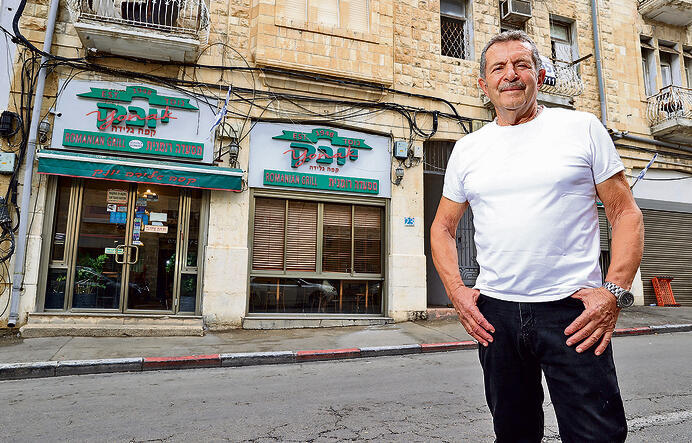
Yonak, for 77 years
(Photo: Elad Gershgorn)
Over the years, the restaurant’s menu expanded, and it became known for Romanian cuisine. The ice cream factory operated until the early 1980s. After Yehuda’s death later that decade, Levitan took over. “The menu hasn’t really changed; I’ve only made minor adjustments."
Signature dishes: Jellied calf’s foot, chorba soup, chopped liver, carp roe spread (ikra), Romanian-style kebab made from fresh beef (“People come from all over the country for it”), entrecôte steak, beef fillet, and pork steak.
Clientele: “We serve people of all backgrounds now, not just Ashkenazi. You’d be surprised, but Mizrahi customers love ptcha. People return from Romania and tell us, ‘Your kebab is better'."
Survival secret: “Top-quality ingredients, reasonably priced wines, and warm, personal service."
Coffee Glida Yonak, 32 Kibbutz Galuyot St., Haifa. Tel. 04-8667929
Rahmo, Jerusalem // Since 1954 — Keeping Mom’s cooking alive
Last year, sisters Liron Keren and Meirav Nachmias celebrated the 70th anniversary of Rahmo, their family’s restaurant in Jerusalem’s Mahane Yehuda market.
It was founded by their late grandparents, Rahamim (“Rahmo”) and Rivka Ben Yosef. “Grandpa was a taxi driver, and Grandma cooked in the homes of German-Jewish families. But it wasn’t enough to make a fair living, so grandma offered to "try opening a lunch counter in the market,’” Nachmias recalls.
"Our grandpa Rahmo started with four simple dishes: rice and beans, hummus, bean soup, and meat patties. Customers soon asked for more. Our late mother, Chaya Gil z"l, started helping at age 12 and later expanded the menu with international influences. She once visited Hungary and came back with a goulash recipe,” Nachmias says. “Now our menu is much broader."
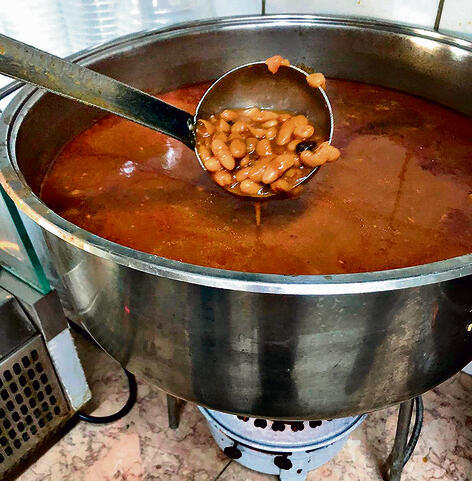
Rahmo. "Slow-cooked overnight on kerosene burners"
(Photo: Meirav Nachmias)
All the food at Rahmo is slow-cooked overnight on kerosene burners, which adds depth of flavor. “My sister Liron is the head chef,” says Nachmias. “She’s very professional, and her food tastes just like our mother’s. She never takes shortcuts."
Signature dishes: Kubbeh hamusta (a sour soup with semolina dumplings), beef stew (sofrito), Rahmo meat patty, moussaka, oven-roasted chicken, and vegetarian makloubeh.
Clientele: “We have loyal customers, including many from abroad. People come and say the flavors and atmosphere haven’t changed. Defense Minister Israel Katz is a regular. Former President Reuven Rivlin has dined here. Famous athletes and actors come too, though I don’t always recognize them."
Secret to survival: “We’ve weathered many tough times such as intifadas and terror attacks, COVID, Operation Iron Swords, uncertainty, but we’ve survived thanks to our quality and our determination to preserve this Jerusalem institution."
Rahmo, 5 HaEshkol St., Mahane Yehuda Market, Jerusalem. Tel. 02-6234595
Shmulik Cohen, Tel Aviv // Since 1936 — Every day feels like a holiday
The walls of Shmulik Cohen, a Tel Aviv institution approaching its 90th anniversary, are adorned with works by top Israeli artists Menashe Kadishman, Moshe Bernstein, and Tsibi Geva.
“They were our customers,” says Tomer Rozin, the restaurant’s fourth-generation proprietor, who runs it alongside his parents, Dubi and Tzipi. “Back in my grandfather Shmulik’s day, they paid with art; it was a kind of mutual support."
Shmulik Cohen, still in its original location in south Tel Aviv, was founded by Rivka Cohen, who immigrated from the Lithuania–Poland border.
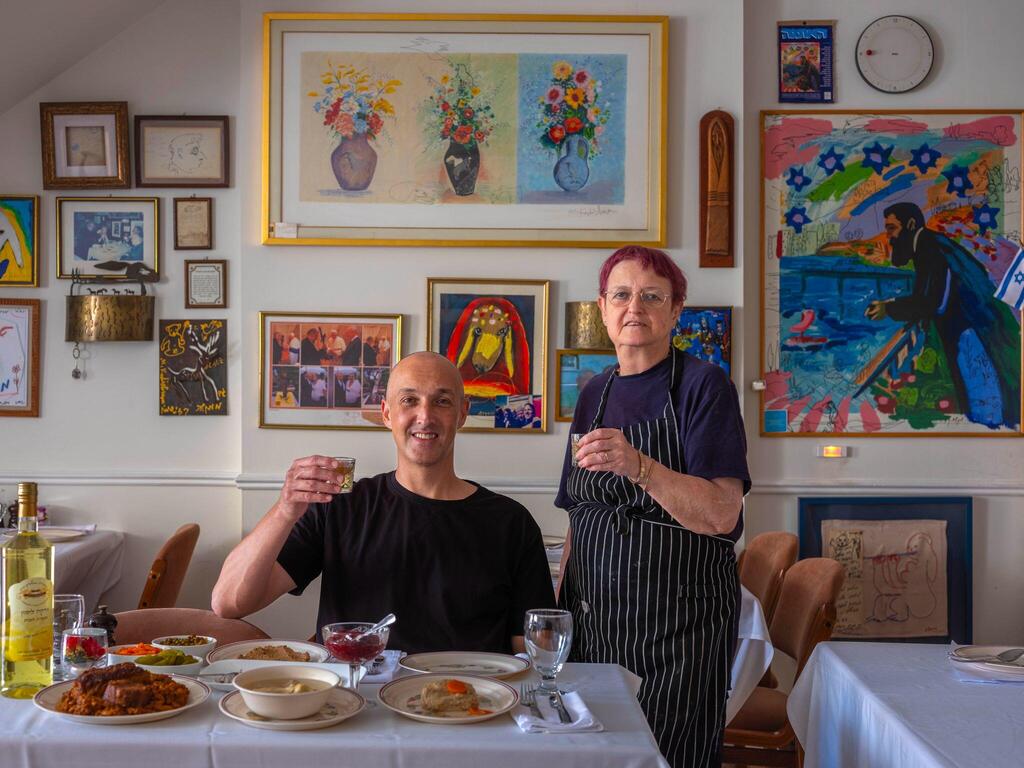
Shmulik Cohen. "Started with Polish breakfast"
(Photo: Yuval Chen)
“My great-grandmother Rivka and her son Shmulik opened a kiosk where they served British soldiers,” Rozin explains. “They started with Polish breakfasts, fried egg, pickled herring, black coffee, and cigarettes. Eventually, they expanded to serve lunch and dinner."
Signature dishes: Gefilte fish (“sweet-leaning, but not too sweet”), cholent, kreplach, and chopped liver. “We still follow my grandparents’ recipes.”
Clientele: “In the 1940s, members of the military organizations Lehi and Etzel, friends of my grandfather, would eat here, even Lehi leader Yair Stern. Later came politicians and generals like Yitzhak Rabin, Ezer Weizman, and Ariel Sharon, who was a big eater and would take food home to Lily. Today, everyone comes, secular and religious, young Tel Avivians craving their grandmother’s cooking."
Secret to survival: “We’ve stayed small, high-quality, and family-run. We don’t stretch beyond our means. Every day here feels like a celebration."
Shmulik Cohen, 146 Herzl St., Tel Aviv. Tel. 03-6810222
Azura, Jerusalem // Since 1952 — Longing for slow-cooking over kerosene flames
At the entrance to Azura, nestled in Jerusalem’s Mahane Yehuda market, hangs a quote from the late Israeli performer Yossi Banai: “At Azura’s, in the little restaurant behind the big market / I saw, simmering on kerosene stoves, pots full of longing seeking a little warmth on a low flame.”
“Yossi was a good friend of my father Ezra Shrefler, and would visit, help out, and talk with him,” says Shabi, who now runs the restaurant with his brothers Nir and Moshiko
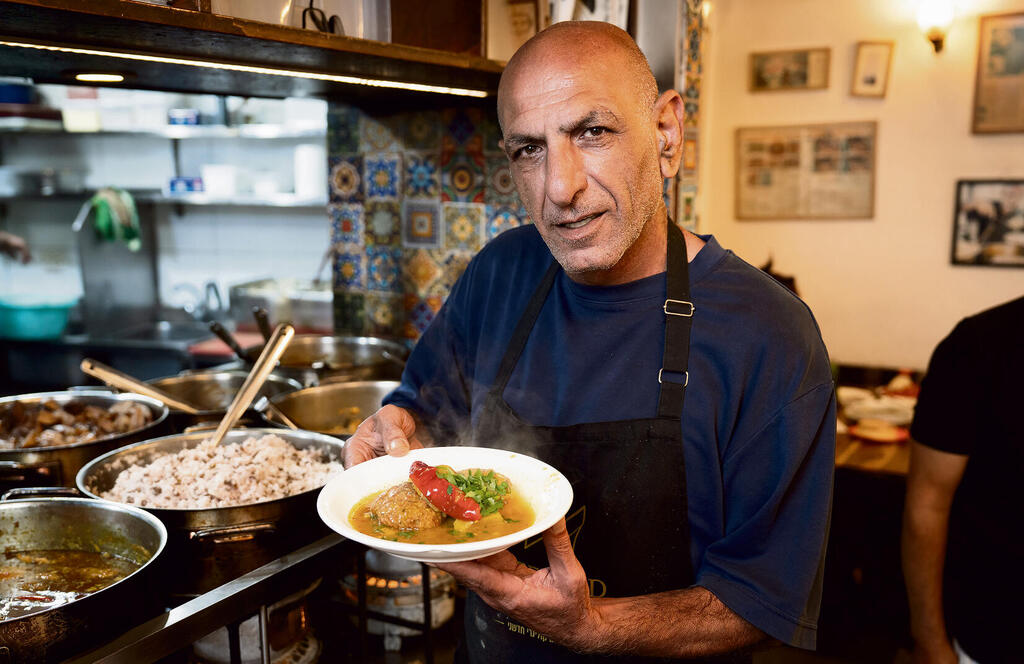
"A little warmth on a low flame”
(Photo: Shalev Shalom)
Ezra Shrefler immigrated to Jerusalem from eastern Turkey at age 13. “A year later, he was already working in the market,” Shabi recalls. “By 15, he was running restaurants, making hummus and rice.
After his army service, he opened a small place of his own.” Ezra based his cooking on what was available in the market, and as new ingredients became accessible, the menu evolved.
Signature dishes: Beef sofrito, hummus, oxtail stew, keema (a ground beef and vegetable stew), and of course, kubbeh soups.
Clientele: “The late Shimon Peres came often; he loved the moussaka and sofrito. Singer Yehoram Gaon likes the rice, beans, and kebab patties with spinach. Comedians like Avi Nussbaum and Israel Katorza visit, and so do foreign celebrities like Sarah Jessica Parker once requested the entire menu."
Secret to survival: “We do everything ourselves: management, cooking, serving, even dishwashing. We’re consistent and never compromise on ingredients."
Azura, 4 HaEshkol St., Mahane Yehuda Market, Jerusalem. Tel. 02-6235204
Falafel HaZkenim, Haifa // Since 1950 — Even Ronaldinho got a falafel ball
When Barcelona’s old-timers’ soccer team visited Israel in September 2023 to face Maccabi Haifa’s veterans, they toured the city, and of course, stopped by Falafel HaZkenim in Wadi Nisnas. It’s a must-visit destination for anyone visiting the area. Before netting five goals, they enjoyed a different kind of ball.
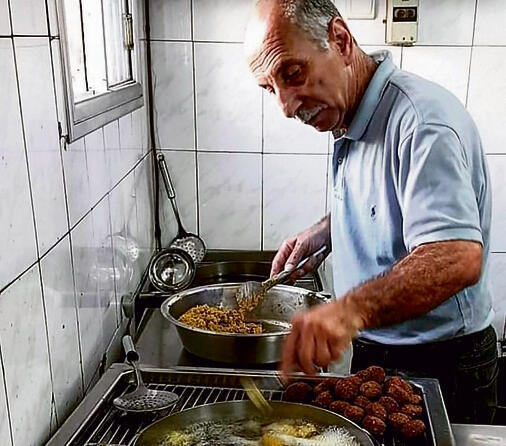
Falafel HaZkenim. "An old winning recipe"
(Photo: Courtesy of Falafel HaZkenim )
In 1950, George and Najala Afara, residents of the neighborhood, opened a modest falafel stand. They never hung a sign. Arab locals called it “Najala’s,” while Jews would say, “Let’s go to HaZkenim (the old folks)”, and the name stuck.
The Afara couple prepared the falafel mix at home and fried the balls in the tiny street stall. Service was slow, and the line was always long. In 1984, they retired and sold the stand to a regular customer, Afif Sabit, who finally hung a sign reading “Falafel HaZkenim.” He renovated the place and expanded the menu slightly to include dishes like bulgur kubbeh stuffed with beef and pine nuts.
Today, Afif’s son Janan runs the business. “I’m my father’s backbone, but of course I’ll never replace him, not while he’s alive,” he says. To mark the restaurant’s 75th anniversary, it recently underwent a full renovation. “We upgraded everything, kitchen, refrigeration, all of it. Here’s to another beautiful 75 years."
Clientele: Soccer players (Giovanni Rosso, Alon Harazi, Yaniv Katan), politicians (Yair Lapid), and Haifa mayors past and present (Amram Mitzna, Yona Yahav).
Secret to survival: “A winning recipe, unchanged and unchangeable,” says Janan.
Falafel HaZkenim, 18 Wadi St., Wadi Nisnas, Haifa. Tel. 04-8514959
Eddie’s Hide-A-Way, Eilat // Since 1979 — The Hideout Everyone Finds
In the coming weeks, Eilat restaurateur and chef Ashley Hetz will come full circle as he moves Eddie’s Hide-A-Way back to its original location.
“My late father, Eddie Arrow, immigrated from New York to Israel in 1973 and Hebraized his last name to Hetz,” Ashley recounts. “He opened a burger joint in Jerusalem, and in 1979 heard there was a property for sale in Eilat’s Alef neighborhood. He and my mother, Batya, bought it and opened Eddie’s Hide-A-Way, which became a local institution. I joined the business 25 years ago, and when my father died 11 years ago, I took over."
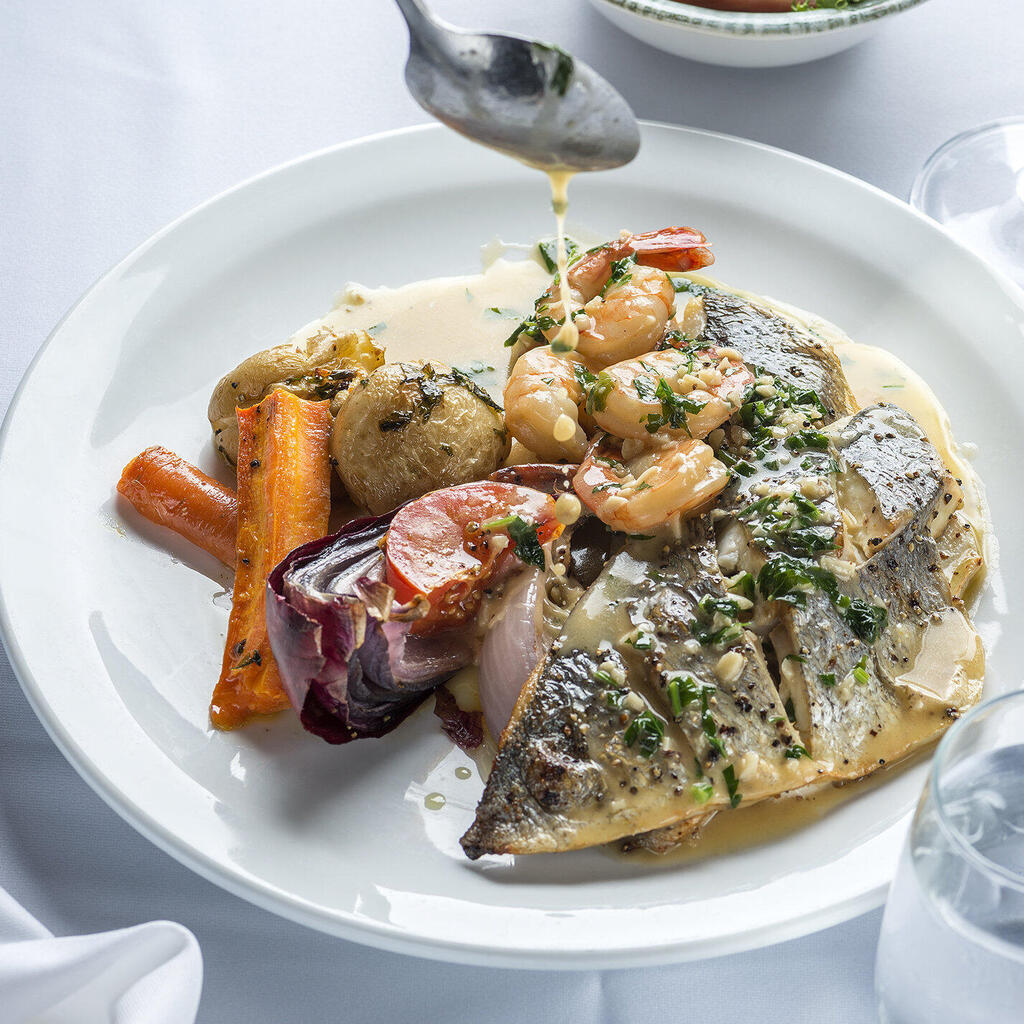
Eddie’s Hide-A-Way.
A decade ago, a fire destroyed the restaurant, and Ashley rebuilt it in Eilat’s industrial zone. Now, he’s returning to where it all began, and he plans to include a nostalgic corner with memorabilia from the original restaurant.
Signature dishes: Ceviche, foie gras pâté, Dijon fillet baked with brown sugar and mustard, fish in tomato butter sauce.
Clientele: “Famous guests? Everyone has been here, but we don’t make a fuss. The late Dudu Topaz once came and there was no room, so he sat at the hostess’s station. The Gipsy Kings dropped by after performing in town. Brooke Shields, who filmed Sahara in Israel, ate here too."
Secret to survival: “We love what we do. And we stand out in Eilat’s culinary scene."
Eddie’s Hide-A-Way, 3 Eilot St., Eilat. Tel. 08-6371137
Abu Hassan, Jaffa // Since 1959 — The golden chickpea
In the summer of 2007, long before he became a superstar, actor Ryan Gosling came to Tel Aviv to record an album. When I interviewed him a decade later, I asked what he remembered most from that time. His answer was unexpected: “We went to Abu Hassan in Jaffa for hummus almost every day."
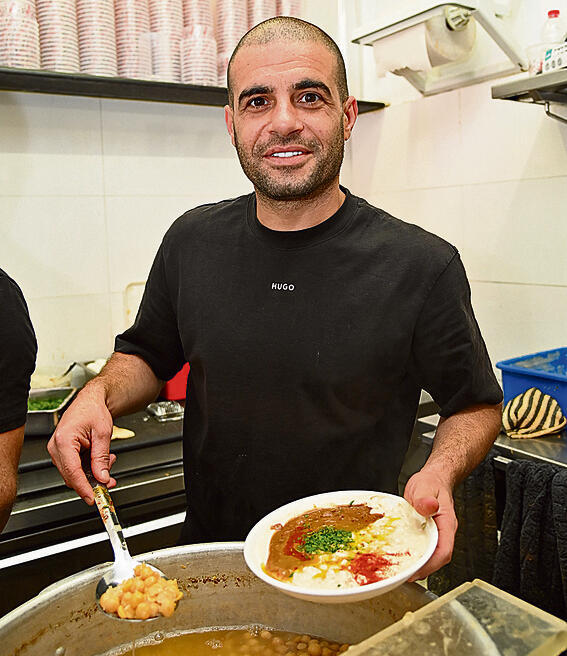
"There’s no secret; it’s just love"
(Photo: Yair Sagi)
Gosling isn’t the only one who became hooked for Hummus. The Abu Hassan story begins in the early 1950s, when Ali Karawan, known as Abu Hassan, started selling hummus from a cart in Jaffa’s Ajami neighborhood. That cart eventually settled on what is now Kedem Street, and in 1959, the first restaurant opened.
In 1972, Karawan relocated to HaDolphin Street, where the flagship location still operates, alongside an additional branch. When he died in 2007, his son Ibrahim took the helm.
Today, the beloved eatery is run by the next generation, owner Ayesh and manager Moussa, who have kept its reputation as a culinary pilgrimage site intact. The small, focused menu has always centered around hummus.
Signature dishes: Masabacha, hummus, ful (brown beans), and labneh. “Masabacha is the most popular,” say Ayesh and Moussa. “A lot of places don’t know how to cook chickpeas like we do."
Clientele: Journalists, tourists, hipsters, Jaffa locals, musicians, and celebrities. “At 7:30 a.m., you’ll find taxi drivers here. Everyone comes; at one table you’ll see billionaire Teddy Sagi, and at the next, someone working a day job."
Secret to survival: “There’s no secret; it’s just love. Our hummus has a trick, but we can’t tell you what it is."
Abu Hassan, 1 HaDolphin St., Jaffa. Tel. 03-6820387
Golan Bakery, Tiberias // Since 1967 — A nearly 60-Year-old bourekas
In an age where artisanal carb temples dominate and terms like “boulangerie,” “bakery,” and “pâtisserie” roll easily off the tongue, a handful of classic Israeli bakeries are still holding their ground.
Golan Bakery was founded in 1967 in Tiberias by Holocaust survivor Dov Hoffman, who immigrated from Hungary, and his wife Esther, originally from Poland. “My father was the baker, my mother handled sales and the business,” says their son Yossi Hoffman. “My brother Ben-Zion and I helped. I used to go to local cinemas to sell their baked goods, especially the 'cinema cake' shaped like a horseshoe, which people loved in particular."
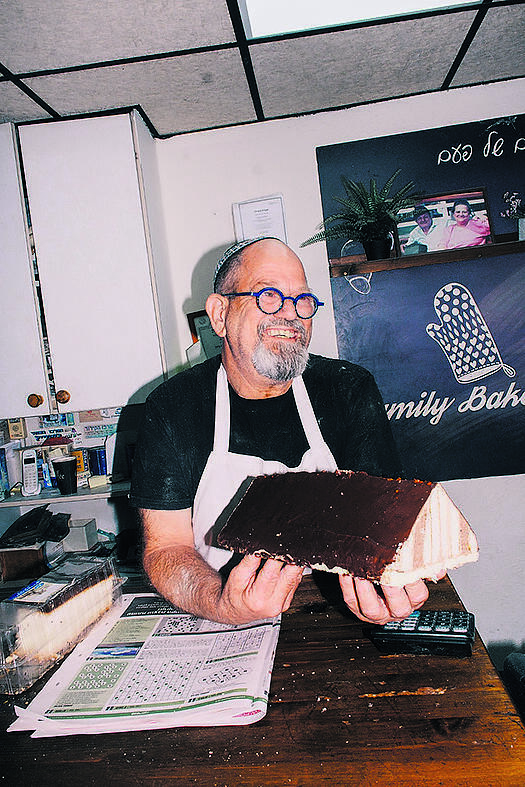
Golan Bakery. "Old-fashioned taste"
(Photo: Ido Assulin)
Yoram, a neighboring shop owner and longtime customer, chimes in: “As kids, when we went to the movies, we’d make sure to save enough money after buying tickets to get a 'cinema cake'.” After the Hoffmans died, their sons took over and continue baking the same nostalgic treats.
Signature items: 'Cinema cake', which evokes a time when grand movie theaters were a central entertainment; cheesecake and cheese bourekas are the top sellers.
Secret to survival: “We do everything ourselves, using only basic ingredients,” Yossi says. “The sign says ‘Old-fashioned taste’, and we stick to that."
Golan Bakery, 1 HaGolan St., Tiberias. Tel. 04-6721367
Keton, Tel Aviv // Since 1945 — Calf Foot Jelly Forever
The guestbook at Keton, which turned 80 this year, reads like a who's who of Tel Aviv. “I’m working on a book about the city, told through the lens of Keton,” says Orna Raskin, the founder’s granddaughter and current proprietor.
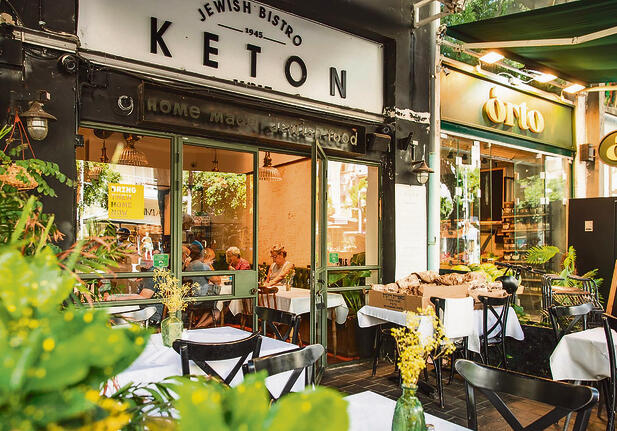
Keton. "We open no matter what"
(Photo: Shani Brill)
Her grandparents, Tzvi and Sarah Rosenberg z"l, opened a kiosk that eventually evolved into a restaurant. “My grandmother began cooking traditional Polish dishes from her childhood,” says Raskin. The name “Keton” (Yiddish for “small room”) was coined by poet Alexander Penn. “One day, Penn walked in and told my grandfather, ‘This is a small place, a small kitchen, call it Keton'."
During the 1940s and ’50s, Keton became not only a bohemian favorite but also a gathering spot for Holocaust survivors, immigrants, and people from the Rosenbergs’ hometown. “My grandfather gave them food and work,” says Raskin, who worked as an intensive-care nurse before stepping in to help her grandmother.
“That was 26 years ago. I’ve kept the menu mostly unchanged, though I did drop half-duck and cow’s tripe, and added Helzel, stuffed chicken neck skin."
Signature dishes: Chopped liver, gefilte fish, calf’s foot jelly, cholent with kishke and meat. “Our most popular item is chicken schnitzel,” says Raskin.
Clientele: “Everyone comes, young and old, Ashkenazi and Mizrahi. Celebrities like Mike Burstyn, Sasson Gabai, and Lior Ashkenazi. Izhar Cohen has been eating here since he was 12, he loves calf Foot Jelly. When Hana Laszlo isn’t feeling well, she comes for chicken soup. The late Alon Abutbul used to come with his whole family."
Secret to survival: “Persistence. We open no matter what. Even on October 7, during the sirens, we opened our doors."
Keton, 145 Dizengoff St., Tel Aviv. Tel. 03-5233679
Hani’s Victory, Ashkelon // Since 1949 — Even Stallone tried the calf foot jelly
In 1949, shortly after Ashkelon was captured during Israel’s War of Independence, Romanian immigrants Yeshayahu (Shaya) and Sarah (Sureika) Leibushor opened a Romanian restaurant in the Majdal market and called it “The Victory.” They were later joined by Yonel and Gabriela Heinik, with the partnership lasting 40 years, recalls Hani Heinik, their daughter.
The restaurant closed in 2019, but in 2023, Hani, determined to preserve the family legacy, reopened it at a new location with her partner Dafi Rotenberg. “My parents didn’t want me in the restaurant business, but I always dreamed of following in their footsteps,” she says. “After my divorce and starting a new life with my partner, I realized I had to fulfill that dream.”
Together, they transformed a neglected ruin into a cozy, warm eatery. “We envisioned a joyous Romanian Hamara, but then my brother, Reuven, was tragically murdered in Kibbutz Kissufim by terrorists, just two days after October 7. That joy is no longer fully there. We now serve a schnitzel named after him—‘Schnitzel Reuven.’”
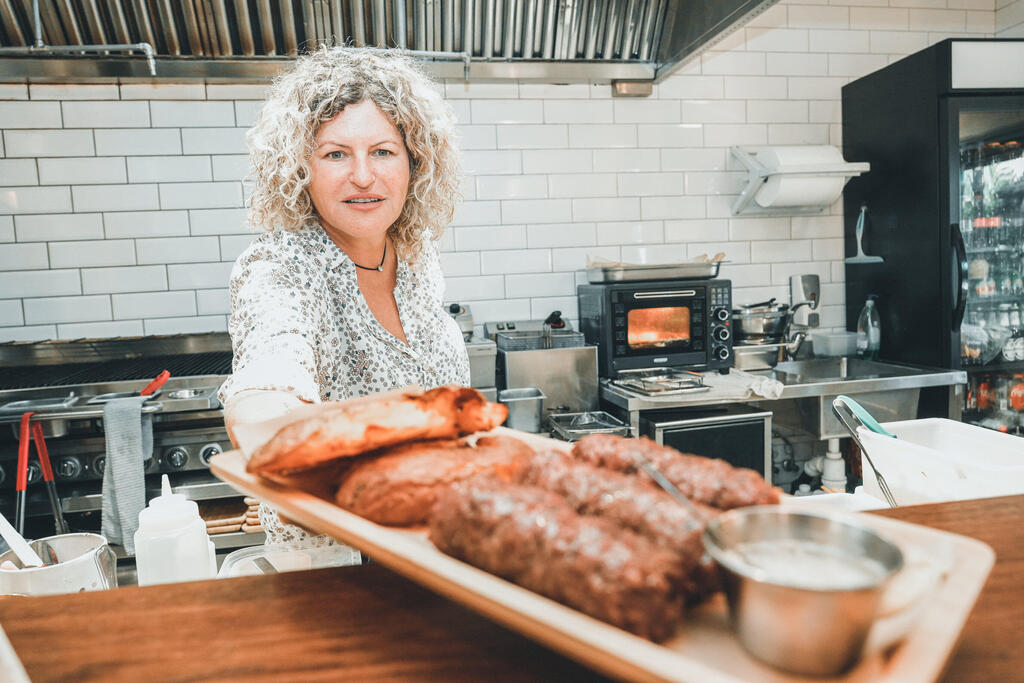
Hani’s Victory. "Fulfilled a dream"
(Photo: Tomer Shunem Halevi)
Signature dishes: Chorba soup, ikra (fish roe spread), pickled herring, stuffed cabbage, varenikes, Romanian kebabs, steaks, and the standout fancy papanash, a mountain of doughnuts topped with house-made grape jam and sour cream.
Clientele: “As a child I remember the folk duo Dudaim, Benny Amdursky z"l and Israel Gurion. Even Sylvester Stallone ate here while filming Rambo III in Israel."
Secret to survival: “Authenticity, atmosphere, fresh and tasty food. People miss these dishes."
Hani’s Victory, 1255 Yakhin St., Ashkelon. Tel. 050-2005810
Sender, Tel Aviv // Since 1948 — Elderly and foodies side by side
During World War II, David Schreiber was a partisan fighting Nazis in the forests along the Poland-Russia border. “That’s where my late father learned to cook,” says his son Zami. “His job was to help in the kitchens and steal ingredients. He’d sneak into slaughterhouses and grab whatever scraps the Germans discarded."
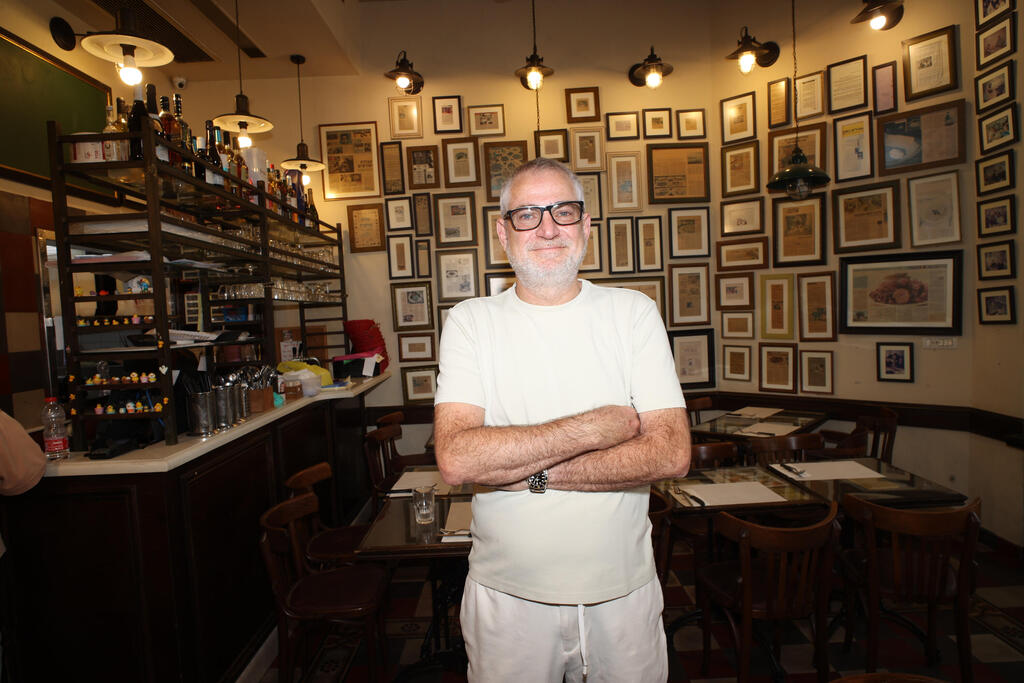
Sender. "Stay on top of things"
(Photo: Yariv Katz)
After the war, Schreiber immigrated to Israel and in 1948 opened Sender in Jaffa with partner Alexander (called “Sender”) Katsikovich.
In 1960, they moved to a larger location near the Levinsky Market. Today, Zami, his wife Yael, and daughter Lihi run the restaurant, which specializes in traditional Ashkenazi Jewish fare. The photos on the walls reveal a parade of celebrities and politicians who’ve dined there over the years.
“our clientele is diverse, elderly customers who can’t make this kind of food anymore and young foodies nostalgic for their grandparents’ kitchen.”
Signature dishes: Chopped liver, gefilte fish, schnitzel, kugel, stuffed spleen, and of course, cholent.
Clientele: “I prefer not to disclose the regulars,” says Zami. “This used to be the home base for Hapoel Tel Aviv’s soccer team, before the ownership changed. The late Shimon Peres loved our chopped liver."
Secret to survival: “Consistency, freshness, welcoming service, and always staying on top of things."
Sender, 54 Levinsky St., Tel Aviv. Tel. 055-9536665