


Imagine walking into your neighborhood bar, ordering a cold beer and taking that first sip: the same gentle bitterness, the same small sense of release at the end of the day. But this time, without changing anything in your habits, the drink in your hand does much more than that. In fact, it contributes to your health. Wait, what?
Alcohol and health usually do not belong in the same sentence, certainly not in 2026, at a time when more and more studies point to the link between alcohol consumption and harm to the body. And yet within that paradox, the Israeli startup Rosalind is trying to flip the equation: to connect beer with the field of longevity and long life. In other words, the product is a beer whose yeast produces NAD+ during fermentation, a derivative of vitamin B3 that is being studied in connection with cellular energy and aging.
Behind the idea are Menashe Haskin, Rosalind’s CEO, and Dr. Moran Gendelman, the company’s chief technology officer. The combination of an entrepreneurial-tech background and expertise in biotechnology is what makes this unusual idea possible. Haskin, a serial entrepreneur, is already on his third startup after a career that began in Unit 8200 and continued through ventures in video compression and computer vision. Along the way he spent time in Silicon Valley, where he worked at Amazon and was involved in developing its smart TV platform, Fire TV.
Alongside him, Gendelman brings a completely different angle, scientific at its core: a doctorate in biotechnology from the Technion, with more than a decade of industry experience, including founding and leading Nextferm, which went public in Tel Aviv. Over the years she has worked on developing a range of fermentation-based products — from alternative proteins to antioxidants — experience that connects basic research with commercial applications. It was clear that interesting things would come out of the meeting between the two, and like quite a few good ideas, this one also started by chance.
“Just over two years ago, we met at a social event, and you know, I’m a physicist by training, Moran is a biologist, so there was chemistry,” Haskin says, quickly adding: “Yes, it’s a silly joke, but in any case we said we wanted to do something together. Moran had just left Nextferm, she really got me excited about the idea of yeast and beer, and it wasn’t entirely clear what we would do. We thought about all kinds of directions, and in the end the direction we locked onto was healthy beer.”
That direction, he says, did not come from nowhere. “For decades already, and especially in recent years, people have been producing all kinds of materials through fermentation — they take various yeasts or other microorganisms and program them using biological methods to produce substances,” Haskin says. But alongside the promise, there are also limits.
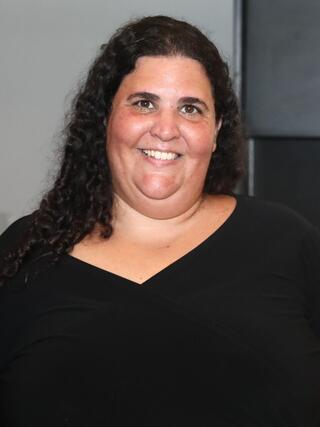 Dr. Moran Gendelman Photo: Yael Zur
“The yield from this is very low. At best, about 1% of the material is the material you want. In addition, the process produces a lot of waste, a lot of wastewater that you need to get rid of — and assuming you engineered the yeast using genetic engineering methods, you need to send it to a treatment plant. These are very expensive processes. By the way, this is also a central problem for many food-tech companies that make milk without a cow or eggs without a chicken, for example.”
From there, the two thought of a solution with its own internal logic: why go against nature when you can play by its rules? In other words, if there is already a natural process that is used for fermentation, why not simply use it?
“We thought that there is actually another process that uses yeast for fermentation, which is beer, and if we can take and train the yeast to secrete healthy substances in a way that is safe to drink, and also tasty, we can turn the drink from something tasty into a drink with added value,” Haskin says.
At the core of the development is a subtle but significant change in the production process itself. Instead of adding ingredients from the outside, Rosalind is trying to get beer yeast to produce the active ingredient as a natural part of fermentation.
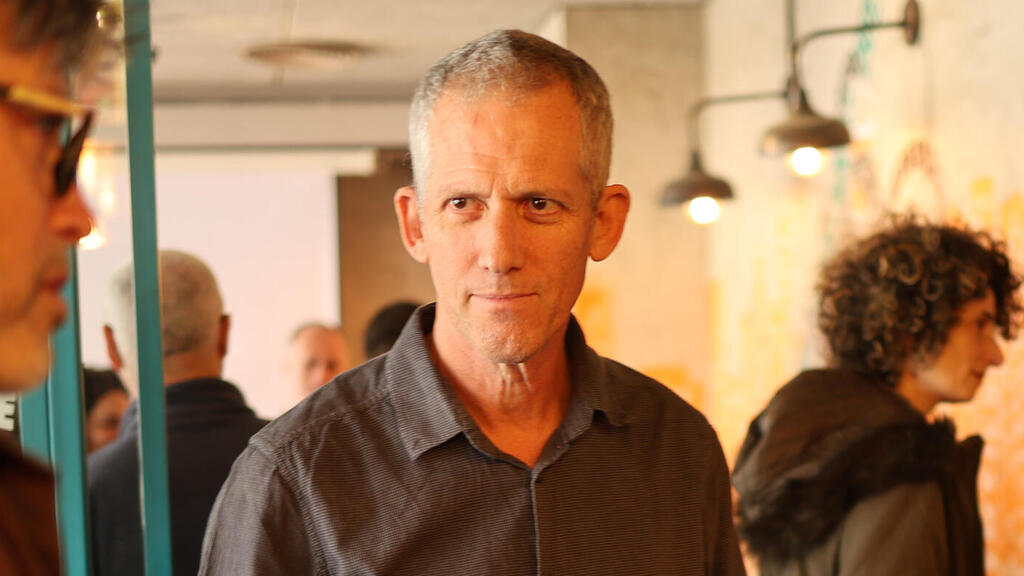
Menashe Haskin
(Photo: Adam Grant)
In this case, it is NAD — a derivative of vitamin B3 that in recent years has been drawing growing attention, both in the research world and in pop culture and the biohacking community, where it is seen as one of the ingredients most closely associated with the aspiration to slow aging processes.
Among those who have already mentioned using it are Kim Kardashian and millionaire biohacker Bryan Johnson, who have made it part of the public conversation around longevity. According to the company, one bottle of beer provides the recommended daily intake of the material, naturally and without artificial additives.
“Using classical microbiology methods that include sexual reproduction, we caused the beer yeast to produce very large amounts of vitamin B3,” Dr. Gendelman explains. “NAD+ is responsible for energy production processes at the cellular-mitochondrial level: it takes part in dozens of mechanisms in the life of the cell, from cell replication, to repair of mistakes in DNA, to recovery and waste removal after energy has been produced at the cellular level.”
“The amount of NAD in our body peaks around age 20 and declines from there,” Haskin adds. “By age 40, we already have half the amount we had at 20. The effects linked to its deficiency begin with difficulty for cells to produce energy, reproduce and recover after they have suffered DNA damage. That causes impaired memory, impaired brain function, reduced ability to recover after injury and after exertion, wrinkles in the skin.”
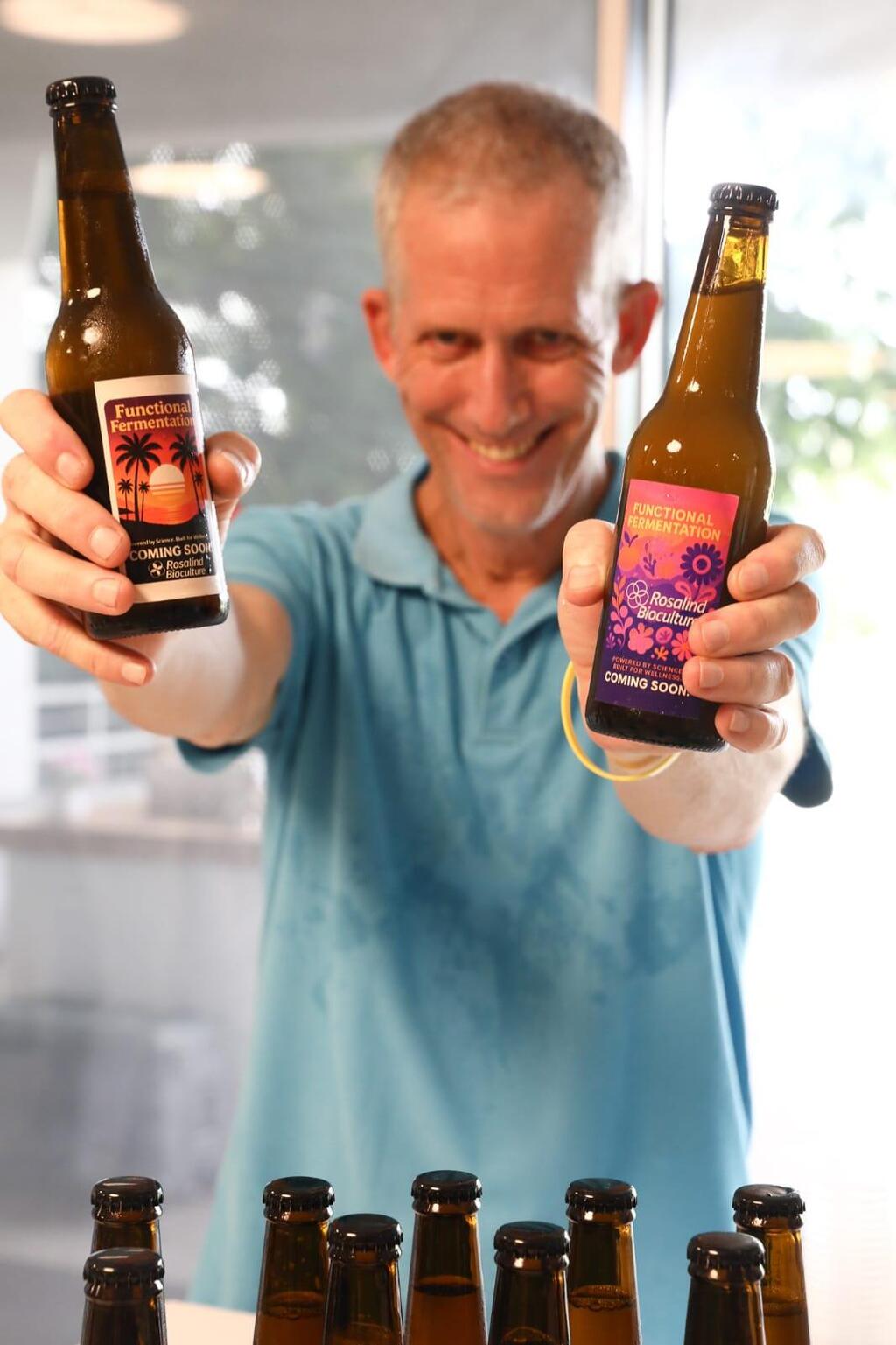
Menashe Haskin
(Photo: Yael Zur)
Alongside the biological ingredient, there is another change here as well. The drink Rosalind is developing contains lower alcohol levels than regular beer. All this also connects to a growing global trend of reducing alcohol consumption. That trend begins with the younger generation, especially among Generation Z, but has long since trickled into older generations as well.
“There is a very strong trend all over the world, especially in the Western world — in Europe and in the U.S. — of functional drinks, and that fits with the fact that people are drinking less and less alcohol,” Haskin says.
“People want to reduce their alcohol consumption, so we thought we could make a drink that is not only healthy, but in the process we can also ‘convince’ the yeast to produce less alcohol. The production of NAD puts some kind of stress on the yeast that causes it to produce less alcohol. We have already made beer with 2.5% to 3% alcohol, and we are currently working on a yeast that will be able to produce less than 2% alcohol. We killed two birds with one stone.”
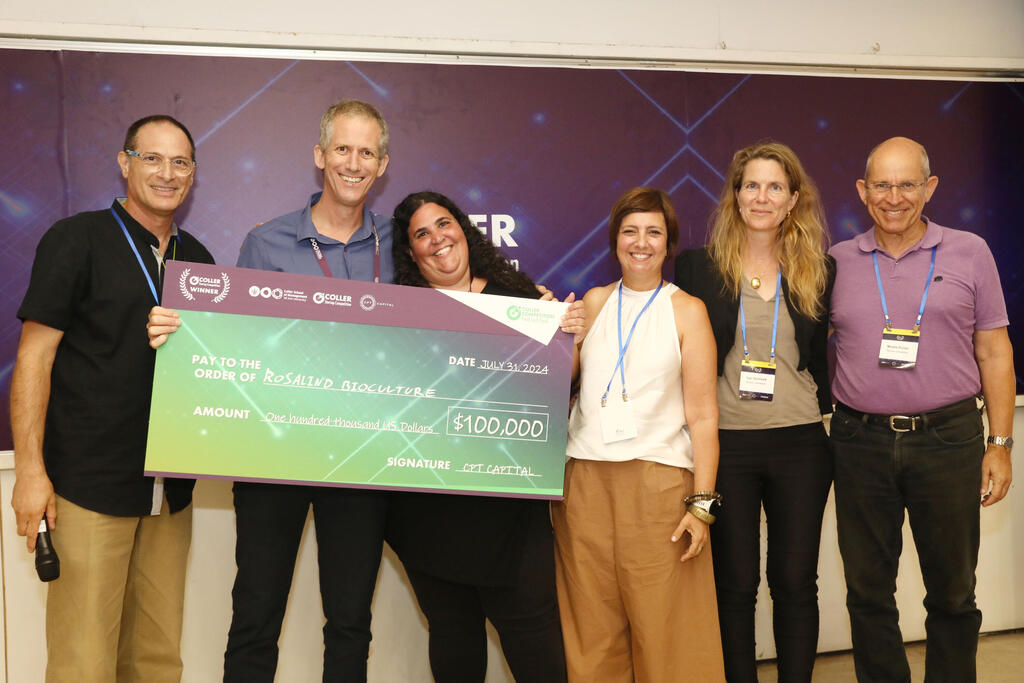
But the interest around the development has not remained only in the realm of a theoretical idea or lab experiment. In recent years Rosalind has also begun receiving outside validation pointing to its potential, chief among them winning the 2024 Coller Startup Competition at Tel Aviv University, one of Israel’s prominent stages for innovation in food-tech.
(Photo: Yael Zur)
“In the decade of activity of the Coller Startup Competition, we are seeing how innovation in food-tech is being translated into market opportunities on a global scale," a statement said from Ilanit Kabessa-Cohen, head of the Animal-Free Tech track in Tel Aviv University’s Coller Startup Competition.
"Our accumulated knowledge in non-animal protein technologies connects directly to expansion into the field of Animal-Free Technologies — a field with enormous potential for advanced materials crossing industries, from food and cosmetics to pharma. Whoever is already building the infrastructure today for technologies without the use of animals will lead tomorrow’s market, and we call on them to join and apply to the competition.”
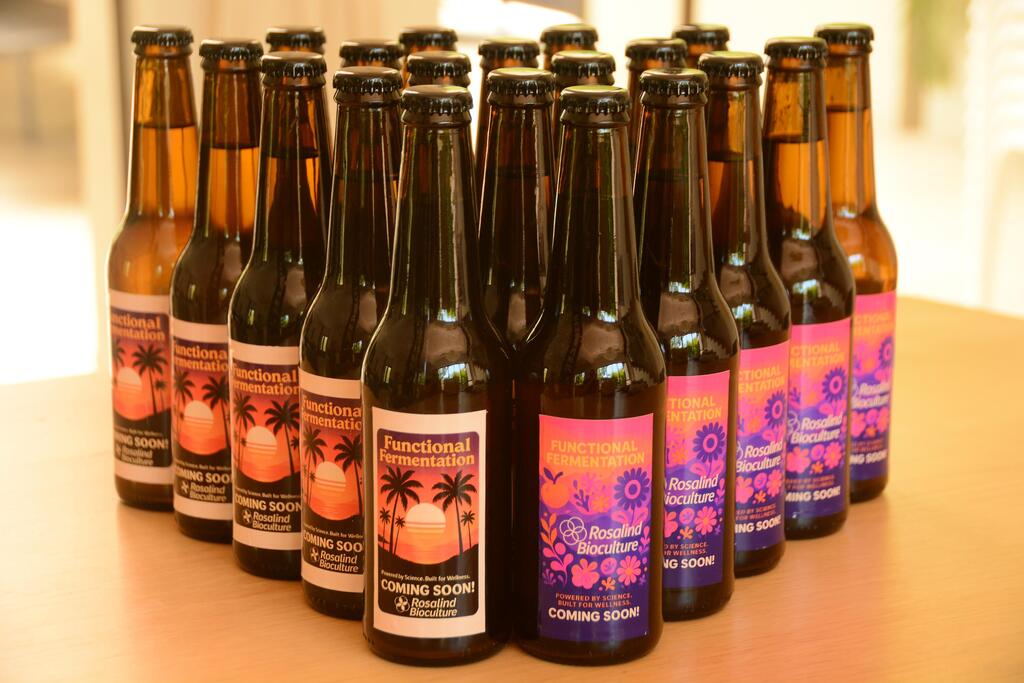
Meanwhile, behind that recognition stands a company that is still operating on a relatively lean and cautious model for its early stage. So far Rosalind has raised about $310,000 in a pre-seed round, operates with a small team, and is now beginning to move from the technological stage to the business stage — with first attempts to create partnerships with breweries in Israel and abroad. It currently produces the first batches of the beer at Shkania Brewery in the Galilee as part of proving the feasibility of the model.
But contrary to what one might have expected, Rosalind is not aiming to become a new beer brand on the shelf. Instead, it wants to remain behind the scenes of the industry and act as the supplier of the technology itself.
Rosalind
(Photo: Rosalind Bioculture)
“We don’t really believe in building a brand, because that requires a lot of money and a lot of understanding in that,” Haskin says. “The path we chose is to work with breweries by offering them our yeast. We can bring our unique strength of understanding yeast, and allow those breweries to be the ones that go to market and be a force multiplier for them, because there is really a lot of demand for innovation, especially innovation of this kind — both health and low alcohol — around the world.”
Where does it stand?
Haskin: “We are currently in talks with breweries in Israel and abroad ahead of trials. There is a lot of enthusiasm. That is, it seems we are answering a real need from customers.”
But what is it more — an alcoholic drink or a wellness product?
“Look, the wisdom is to sell people what they need under the guise of what they want. We are trying as much as possible not to educate the market. We want to reduce friction to a minimum, so a person will not have to think too much or change their habits. We are selling beer. Let it be tasty and good beer, and let people drink it because they enjoy it, and along the way we want to make them healthier.”
Are there risks?
“No. We use the safest yeast in the world. Every bread and every beer we know uses it. We use methods that do not cause invasive changes to its genetics, so the chance that something problematic will get into it is very low. Also, the quantities we produce are far below the level considered dangerous. There is no problem here.”
Are there other things you are developing right now?
“We are focused on beer yeast. NAD is only the first product. We intend to develop an entire line of yeasts with all kinds of health benefits. Broadly, the directions we want to take the yeast in are directions of mental well-being, but without being intoxicating or mind-altering, rather things that will really help with feeling good and good brain function. Other directions will focus on substances that will help the immune system and the digestive system, things that somehow often go together. And there are others as well. Right now we are chasing only one rabbit — only NAD.”