

At the entrance to the special wing of Ayalon Prison, the senses are deceived. The usual mix of mildew, dampness and heavy cleaning supplies is replaced by the unmistakable scent of chocolate, wafting past three iron doors. Inside, the clinking of handcuffs and metal bars gives way to the steady hum of a mixing machine stirring a sweet blend.
In a quiet hall, 20 inmates — some of them serving long sentences for serious crimes — sit in orange uniforms and white aprons, focused on producing chocolate. At first glance, it looks like the floor of a commercial factory. But a guard standing nearby is a reminder that this is still prison. The production line here doubles as a unique rehabilitation track.
The chocolate factory at Ayalon Prison
(Video: Mickey Schmidt)


“This is not about inmates just sitting in their cells,” said Efrat Tesfahon, the education officer running the project. “The idea is to give them a way forward.”
Tesfahon has been in the Israel Prison Service for 11 years. A former Bible teacher, she said she believes education can spark real change for inmates. “I wondered at first if I could cope emotionally,” she admitted. “But I realized this work gives me a chance to help them prepare for life after prison. That’s our mission — to return them to society rehabilitated.”
The inmates working in the chocolate factory are often considered “under supervision” cases, meaning they have special needs, often linked to addiction or mental health issues. The program offers structure and purpose. “There’s no such thing as an inmate just sitting in a cell doing nothing,” Tesfahon said. “If he isn’t in treatment, he’s working or studying.”

The chocolate plant employs 20 inmates in morning and afternoon shifts. Beyond vocational training, Tesfahon sees it as therapeutic. “It gives them a chance to fail and succeed, to discover they’re capable of change. They wake up with motivation.”
While most of the chocolate stays within the prison system, the factory has occasionally reached outside. Israel Railways once ordered 600 gift boxes. Packages have been donated to soldiers, hospitals and charities, including a women’s shelter in Jerusalem.
Tesfahon said one graduate of the program even found work in a chocolate company outside prison. “That’s the goal — to give them a skill they can carry with them,” she said.
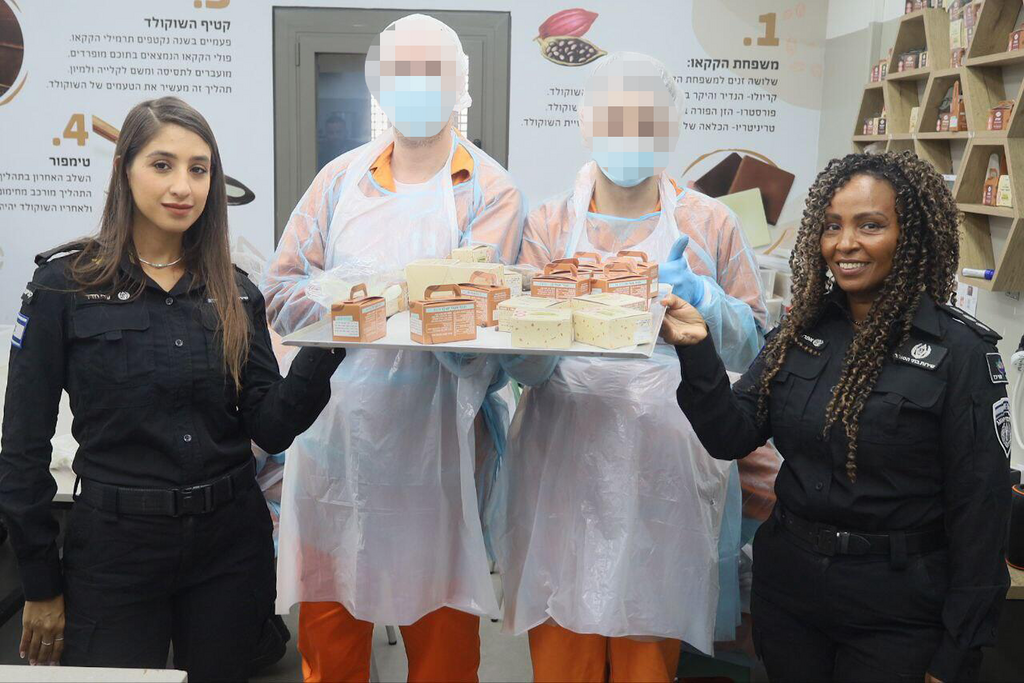
(Photo: Mickey Schmidt)
One inmate summed it up: “The fact that we have something to do, that we get up in the morning and have a place to go — that’s the difference. The factory is part of our rehabilitation.” Asked who he would most like to give the chocolates to, he answered simply: “The hostages.”
Central District Commander Shlomi Sagi called the project an example of the prison service’s rehabilitation vision. “Alongside maintaining security, we place great importance on giving inmates the chance to gain skills and real work experience,” he said. “Programs like this strengthen their chances of reintegration and ultimately improve public safety.”