

After years of being told women should eat delicately—and ideally, very little—videos of women confidently consuming large amounts of food, sometimes with their mouths wide open, may seem like a small revolution. The trend, known as mukbang, originated in South Korea. The term blends the words for “eating” and “broadcast,” capturing the basic concept: people filming themselves while eating, often copious amounts, on camera.
Though mukbang began several years ago—ancient history in internet terms—it has only evolved and expanded. YouTube, TikTok and Instagram are packed with mukbang content from around the world. Influencers specializing in the genre regularly draw millions of views per video.
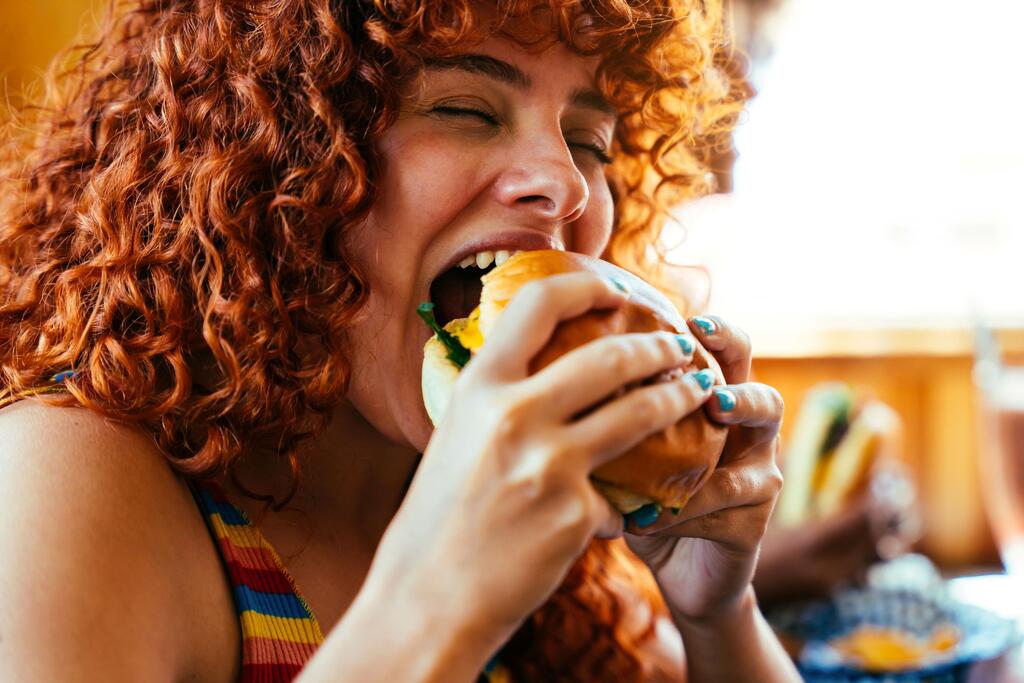
(Photo: Shutterstock)
Over time, the trend has developed sub-genres: ASMR mukbang, where high-quality microphones amplify the sounds of slurping, chewing, swallowing and licking, creating a sensory experience; extreme mukbang, featuring staggering quantities of food like trays of sushi or towering burgers with fries and sodas; spicy mukbang, focused on extremely hot dishes, especially ramen; and luxury mukbang, where creators eat outrageously expensive or gourmet items on camera (prompting, for example, my 14-year-old daughter to ask me for caviar after watching one).
Why is it so popular? Theories vary. Some argue that watching uninhibited, excessive eating provides a vicarious release—allowing viewers to indulge visually without consuming a single calorie. This argument resonates in a culture that often praises rigid dieting and narrowly defined body ideals while simultaneously glamorizing indulgence.
Another explanation is more social: mukbang mimics a kind of digital dinner with a virtual friend—an oddly intimate experience through a screen. (Just how intimate? The line between voyeuristic eating and other forms of physical exposure can feel uncomfortably thin.)
On a broader level, mukbang videos offer viewers a glimpse into global cuisines, ingredients, restaurants—and personalities. That, too, is part of the appeal.
So it’s no surprise that many female content creators post mukbang videos and attract huge followings. But when women are the ones eating on camera, the trend takes on added significance. For generations, women were taught to eat less—and certainly never to appear greedy or indulgent, especially on a date. The sight of a woman eating whatever and however she wants on camera quietly challenges those norms.
Many women still feel uncomfortable eating “messy” or indulgent food in front of partners or friends—doing so, if at all, in secret. Seeing others defy that instinct can reframe our internal expectations. It’s a subtle mental shift: women are allowed to eat with appetite.
Still, the trend isn’t without criticism. When men or women consume unrealistic amounts of food—or do so at unnatural speeds—it can send troubling messages or unintentionally normalize disordered eating behaviors.
As with much of online culture, mukbang sits at the intersection of self-expression, entertainment, and social commentary. Whether it’s empowering, troubling—or both—it reflects, challenges and redefines how we watch others, and how we see ourselves.