

For a few days in January 2011, it felt as if Israel had finally joined the family of nations, specifically the nations that like to drink and are willing to invest a little in doing it properly. The feeling grew stronger with every minute I spent inside Yad Eliyahu Arena in Tel Aviv, then still known as Nokia Arena, in keeping with the branding spirit of the time. The event had nothing to do with basketball. It was Israel’s first beer exhibition, officially called BEERS 2011, which promised, delivered and poured 200 different beers from Israel and around the world.
Alcohol writers at the time, myself included, competed in effusive previews, live reports and post-event reflections. The general line was that this was the natural and long-awaited next stage in the beer revolution that had begun in Israel about five years earlier and was now reaching its peak before thousands of thirsty visitors.
Looking back, that moment may have been the high point of the local hype around boutique beer in Israel. These were beers from new, small breweries, far smaller than the two giant players that had long dominated the market, all promising to bring the craft beer gospel from the United States and Europe to Israel.
At the time, it seemed that two or three invitations landed on the editorial desk every month, each one asking us to come see some tiny romantic brewery in the Galilee or a cool south Tel Aviv pub pouring only local boutique beer. Many times, the small brewery turned out to be little more than a few jerrycans connected to a pipe, and the pub was a hole in the sidewalk with two taps that had seen better-flowing days. But the general atmosphere was clear: something good was happening here, and it was bubbling.
Some small breweries already seemed built to last. They were trying to do things by the book, at least in terms of equipment and know-how, and fighting to secure the occasional tap in nightlife venues or catch a customer’s eye from the shelf of a specialty alcohol shop. Some even made it onto the shelves of larger retail chains, though for most supermarket shoppers they still felt like something of a curiosity.
Fast-forward to 2026, and here is a spoiler that will probably not shock anyone: Israel did not become a beer powerhouse. Not for regular beer and not for craft beer. In a country where annual beer consumption per person is around 15 liters, roughly a quiet quarter in much of the Western world, the ceiling is clear, and it is not very high.
Still, 20 years after that much-discussed revolution began, it is worth asking where we have ended up. Who is still with us? Who fell by the wayside? And how does anyone maintain a boutique alcohol industry in a country where the busiest app belongs to the Home Front Command?
So I went to find out. Which is another way of saying I drank a lot.
Malka Brewery: Bro, this is not Europe
The northern Tefen Industrial Tower at 11 a.m. on a weekday is exactly the sleepy event you imagine it to be. The road winds between green patches and small communities, and shortly after the traffic circle, Malka Brewery appears.
It is easily one of the first brands that comes to mind when talking about Israeli boutique beer, and not only because it started playing with malt and hops back in 2006.
Owner Assaf Lavi greets me in his office, overlooking the large brewing tanks, and asks what I want to drink. It takes me a second to remember the hour and the fact that I still need to drive home, so Lavi uses my hesitation to make us both coffee.
The last time we met was at Malka’s original location, at Kibbutz Yehiam. Back then, the brewery was much more modest, but it opened onto a huge wooden deck with a stunning view, and a glass of fresh beer in hand was all you needed to overcome the aroma from the nearby sausage factory.
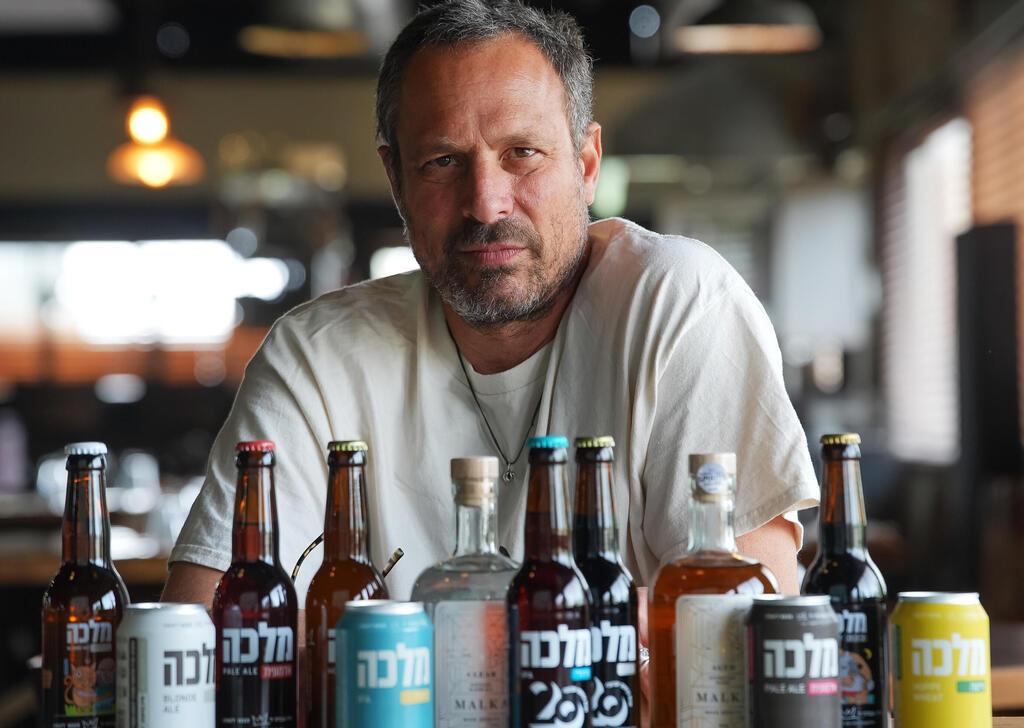
Assaf Lavi, Malka Brewery
(Photo: Effi Sharir)
“The whole thing started with my brother,” he says. “In the United States, the craft beer revolution was already in full swing, and in Israel there were only Tempo and Israel Beer Breweries. My brother said that if people here were drinking 14 or 15 liters a year, and the whole market could grow to 25 or 30 liters, maybe there was business potential here.
“We were also used to the idea that in every Western country there is wine with the meal, cocktails and beer that people drink daily. When I lived in London, I would drink two or three pints at a regular after-work meeting on the way home.”
But Israel, to put it mildly, is not there.
“No,” he says. “At the end of the day, we stayed at 15 liters. Do you know the Scottish brewery BrewDog? They started the same year we did. But they entered a market of 100 liters a year per person. They came in with crazy marketing and told people, come drink tasty beer. Today they are worth about 1.5 billion pounds.
“So yes, today there are dozens of different brands in Israel, there are beer competitions, and we have learned to taste and understand. But we never really made time to drink beer at the end of the day, so the cultural change did not happen. Growth did not increase. “But beyond that, the conditions here are anything but easy.”
What does that mean?
“First of all, we live in a country that is constantly under stress,” he says. “In our industry specifically, since 2020 we have been constantly 'putting out fires'. There was COVID, and then all the wars. During the latest war with Iran, we were on unpaid leave because it was impossible to work. Unlike wine, beer has a shelf life and has to stay fresh.”
Unlike the large breweries that produce or import familiar international brands, Israeli boutique beers rely heavily on draft consumption, in pubs, bars and restaurants. Those are precisely the places that stop operating when missiles are flying overhead. Demand can collapse overnight.
Large producers rely more heavily on the six-packs people buy in supermarkets, which tend to remain busy during periods of national stress.
“There is also the cost of living factor,” Lavi says. “The basic basket of goods is so expensive today. A person spends thousands of shekels a month just to feed his family, and then he reaches the beer shelf with a full cart. He sees a six-pack of Stella Artois for 35 shekels or two Malka beers for 25. Maybe he likes our beer and wants to support us, but he says to himself, I want to drink one beer a day, so he buys the six-pack. Maybe if there is a special event, he’ll also buy two Israeli boutique beers.”
So Malka is marking its 20th anniversary this year, but it is not exactly all celebration.
“Wait, wait,” Lavi says suddenly. “I don’t want this to sound whiny. It feels good to know we make a quality product, and I want to keep maintaining the highest standard because I also charge a premium price.
“If for every three industrial lagers you want to take one Israeli craft beer off the shelf, I need to give you that option. If you like wheat beers, I won’t brew you a classic Bavarian wheat, because why would I compete with Weihenstephan, which has been doing that for 3,000 years? We’ll make our own wheat beer.
“Take our dark beer, for example. It is a niche beer, and people who love Guinness usually drink only Guinness, but there are already Israelis who love our dark beer. So I will make relatively little of it, almost like a seasonal beer, but I will keep making it.
“In the end, almost all of us in this industry developed from home brewing 20 liters at a time. We learned the process through experience and accumulated knowledge. No matter what happens, I have to keep our craft identity alive.”
(Photo: Siamionau Pavel, Shutterstock)
Beer & Beyond: The craft club
If Israel’s boutique beer revolution began 20 years ago, Shachar Hertz was there even a little earlier. He started with beer workshops and private events, and for the past 15 years has also operated his excellent Tel Aviv concept store, part of his Beer & Beyond venture.
Today, he carries around 300 different beers, but this morning, I am more interested in the “beyond” part. I want his view as someone who has spent years promoting beer culture in Israel while also being able to look at it from the side. Much of his work is connected to craft beer scenes abroad, mainly in Belgium, Germany, the Czech Republic and the United States, so he can also compare Israel’s beer scene with those abroad.”
“Yes, it feels like this scene in Israel has slowed down a bit,” Hertz says. “It was clear that it would reach saturation, but at one point I thought that would happen only when we reached something like 50 Israeli boutique brands. That didn’t happen, but maybe it’s good that way.”
Good?
“Yes, because there really were several strong years of real growth. It didn’t disappear; it simply became another option, another thing that exists, and that is completely natural.”
So maybe this is simply evolution?
“Absolutely. If beer consumption in Israel is what it is, maybe there is no need to divide the pie even further. It feels like if more small breweries open, they will mainly eat into each other, because it doesn’t look like the entire segment will grow. “On the other hand, Israelis’ attitude toward craft beer has changed dramatically.”
Explain.
"I see it most clearly in my workshops. The terms are no longer foreign, even to people who are not deeply interested,” he says. “Today I can usually skip the part where I explain what an IPA (India Pale Ale) is. It is much easier for me now to identify a taste or style someone will like. I feel it in the store too.
“In the early years, the people who came here to buy were almost exclusively beer geeks, people who always wanted to discover and buy new beers. But as the field developed in Israel, it became broader. What I like most is meeting the second circle of beer geeks, people who got hooked on some special beer from abroad or an Israeli boutique beer and now come here regularly to buy a six-pack of it.”
That is encouraging. Something has changed after all.
“Absolutely,” he says. “Another thing that happened is that there is more interest among younger people. In the early years, there was no chance of talking to young people about a boutique beer for 15 shekels. Even on beer trips abroad, I mostly met older guys. I think it is still more of a thing for people in their 30s than their 20s, but there are definitely more young people now than before.”
Did this evolution happen elsewhere too?
“In the United States, for example, craft beer is still very much alive,” he says. “It has simply become completely standard and is no longer considered special. Even in relatively remote places, if there is a beer spot, at least one of the taps will be an interesting IPA. I think even there the field is in some decline, but there is a small difference: at its peak, craft beer in the U.S. approached about 20% of total beer consumption. Here in Israel, it is around 4%.
“In the U.S., the price gap between craft and regular industrial beer is 20% to 30% at most, so it is different. England is another country that had a fast boom after what started in the U.S., but in recent years we have seen several craft breweries close there, probably because too many opened. When there are so many, you have to be super creative to stand out, and being creative is usually insanely expensive. You start aging beer in bourbon barrels for three years and then need to sell it for 12 or 15 pounds. That is where we really started to see signs that the craft world sometimes goes too far.”
Shapiro Brewery: It all pours in the family
From the outside, there is no chance you would guess that excellent Israeli beer has been produced for years at Shapiro Brewery. The Beit Shemesh Industrial Zone may not sound like the world’s most romantic terroir, but the story of the brothers, and sister, behind the brand more than makes up for it.
I hear it while Dani Shapiro opens a bottle for us as we stand among rows of tanks brewing something that smells wonderful.
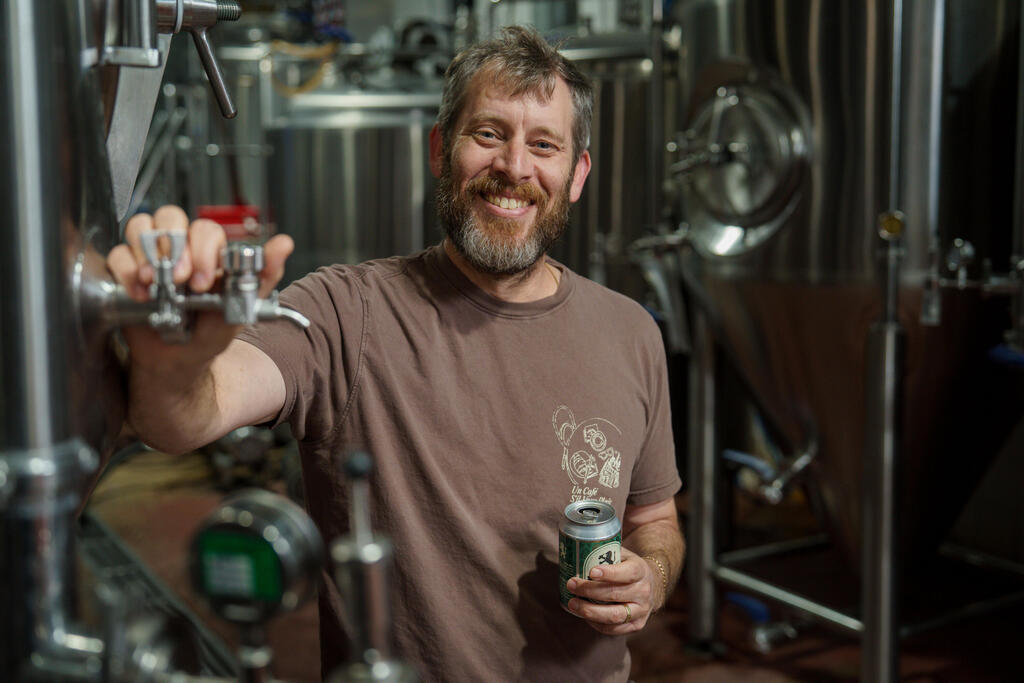
Dani Shapiro,Shapiro Brewery
(Photo: Shalev Shalom)
“One of my brothers came back from abroad with a book about brewing beer, so we said, let’s try,” Dani says, smiling behind his impressive beard. “But really, only in 2011 did we begin working professionally. That was after the big boom of the early 2000s. My brother and I found ourselves walking around Jerusalem with coolers, giving people tastings and trying to explain what this even was.
“From the beginning, it was important for us to remain a family company, and the connection with customers was personal. We ourselves would sit and eat and drink in the places where we sold beer.”
The brewery employs Dani, Itzik, Avi and Tamar Shapiro, along with brewmaster Yochai Kudler, considered a serious name in the field. His role is somewhat parallel to that of a winemaker or chocolatier. He oversees the professional side, from choosing malt and hop varieties to countless tastings, until the desired result is achieved.
Shapiro also represents an interesting trend in the local beer market: partnerships with major beverage companies. In Shapiro’s case, the brewery joined forces with Tempo. “At first we did everything,” Dani says. “Producing the beer, distribution, collection, technical service. At some point, we understood this was a pretty big operation, and what we are best at is making beer. Four years ago, Tempo entered the picture.
“I think the bigger companies in the market realized long ago that this trend is here to stay. For us, the advantage of the partnership is that we retain full creative independence, so our identity remains intact within the arrangement.”
“Besides, I believe that if we are paying the ‘price’ of moving away from direct contact with customers, it has to be for a good reason: cooperation with a major player that can take us where we want to go. But that is the challenge. Still being ambassadors of the brand. Still being connected to the field. Still maintaining authenticity. In the end, this is still a relatively small brewery, just 10 employees. It is not a mega-industry in any way.”
These kinds of partnerships are not unique to Shapiro and Tempo. Years earlier, HaCarem entered a partnership with Malka, and other boutique breweries have business ties with large distribution or logistics companies, even if ownership is not involved.
Some may feel that these connections damage the romantic boutique story of the small brands. But in the near-impossible reality in which some of these brands operate, against the backdrop of a small market and heavy regulation on beer, it feels odd to be conservative about it.
If these partnerships give Israeli craft beer a longer, healthier life, I am in favor. If they give small breweries the breathing room to keep challenging the Israeli palate and playing with flavors and styles, I am in.
Shapiro currently brews five permanent beers and four seasonal ones. But they always leave some room to remember why they got into this in the first place.
“There is the regular work, and there is the seasonal work,” Dani says. “But we always do all kinds of special things. Suddenly we feel like making a sour beer, which is the niche of the niche, but that is our fun.
“After October 7, for example, some farmers near the Gaza border had a problem with mango and pineapple crops that had to be picked urgently. So we went there, helped them pick the fruit and brought everything here to see how we could make beer from it.”
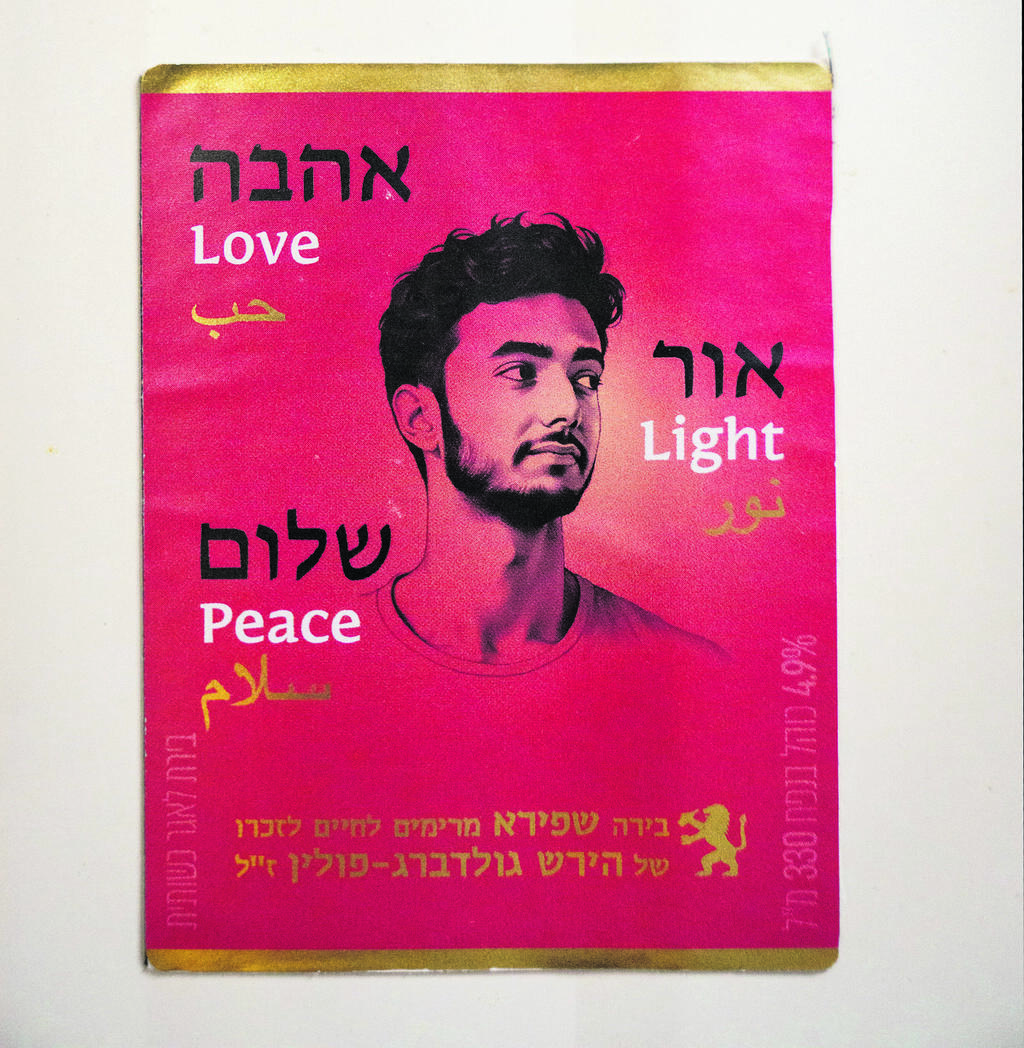
Shapiro Beer’s initiative in memory of Hersh Goldberg-Polin
(Photo: Shalev Shalom)
White Rabbit Brewery: A new brand in the neighborhood
Veteran beer lovers may remember this: several years before the Israeli boutique scene became, well, the Israeli boutique scene, there was already a small Tel Aviv brewery that even poured its beer to customers in an adjacent bar.
It was called Dancing Camel, and the man behind it was David Cohen, an immigrant from the United States who tried to import America’s craft beer hype into a small alley off Hamasger Street. I cannot say what led to the brewery’s closure, but I recently discovered that a new brewery had opened in its place. Now, instead of a camel, stands another animal.
White Rabbit Brewery has been operating for less than three years, which is intriguing enough to investigate. “A new local beer venture, in this climate of all times, reportedly doing things carefully and seriously while also promising some intriguing technological innovations? Of course I had to see it for myself.”
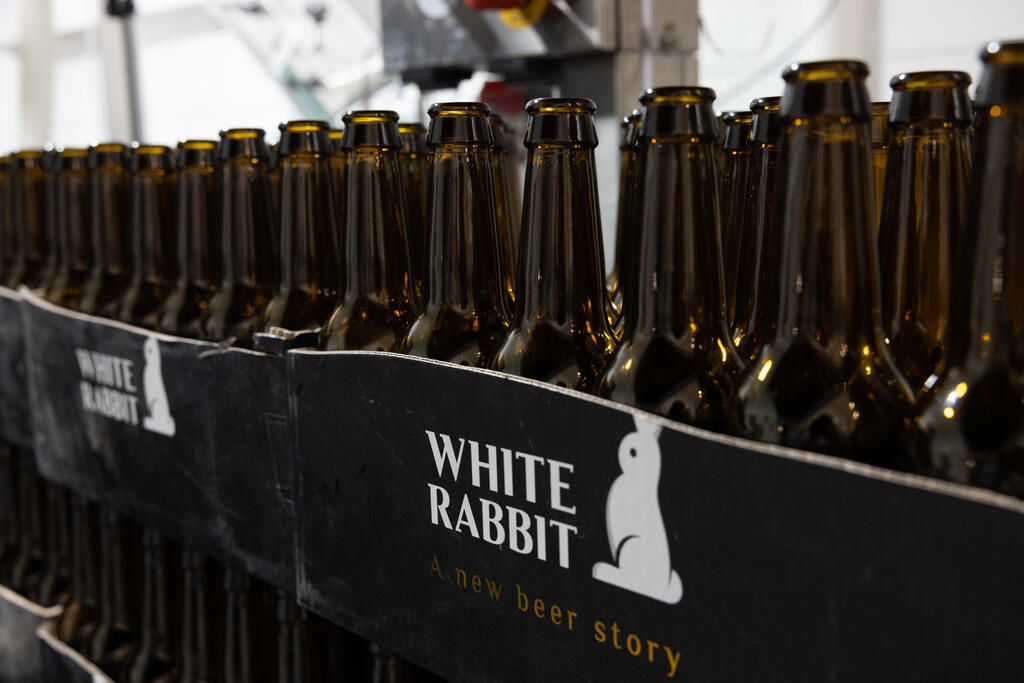
White Rabbit Brewery
(Photo: Oz Moalem)
Ze’ev Rabinovich is already waiting for me on a barstool inside. He comes from an industrial background. He worked for years in the defense sector, then bought a silicone-related factory. All his life, he operated in business-to-business sales, and now he is suddenly selling to private consumers, in a field as specific as boutique beer.
But Rabinovich looks at White Rabbit much as he looks at other, more standard industrial fields: through learning, development and the introduction of new elements.
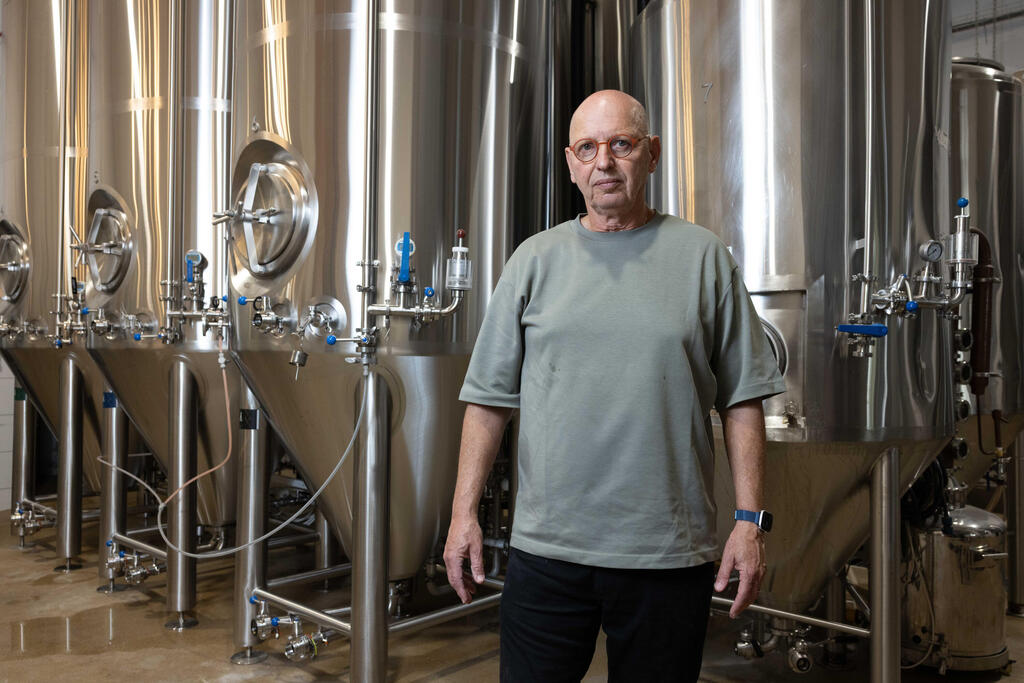
Ze’ev Rabinovich, White Rabbit Brewery
(Photo: Oz Moalem)
“At first, I simply brewed a little beer at home,” he recalls. “But I am a thorough person, so I said, let’s go to the UK and study it properly. That was in 2018. I discovered that beer is a complex and technologically complicated product that requires a lot of precision, and I really liked the complexity of the process.
“During the course in the UK, a tax consultant came in one day and explained how beer taxation there had developed over some 500 years,” he said. “It makes you realize just how far apart we are in this field. In any case, we bought the place from David in September 2022, and after a year of work we were ready to open in early October 2023.”
What timing.
“Yes, the worst timing imaginable,” he says. “Try introducing a new brand when no one has interest or attention for anything. And beyond that, you don’t exactly feel comfortable going out with a marketing campaign for something like this. So we decided to turn inward and work on other things for a while, and only after a few months did we start knocking on doors, mainly wine shops, bars and restaurants.”
On the wall across from us is the slogan “New Beer Story,” and Rabinovich explains that for him it is an entire philosophy. From the start, he understood that White Rabbit could not be like everyone else, because then there would be no story and no message.
“If I simply did what everyone else was doing, I would be committing business suicide,” he says. “So we tried to invest in every point along the chain: raw materials, flavors, aromas, beer storage. That also means I am a little different in pricing.”
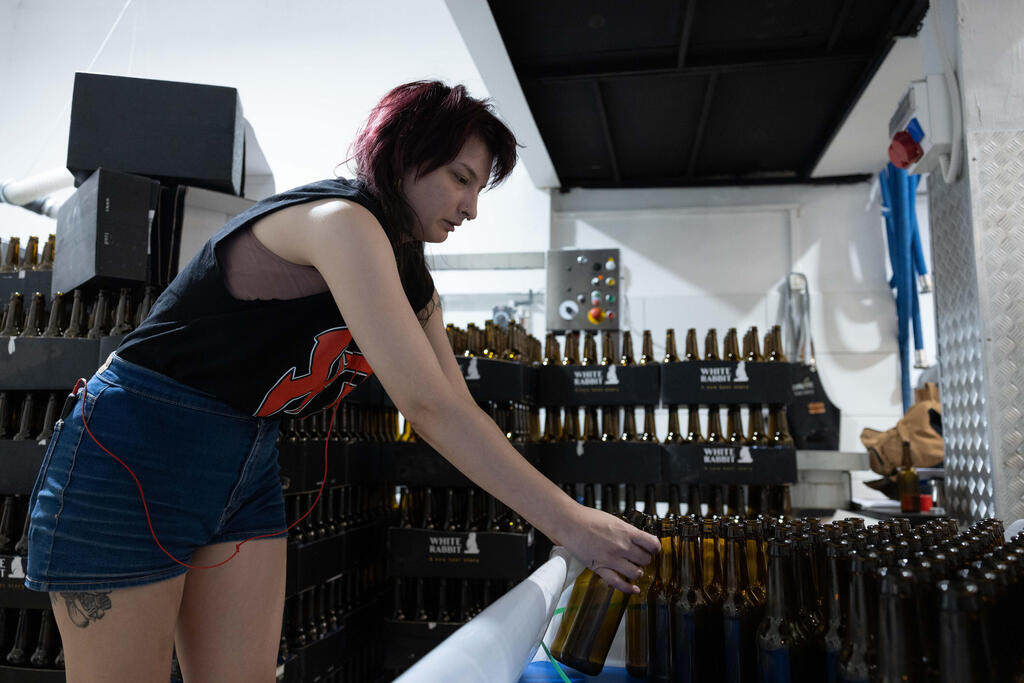
White Rabbit Brewery
(Photo: Oz Moalem)
Alongside four regular beers, sold in elegantly designed bottles that look a bit like expensive wine, the brewery is constantly working on intriguing beer solutions. Chief among them is a disposable draft container: essentially a plastic keg of three, five or 10 liters with an internal bag. The beer never touches the walls of the keg, and even the pouring tube is disposable.
The idea is to remove the need for exhausting maintenance of standard kegs, or their tendency to collect bacteria if beer is not poured for several days. For White Rabbit, the investment in disposable kegs and smart pouring systems is another sophisticated way to get its beer into restaurants and bars.
The brewery is also developing a fully automatic pouring station: you buy beer with a credit card and receive it fresh in a glass, after a smart facial scan verifies you are old enough to drink. Seriously.
I suggest that if Israel continues to suffer rounds of fighting, maybe we will all soon need a disposable pouring system at home. That draws a brief speech from Rabinovich. “Listen, the reality here really is not normal,” he says. “As soon as a war ends, we immediately go back to living normally until the next event. But I consider myself an optimistic person, and history has taught me that our wars always end in growth. That will happen this time too. In the end, you cannot suppress life.”
I will definitely drink to that.
Alexander Brewery: Mom, we brought home a medal
The first stop, and in hindsight perhaps the most optimistic one on my beer tour, was Alexander Brewery, which began flowing from select taps 18 years ago. There I met CEO Lior Balmas, who several years ago replaced Ori Sagy, a former Israeli Air Force pilot and the entrepreneur behind the beer with the winged turtle logo.
Balmas has been moving through the bubbles of the craft world since 2003, giving him all the perspective required. He takes me on a tour that begins in the freezing beer storage room, built so that the bottles at least leave the brewery in optimal condition. From there we walk among giant tanks and gleaming brewing kettles. For something considered boutique, the operation looks extremely serious and polished.
Alexander employs more than 40 people, working three shifts from Sunday through Thursday, making it one of the heavyweights of Israel’s craft beer market. When I point that out, Balmas immediately goes back to the brewery’s far humbler beginning.
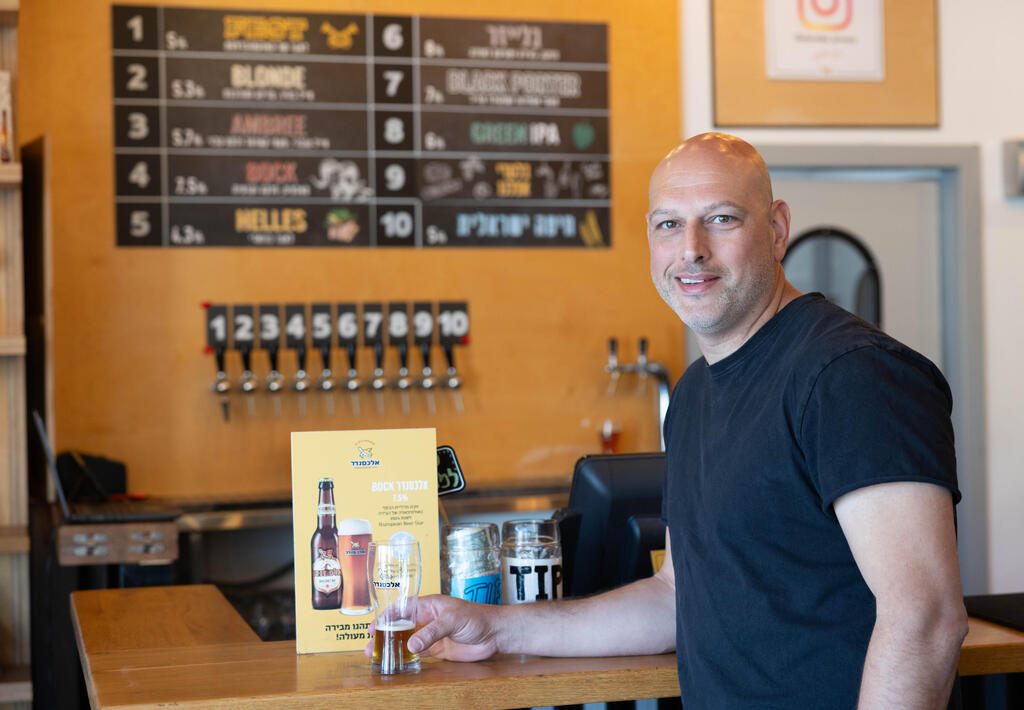
Lior Balmas, CEO Alexander Brewery
(Photo: Oz Moalem)
“When we first started working in this location,” he says while pouring me another third of a glass, “barely a couple would wander in here and ask, ' What is this place?'. Today the tours we hold at the brewery are constantly packed.”
For Alexander, the work of promoting the brand never ends. The tours are one way to spread the word. Another is cooperation with restaurants and constant participation in international festivals.
The wall beneath which we are drinking is covered with certificates from such competitions and events. Just two years ago, Sagy and Balmas found themselves onstage after winning second place at a respected festival in Germany, with a bock, a strong German lager. That is like winning a baguette medal on French soil.
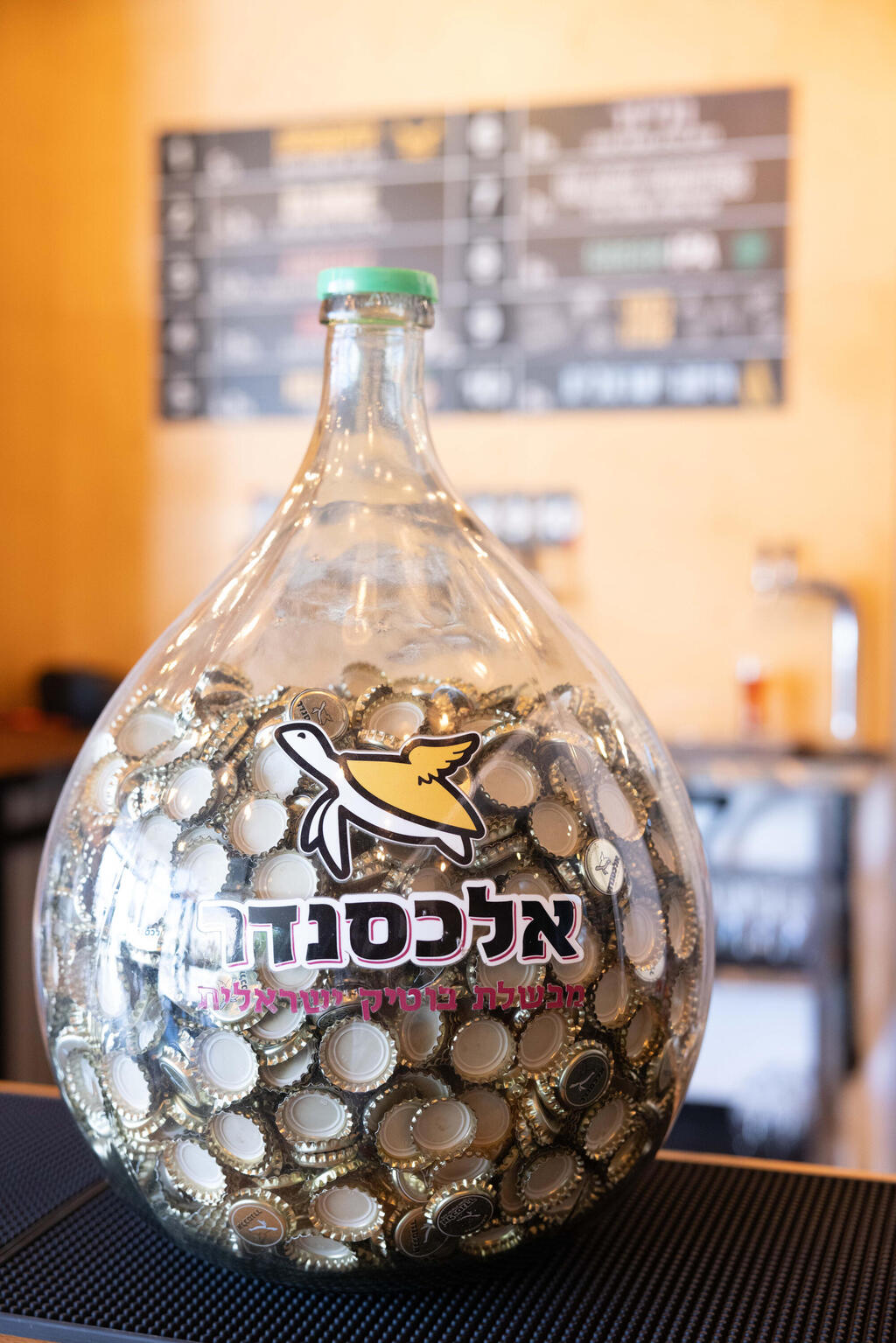
Alexander Brewery
(Photo: Oz Moalem)
So, as a silver medalist, do you think per capita beer consumption in Israel might one day rise?
“Indeed, per capita consumption in Israel has not changed,” he says. “But when we started, six million Israelis lived here, and now there are more than 10 million. It is also true that the global trend is that people are drinking less beer, but that is a broad statement. What is really happening is that people are drinking fewer industrial beers. Younger generations are drinking less industrial beer and more quality beer, so the field of more interesting craft beers is actually growing.”
How do you grow in the Israeli market?
“My goal is to increase exposure and interest in craft in general,” he says. “If the small breweries fight over every liter in the existing market, we definitely will not move forward. The vision should be for both quantity and quality to keep rising.
“That is why our entire strategy at Alexander is to focus our energy only on beer and make the best product we can consistently. Today we brew 16 beers regularly, and we want to grow from there.”
Others in the industry told me that it is no small challenge in a country that seems addicted to drama.
“There is no doubt the past few years have been a roller coaster,” Balmas says. “Suddenly there is a war, then unpaid leave, and people do not work for a month and a half. One missile in central Israel is enough for the whole market to close.
“When that happens, people buy a little in our store and a little online, because they are sitting at home and still want to drink a bit. Then it ends, and suddenly it feels like the market enters a kind of emotional eating phase, and you have to replenish stock very quickly. I’ve seen this pattern before. After the latest war, consumption will rise by roughly the same amount it fell, and some more.”
Listen, you’re probably one of the few people in the beer world who can explain how coming out of a war affects the pour.
“Absolutely. I can tell you the state of the nation by the beer level.”
***
By this point, anyone still reading deserves a bottom line. Nearly two decades after Israel’s craft beer revolution began, the breweries that approached it seriously, and with no small financial investment, are largely the ones still standing. Many of small and mid-sized craft brands never made it this far, but in Israel, this was never an easy business to begin with.
Some of the brands still standing now cooperate with major companies, and that is not necessarily a bad thing. It helps all this good beer, foam and all, reach more people instead of remaining the preserve of central Israel hipsters.
At the end of my tour, I remembered something Malka’s Assaf Lavi told me: what excited him about this field 20 years ago still excites him now.
I think that applies to me too. I liked hearing in 2006, when it seemed half the country was going into high-tech, that there were also people starting to deal with hops and pipes, trading laptops for tall rubber boots. And I still like hearing, in 2026, that all these good people are willing to keep working hard to make me a good Israeli beer.
- Special thanks to Rotem Bar-Ilan for his assistance in preparing this article.