

“I felt like the earth opened up and I was falling in,” recalls 32-year-old Dana from Kiryat Motzkin. “I started crying immediately. I said, ‘That’s it, I’m going to die.’” What began as shortness of breath quickly escalated into the discovery of a 13-centimeter tumor above her lungs.
“My husband, Yossi, and I got engaged just before I got sick,” she shares. “I told him he could leave, that I wouldn’t blame him. But he said, ‘We have a mission—we’ll get through this together.’” The two went ahead with a wedding amid treatment. “I got married bald and felt more beautiful than ever,” she smiles. “It was during a short remission, and we were full of hope.”
Gallery
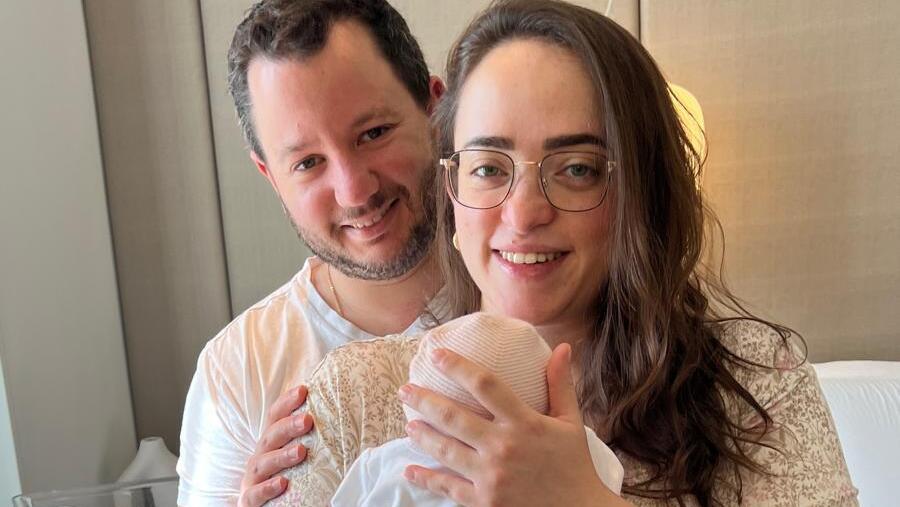
Dana Solomon and her husband Yossi, the first Israeli woman to conceive after CAR-T cancer treatment
(Photo: Private Album)
Despite an initial response to treatment, the cancer returned—this time more aggressive. “When I relapsed, I broke down completely. I even told my husband how I wanted my funeral to look,” she says. “We had conversations newlyweds should never have.”
A technological breakthrough: “Turning regular soldiers into commandos”
As the disease progressed, Dana’s options were running out. “I was terrified of a bone-marrow transplant—it’s such a difficult, last-resort treatment. I asked my doctor, ‘What if it doesn’t work?’ That’s when he told me about a new therapy called CAR-T.”
Her doctor described it as “a process where you take regular immune cells—like ordinary soldiers—and train them into commandos.” From that moment, Dana pinned all her hopes on it.
Dr. Uri Greenbaum, Head of cellular therapy at Soroka Medical Center, explains: “CAR-T, a technology that originated in Israel under the late Prof. Zelig Eshhar, involves extracting a patient’s T-cells—immune cells that normally attack infections—and genetically reprogramming them in the lab to recognize and destroy cancerous B-cells. The engineered cells are then infused back into the patient to hunt down the tumor with precision.”
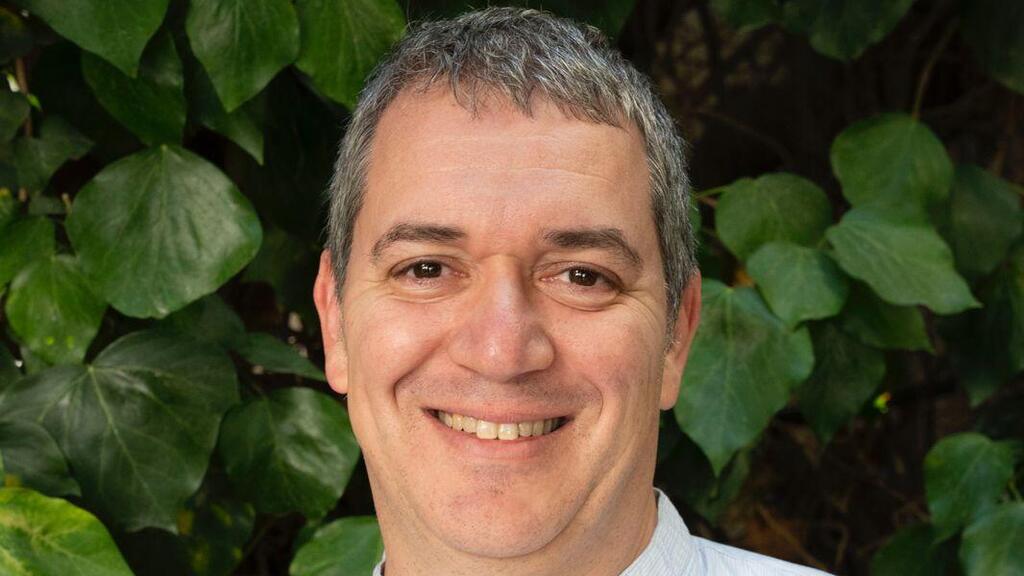
Dr. Uri Greenbaum
(Private)
Revolutionary effectiveness now included in Israel’s Health basket
“Lymphoma is a cancer of immune system cells called lymphocytes,” Dr. Greenbaum explains. “These cells normally fight infections and produce antibodies, but when they turn cancerous, they multiply uncontrollably, spreading to the spleen, bone marrow, and lymph nodes.”
“With CAR-T,” he adds, “about 40% of patients achieve complete remission—a remarkable success rate, especially for those who had no other effective options.”
Unlike chemotherapy and radiation, which kill healthy dividing cells and cause harsh side effects, CAR-T therapy tends to have fewer complications. “Immune suppression is milder, side effects are often less severe, and the overall cure rate is roughly twice that of chemotherapy,” says Dr. Greenbaum. The treatment is now approved in Israel’s health system for patients with large B-cell lymphoma and other B-cell cancers after first-line therapies fail.

Dana Solomon and her husband Yossi, the first Israeli woman to conceive after CAR-T cancer treatment
(Photo: Tamir Shachar, Studiotopic)
A new life—and the fulfillment of motherhood
For Dana, CAR-T was her only chance. “I remember the exact moment they brought in the tiny infusion bag,” she says. “I reached out, touched it, and whispered, ‘Please, help me live.’”
The therapy worked. Two years after her last cancer marker disappeared, her biggest dream came true. “I always knew I wanted to be a mother—it was the one thing that kept me going,” she says proudly. “My daughter, Ariel, and I made history—she’s the first baby in Israel born after CAR-T treatment, and only the sixth in the world.”
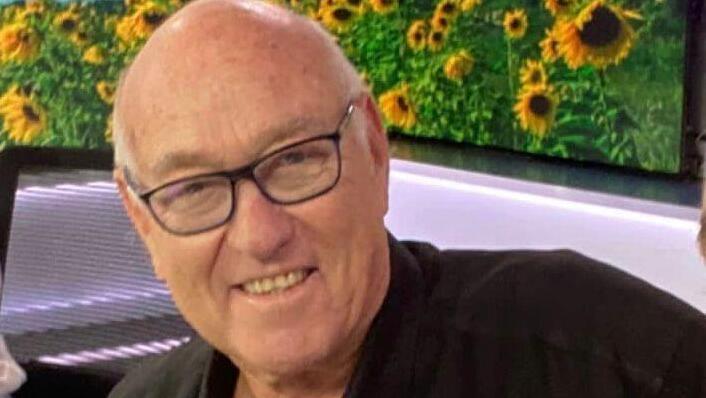
Giora Sherf
(Private album)
“Even when everything looks sark, there’s always a chance”
Today, Dana runs a business selling handmade crocheted dolls to customers worldwide and serves as a beacon of hope for other cancer patients—especially women yearning for motherhood. “Even when everything looks black and hopeless, there’s always a small window where things can change,” she says.
“CAR-T is a life-saving treatment that must be accessible to every patient—regardless of financial means,” emphasizes Giora Sherf, head of Halil Haor, Israel’s blood cancer patient association. “Many lymphoma patients have endured exhausting rounds of chemo, radiation, and transplants—only to be left with no options. For them, CAR-T is often the last chance at life.”
According to Sherf, “We now have years of global and Israeli experience, and for some, it truly means a cure. Since its introduction in Israel, we’ve seen dramatic transformations—patients once deemed ‘beyond help’ entering remission, regaining quality of life, and giving their families more time, hope, and life itself.”
The road to recovery starts with early access
Dr. Greenbaum concludes: “CAR-T is an effective, manageable therapy that brings real hope to patients who once had none. The key is early referral—getting eligible patients to experienced centers as soon as possible.”
Dana Solomon’s story proves that even in the darkest moments, medical innovation can restore what once seemed lost—health, future, and the chance to live dreams once thought impossible.
Presented as a public service by Gilead