

Israeli military's coronavirus task force has ramped up its operations and will likely expand its activity further as COVID cases surge around the country, an IDF official said Monday.
The Alon Coronavirus Command Center has already reopened 14 testing facilities across the country since the pandemic began resurging some two weeks ago. Another seven facilities are expected to reopen in the coming days, bringing the total number of Home Front Command-operated testing centers to 21.
Gallery
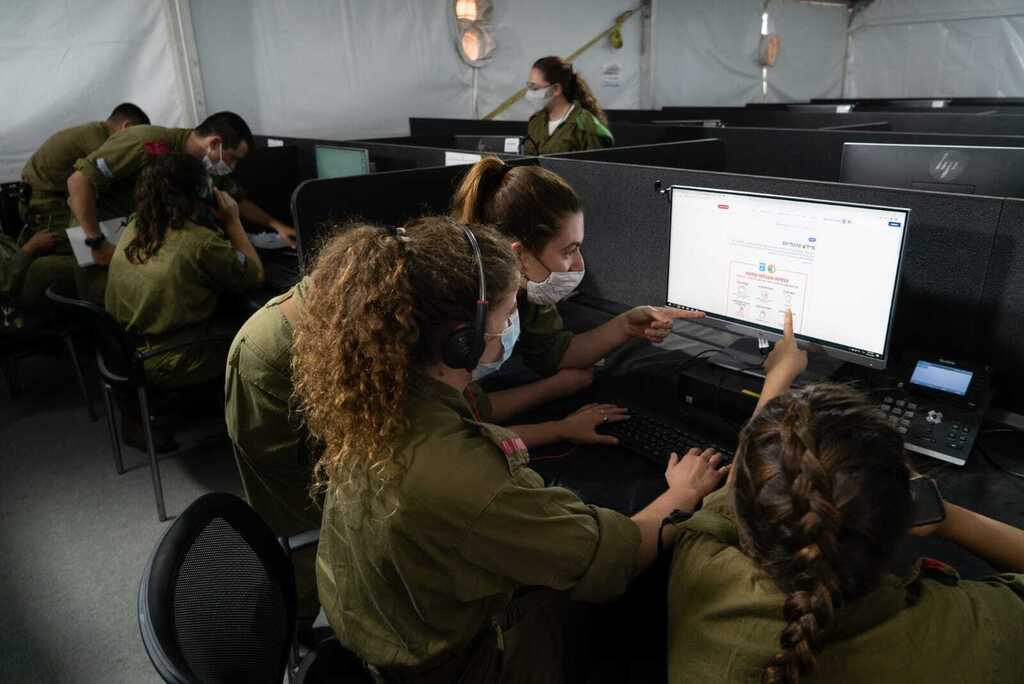
Alon Coronavirus Command's epidemiological investigators Center in action
(Photo: IDF Spokesperson's Unit)
"At the peak [of the pandemic], we were able to test 130,000 people a day and when the pandemic subsided, our capacity decreased to 15,000 a day and this week we will go back to 60,000 a day," a Home Front Command officer told Ynet on Monday.
The IDF's pandemic task force, whose headquarters are located at the Home Front Command base near the central city of Ramla, was set to be dissolved in early August, a whole year after it first launched its operations. However, Alon commanders decided to hand forces a month's extension as the country came into grips with resurging cases.
The command center estimated that the number of new daily cases could go up from a couple hundred a day to several thousand in a matter of days if not handled properly.
The officer expressed cautious optimism as authorities managed to stabilize daily infections in major outbreak epicenters — chiefly Binyamina and Modi'in — but noted he was worried about preliminary signs of rising morbidity in several cities in central Israel, including Tel Aviv.
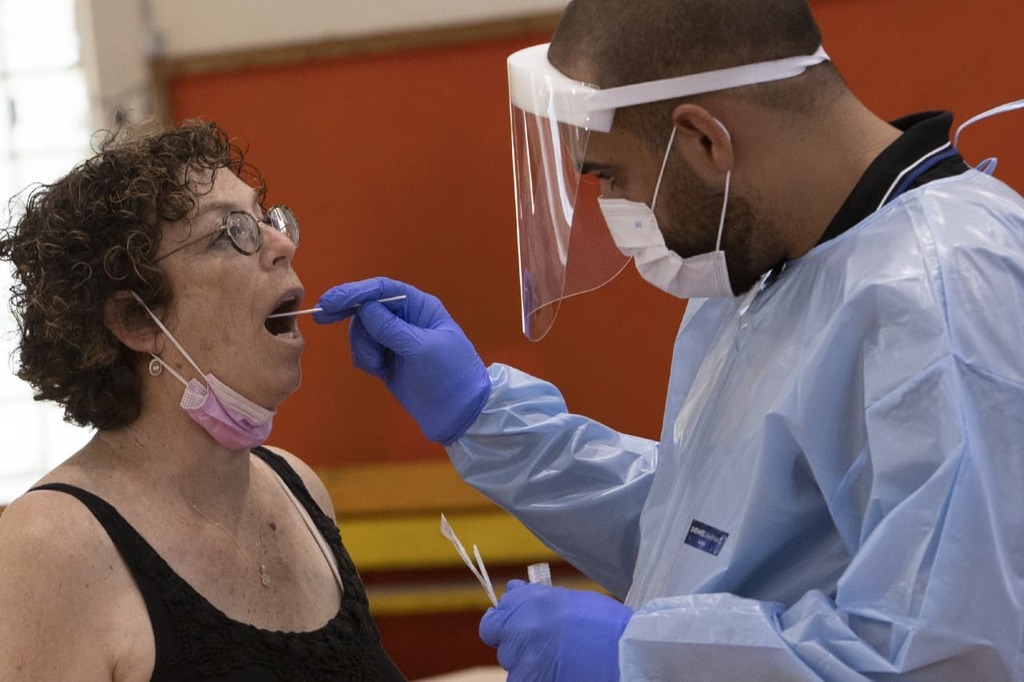
A woman getting tested for coronavirus at a testing facility in Binyamina
(Photo: Gil Nechushtan)
For the time being, Alon command center has not recruited any additional servicemembers to bolster the country's epidemiological investigations apparatus, which has so far managed to trace and break chains of infections with relative efficiency.
There are currently hundreds of epidemiological investigators operating across the country on behalf of the Health Ministry and local authorities out of an emergency pool of some 3,000 professionals.
"We are building up our response to the pandemic but ultimately, it is in everybody's interest that the Health Ministry and its personnel would be fully in charge of all operations," the officer said. "It is not a simple logistical operation, but we have already reached high capabilities of breaking [infection] chains."