


At 23, just months before beginning a Ph.D. in genetics and immunology, Dr. Elisabeth "Liz" Marnik was asked to provide proof of vaccination. For most students, it was a routine administrative requirement. In her case, there was simply nothing to provide: Marnik had not received a single vaccine since birth because of her mother's opposition to immunization. The irony was hard to miss.
She did what seemed the obvious thing and went to her doctor to catch up on every vaccine she had missed. But because the physician treated adults, the clinic did not stock all the childhood vaccines she needed and referred her to a travel clinic. There, staff faced an unusual question: How do you vaccinate a 23-year-old whose immunization schedule had never even begun?
Gallery
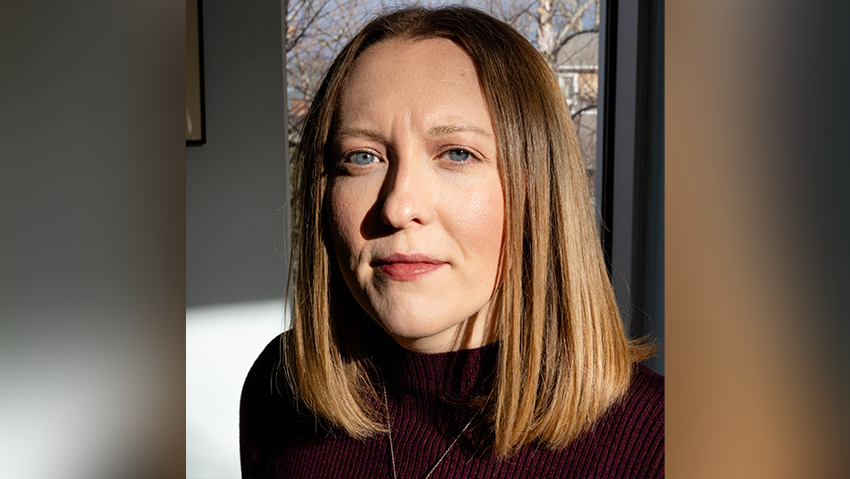
Dr. Elisabeth Marnik's transformation: Unvaccinated as a child, she became an immunologist
(Photo: Instagram)
In a profile published by STAT, a news outlet specializing in health and medicine, her request to the medical staff was described in simple terms: vaccinate her against everything. She eventually received the vaccines she had missed in childhood. But the injections themselves were never what worried her. What did concern her was how her mother would react.
The pamphlet that tipped the scales
Marnik, now 37, grew up with her mother and younger brother in Thomaston, Connecticut. The family belonged to an evangelical church in nearby Waterbury, and religious faith shaped much of their daily lives.
"Pretty much the only thing we did was go to church," she has said in interviews. She taught children in Sunday school, was not allowed to dress up for Halloween or watch Disney films and many television programs, in part because they featured magic.
Science, too, was presented as a threat to faith. At home, she was taught that the biblical creation story had literally taken place over seven days and that scientists who contradicted the Bible could not be trusted. In a personal essay published in February 2025, she wrote that she was also raised to distrust medicine. The family avoided medications and doctor visits unless they were absolutely necessary.

Her mother told her vaccines were dangerous and could cause deafness; illustration
(Photo: Shutterstock)
Alongside their religious beliefs, the family also struggled with poverty. Her parents separated when she was a child, and although her father paid the rent, he was largely absent from their lives. Her mother did not work and did not drive. Marnik's schooling was repeatedly disrupted as well. She and her brother were pulled out of elementary school before her class was due to read the Harry Potter books, which her family regarded as promoting witchcraft.
One of her earliest memories, she later wrote, was her mother explaining that vaccines were dangerous and could cause deafness. Her mother, Teresa Ryan, said that as a young parent she had received a pamphlet containing stories about children who had allegedly been harmed by vaccines. Ryan approached the pediatrician with questions but said she did not receive answers that eased her fears.
Marnik told The Boston Globe that her mother experienced the doctor's response as little more than a demand that she vaccinate her daughter, without an explanation of the benefits and risks in terms she could understand. After that encounter, Ryan decided not to vaccinate Liz and later made the same choice for her son. She left the clinic and never returned, and Marnik herself did not see a doctor again until her teenage years.
Looking back, Marnik does not see that decision as an act of malice but as a mistake rooted in fear and made under conditions of limited knowledge and limited options. Her mother, who left school after eighth grade, believed that refusing vaccines was how she could best protect her children. Years later, the distinction between a harmful decision and the motive behind it would become central to her daughter's work. At the time, however, Marnik still feared her mother's reaction: She waited an entire year before telling her she had been vaccinated.
The chemistry class that cracked the wall
A turning point came during Marnik's teenage years. Before 11th grade, she persuaded her mother to let her return to public school. There, she attended a formal science class for the first time.
Chemistry lessons, and the calculations used to understand reactions between substances, immediately fascinated her. A teacher recognized her ability, encouraged her to consider studying science and helped her navigate college applications and scholarship forms. Until then, Marnik has said, she had never really considered a career. The assumption at home was that she would marry and raise children.
She enrolled at Central Connecticut State University, initially studying chemistry before switching to biochemistry. At the beginning of her freshman year, she was so quiet and withdrawn that her adviser worried she might not finish her degree. That changed after she joined a genetics research laboratory. She became a top student and co-authored two scientific papers while still an undergraduate.
College exposed her not only to new knowledge but also to people who lived outside the world in which she had been raised. She met researchers who took their work seriously, made time for her and helped her with matters that had nothing to do with academics.
One such moment came toward the end of her junior year. After a difficult night at home, she called the pastor's wife and asked if she could stay with her, but was told she should return to her family. The next morning, she arrived on campus and discovered a flat tire. Three professors came out to the parking lot and tried to help her.
She later said the episode highlighted the gap between what she had been taught to believe about church members and scientists and the way those people actually treated her.
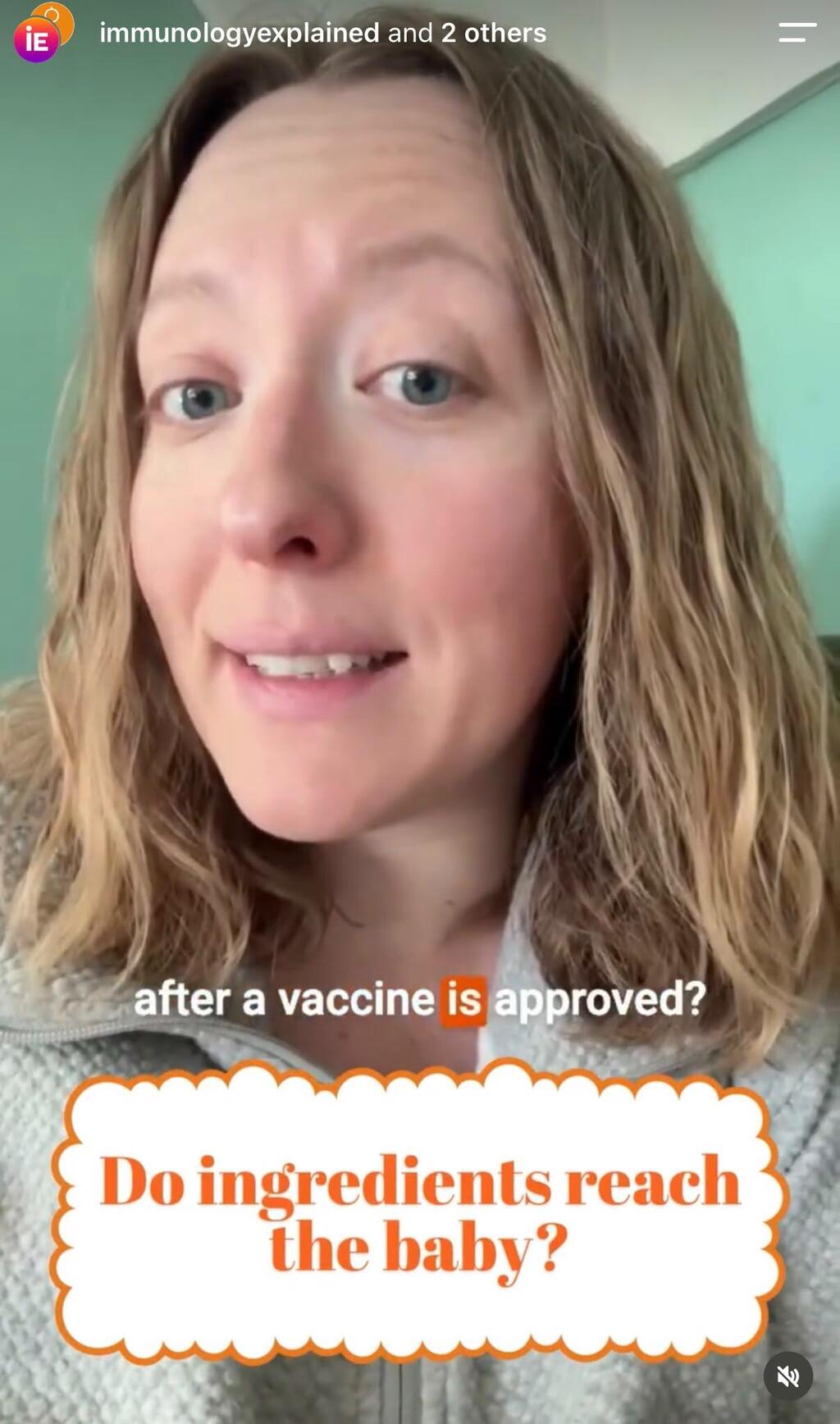
Marnik, who was unvaccinated as a child, became an immunologist and a leading vaccine advocate
(Photo: Instagram)
Her professors encouraged her to remain in school, connected her with counseling and one even offered to let her stay at her home. Marnik graduated in 2011 and was accepted into a doctoral program. By the time she was asked to produce her immunization records, she no longer accepted the beliefs she had grown up with. The formal requirement provided the final push for a decision that had been taking shape throughout her college years.
As noted, she waited a year before telling her mother she had been vaccinated. The two remember the conversation differently. Marnik recalls anger and raised voices. Her mother says she was not angry but frightened by the number of vaccines her daughter had received in a short period.
Either way, vaccination became a recurring source of conflict between them. Marnik, who by then was studying the immune system, struggled to understand why her mother would not accept her explanations. She told The Boston Globe that for years she viewed the decision not to vaccinate as the product of ignorance and judged her mother harshly. Eventually, they stopped discussing the issue.
An old fear returned in the delivery room
Marnik continued advancing quickly, earning a Ph.D. in genetics and immunology, with research focusing on the role of T cells in autoimmune disease. She later completed postdoctoral work at the MDI Biological Laboratory in Maine, studying mechanisms related to stem cells.
During her research career, she realized she was less interested in running her own laboratory and more drawn to teaching science and making it accessible to the public. She invited schoolchildren into the lab, developed summer programs for teenagers and eventually moved into science education and outreach.
In 2019, she gave birth to her first child. The delivery was difficult, and Marnik suffered heavy bleeding that required several blood transfusions. Afterward, she was asked whether she consented to her newborn receiving the hepatitis B vaccine.
Despite her training as an immunologist and her unequivocal support for vaccination, her first reaction was to say no.
She later explained that she was exhausted, in pain and overwhelmed by the responsibility of caring for a newborn. For a moment, the fears she had heard in childhood resurfaced. A friend visiting her in the hospital spoke with her about the decision without dismissing her fear or judging her. Before they left the hospital, her son received the vaccine.
The episode did not change her view of vaccine safety or effectiveness, and both of her children are vaccinated. It did change the way she understood her mother's decision.
In a May 2024 essay, Marnik wrote: "The reason my mom didn’t vaccinate her kids is one of the same reasons I chose to vaccinate mine." In both cases, she explained, the decision came from a desire to protect their children.

(Photo: Shutterstock)
When she made that argument in a guest essay in The New York Times, harsh reactions came not only from vaccine opponents. Some vaccine supporters argued that facts should be enough and that empathy legitimizes behavior that puts others at risk.
Marnik rejects both arguments. To her, empathy does not mean abandoning evidence or agreeing with someone. It is a tool that allows people to remain in the conversation and keep listening.
"Facts alone are not enough," she told The Boston Globe. "I’m not saying facts are not important. They are deeply important, but facts alone are not enough."
In an interview on the First Focus on Children podcast, she said that "what ultimately changes minds is relationships."
And if anyone knows the frustration of talking to vaccine opponents, it is Marnik. For years, she directed that frustration at her own mother. Today, she warns that ridicule, shame and bombarding people with information usually produce the opposite result.
"People aren’t gonna wanna listen to somebody who tells them they’re stupid," she said on the podcast.
She therefore advocates beginning with empathy and curiosity, even when there is no agreement on the facts.
She also says the purpose of a personal conversation should not be to change someone's mind in a matter of minutes. Her own transformation took place over four years of college through a combination of education, relationships and encounters with people whose behavior contradicted what she had been taught about them.
She told The Boston Globe that people exposed to her content have contacted her years later to say that conversations with her, combined with other influences, eventually helped persuade them to vaccinate their children.
Empathy, but also boundaries
That lesson took on broader public significance during the COVID-19 pandemic, when Marnik watched misinformation spread among people who reminded her of the community in which she grew up, while scientists and medical professionals struggled to communicate with them.
She launched social media accounts under the name ScienceWhizLiz and began explaining issues related to COVID-19, vaccines and public health. As of the time of writing, her Instagram account had 64,000 followers.
Today, she serves as executive director of The Evidence Collective, an organization that brings together scientists and medical professionals working to make scientific information accessible to the public. She is also chief scientific officer of Those Nerdy Girls, a group of scientists and health professionals who provide evidence-based medical and scientific information to the public, while continuing her work in science education and outreach.
Her work is not limited to scientists speaking among themselves. She has brought together scientists who are mothers with influencers whose audiences are largely parents and paired scientists with religious leaders to develop messages about measles vaccination that also align with faith-based values.
The goal is to break through information bubbles rather than simply produce more accurate content inside communities that are already convinced.
Still, the empathy she advocates does not eliminate boundaries. Marnik supports vaccination requirements in schools and recognizes their role in increasing immunization rates, particularly as measles cases rise. In her view, it is possible to understand a parent's fear while still deciding that an unvaccinated child cannot enter a particular setting.
Her mother, meanwhile, still disagrees with her. Teresa Ryan did not receive a COVID-19 vaccine and does not get a seasonal flu shot. When Marnik's second daughter was born, Ryan was told she would either have to be vaccinated or wear a mask in order to hold the baby, who was still too young to receive some vaccines. She chose the mask.
Still, Ryan has said she would agree to vaccination after a bite from an animal suspected of carrying rabies or after an injury that could expose her to tetanus. She has also acknowledged the importance of measles vaccination because of the seriousness of the disease. Her daughter considers that progress.
Even that progress has come slowly. Marnik told her mother that measles can erase some of the immune memory built up after exposure to other pathogens, a phenomenon known as "immune amnesia." Her mother responded that she now understood why the MMR vaccine, which protects against measles, mumps and rubella, is important.
After reading her daughter's New York Times essay, Ryan said she might have made different choices if someone had addressed her questions the way her daughter addresses them today.
She has not changed her mind about everything. But the conversation remains open.