

A chemical associated with cancer, obesity and developmental disorders was found in baby pacifiers made by three leading European brands, according to a new study by the Czech consumer organization dTest, reported by The Guardian.
Laboratory tests revealed bisphenol A (BPA) in pacifiers produced by Dutch manufacturer Philips, Swiss company Curaprox and France’s Sophie la Girafe. Two of the products are sold in Israel. All three were marketed as “BPA-free” or made from “natural rubber,” raising serious concerns about the reliability of labeling on infant products.
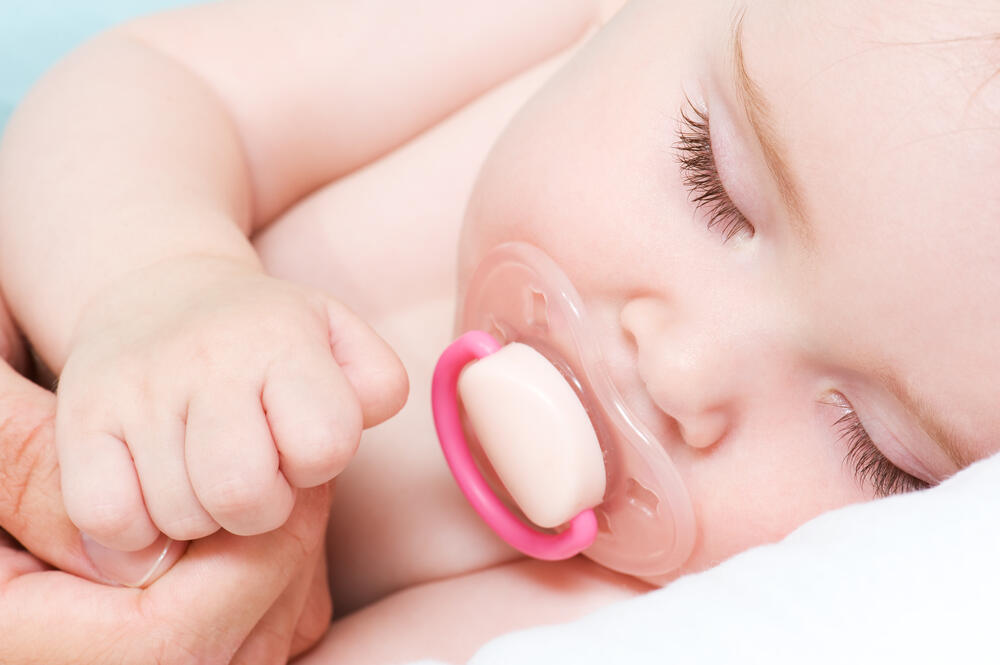
(Photo: Shutterstock)
BPA is a synthetic compound used in plastic manufacturing whose molecular structure mimics the female hormone estrogen, allowing it to interfere with hormonal processes in humans and animals.
“The health effects of BPA are wide-ranging: breast and prostate cancer, endometriosis, heart disease, obesity, diabetes, immune system alterations and developmental and behavioral effects, including in children,” said Chloe Topping of the environmental organization Chem Trust in an interview with The Guardian.
Children, she added, are especially vulnerable “because they are still developing, and their organs are very sensitive to disruption.” Early-life or prenatal exposure to BPA has been linked to reduced sperm count and premature puberty. “What’s worrying about endocrine-disrupting chemicals is that they can act at very low concentrations,” Topping said.
Findings from the Czech study
Researchers purchased 19 pacifiers from stores in the Czech Republic, Slovenia and Hungary, and two more online via Temu. To simulate conditions inside an infant’s mouth, each pacifier was placed in artificial saliva at 37 degrees Celsius for 30 minutes before testing the resulting liquid for bisphenols.
Of the four pacifiers found to contain BPA, the highest level, 19 micrograms per kilogram, was detected in a model made by Curaprox, in violation of the European Union’s 10-microgram limit. The natural rubber pacifier from Sophie la Girafe contained 3 micrograms per kilogram, and Philips’ Avent Ultra Air showed 2 micrograms per kilogram, both despite being labeled “BPA-free.”
Curaden, the Swiss manufacturer of Curaprox, said the finding “surprised us.” After verifying the results with its own tests, the company decided to “immediately withdraw the pacifiers from the market and offer refunds to affected customers.” By contrast, Vulli, the French company behind Sophie la Girafe, rejected the results. “The regulatory limit for BPA migration is set at 0.04 mg/kg, and the laboratory’s detection limit is 0.01 mg/kg. The value found—3 micrograms per kilogram, or 0.003 mg/kg—is well below that threshold and therefore negligible,” a spokesperson said.
Philips stated that “product safety is our top priority,” assuring that “our pacifiers are BPA-free throughout the production process.” The company said that additional tests performed by the independent organization DEKRA confirmed that “no BPA is present in any of our pacifier lines.”
EU rules remain unclear
European Union regulations on BPA in pacifiers remain ambiguous. The EN 1400 standard sets a limit of 10 micrograms per liter, while the Toy Safety Directive, which also covers pacifiers, permits up to 40 micrograms per liter. The EU banned BPA in baby bottles in 2011, later extending the ban in 2018 to all food containers and bottles for children under age 3.
“It makes no sense that bisphenols are banned in baby bottles but not in pacifiers, which babies use even more intensively and often for years,” said Karolina Brabcová of the Czech environmental group Arnika. “We see a clear lack of strict regulation, and it’s disappointing for consumers.”