


Climbing the stairs is one of the simplest forms of physical activity to incorporate into everyday life. It requires no gym membership, no special equipment and can be done at home, at work or in public spaces.
Now, a systematic review and meta-analysis involving more than 480,000 people has found that the everyday habit is associated with a substantially lower risk of death, particularly from cardiovascular disease.
Gallery

Stair climbing was linked to a lower risk of death from cardiovascular disease
(Photo: Shutterstock)
The study, recently published in the American Journal of Cardiovascular Drugs, was conducted by researchers from the University of East Anglia and Norfolk and Norwich University Hospital in Britain.
Researchers found that people who climbed stairs had a 39% lower risk of dying from cardiovascular disease and a 24% lower risk of death from any cause compared with those who did not climb stairs. Stair climbing was also associated with a lower risk of major cardiovascular conditions, including heart attack, stroke and heart failure.
More than 480,000 participants
Dr. Maali Abu Omer, a pediatric cardiologist at Emek Medical Center, part of Clalit Health Services, said researchers searched the PubMed and Embase medical databases for relevant studies published through April 8, 2025.
“They looked for observational studies and randomized controlled trials that examined stair climbing,” Dr. Abu Omer said. “The search identified 1,873 studies. Nine of them, involving a combined 480,479 participants, met the inclusion criteria and were included in the analysis. The median follow-up period was 14 years. Participants ranged in age from 35 to 84 and included both healthy people and those with a history of heart problems.”
 Dr. Maali Abu OmerPhoto: Courtesy
The researchers examined cardiovascular mortality, all-cause mortality and the development of cardiovascular conditions including heart attack, ischemic stroke and heart failure.
The main analysis of cardiovascular mortality was based on five studies involving 455,619 people. It found that stair climbing was associated with a 39% lower risk of cardiovascular death, with a relative risk of 0.61 and a 95% confidence interval ranging from 0.48 to 0.79. The finding was statistically significant, with a p-value of 0.0002.
A separate analysis of the same studies found a 24% lower risk of death from any cause among stair climbers, with a relative risk of 0.76 and a 95% confidence interval of 0.62 to 0.94. That result was also statistically significant, with a p-value of 0.01.
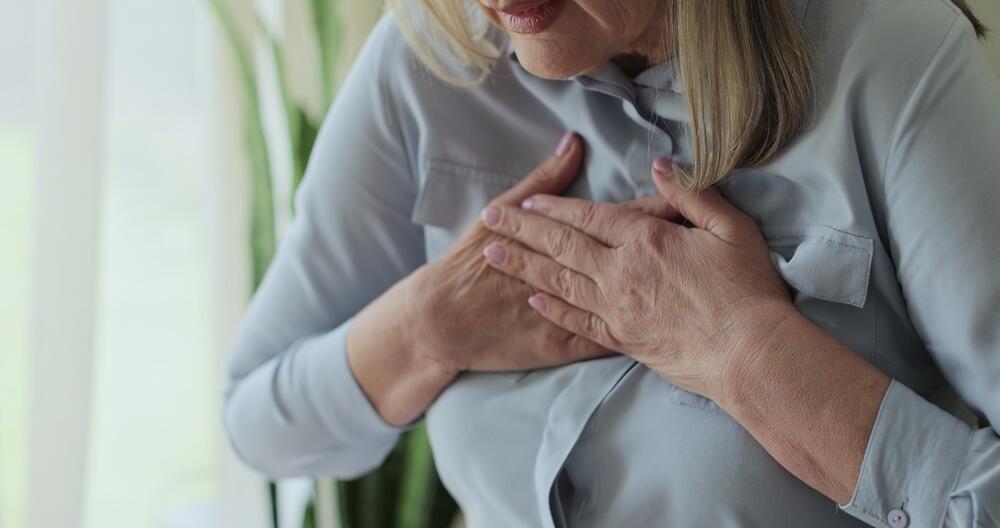
Stair climbing was linked to a 39% lower risk of death from cardiovascular disease
(Photo: Shutterstock)
Researchers also reported an association between stair climbing and lower cardiovascular disease risk, although the study abstract did not provide separate numerical estimates for heart attack, stroke or heart failure.
“This is not the first time we have known that climbing stairs is good physical activity, but now there is research support pointing to benefits for heart health,” Dr. Abu Omer said. “Many people think exercising requires investing time and money or signing up for a gym, but even something as simple as taking the stairs instead of the elevator can benefit your health, and it costs nothing.”
Vassilios Vassiliou of the University of East Anglia’s Norwich Medical School told Fox News that cardiovascular disease remains the leading cause of death worldwide and that the number of cases nearly doubled between 1990 and 2019.
More than a quarter of adults worldwide also fail to meet recommended physical activity levels, he said, while sedentary lifestyles, smoking, poor diet and obesity all contribute to cardiovascular disease.
How many stairs should you climb?
The study does not establish a specific number of stairs or floors people should climb each day. However, according to a Fox News report on the findings, one of the larger studies included in the analysis suggested that climbing around six flights of stairs a day may provide substantial benefit. Researchers stressed that more research is needed to determine the optimal amount.
“Some of the studies we looked at showed that the more stairs climbed, the greater the benefits, but even small changes had a measurable impact,” researcher Sophie Paddock of Norwich Medical School said in a University of East Anglia statement quoted by Fox News.

Stair climbing engages multiple muscle groups and helps improve cardiovascular fitness
(Photo: Shutterstock)
Stair climbing repeatedly forces the body to work against gravity, engaging several muscle groups while challenging the cardiovascular system.
Researchers said the activity can contribute to both cardiovascular fitness and muscle strength. Its practical advantage is accessibility: It is free and can often be incorporated into everyday routines without setting aside time for a formal workout. That may make it particularly useful for people who lack the time for structured exercise or easy access to sports facilities.
"Even brief bursts of physical activity have beneficial health impacts, and short bouts of stair climbing should be an achievable target to integrate into daily routines,” Paddock said.
What the study cannot prove
Despite the striking numbers, researchers stressed an important limitation: The findings show an association between stair climbing and lower mortality risk. They do not prove that climbing stairs itself caused participants to live longer or directly reduced their risk of cardiovascular death.
The researchers concluded that stair climbing as a form of physical activity was associated with a reduced risk of both cardiovascular and all-cause mortality, highlighting the importance of promoting ordinary everyday activities performed at home and workplace as part of a healthier lifestyle.
Three researchers involved in the study were academic fellows funded by Britain’s National Institute for Health and Care Research (NIHR), while another received a doctoral fellowship from the organization. The authors reported no conflicts of interest relevant to the research.
Researchers also cautioned that stair climbing may not be suitable for everyone, particularly people with mobility limitations or joint problems.