


One of the major questions in immunotherapy is how to help the immune system better recognize cancerous and viral targets and attack them. A new Israeli study now offers another step in that direction: Researchers at Bar-Ilan University and the Weizmann Institute of Science have found a way to strengthen immune cells so they can better identify cancer cells and viruses and attack them more effectively.
In the study, published last week in the journal Science Advances, the researchers used computer-assisted protein design to improve the receptor immune cells use to identify their targets. In experiments, the engineered cells produced a stronger immune response and showed an enhanced ability to attack target cells.
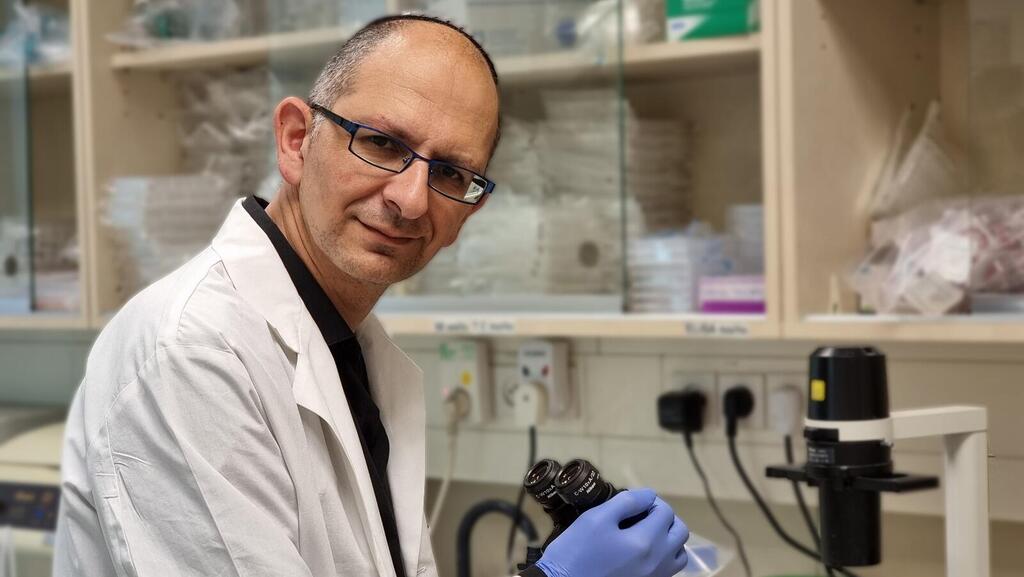
Identifying the enemy from within
“In recent years, we have seen major advances in the field of immunotherapy,” said Prof. Cyrille Cohen, a member of the research team, head of the Laboratory of Tumor Immunology and Immunotherapy at Bar-Ilan University’s Goodman Faculty of Life Sciences and the university’s rector.
“The idea is to change the behavior of the immune system so that it can fight disease-causing agents, or essentially turn it into a platform that helps bring about healing in the body.”
The immune system can do this naturally in many cases, he said, such as viral and bacterial infections, but sometimes it needs help.
“To intervene in the immune system, you first need to understand how it works and what can be done to improve its behavior during disease,” Cohen said. “That understanding is what gave rise to the field.”
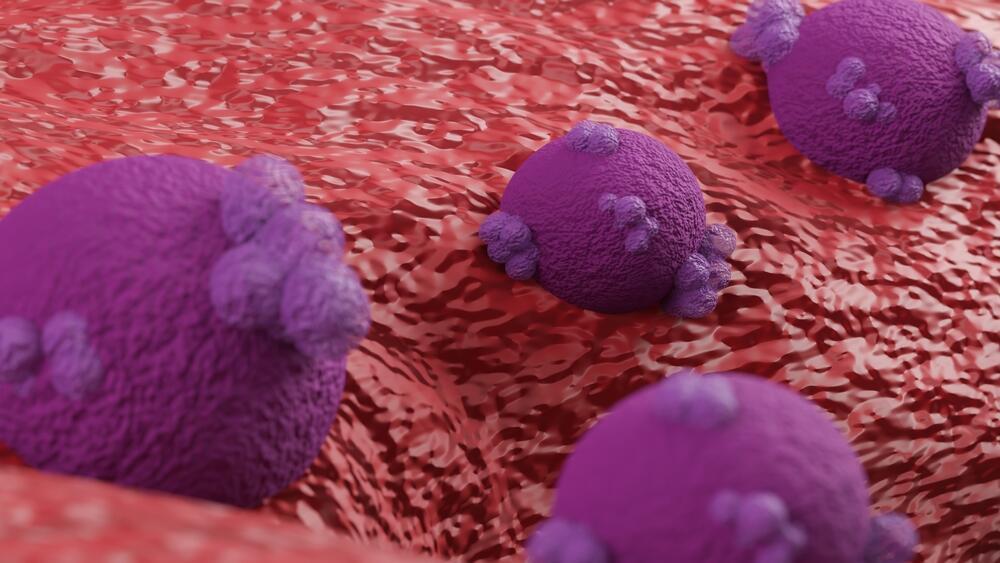
Cancer cells attack healthy cells; the goal: train immune cells to identify and attack them
(Photo: Shutterstock)
The challenge is especially great in cancer. “For years, the assumption was that the immune system could usually deal with bacteria and viruses, but would not always recognize cancer because it comes from the body itself, and the immune system is not supposed to attack the body,” Cohen said.
Over time, however, scientists discovered that differences between healthy and cancerous cells can be exploited.
“Sometimes the differences are extremely subtle, but they can allow the immune system to recognize the cancer cell and act against it without damaging healthy tissue,” he said. “That is essentially what we are looking for, because cancer treatments such as chemotherapy and radiation can damage not only cancer cells but healthy cells as well, which is why they have so many side effects.”
A recipe for a new scanner
One of the immune system’s main tools in this fight is the T cell, an immune cell that identifies and destroys infected or abnormal cells.
“You can think of the immune system as an army,” Cohen said. “It has intelligence units, armor and artillery, and it also has reconnaissance units — the T cells. They are especially well suited to identifying abnormal cells and attacking them.”
One of the most striking abilities of T cells is the precision with which they distinguish between different targets. According to Cohen, studies conducted in his laboratory and elsewhere have shown that in some cases a difference of just a few atoms can be enough for the immune system to distinguish a diseased cell from a healthy one.
That recognition is carried out by a receptor on the surface of the T cell called a T-cell receptor, or TCR.
“You can think of it as a kind of scanner,” Cohen said. “The body has about 500 billion T cells, and each cell has its own scanner that recognizes a specific target, such as a component of a virus or bacterium, for example smallpox virus or E. coli.”
That capability can be harnessed to treat cancer.
About 20 years ago, Cohen was part of a team in the United States that was among the first to engineer patients’ T cells using a TCR that recognizes a feature of their tumor.
The idea is to transfer into one patient’s T cells the genetic information that encodes a receptor capable of recognizing cancer, using information taken from the T cells of another patient.
“You are essentially giving the T cell the recipe for building a new scanner, one that allows it to identify cancer cells,” Cohen said.
But that creates a problem. A T cell does not start out empty. It already has its own natural TCR. When a new receptor designed to identify cancer is introduced, the two receptors can interfere with one another.
“The existing TCR and the TCR we introduce start, in a sense, getting mixed up and interacting with one another,” Cohen said.
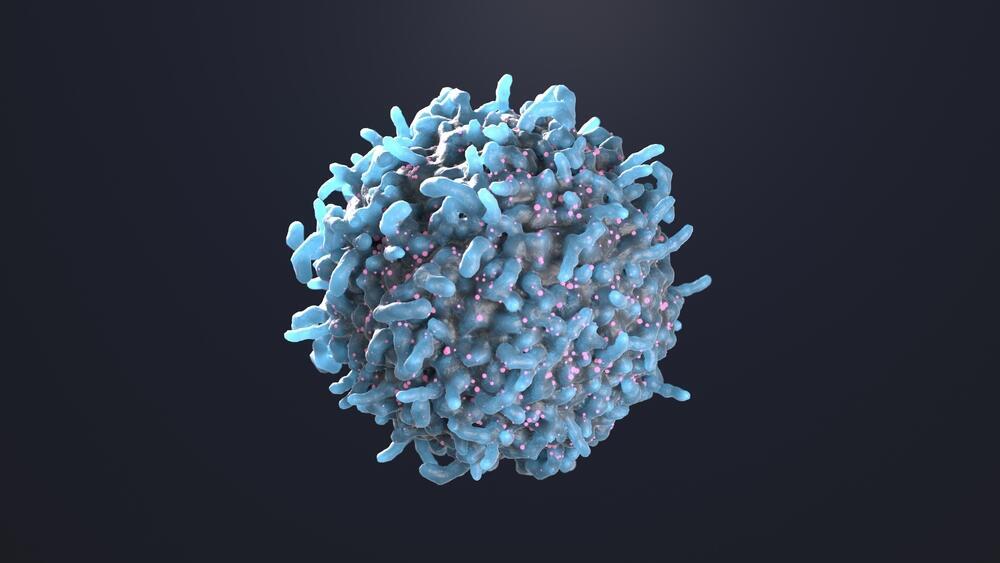
The body contains about 500 billion T cells, each with its own scanner that recognizes a specific target
(Photo: Shutterstock)
In simpler terms, each TCR is made of two chains, alpha and beta, which are meant to pair in a fixed combination. But when an additional receptor is inserted into the cell, the new chains may instead pair with chains from the original receptor.
“If we call the receptor we introduce alpha 1 and beta 1, while the cell already has alpha 2 and beta 2, we can end up, for example, with alpha 1 and beta 2,” Cohen said. “Those are not good pairings. The scanner is not supposed to work that way. It is supposed to function with alpha 1 and beta 1 together.”
That problem was at the heart of the new study: how to make the engineered TCR pair correctly and more stably, thereby improving the ability of engineered T cells to identify and attack their targets.
The computer designed it, the lab built it
To solve the problem, Cohen’s team joined forces with Prof. Sarel Fleishman of the Weizmann Institute of Science, who specializes in computational biology and protein design.
“A TCR is a protein, so computational design can be used to test which structural changes might help it bind more effectively,” Cohen said. “You can imagine the TCR as a Lego structure made up of many blocks. The computer can examine where changes should be made so that the new scanner pairs correctly with itself and is not affected by the other scanners already inside the cell.”
A promising Israeli experiment; could it mark a breakthrough in the fight against cancer? Illustration
(Photo: Shutterstock)
What followed, Cohen said, was a kind of “ping-pong” between the computational laboratory at Weizmann and his laboratory at Bar-Ilan.
Researchers at Weizmann used computer simulations to generate a series of possible receptor designs, while the Bar-Ilan team built them in practice and tested how they functioned in human immune cells.
“They came back to us with protein designs calculated by the computer, and we started testing the models one by one,” Cohen said. “We took human cells, introduced the changes and checked what they did. It was a tremendous amount of work.”
Most of the experiments, he said, were carried out by Dr. Maria Redman and Dr. Esther Shmuel-Revy.
Through this process, the researchers developed an improved structural version of the TCR called SET, short for Structurally Enhanced TCR.
The changes were designed so that the two chains making up the engineered receptor would pair more effectively and stably with each other, while mixing less with the chains of the natural receptor already present in the cell.
The goal was straightforward: to make the new scanner work more efficiently inside the T cell.
The first stage was conducted in the laboratory. The researchers inserted the improved receptors into human T cells and exposed them to human cancer cells to determine which modifications enhanced their activity.
In those experiments, T cells carrying SET produced a stronger immune response and showed a greater ability to kill cancer cells than cells carrying the original receptor.
After identifying the most successful combination of changes, the researchers moved to the next stage.
“We took mice, implanted them with tumors derived from human cancer cells and introduced engineered human immune cells that were supposed to fight the cancer,” Cohen said. “We saw that the changes significantly slowed the development of the cancerous tumors.”
Promising results, but a long road ahead
The results were especially notable in mice carrying tumors derived from human cells.
After 83 days, tumors in mice treated with T cells carrying SET were about 35% smaller than tumors in the untreated control group.
By day 127 of the experiment, all the mice that received the improved cells were still alive, compared with fewer than half of the mice in the control group.
One of the study’s main findings was that the improvement was not limited to a single receptor or a specific cancer target.
The researchers applied the same strategy to T cells designed to recognize several different cancer-related targets, including targets associated with melanoma and other cancers, as well as targets from Epstein-Barr virus, or EBV, and SARS-CoV-2, the virus that causes COVID-19.
In every case, the improved T cells showed stronger immune activity than cells carrying the original receptor.
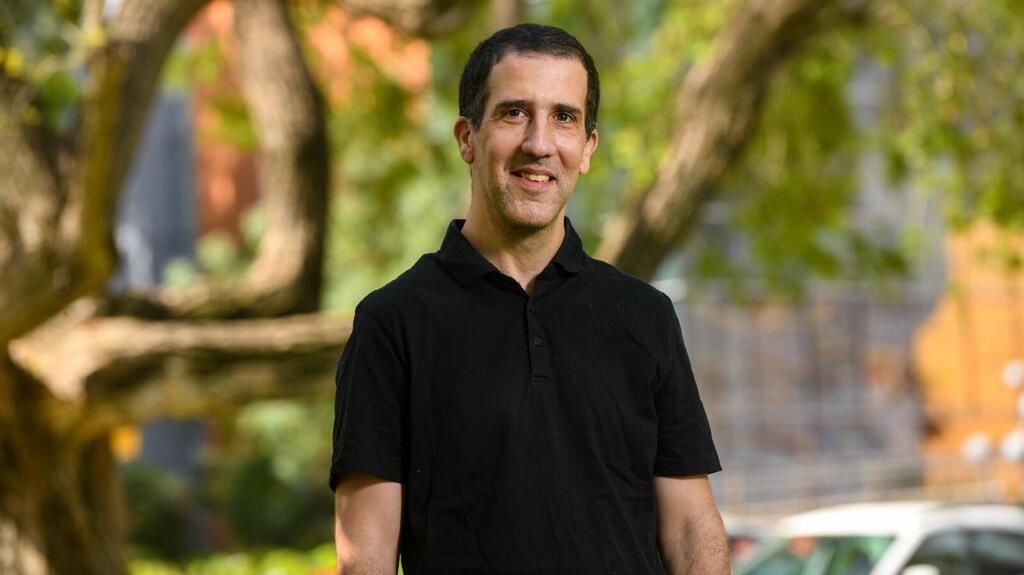
Prof. Sarel Fleishman of the Weizmann Institute of Science
(Photo: Weizmann Institute of Science spokesperson)
“One of the most exciting findings was that the same strategy succeeded in improving T-cell function against targets that were very different from one another,” said Redman, of Bar-Ilan’s Goodman Faculty of Life Sciences and the study’s first author.
“We saw increased activity not only against cancer-related targets, but also against viral targets. That suggests the approach could be used broadly to engineer T cells with stronger and more effective immune responses.”
The potential significance extends beyond improving a single TCR. According to Fleishman, who led the computational design work with Dr. Jake Parker, a visiting researcher from Australia, one of the key advantages is that the same set of structural changes was able to improve different TCRs.
“What stands out in particular is that one set of mutations, strategically designed in conserved regions of the TCR, has a beneficial effect on entirely different types of TCRs,” he said.
“Instead of spending years identifying enhancing mutations for each therapeutic candidate separately, we expect that the mutations we designed could improve many TCRs and thereby speed the path from a promising discovery to medical treatment.”
The road to that point, however, remains long. The findings are still preclinical: They were demonstrated in human cells in laboratory conditions and in animal models and have not yet been tested as a treatment in humans.
Further studies will need to examine, among other things, the approach’s safety, its long-term effectiveness and whether the benefits seen in the laboratory and in mice can also be reproduced in patients.
For Cohen, that is now the next goal. “Our laboratory develops treatments for serious diseases, so now that we have a successful design, we want to integrate it through collaborations with hospitals and eventually into clinical trials,” he said.
“There are already dozens of trials of this kind around the world, and our work could improve the way they are designed. I am optimistic. For me, this is another brick, another piece in the larger puzzle of the fight against cancer.”