


Daria Shipilova, 28, died overnight between October 1 and October 2 at a hospital in Shelekhov, Siberia, just days after she was admitted. According to Russian media, Shipilova worked as a laboratory technician at the Irkutsk Anti-Plague Research Institute. One account describes an alleged accident on September 25, when a test tube containing the plague bacterium broke while she was working. Within a week, an employee of an institute dedicated to combating the disease was dead. The circumstances of the exposure have not been officially confirmed.
Shipilova was hospitalized on September 29 with symptoms of severe pneumonia, raising suspicions of pneumonic plague. Following the incident, restrictions were imposed on hospital wards, with admissions and discharges suspended in some departments. Maxim Modin, head of the Shelekhov district, confirmed that the hospital was under quarantine while its outpatient clinic continued to operate.
Gallery

The death of Daria Shipilova, a laboratory technician at an anti-plague facility in Siberia, raises serious questions
Her death has put the spotlight on an institution established to prevent precisely such dangers. The Irkutsk Anti-Plague Research Institute was founded in 1934 as a research and operational body tasked with combating the disease. Its responsibilities were later expanded to include other dangerous infections, including cholera and anthrax. It operates under Rospotrebnadzor, Russia’s public health and consumer protection agency, which is now overseeing efforts to contain the incident.
Deleted notices and conflicting accounts
According to reports, at least 197 people who may have come into contact with Shipilova were identified following the incident, with 189 placed under observation in medical facilities. Public events in Irkutsk were also canceled and a criminal investigation was opened into suspected violations of safety regulations resulting in death. Anna Popova, head of Rospotrebnadzor and Russia’s chief public health official, traveled from Moscow and attended an emergency meeting to coordinate containment measures.
Residents reported seeing people wearing protective suits, masks and gloves in the streets, while masks were distributed at kindergartens. The independent news outlet Baikal People, which operates outside Russia, cited a source close to law enforcement as saying officers from the Federal Security Service, or FSB, escorted ambulances transporting people who had come into contact with Shipilova for testing. The claim of FSB involvement has not been officially confirmed.
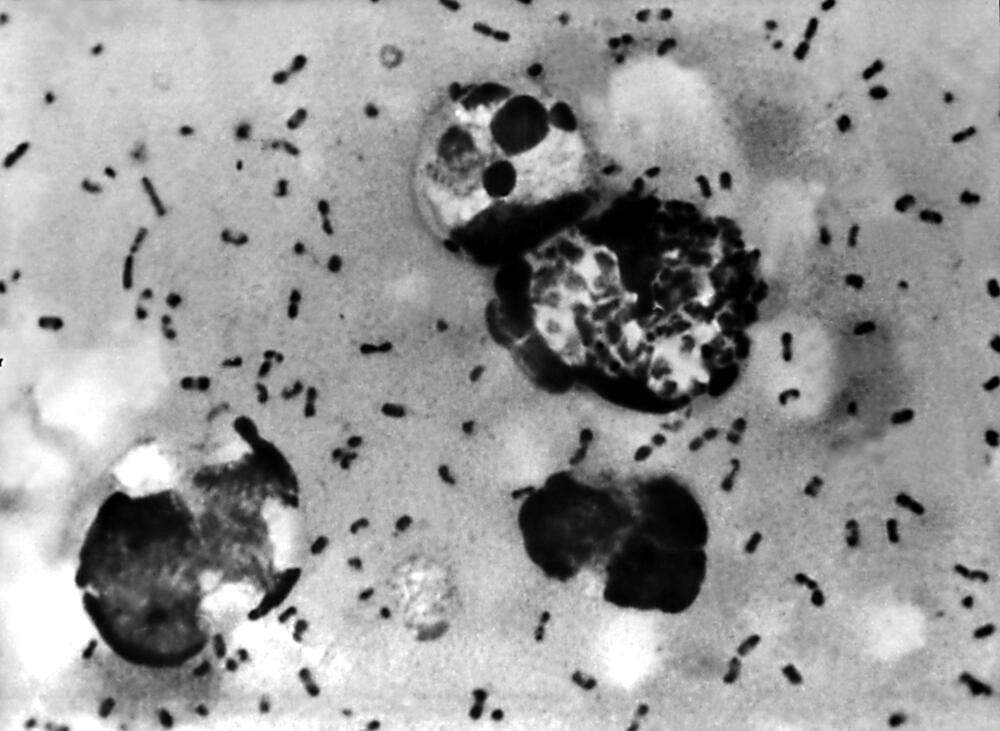
Plague bacteria under a microscope
(Photo: shutterstock)
Despite the emergency measures, local authorities have provided the public with only limited information about the disease itself. In an official statement on October 2, Irkutsk regional Gov. Igor Kobzev referred only to a suspected “particularly dangerous infection.” He said everyone identified as having come into contact with the patient was under medical observation, showed no signs of illness and had tested negative in laboratory tests. The disease was not named in the statement. Russia’s Health Ministry has issued no statement on the incident, nor has the World Health Organization commented on it.
Alexey Tsydenov, head of the neighboring Republic of Buryatia, initially wrote that the woman had died of plague. He later edited the post to say she “may have died of plague.” He also denied that she had visited Buryatia or that her infection was linked to his republic.
Three accounts of how she may have been infected have since emerged: exposure after a test tube broke in the laboratory, infection during a work trip to Buryatia and infection after returning from Thailand. The Buryatia account was denied by the republic’s leader, while neither of the other two versions has received official confirmation.
The uncertainty deepened when information that had already been published began disappearing. The Baikalsk municipality issued a recommendation to avoid travel to Shelekhov because of unofficial reports of plague, then deleted it about two hours later. Social media posts by Russian media outlets were also removed. Amid the rumors, residents of Shelekhov and Irkutsk began buying antibiotics effective against the bacterium.
Russian epidemiologist Michael Favorov, who lives in the United States, questioned the test-tube account. He said employees at the institute should be wearing protective suits, making infection from a broken test tube unlikely. He described Popova’s arrival as a sign of the seriousness of the incident and said: “They will not tell us what really happened.” His comments reflect his assessment, rather than a finding of the investigation.
Gennady Onishchenko, a former head of Rospotrebnadzor, meanwhile questioned whether the case involved plague at all. He said the woman may have died from another infection and stressed that established preventive measures and treatments exist for plague. Among his arguments, he cited the cold weather in Buryatia and the hibernation of animals that carry the bacterium.

A broken test tube in a laboratory and a mysterious death. Illustration
(Photo: shutterstock)
Conflicting claims have also emerged about the condition of those under observation. While the official statement said they showed no signs of illness and had tested negative, another report claimed some hospitalized people were experiencing symptoms. No infections have been confirmed, however. The number of people under observation is not the number of people infected and there is no evidence that the disease spread from Shipilova to anyone else.
‘It can be treated, but treatment must begin quickly’
Prof. Tal Brosh Nissimov, director of th eInfectious Diseases Unit atSamson Assuta Ashdod University Hospital, addressed the possibility that Shipilova was infected in a laboratory accident.
“Let’s assume what is being reported is correct. I have no idea what the safety standards are there or what their procedures are. When people work in laboratories with dangerous bacteria, accidents happen and people are exposed. The description of what happened to this woman is consistent with exposure to the plague bacterium.”
According to Brosh, the key to understanding such a scenario is how the bacterium entered the body.
“If a test tube containing the plague bacterium broke and an aerosol was released from it, meaning droplets were released into the air, inhaling the bacterium can cause pneumonic plague,” he explained. “There are several forms of plague. The most severe, the deadliest and the most contagious is pneumonic plague. It is an extremely fast and extremely aggressive disease and the description of her deterioration within days is consistent with it. It is not certain, but it fits. It progresses extremely quickly and causes very severe pneumonia. Plague can be treated, but treatment has to begin very quickly. It does not respond well to late treatment.”
 Prof. Tal Brosh NissimovPhoto: Private album
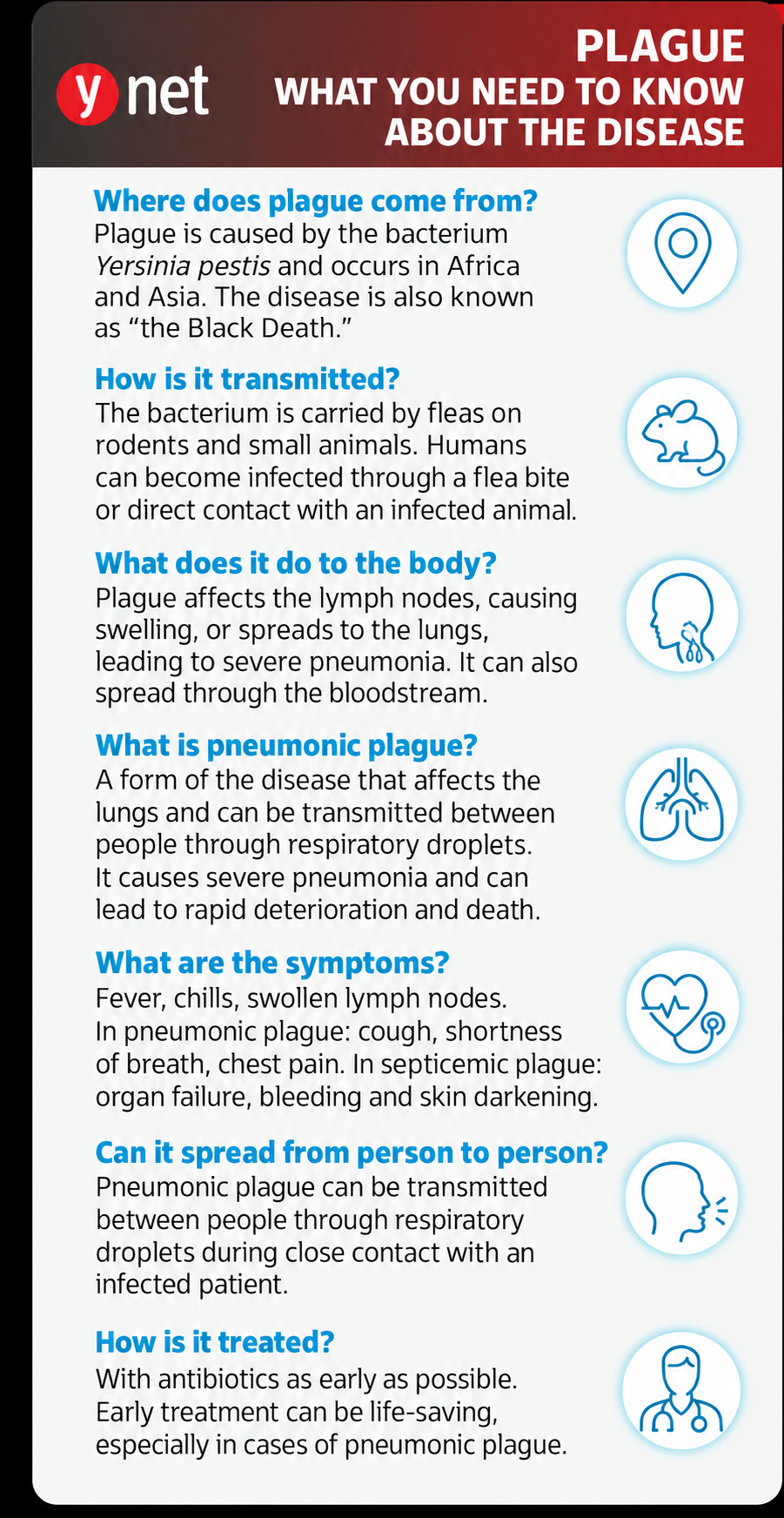
Plague is caused by the bacterium Yersinia pestis, notorious for causing the Black Death pandemic in the 14th century. But the disease is not merely a chapter in the history books.
“It is a disease that exists. It is not something imaginary,” Brosh said. “Not in Israel, but there are places in the world where plague remains active: parts of Central Asia, northern China and Mongolia. There are not many cases, but they exist. There are also cases in South America, some in the western United States and in Africa. Madagascar is one of the disease’s major hotspots.”
Prof. Tal Brosh Nissimov: “There are several forms of plague. The most severe, the deadliest and the most contagious is pneumonic plague. It is an extremely fast and extremely aggressive disease and the description of her deterioration within days is consistent with it. It is not certain, but it fits. It progresses extremely quickly and causes very severe pneumonia.”
The figures support that assessment. According to the World Health Organization, 10 countries reported confirmed or suspected plague cases between 2019 and 2025, amounting to nearly 4,000 suspected cases overall. Russia’s last documented case was in 2016, when a 10-year-old boy in the Altai Republic became infected while skinning a marmot. He recovered after receiving timely treatment.
The disease persists in nature among small animals such as rodents and spreads between them.
“People generally do not become infected unless they come into contact with these animals, for example hunters who hunt marmots, or through a flea that passes from an animal to a person. That causes bubonic plague, which affects the lymph nodes,” Brosh explained. “When the bacterium is inhaled, pneumonic plague can develop. Pneumonic plague is very severe and can also spread from person to person, whereas bubonic plague does not spread from person to person.”
Despite the distinction Brosh noted, bubonic plague can also be dangerous if left untreated. According to the World Health Organization, it can spread to the lungs or bloodstream.
Commenting on the emergency measures taken in Russia, Brosh said: “On the face of it, the response there sounds somewhat excessive to me. They are putting large numbers of people into quarantine and imposing various fairly dramatic restrictions. Very close contact is required to become infected with plague. It is a disease whose transmission is relatively easy to prevent.”