

During the Sukkot holiday, doctors at Hadassah Ein Kerem Hospital in Jerusalem performed a groundbreaking and unprecedented medical procedure: a patient in his 40s underwent complex heart bypass surgery, followed immediately that same night by a life-saving liver transplant.
The operation, never before performed in Israel and done only in a few leading hospitals worldwide, required meticulous planning, extensive coordination, and total commitment from multiple medical teams. It was part of a 24-hour transplant marathon that saved four lives — two liver and two kidney transplants.
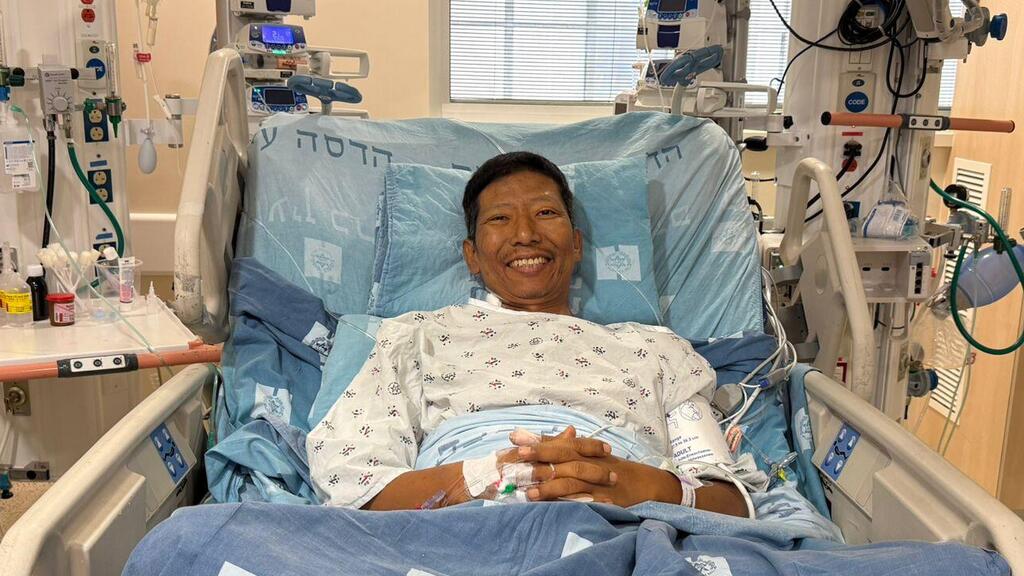
Dr. Abed Khalaileh, director of Hadassah’s Solid Organ Transplant Unit, who led the procedure, described the tense and complex night: “The patient would not have survived the liver transplant without the bypass surgery, and on the other hand, he would not have survived without the liver transplant. His life was saved in one night, in two different operating rooms.”
The patient, Shneor Kipgan, 44, a father of four from the community of Ofra, made medical history at Hadassah. Kipgan, who suffered from severe liver cirrhosis, underwent the dual surgeries in a single night. “I never thought my medical condition would reach such a stage,” he said. “When they told me I needed a transplant, I was scared — it’s not a simple thing.”
Dr. Ashraf Imam, head of the Liver Transplant Service at Hadassah, explained that cirrhosis is caused by chronic illness that replaces healthy liver tissue with scar tissue, leading to liver failure. “Shneor’s condition had worsened drastically over time,” recalled his wife, Shoshana. “About a year ago, we were told he needed a liver transplant.”
Before the procedure, doctors discovered during routine tests that Kipgan was also suffering from blocked coronary arteries, requiring immediate heart bypass surgery. The cardiac surgery was led by Dr. Amit Korach, director of the Department of Cardiothoracic Surgery at Hadassah, while at the same time, another team performed a liver harvesting surgery at Rambam Hospital.
After the bypass surgery was completed at 4 a.m., the liver was transported to Hadassah, where the transplant surgery immediately began — and succeeded.
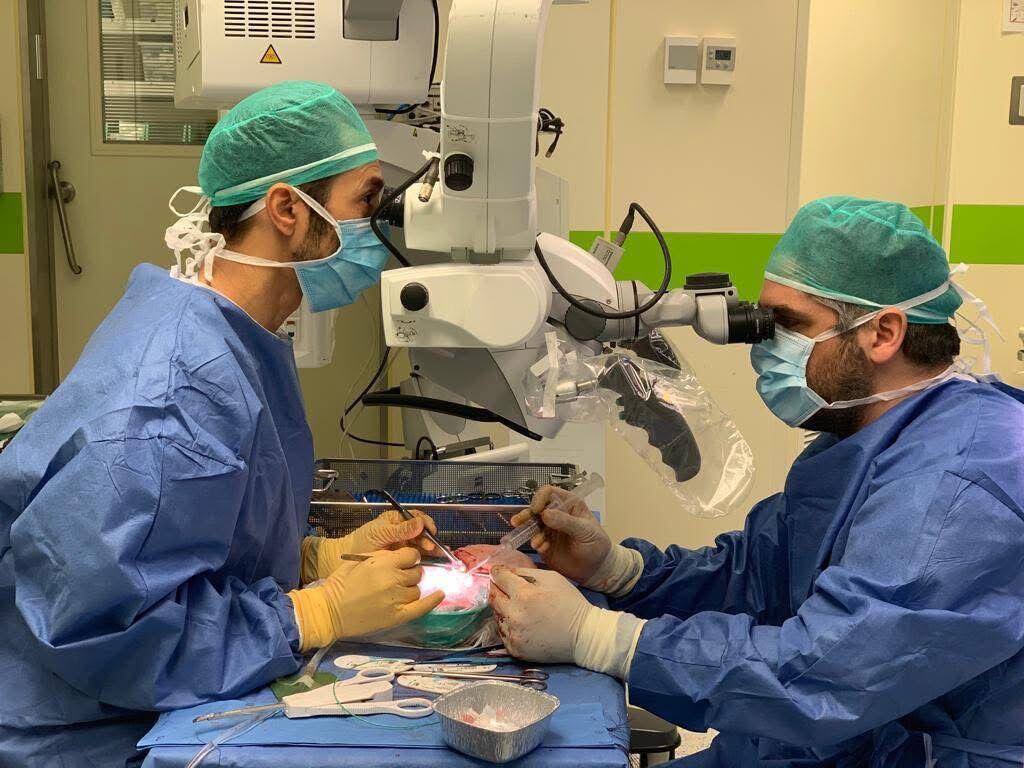
Dr. Abed Khalaileh and Dr. Ashraf Imam
(Photo: Hadassah Ein Kerem Hospital)
“Shneor suffered from narrowing of the arteries that supply blood to the heart — a life-threatening condition that made it impossible to perform a liver transplant first,” Dr. Korach said. “Bypass surgery involves taking blood vessels from other parts of the body to reroute around the blockages. The risk of performing both surgeries consecutively is immense, especially in a patient with severe liver failure and an impaired ability to clot blood.”
He added that the decision to combine the two procedures was made after consultations among heart surgeons, transplant specialists, anesthesiologists, and hepatologists. “We spent months preparing every detail, listing potential complications and required equipment. The main tension came from the unknown — this kind of combined surgery has been attempted only a few times worldwide.”
The medical drama continued as the Hadassah team who performed the liver harvesting at Rambam then traveled to Assuta Ashdod Hospital to carry out another liver retrieval for a different patient awaiting transplant.
At 8 a.m., a second liver transplant was performed at Hadassah for a 50-year-old patient from northern Israel. Later that day, the team performed two kidney transplants: one for a 55-year-old woman with chronic illness, and another for an 83-year-old man.
All surgeries were completed within 24 hours, requiring extraordinary coordination among hospitals and transplant teams across the country. All four patients are now recovering well.
Dr. Khalaileh summed up: “This was an unprecedented medical achievement that required perfect synchronization among dozens of professionals — surgeons, anesthesiologists, nurses, technicians, and logistical staff. Four lives were saved thanks to dedicated, precise work that continued around the clock without pause. I’m proud of our teams and grateful to everyone who took part.”