

Imagine a baby who’s just finished feeding. What’s the first thing you do after the meal? You lift the baby and gently pat their back to help them burp. Every new parent knows that without releasing that trapped air, the baby won’t sleep well.
Now imagine you’ve just finished a glass of a fizzy drink. You feel a growing pressure in your upper abdomen, a mounting discomfort. Relief only comes when the long-awaited burp finally escapes. But what if, no matter how hard you try, that burp simply refuses to come?

That’s exactly the experience of people living with retrograde cricopharyngeal dysfunction, or RCPD.
Trapped air with nowhere to go
We all swallow air throughout the day—when we eat, drink and even just swallow saliva. Burping is a reflex designed to release this air, which accumulates in the stomach and esophagus. Since burping works “against the flow”—moving air from the stomach back up through the esophagus to the mouth—it requires certain muscles to relax to let that air out.

(Photo: Shutterstock)
Two key muscles must release for a burp to occur. The first is the lower esophageal sphincter, located at the junction between the esophagus and stomach. The second, more crucial in this case, is the upper esophageal sphincter, which sits between the pharynx and the esophagus.
In people with RCPD, the upper esophageal sphincter fails to relax properly, trapping air in the esophagus with no exit route.
Beyond discomfort: The everyday impact
Aside from pressure in the chest, those with RCPD often experience strange gurgling noises that come from the base of the neck—caused by air moving inside the esophagus. These involuntary sounds can be a source of deep embarrassment, especially in social or intimate settings.

(Photo: Shutterstock)
People with RCPD also suffer from frequent bloating and excessive gas—after all, what doesn’t come out one end will find its way out the other.
In addition, vomiting can be extremely difficult or painful for RCPD sufferers, since the same upper esophageal sphincter must relax to allow vomiting. For many, this adds another layer of anxiety in situations involving illness or nausea.
A simple solution for a little-known problem
Why haven’t you heard of RCPD until now? Likely because the condition—an inability to burp—was first formally described just a few years ago. The first to identify and name the disorder was Dr. Robert Bastian, an American ear, nose and throat specialist, in 2019. Once he published his findings and offered a treatment protocol, people from around the world began to come forward, finally able to name their distress and seek relief.
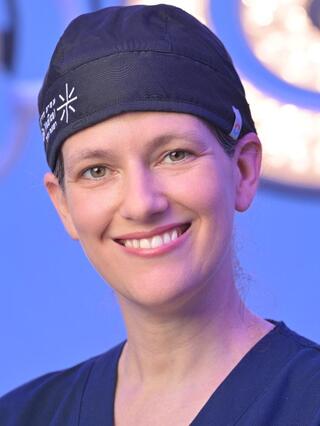 Dr. Yael Shapira-Galitz Photo: Yossi Zwecker
Dr. Bastian’s proposed solution for RCPD is surprisingly straightforward: temporarily paralyze the upper esophageal sphincter. This ring-shaped muscle, when relaxed, allows trapped air to escape upward from the esophagus. To achieve this, he injected botulinum toxin (Botox) directly into the muscle.
Botox, one of the most potent toxins known to science, blocks the signals between nerves and muscles at the injection site, effectively paralyzing the muscle. While widely known for cosmetic use—smoothing facial wrinkles—it can also be injected into other muscles, including those in the neck, limbs, vocal cords and in this case, the upper esophageal sphincter.
In the first group of patients treated with Botox for RCPD, results were almost immediate. The treatment worked: over 80 percent began burping after a single injection. Some required multiple rounds of treatment, and a small number eventually underwent a more invasive surgical procedure to relax the muscle. But for the vast majority, one injection was life-changing.
Awareness of RCPD is still growing—among both doctors and patients. It appears to be a relatively rare condition, and many healthcare providers still aren’t familiar with it or the fact that there is a safe, effective, and simple treatment. Even more concerning: many people suffering from RCPD don’t yet realize that a solution exists.
- Dr. Yael Shapira-Galitz, deputy director of the Ear, Nose and Throat Department at Kaplan Medical Center and a specialist in laryngology and vocal cords, is among the Israeli experts helping to raise that awareness.