


Hebrew University researchers have altered a single gene in a small laboratory fish, opening a window into one of biology’s most enduring questions: What if the same mechanism that helps the body grow quickly and reach sexual maturity early also shortens its life?
In the genetically altered fish, researchers observed faster growth and earlier sexual maturity. But that acceleration came with a price: a 15% shorter lifespan and the appearance of melanoma-like tumors.
Gallery

Do humans also pay a price for maturing early later in life? Illustration
(Photo: Shutterstock)
The study, published Tuesday in Nature Communications, offers rare direct experimental evidence for a longstanding evolutionary theory known as antagonistic pleiotropy, the idea that some genes provide benefits early in life but carry a cost later on.
The research was led by Dr. Eitan Moses, Dr. Marva Bergman and Prof. Itamar Harel of the Hebrew University’s Institute of Life Sciences, in collaboration with Prof. Nabieh Ayoub of the Technion and Prof. Alexei Maklakov of the University of East Anglia in the UK.
The researchers set out to test one of the oldest theories in evolutionary biology, which holds that certain genes can improve fitness in early life, but later harm health and survival. For years, the theory was supported mainly by correlations and observations, while direct experimental evidence for such a mechanism in vertebrates remained rare.
The secret of longevity
In an interview with ynet, Harel said the study began with one of the central questions in aging research: how to extend healthy years, not merely total lifespan.
“When we think about aging research, the goal is not necessarily to live more years, but to maintain health and function for longer,” he said. “We are trying to understand how to extend the healthy period of life.”
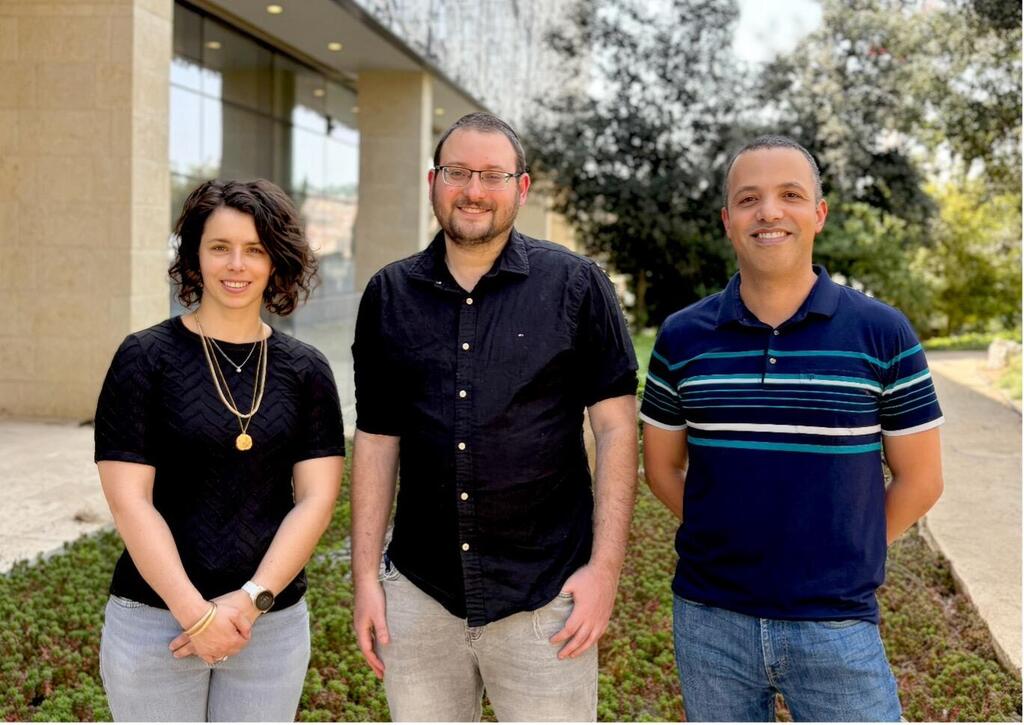
The research team, from left: Dr. Marva Bergman, Dr. Eitan Moses and Prof. Itamar Harel
(Photo: Tehila Atlan)
One way to explore that question, he said, is by looking at animals. “When you look at vertebrates, the group that includes humans, you see extreme differences in lifespan,” he said. “There are fish that live only about half a year, while animals like the Greenland shark can live for hundreds of years. That is an enormous gap.”
The question, he added, is not only which animals live longer, but how that happens biologically. “We are trying to understand how animals that are ultimately built in fairly similar ways evolved such different life tempos, and which genetic changes allowed some to age quickly while others preserve their bodies over time.”
The researchers focused on the African turquoise killifish, a short-lived species that has become an important model for aging studies. One of its advantages is that it reaches sexual maturity within weeks and lives only a few months, allowing scientists to study processes that take many years in humans.
The observation behind the study was simple: animals with short lifespans tend to reach sexual maturity faster, while longer-lived animals mature more slowly. “But we did not know why that happens,” Harel said. “So we looked for genes that affect sexual maturity in a relatively isolated way.”
The gene that changed the picture
To test the question, the researchers used CRISPR, a gene-editing technology that allows precise changes to DNA. They created different versions of the fish by altering various regions of a gene called vgll3.
The results surprised them. When the researchers changed the gene in one way, the fish grew faster and reached sexual maturity earlier than usual. But when they made a different change to the same gene, the opposite happened: the fish matured more slowly.
The finding suggested that the gene was not affecting just one process in the body, but could act as a kind of regulator that helps set the pace of development and life itself.

African killifish, male (right) and female
(Photo: Prof. Itamar Harel)
“After we were able to alter the pace of sexual maturity, we wanted to know whether the effect was limited to that stage or extended to the entire body,” Harel said. “Then we saw that everything had accelerated.”
In the fish whose sexual maturity was accelerated, researchers found increased stem cell division in the intestine, higher proliferation of reproductive cells, increases in growth measures and body weight, and acceleration in other development-related processes. Cellular and molecular analyses also pointed to changes in pathways linked to cell division, stem cell activity and DNA repair.
At a certain stage, the researchers realized they were likely seeing something larger than an effect on sexual maturity alone.
“For years, this theory existed mainly as an evolutionary concept,” Harel said. “But two moments in the study made us realize we were looking at a real biological mechanism. The first was when we discovered that changing one gene could speed up or slow down a complex process like sexual maturity. The second came later, when we walked around the animal facility and saw that many of the genetically altered fish had developed melanoma-like tumors. Suddenly we understood that maybe these two things, what happens at the beginning of life and what happens at the end of life, are connected.”
At that point, the researchers realized they might be looking at two sides of the same biological mechanism: the same system that promotes growth and early development may also increase the risk of damage later in life.

Thanks to the killifish’s short life cycle, researchers can quickly track processes such as growth, aging and disease
(Photo: The Zuckerman STEM Leadership Program)
To test whether the growths were truly cancerous, the researchers developed a new killifish model with a weakened immune system, allowing them to transplant cells into the fish and track them. When cells taken from the suspicious areas were transplanted, they took hold and continued dividing, strengthening the conclusion that the growths had cancer-like characteristics.
The price: more tumors and fewer years
Alongside the increase in tumors, the researchers found another cost: shorter life. Male fish that underwent the genetic change showed an approximately 15% drop in median lifespan, while females showed a roughly 7% decline, along with higher age-related mortality.
“What’s both fascinating and a little unsettling is that these tumors are not random,” Harel said. “They are the direct shadow of the fish’s youthful vitality. The same system that helps cells build a young body can, later in life, also promote disease.”
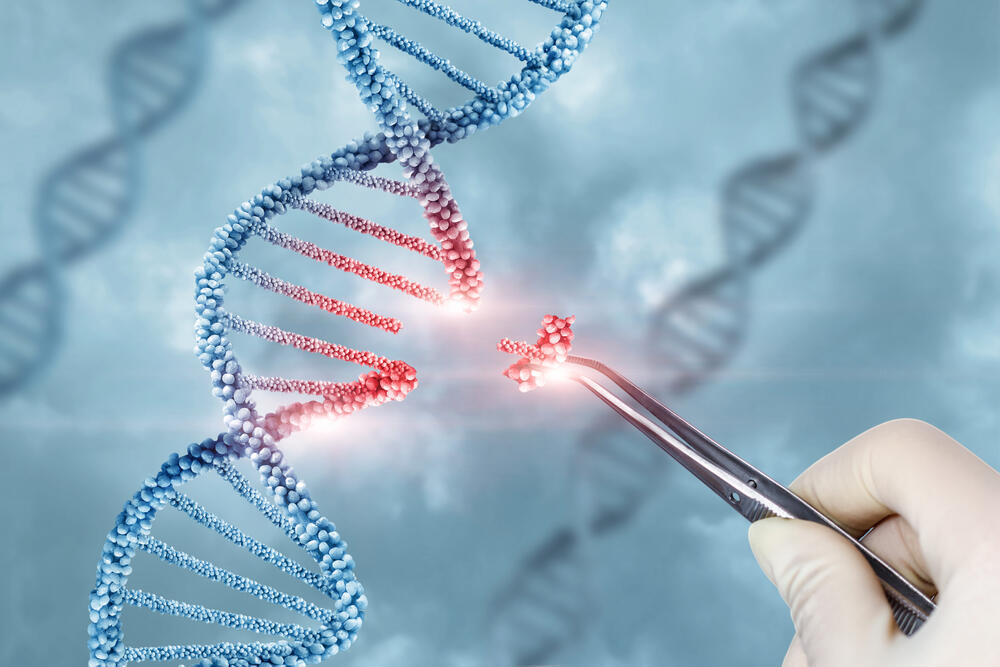
CRISPR is a gene-editing technology that allows researchers to make precise changes to genes and examine how they affect the body
(Photo: Shutterstock)
The big question now, he said, is whether science may one day be able to separate the benefits from the cost. “We know this gene is involved in many processes in humans as well, including cancer, but we still do not know mechanistically how it all connects,” he said. “Many drugs today learn a mechanism and manage to use only part of it. The central discovery here is that we were able to take a whole organism and see that one gene can influence the course of its life.”
Can aging be slowed?
The researchers stress that the study does not prove that evolution directly selected this mechanism in nature, but it does provide significant support for the idea. To prove that, they say, it would be necessary to show that under natural conditions, the advantage early in life outweighs the cost in old age.
Since vgll3 also exists in humans, the researchers believe the findings could have broader implications. Previous studies have already linked the gene to the timing of puberty, hormones, height and metabolic traits, but direct evidence of its role across the lifespan had been lacking.
Could puberty one day become a marker that predicts health later in life?
Harel is careful not to draw direct conclusions, but says there are already signs that processes tied to the reproductive system may reflect, to some extent, the pace of aging.
 Prof. Itamar HarelPhoto: The Zuckerman STEM Leadership Program
“For example, declining fertility is considered in some cases an indication of the pace of aging, and we know that hormone levels are also connected to health in older age,” he said. “I don't think the goal will be to affect the rate of sexual maturity itself, because it is connected not only to the body, but also to cognitive and emotional development. But if we better understand how puberty affects the body across life, perhaps in the future we will be able to identify when and how to intervene to improve health in old age.”
For Harel, the central message of the study is clear. “To me, the most fascinating thing is the understanding that one gene can affect the entire pace of life,” he said. “We showed that this gene can affect more than a single process, changing the pace of development as well as what happens later in life.” This is just the beginning. The big questions come next: how does it work, and will we one day be able to slow down or speed up certain processes without paying the price?”