

The European Medicines Agency (EMA) said Tuesday it had found no link between the use of paracetamol during pregnancy and autism, hours after U.S. President Donald Trump claimed the opposite at a press conference with his health secretary, Robert F. Kennedy Jr.
“Available evidence has found no link between the use of paracetamol during pregnancy and autism,” the EMA said, adding there was no scientific basis to alter current EU recommendations. The agency advises that paracetamol can be taken in pregnancy at the lowest effective dose, for the shortest possible duration and at the lowest frequency needed—guidelines that have not changed.
U.S. President Donald Trump on autism
(Video: via X)



The World Health Organization echoed the position, saying evidence of a link remained “inconsistent.” WHO spokesman Tarik Jasarevic also stressed that vaccines do not cause autism. “Vaccines save countless lives. Science has proven this, and it should not be in doubt,” he told reporters in Geneva.
Trump, however, announced that the U.S. Food and Drug Administration (FDA) would direct doctors to warn patients that using Tylenol—the American equivalent of drugs like Acamol or Dexemol—during pregnancy may be tied to “a very high risk of autism,” despite decades of research confirming the drug’s safety.
“So taking Tylenol is not good — I’ll say it — it’s not good. For this reason, they are strongly recommending that women limit Tylenol use during pregnancy unless medically necessary,” Trump said, adding that autism diagnoses had surged more than 400% since 2000.
He went further, claiming without evidence: “There’s a rumor, I don’t know if it’s true, that in Cuba they don’t have Tylenol because they can’t afford it, and they have almost zero autism.”
Medical groups condemned the remarks as irresponsible. Dr. Steven Fleischman, president of the American College of Obstetricians and Gynecologists, said such claims risk frightening expectant mothers and parents of autistic children.
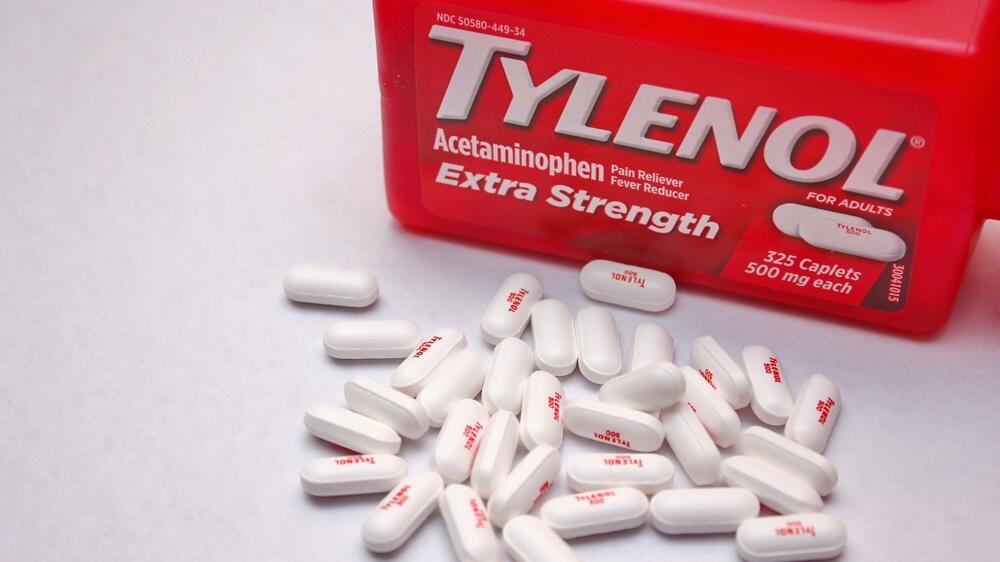
Tylenol
(Photo: FOOD PHOTO STOCK / Shutterstock.com)
“I don’t want people looking back and blaming themselves,” he said. “It’s not something you did. Untreated fever in pregnancy is actually more dangerous than taking the medication.”
Autism is not a disease but a developmental condition that falls on a broad spectrum. Symptoms can include delays in language, learning or social skills. While a small number of people face profound challenges, the majority experience far milder effects.
Rates of autism have risen for decades, largely due to expanded diagnostic criteria and better awareness. In the 1990s, only the most severe cases were recognized. By the early 2000s, the rate was estimated at 1 in 150 children. Today, it is closer to 1 in 31.
Research shows autism is primarily rooted in genetics, with hundreds of genes identified as contributing factors. Other influences may include paternal age, premature birth or maternal health issues during pregnancy such as fever, infections or diabetes.
Some studies have suggested a possible association between paracetamol use in pregnancy and autism, but many others have found no link. Autism researchers also note that paracetamol use has not increased over the same period that autism diagnoses have. Untreated fever during pregnancy, especially in the first trimester, is known to increase the risk of miscarriage, preterm birth, and developmental problems.

(Photo: Shutterstock)
The FDA has advised doctors to limit acetaminophen use in pregnancy when possible, while acknowledging uncertainty. “To be clear, while an association has been described in many studies, a causal link has not been proven, and there are contradictory findings,” the agency said.
Tylenol packaging already advises pregnant women to consult their doctor before use, and experts stress that medical guidance remains the best course of action.
In a separate development, the FDA said it is considering approval of leucovorin (calcium folinate), a form of folic acid, as a potential treatment for some autistic individuals.
Researchers believe certain neurological symptoms may be linked to low folate in the brain, and the drug could ease some effects. Pregnant women are already advised to take folic acid before and during pregnancy to reduce the risk of certain birth defects.