

Prof. Edna B. Foa, a psychologist whose groundbreaking work reshaped the treatment of trauma and anxiety, died Tuesday afternoon in Philadelphia at the age of 89, surrounded by her family.
Foa was one of the founders of cognitive behavioral therapy, a world-renowned expert and a trailblazer in both research and clinical treatment. As early as the 1980s, she developed leading theories on anxiety disorders, obsessive-compulsive disorder and post-traumatic stress disorder, as well as methods to treat them.
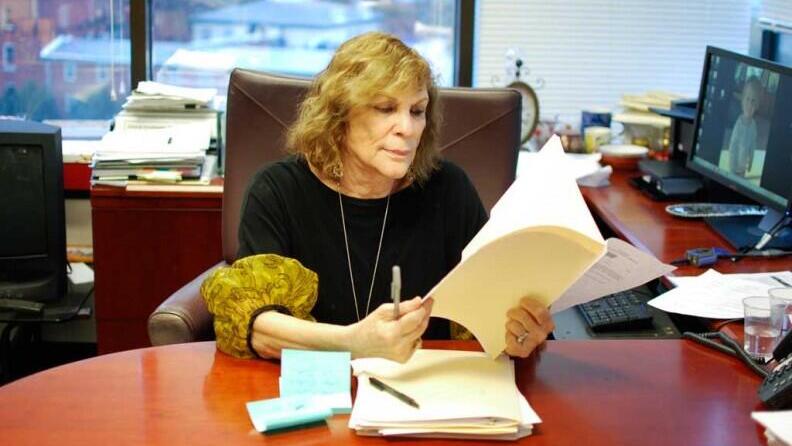
Among her most influential contributions were prolonged exposure therapy for PTSD and exposure and response prevention for OCD, both of which have been scientifically demonstrated to be highly effective.
In recent years, Foa divided her time between Israel and the United States, spending about half the year in Tel Aviv. Since October 7, she has intensified her efforts to assist trauma victims. She volunteered as a consultant and supervisor at the Dror Clinic for cognitive behavioral therapy at Sheba Medical Center.
“This is a great personal loss for me, and an even greater loss for the professional community in psychology and psychiatry and for those working in trauma,” said Dr. Nitsa Nacasch-Axelrod, director of the Dror Clinic and a longtime colleague who taught alongside Foa for two decades.
“She was a trailblazer, internationally recognized in the field of trauma, who developed treatments that saved the lives of countless patients. At a time of such prolonged war, with so many trauma victims, this is a very great loss for therapists and for patients alike.”

The massacre at the Nova music festival. Prof. Foa was determined to help trauma victims
(Photo: AP/ Ohad Zwigenberg)
According to Nacasch-Axelrod, just days before her death, Foa was still training therapists across Israel, working with victims of the war. In January, the two led a workshop to train additional clinicians.
“She was extraordinarily intelligent, creative and possessed invaluable knowledge, with endless ideas for research,” she said. “Despite her exposure to many traumatic stories over her career, including those of U.S. soldiers and survivors of childhood sexual abuse, she said the accounts from the current war and October 7 were among the hardest she had ever heard. It drove her to help these patients, and she saw it as a top priority.”
Over the past two years, Foa received two major research grants in the United States and was in the midst of studies aimed at improving treatments for OCD and PTSD.
The two first met in the early 2000s, during the Second Intifada, when Foa came to Israel to lead a workshop for therapists. Following that meeting, Nacasch-Axelrod traveled to the United States for advanced training at the Center for the Treatment and Study of Anxiety at the University of Pennsylvania, which Foa directed.
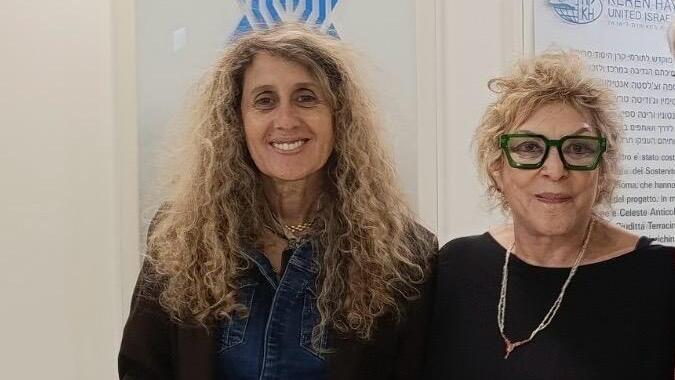
Dr. Nitsa Nacasch-Axelrod and Prof. Edna B. Foa
“At the time, most U.S. research using her method focused on civilian trauma,” she said. “When I returned to Israel in 2002, we decided to conduct the first study examining its effectiveness among combat soldiers here. The results, conducted at Sheba, were remarkable and showed a significant reduction in post-traumatic symptoms.”
Since then, she said, Foa invited her to teach alongside her. “No matter how many years I worked with her, there was always more to learn. It was a great privilege.”
Foa was born in 1937 in Haifa, the youngest daughter of Avraham and Rivka. Her older brother, Uri, seven years her senior, was killed in Israel’s War of Independence. She earned her undergraduate degree in psychology at Bar-Ilan University, where she met her first husband, Prof. Ariel Foa. The couple had three daughters, who live in the United States. She later completed a master’s degree in clinical psychology at the University of Illinois and earned her doctorate from the University of Missouri.
For many years, she headed the Center for the Treatment and Study of Anxiety at the University of Pennsylvania, where she continued to receive major research grants until her final days and trained generations of students who are now leaders in the field.
“She had a rare combination of professionalism and kindness,” said Nacasch-Axelrod. “She not only taught, but she also built close relationships with her students and helped raise them professionally.”
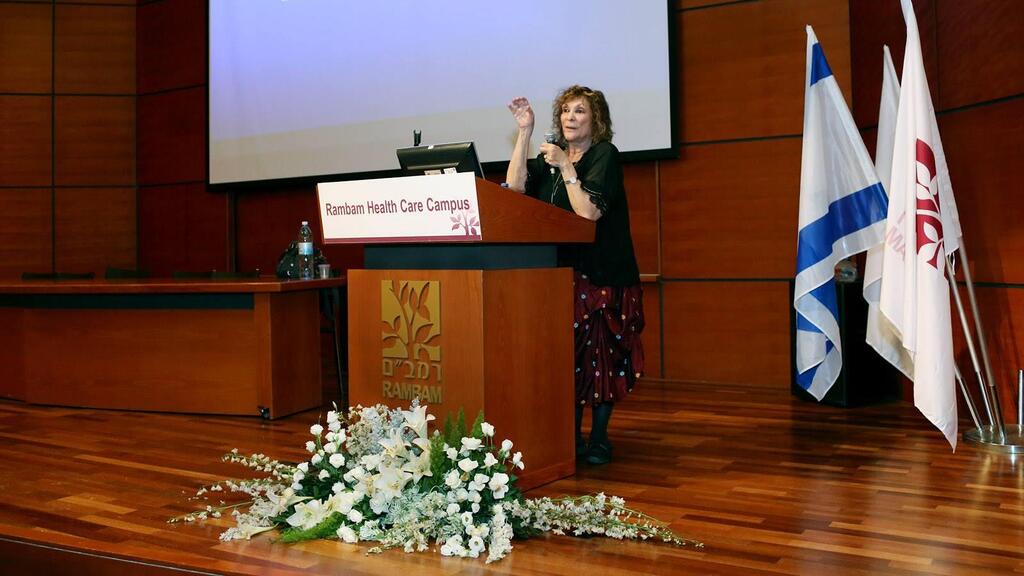
'She never lost her love and concern for Israel'. At a conference at Rambam Health Care Campus in 2013
(Photo: Rambam)
After divorcing in the late 1980s, Foa married Charles Kahn, a professor of Greek philosophy, who died about three years ago. Over the course of her life, she received numerous professional and public honors for her contributions to research and her achievements. In 2010, she was named one of Time magazine’s 100 most influential people.
Beginning in the early 2000s, she regularly traveled to Israel for extended periods, aiming to implement prolonged exposure therapy among clinicians in the country. Over the past 23 years, and as recently as last week, she led workshops in Israel to train therapists in the method.
The treatment she developed, prolonged exposure therapy, is a short-term cognitive behavioral approach shown to help patients process traumatic memories and reduce avoidance by gradually exposing them to distressing stimuli, situations and places associated with trauma.
The method includes real-life exposure to situations or objects patients avoid due to trauma-related anxiety, as well as repeated, guided revisiting of traumatic memories in a safe setting to process them.
“One of the things she always said was that the treatment no longer belonged to her, but to millions of people around the world,” Nacasch-Axelrod said. “She had great generosity, not only in teaching but also in sharing her ideas. Despite spreading the treatment globally, I think her connection to patients in Israel was the most important to her.”
Rami Yulzari, 62, who suffered from PTSD following his military service in the First Lebanon War, was one of the first patients in Israel to undergo prolonged exposure therapy in 2002.
“The treatment she developed brought me back to life. Before it, I was beyond despair,” he said. “I also had a personal connection with her and met her over the years. Her professional achievements speak for themselves. I was fortunate to know her.”
Despite spending most of her life in the United States, he said, “she never lost her love and concern for Israel.”
Prof. Jonathan Huppert, of the Hebrew University, who worked with Foa for nearly 30 years, described her as “an academic mother.”
“I lost an academic mother. It is a very great loss that I am still processing, and it is very difficult,” he said. “She was truly a giant, one of the leading figures in CBT.”
He added that she continued working with intensity and passion until the very end. “Two months ago, when she was in Israel, she told me she had at least 12 hours a day she could work and wondered why no one was using all of them,” he recalled. “She worked until the last moment and was even planning a five-year follow-up study on her recent research.”
Colleagues also emphasized her generosity and personal warmth. “She always opened her home, you could talk to her about anything, and she supported many causes,” Huppert said. “In recent years, she was deeply concerned about the future of the country. She believed in the power of people and in the power of psychology.”