

For nearly two and a half years, Israeli civilians have repeatedly faced sirens, missiles and the need to run to protected spaces, often several times a day and sometimes at night. The prolonged state of emergency, with no clear end in sight, has disrupted the sleep routines of many people.
“Sleep is a basic human need, not something we do simply because we enjoy it,” explains Dr. Uri Alkan, an ear, nose and throat specialist and head and neck surgeon, and a sleep physician at Beilinson Hospital of the Clalit Health Services group. According to him, during sleep the body produces and regulates important hormones, including growth hormone and stress hormones such as cortisol.
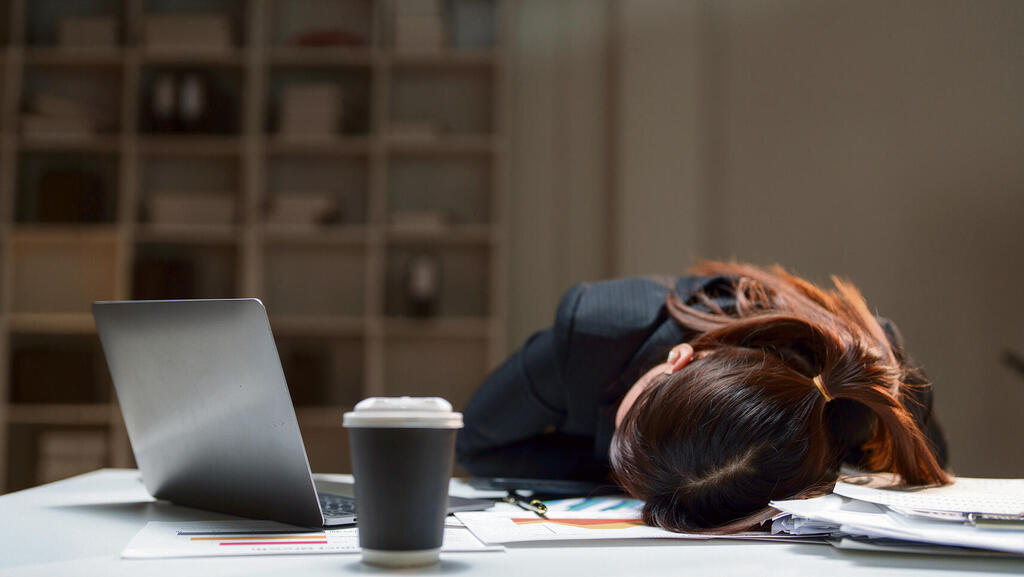
At the same time, emotional balance is maintained and hunger hormones are regulated. Cognitively, sleep is when the body and brain undergo processes of learning and consolidation — processing and organizing memories. “It’s not only that we must sleep; it’s also important that the sleep be of good quality,” he emphasizes.
When sleep is interrupted, as has recently been the case due to the conflict with Iran, sleep quality declines. “If this happens once every few weeks, the body can cope, but when it occurs frequently the effects become noticeable,” says Dr. Alkan. He explains that poor sleep quality can disrupt the balance of hunger hormones such as ghrelin and the satiety hormone leptin. “That’s why people sometimes feel hungrier, eat more — especially carbohydrates — and particularly in the evening hours.”
Heightened emotional sensitivity
Michal Rosenzweig, a medical psychology resident and therapist at the sleep disorders psychological treatment unit in Jerusalem District of the Meuhedet health fund, adds that lack of sleep disrupts emotional balance and increases sensitivity, sometimes leading to stronger reactions.
“Every difficulty is experienced differently in that state,” she explains. “For example, if you are sitting in the living room and a glass of water spills, the reaction will be very different depending on whether you slept well or not.”

Physical activity helps improve mood
(Photo: Shutterstock)
According to her, poor sleep quality may also increase tendencies toward anxiety and depression and can worsen existing symptoms. She notes that these effects are even more significant given that many Israelis have been confined to their homes during these difficult days.
“Physical activity increases serotonin, which regulates mood and helps prevent depression,” Rosenzweig says.
 Dr. Uri Alkan
Dr. Alkan adds that memory can also be temporarily impaired by poor sleep, as can concentration and attention. “We need good sleep in order to function properly, and when that doesn’t happen we feel it in every aspect of life — work efficiency declines, the immune system weakens and we are more susceptible to illness. Even sexual desire and performance may be affected.”
Dr. Alkan explains that “when we are tired, the body behaves somewhat like it does when we are drunk. Judgment is poorer and reaction time slows, which makes driving more dangerous.”
The body remains in survival mode
The challenge is not only waking up in the middle of the night; for many people, the difficulty lies in falling back asleep afterward.
“When sleep is interrupted by sirens, we wake up directly into a state of anxiety or emergency, and the body shifts into survival mode,” Rosenzweig explains. “As a result, the body releases stress hormones such as adrenaline and cortisol, and the sympathetic nervous system becomes more active. In that state we are highly alert, which makes it very difficult to fall back asleep.”

At 5 a.m., it is harder to fall back asleep
(Photo: Shutterstock)
According to her, the time of the siren also affects the ability to return to sleep.
“If we wake up at 5 a.m. because of an alert, it usually causes more anxiety because there is less time left to return to sleep. The pressure to fall asleep increases, which actually pushes sleep further away. By contrast, a siren at 1 a.m. allows for a longer period of sleep afterward, so we are somewhat calmer and usually fall asleep more quickly.”
And what about children?
“In children, sleep is even more important than in adults, because a major part of the growth process occurs during sleep,” says Dr. Alkan.
Rosenzweig adds that in recent days many parents have reported changes in their children’s behavior.
“When a child doesn’t sleep well, the symptoms can resemble those of attention deficit disorder — irritability, difficulty concentrating, tantrums, prolonged crying, difficulty organizing tasks, hyperactivity and stubbornness.”
According to her, maintaining a daily routine, even during emergencies, can help children return to sleep after waking during the night.
However, Dr. Alkan stresses that as long as the situation does not persist for too long, the body will be able to restore its functions once normal routine returns and sleep quality improves. He notes that even in ordinary times, most people do not meet the recommended seven to nine hours of sleep per night.
No news before bedtime
So what can be done to improve sleep quality?
First and foremost, experts recommend maintaining as much routine as possible.
Dr. Alkan says it is advisable to prepare physically and mentally in advance for the possibility of a siren and to make sure the protected space is equipped and ready at all times.
“Once you know everything is ready, the body is calmer and less alert, which can help us fall back asleep afterward,” he explains.
He also recommends avoiding exposure to stressful content while in the protected space, reducing news consumption and limiting screen time.
 Michal RosenzweigPhoto: Yakir Barrabi
Rosenzweig advises avoiding daytime naps, which “create short ‘windows’ of sleep instead of one continuous, quality sleep period, and that loop can leave us feeling even more tired and irritable.”
She also recommends reducing caffeine, nicotine and alcohol from around 2 p.m., as they are known to harm sleep quality.
According to the experts, after returning to bed it is helpful to practice breathing exercises or meditation. If sleep does not come after about 15 minutes, it is better to get out of bed and engage in a calming activity such as reading or listening to music until feeling sleepy again.
Experts also recommend maintaining comfortable sleep conditions — a comfortable bed and pleasant room temperature — and incorporating physical activity during the day.