


On TikTok, YouTube, beaches and public parks, you’ve likely noticed a growing number of people defying gravity - pulling, pushing, jumping and standing on their hands with striking physical control.
The name for this trend is Calisthenics, a workout method that has exploded in popularity in recent years, thanks in large part to social media. If you haven’t encountered it yet, this might be the time. Ready to challenge yourself? Fitness trainer Omer Bejach explains how, with the right mindset and dedication, you too can learn to do a handstand.
Fitness trainer Omer Bejach explains how to do a handstand


What is calisthenics?
Calisthenics is a training method that relies on bodyweight exercises. Over the past decade, it has become increasingly popular. Rather than lifting weights, your body becomes the weight, and with a combination of targeted movements and precise joint control, you can adjust the intensity through leverage and position.
The goal is complete control over every muscle in your body, along with awareness of which muscles are working at any given moment.
Some advanced moves, like the planche or back lever, take months or even years of practice and involve holding your body in mid-air, seemingly floating against gravity. But the most coveted move of all is the simple handstand.
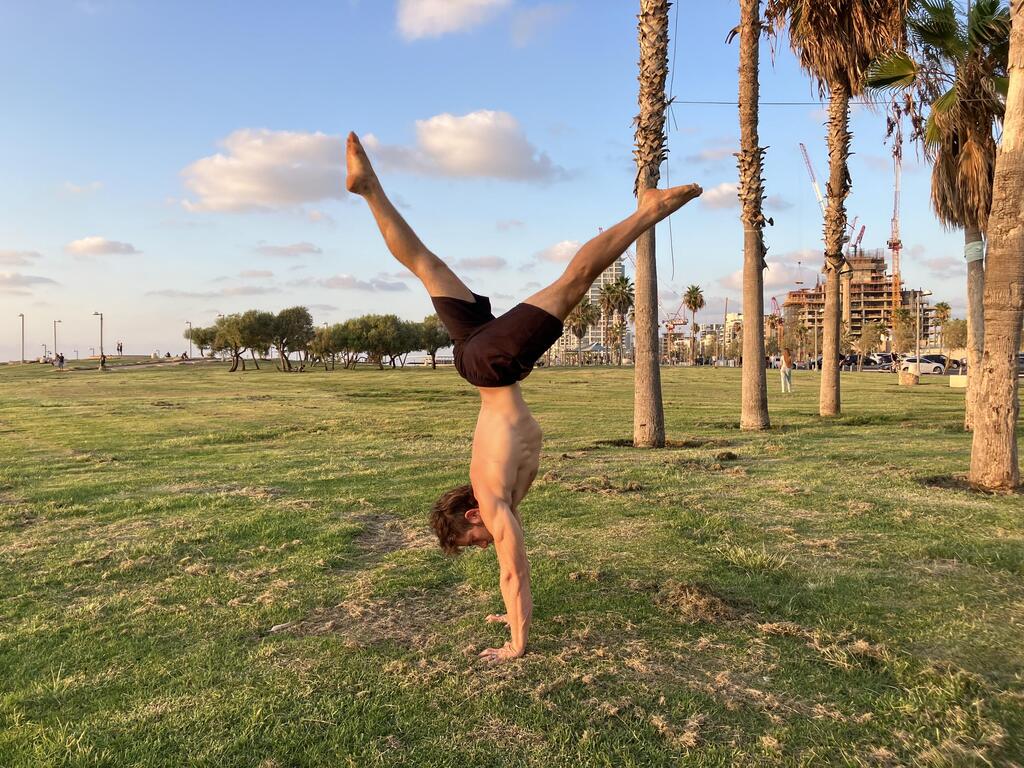
Why train in calisthenics?
In addition to the well-known health benefits of regular physical activity, such as lowering risk for disease and extending lifespan, calisthenics improves your body’s movement awareness, which can enhance overall quality of life. Inverted poses increase blood flow, which in turn improves the efficiency of many bodily systems (just watch David Ben-Gurion, who famously practiced them). The training also builds functional strength that helps with everyday tasks and improves physical resilience.
Can anyone learn to do a handstand?
Absolutely. As long as you’re healthy and have no medical restrictions, there’s no reason you can’t develop this skill. Sure, you may face difficulties, but as the saying goes, there are no shortcuts in life. To reach your goal, you’ll need to commit, sweat and keep going.
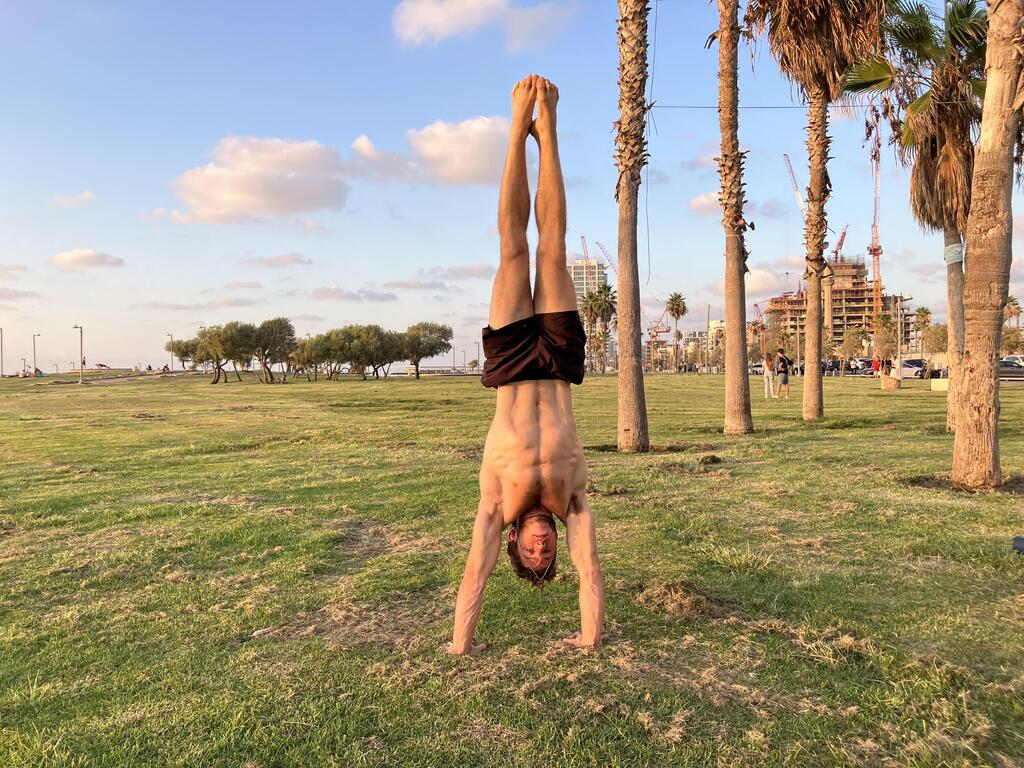
One exercise, many muscles working simultaneously
Which muscles are involved?
A handstand requires coordination across many muscle groups: hands and fingers, flexors and extensors, shoulders, scapula, core, hips and legs. In fact, nearly every muscle in the body is activated. Even the passive muscles pitch in to help the active ones contract without interference.
Can you train at home? Yes! Here’s how:
Handstand practice can happen anywhere, anytime. One of the most important elements is flexibility, which helps you achieve the ideal alignment where all your joints stack in a straight line.
No need for anything fancy; stretching can also be done almost anywhere. You can open up your shoulders and upper back with floor stretches (similar to the “downward dog” yoga pose) and include both static and dynamic stretches. One effective stretch: rest your elbows on an elevated surface, kneel, place your head between your arms and relax your chest toward the floor.
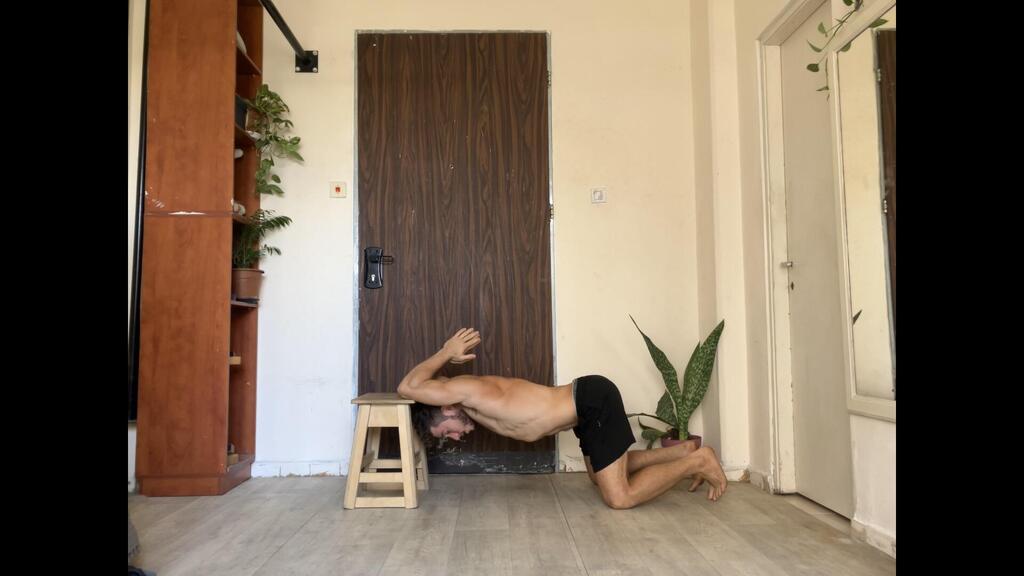
Strength matters, but flexibility is just as essential
You’ll also need shoulder strength. One of the best beginner-friendly tools is a wall, your new best friend on the road to a handstand.
If you're not comfortable with the wall yet, place your feet on an elevated surface like a step, chair, table or counter (safety first). Position your wrists, elbows, shoulders and hips in a straight line. As you progress, try lifting one leg. If tight hamstrings make this difficult, bend your knees slightly.
Bit by bit, you’ll build the shoulder strength and confidence needed to step up and walk your feet up the wall. The beauty of this practice is that it requires virtually no equipment; you can fit in short sessions any time, anywhere. Every attempt gets you one step closer to your goal.
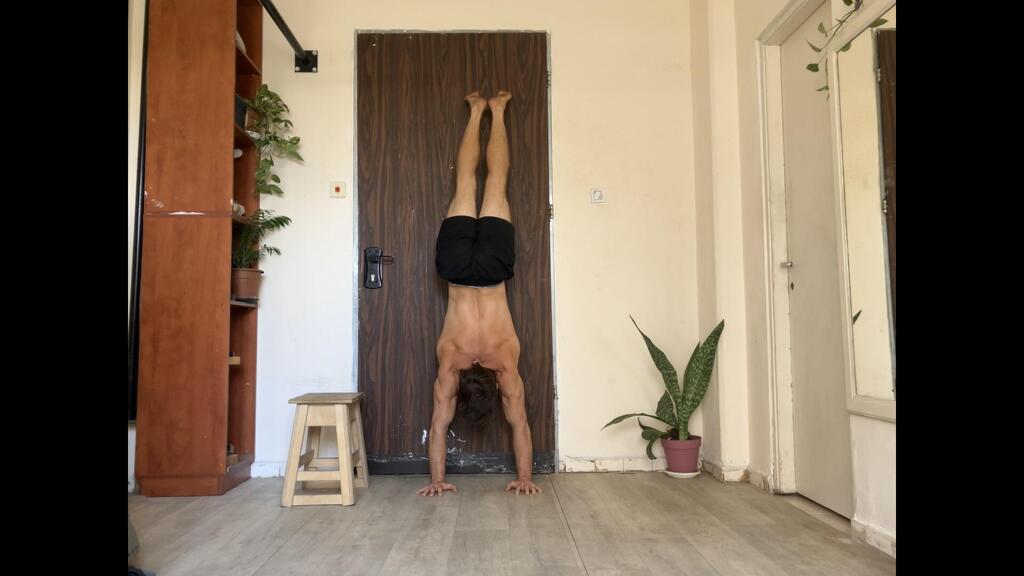
The wall is a beginner’s best friend
Of course, getting up is only half the skill; you also need to know how to get down. Learning how to fall is crucial to preventing injuries and building confidence. A great way to start is by practicing cartwheels, which teach your body how to exit a handstand safely.
Not ready for full cartwheels? Start by hopping side to side on your hands, shifting your weight from one arm to the other. With time and repetition, your body will adapt, and you’ll be ready to move forward.
And one last tip: Everyone progresses at their own pace. The more time you spend upside down, the faster you'll improve.
Good luck.
Omer Bejach is a certified fitness trainer from Wingate Institute, specializing in training individuals, couples and groups.