

Artemis 2 is approaching a key milestone as NASA’s Orion spacecraft nears the Moon, entering its gravitational sphere of influence.
After reaching a distance of about 62,000 kilometers from the Moon, the spacecraft is now more strongly affected by lunar gravity than by Earth’s. Before marking the moment, astronauts Victor Glover, Christina Koch, Reid Wiseman and Jeremy Hansen received a recorded message from Apollo 16 astronaut Charlie Duke, who walked on the Moon in 1972. He told them that photos of his family remain on the lunar surface below and wished them a safe return home.The spacecraft is continuing to approach the Moon and, later tonight Israel time, will make its closest pass to it. Earlier this evening (Monday) at 8:56 p.m. Israel time, the astronauts surpassed the record for the farthest distance traveled by humans from Earth, reaching 400,171 kilometers, a record set during the Apollo 13 mission in 1970. They are expected to transmit a message at that milestone.
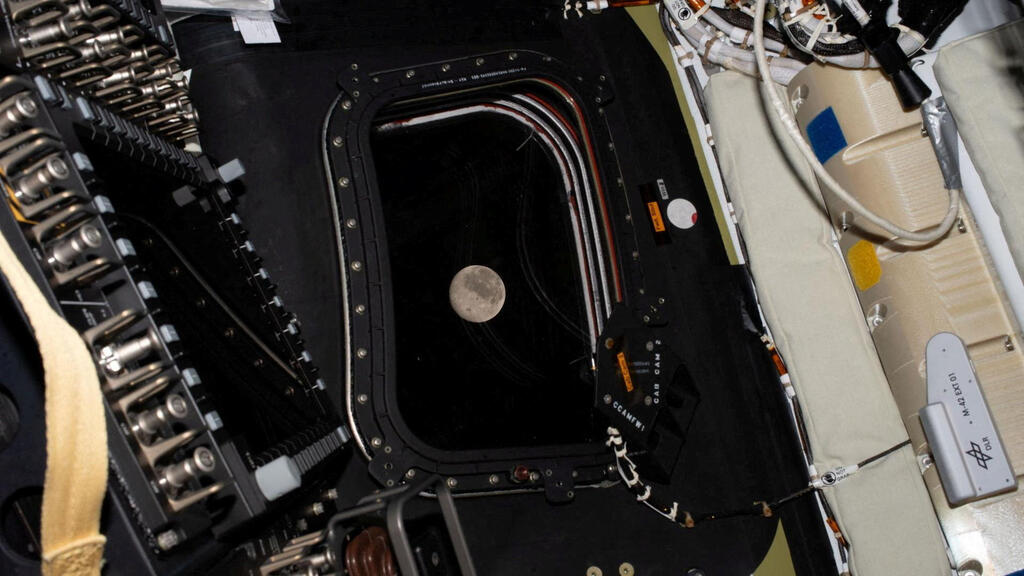
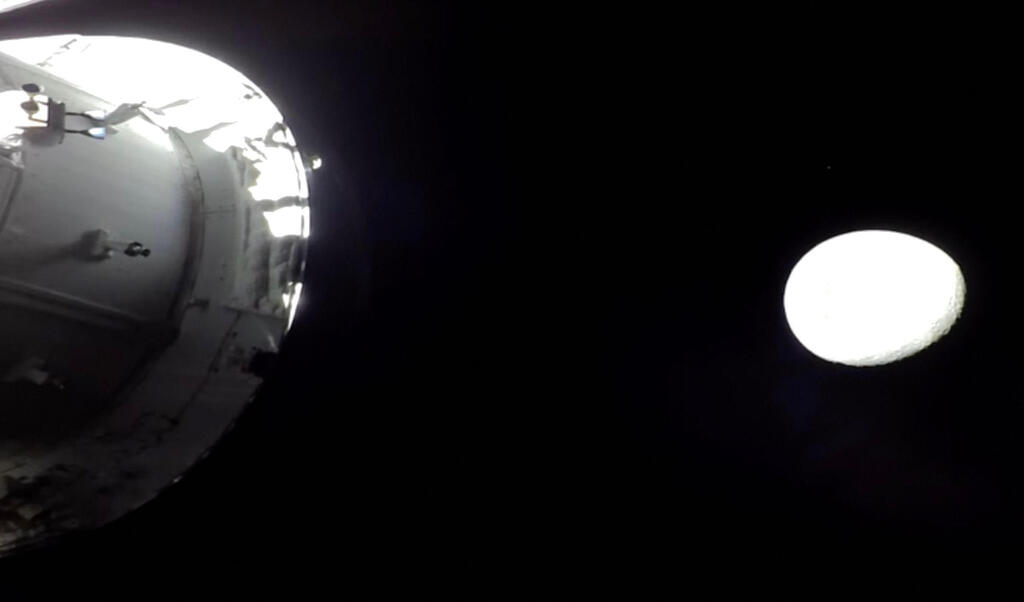
The Orion spacecraft and the Moon
(Photo: Nasa/Handout/AFP)
The spacecraft is continuing to approach the Moon and, later tonight Israel time, will make its closest pass to it. Earlier this evening (Monday) at 8:56 p.m. Israel time, the astronauts surpassed the record for the farthest distance traveled by humans from Earth, reaching 400,171 kilometers, a record set during the Apollo 13 mission in 1970. They are expected to transmit a message at that milestone.
The crew will begin lunar observations at 21:45. At 1:44 a.m. Tuesday, Israel time, communication with the spacecraft will be temporarily lost for about 40 minutes as Orion passes behind the far side of the Moon.
At 2:02 a.m., the spacecraft is expected to reach its closest point to the lunar surface, about 6,540 kilometers above it. Five minutes later, it will break its own distance record, reaching approximately 406,686 kilometers from Earth.
At 2:25 a.m., the astronauts will again see Earthrise over the lunar horizon and reestablish communication with mission control. About an hour later, they are expected to observe a solar eclipse, as the Moon passes between them and the Sun. At that stage, the Moon will appear very dark, marking the end of the close-range lunar observations.
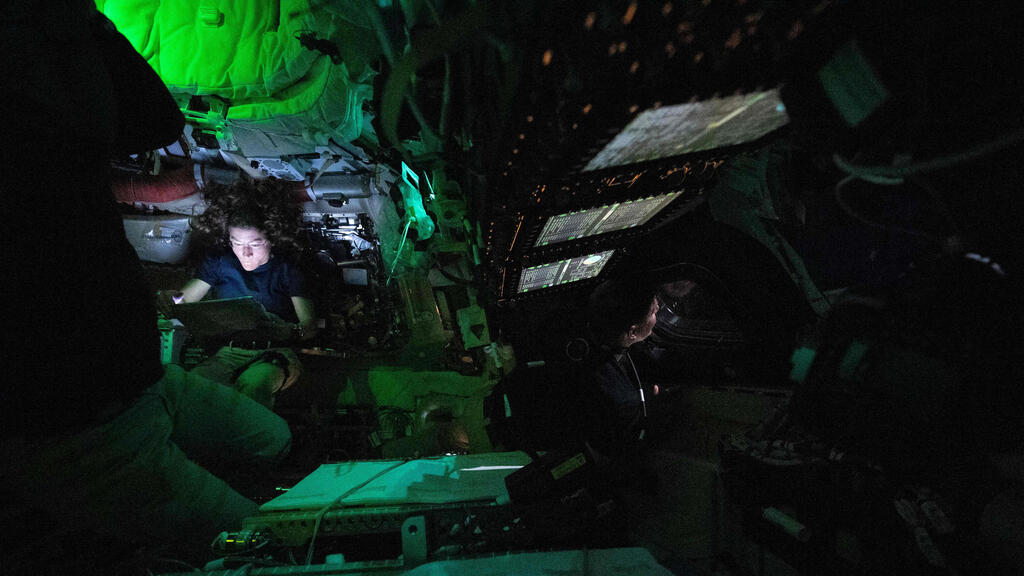
Astronaut Christina Koch, an Artemis 2 crew member, in space
(Photo: NASA/Handout/AFP)
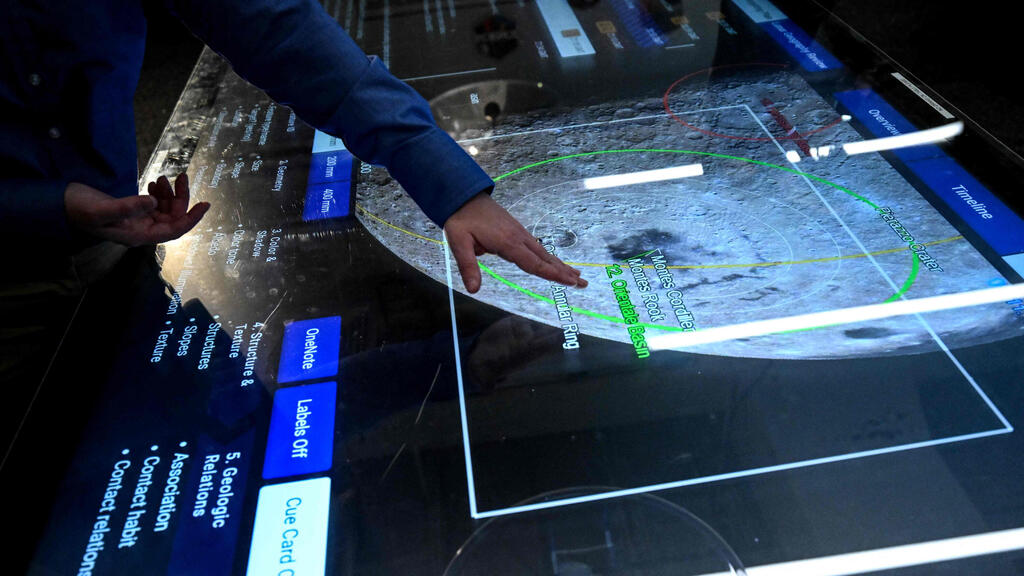
Scientific mission operations room at NASA’s Johnson Space Center in Houston
(Photo: Ronaldo Schemidt/AFP)
After gradually losing speed over the past four days, the spacecraft will begin accelerating again as it starts its journey back toward Earth.
Earlier in the mission, at the start of the sixth day, the astronauts awoke about 30,000 kilometers from the Moon to a recorded message from Apollo 13 commander Jim Lovell, made before his death in 2025.
“Welcome to my old neighborhood,” Lovell said in the recording. “On Apollo 8, Frank Borman, Bill Anders and I were the first humans to see the Moon up close, and we saw our planet in a way that inspired unity for many on Earth. I am proud to pass the torch to you as you fly by the Moon and pave the way to Mars, for the benefit of all.”
The astronauts began their fifth workday with a trajectory correction maneuver. Three such engine burns had been planned for the journey, but NASA skipped the first two as the spacecraft remained precisely on course. In Monday’s correction, Orion’s engine fired for 17.5 seconds to fine-tune its path for the lunar flyby.
Apollo 13 commander in a message recorded before his death for the Artemis 2 crew


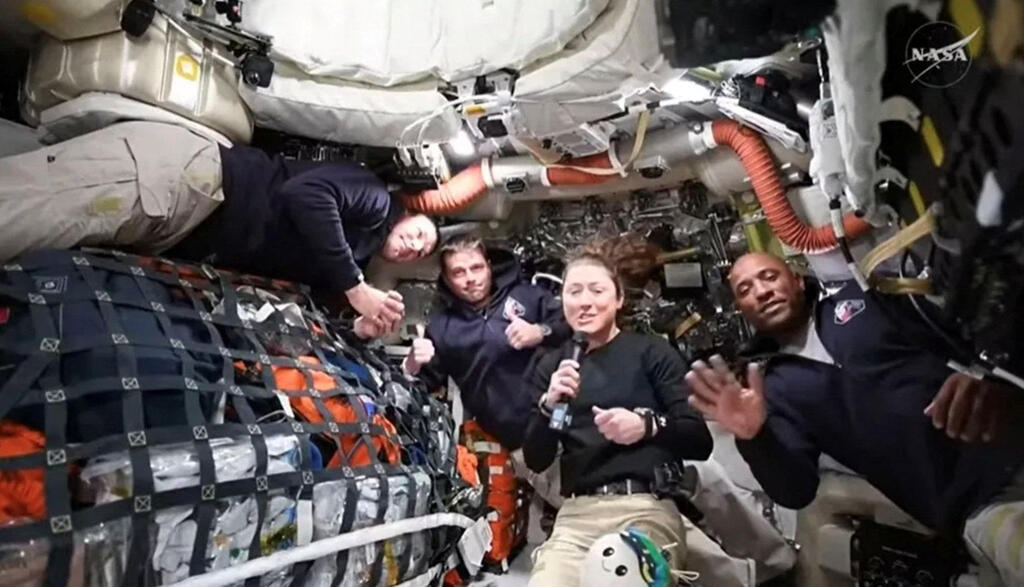
Artemis 2 crew members
(Photo: NASA TV/Reuters)
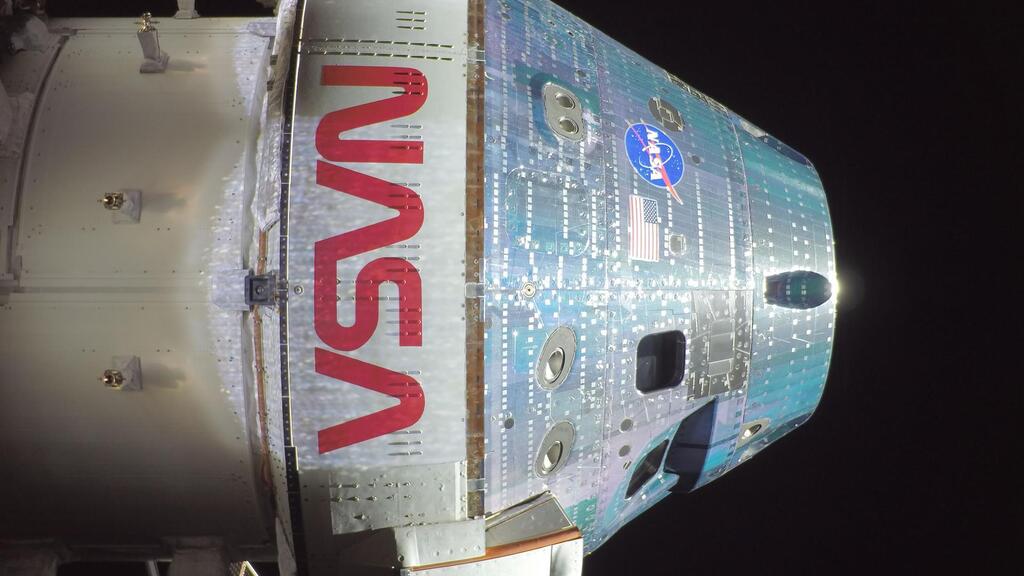
The Orion spacecraft
(Photo: NASA)
The crew also donned their orange emergency suits. While not designed for spacewalks, the suits are intended to protect astronauts in emergencies. They are worn during critical mission phases such as launch, reentry and docking.
During the exercise, astronauts practiced wearing the suits in microgravity, checking systems, strapping into their seats and performing tasks such as eating and drinking while suited, in case they are required to wear them for extended periods.
Unlike NASA’s new generation of spacesuits, which are being developed by private companies, the survival suits remain an in-house NASA design, incorporating multiple upgrades from earlier shuttle-era suits. These include improved fire resistance, enhanced lighting, customized fit, greater mobility and gloves adapted for touchscreen use.
In the event of cabin depressurization, the suits can sustain astronauts for up to six days. Their bright orange color is designed to improve visibility during potential rescue operations at sea.