


Childhood obesity has become one of the most significant public health challenges of the 21st century. But what if the risk of excess weight could be predicted as early as pregnancy — and even prevented through a simple nutritional intervention?
A new Israeli study, recently published in the scientific International Journal of Obesity by Nature, describes an artificial intelligence model that can predict the risk of excess weight in children at age 2 — a well-established marker of childhood obesity — based solely on data collected during pregnancy and delivery.

The study was conducted in the women’s and obstetrics division at Barzilai University Medical Center in Ashkelon, in collaboration with physicians and researchers from other centers across Israel. It offers new insights into the links between maternal nutrition, thyroid function and the risk of childhood obesity. “The prevalence of obesity has risen dramatically over the past two decades, and as of 2019, obesity-related mortality was estimated at about five million deaths per year,” said Dr. Yaniv Ovadia, head of the Big Data Research Unit and a research dietitian at Barzilai Medical Center, one of the study’s leaders. “Estimates suggest that rates of overweight and obesity among children worldwide could reach one-third by 2030. That is the forecast. Overweight and obesity in early life are linked to cardiovascular disease later on and even to premature death. In other words, they can shorten life expectancy.”
Dr. Naama Fisch-Shvalb, a senior physician at the Institute of Endocrinology and Diabetes at Schneider Children’s Medical Center who took part in the study, stressed that addressing obesity once it has already developed is far from simple. “Once obesity is present, it is very difficult to treat because it is persistent, and many existing treatments do not always allow us to turn the clock back,” she said. “Some involve surgery or the use of medications. All of this leads to one bottom line: prevention should be the focus.”
 Dr. Yaniv OvadiaPhoto: Barzilai Medical Center
As part of the study, researchers tested the hypothesis that a combination of biological, nutritional and anthropometric measures collected during pregnancy could help predict the risk of excess weight in children during their early years. They examined links between maternal thyroid function, nutritional status and other physiological characteristics and the likelihood that offspring would develop excess weight by age 2.
“We tried to see whether it was possible to combine measures related to maternal thyroid function during pregnancy with anthropometric measures such as height and weight, along with dietary intake — with an emphasis on iodine — and other known variables, to assess the probability that the offspring would be overweight at age 2,” Dr. Ovadia said. The starting assumption, he explained, was that obesity in early childhood is not random but rather the result of a complex interaction of hormonal, metabolic and environmental factors that begin operating as early as pregnancy.
When data meet an algorithm
Israel, like many other developed countries, is considered a region with mild to moderate iodine deficiency. In the first national study conducted by the research team in 2017, they found that urinary iodine concentrations among pregnant Israeli women were significantly lower than levels recommended by the World Health Organization. The current study set out to examine whether this deficiency, combined with other data collected during pregnancy and delivery, might also be associated with the risk of excess weight in offspring during the first years of life.
“We followed 191 mother-newborn pairs,” Ovadia said. “We collected data from women as they arrived at the hospital’s women’s division. In total, we gathered 87 different variables, including anthropometric measures such as maternal height and weight, thyroid function — including FT3 levels, the free T3 thyroid hormone in the blood — consumption of iodine-rich foods and urinary iodine concentrations. We used a detailed dietary questionnaire that allowed us to calculate average daily iodine intake from food.”
The researchers then waited until the children reached age 2, when height and weight data were recorded as part of routine checkups at maternal and child health clinics. Overweight was defined as a weight at or above the 85th percentile at age 2, adjusted for sex and exact age. “In other words, anyone in the top 15 percent of the weight curve was considered an infant with excess weight,” Dr. Ovadia said.
The data were then analyzed using artificial intelligence models. “We tested several machine-learning classification algorithms and ultimately selected the one that showed the best predictive performance, already at birth, for identifying children who would be overweight at age 2,” said Dr. Abigail Paradise-Vit, a data scientist specializing in artificial intelligence and a lecturer in the information systems department at Yezreel Valley College, who played a key role in translating the model’s outputs into interpretable findings. “The model was based on maternal data — her diet, anthropometric measures and thyroid function — and also incorporated the newborn’s birth weight and head circumference,” she said.
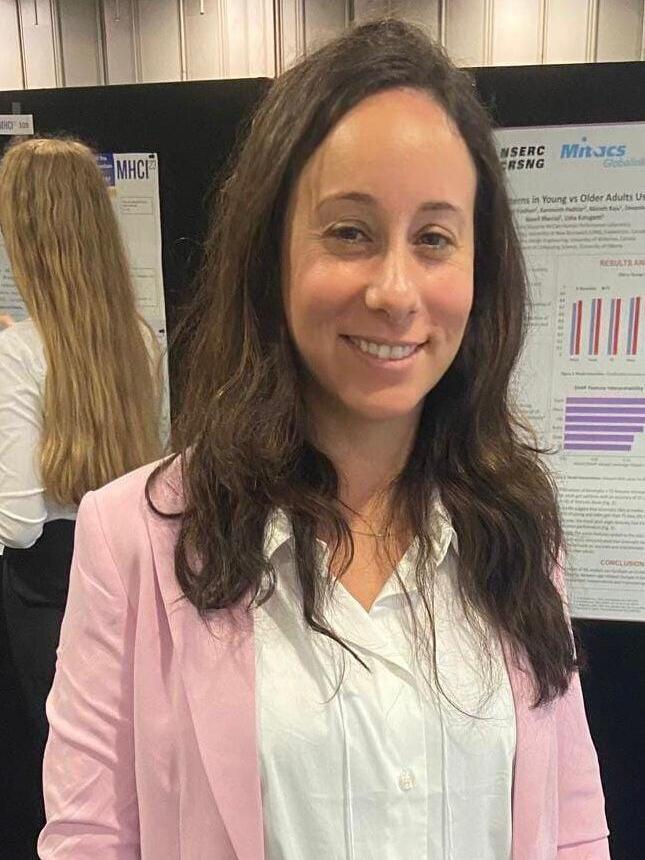 Dr. Abigail Paradise-Vit
By the end of the study, the model correctly identified 74.3 percent of cases in the test group and, more importantly, correctly identified five of the seven children, or 71 percent, who were indeed overweight at age 2. “The factors found to have the greatest impact on the risk of excess weight at age 2 were, somewhat surprisingly, a combination of obstetric, anthropometric, hormonal and nutritional factors,” Dr. Ovadia said.
From an anthropometric perspective, the number of previous pregnancies and the mother’s height emerged as strong predictors. Newborn head circumference at birth was also a significant factor. Nutritionally, a diet rich in iodine, including the consumption of certain types of fish, was found to be meaningful. At the same time, dairy products such as mozzarella and Parmesan cheese were also strong predictors, as were milk-based frozen treats. “All of these foods had an effect on the offspring’s risk of excess weight, in relation to the mother’s diet and these specific components,” Ovadia said. “With regard to thyroid function, the free hormone FT3 was a strong predictor.”

(Photo: Shutterstock)
Each factor likely reflects a different biological mechanism, he added. Lean sea fish such as sea bream, red mullet and grouper contain large amounts of iodine, which may positively influence metabolism during pregnancy and, through the mother’s metabolism, also affect the newborn’s metabolism. On the other hand, foods such as mozzarella, Parmesan and milk-based frozen treats are relatively high in fat. “Women who consume more high-fat foods are likely to be in an energy surplus at times, and it is possible that fetal growth and fat accumulation were greater, with effects that appear later in life,” he said. “That was one of our hypotheses.”

(Photo: Shutterstock)
The researchers emphasized that the study also has important limitations. It is a single study that has not yet been validated in additional groups of pregnant women in other countries. In addition, as Dr. Fisch-Shvalb noted, children’s growth trajectories were not followed over time but assessed at only one point — age 2.
The study also did not collect data on the children’s own diets, a factor that could influence weight outcomes. “For example, a preference for frozen treats over yogurt among mothers may reflect broader levels of health awareness and family lifestyle patterns that could also influence a child’s tendency toward excess weight,” Dr. Ovadia said. Dr. Paradise-Vit added that some of the data used to train the model were synthetic, generated by the algorithm to increase and balance the number of cases — a factor that calls for caution when generalizing the findings.
Beyond the statistics and models, the study raises a broader question: how can these data be used to help prevent one of the major epidemics of the 21st century? “This may be one of the study’s most significant contributions,” Dr. Ovadia said. “It could help decision-makers — physicians and dietitians — better plan for a child’s future weight already during pregnancy.” He said the approach could eventually allow for personalized risk profiles for pregnant women, followed by targeted care, including individualized dietary recommendations.
“The benefit for all of us is the possibility of preventing excess weight in offspring in advance, primarily through better pregnancy planning,” he said. “It is a tool with real potential because it is supported by artificial intelligence, which may save time and uncertainty in identifying risk. In other words, there is hope here to get ahead of the problem if such a tool is developed.”
The study was conducted by a multidisciplinary team from Barzilai University Medical Center, Ben-Gurion University of the Negev, the Health Ministry, Schneider Children’s Medical Center, Clalit Health Services, Yezreel Valley College and the Hebrew University of Jerusalem’s School of Nutrition.