

Sylvia Garcia, 51, of Ramat Gan, sought treatment for dry eyes through Chinese acupuncture and nearly lost her sight. “I never imagined acupuncture could end like this. Even now I see a black curtain in front of my eyes,” she told ynet and its parent newspaper Yedioth Ahronoth after being treated and hospitalized at Tel Aviv’s Sourasky Medical Center.
Garcia has been coping for several years with dry eye syndrome, a common condition caused, among other factors, by dysfunction of the tear glands, poor quality of the tear film or improper positioning of the eyelids. She was initially treated with medication but was recently advised to try Chinese acupuncture.
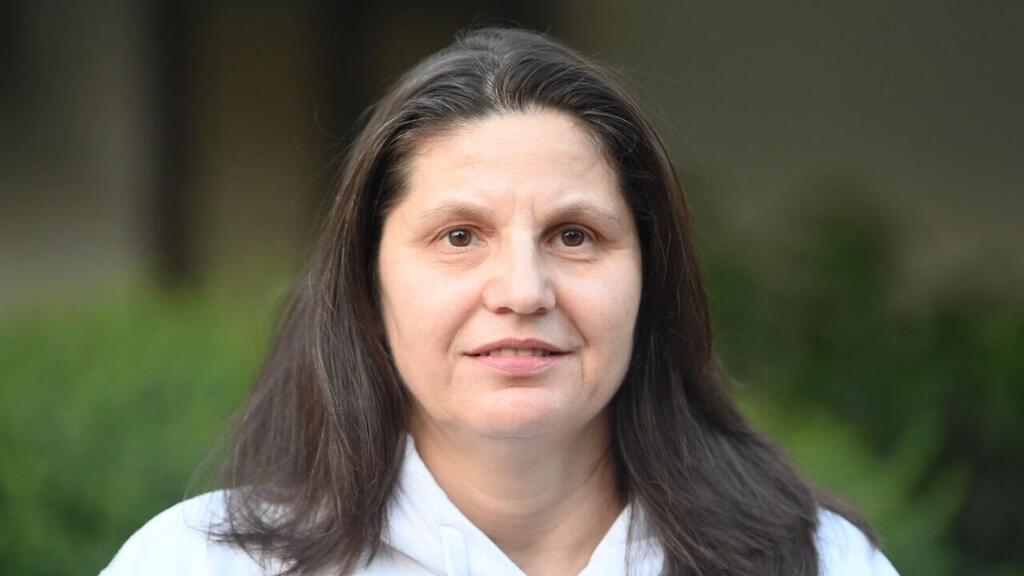
“I went to a practitioner who was recommended to me, and he promised me he was an expert in treating dry eyes,” Garcia said. She had already undergone several treatments with him, but the most recent session last week was completely different. “It wasn’t the first time I was treated by him, but it was the first time the treatment was so intensive, with needles placed so close to the eye.”
Garcia said she began to feel pain during the session. “I told him to stop, he paused briefly and then continued. He kept moving the needles so it wouldn’t hurt, but he didn’t touch the needles in the eye area.”
According to her, the practitioner used a technique combining electrical stimulation with traditional acupuncture. “I wasn’t familiar with that before. I had the needles in for half an hour, and throughout the treatment I was in pain. After he removed the needles, I opened my eyes and told him I couldn’t see out of my left eye,” she recalled. “I went into hysteria. He told me to rinse my eyes, but it didn’t help. I was panicking and terrified I would lose my vision. Horrible thoughts were running through my head.”
Despite her fears, Garcia waited through the weekend in the hope that her condition would improve. “I didn’t realize how serious it was. I thought it would pass. The practitioner told me to put compresses on my eyes, but on Sunday morning I opened my eyes and saw that I still couldn’t see out of my left eye. I went to an urgent care clinic, and from there they sent me immediately to the emergency room.”
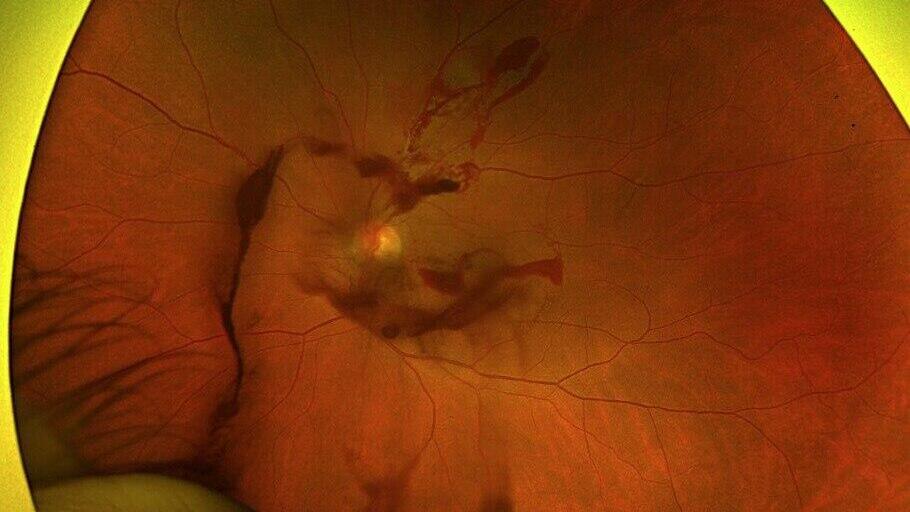
Sylvia Garcia's eye
(Photo: Sourasky Medical Center)
Dr. Shulamit Schwartz, head of the retinal surgery and ocular trauma unit at Sourasky, said the patient arrived at the hospital unable to see in her left eye. Tests revealed significant internal bleeding within the eye, caused by one of the needles that was apparently placed incorrectly and inserted into the eye socket. “The source of the bleeding was a needle that penetrated inward, through the wall of the eye, straight into the eye cavity, injured blood vessels and caused bleeding,” she explained.
Danger in Clinics
The patient was immediately hospitalized in the ophthalmology department and underwent an extensive series of tests and imaging studies to characterize the puncture site and the damage caused. She was also kept under observation to ensure that no infection developed inside the eye. At this stage, the bleeding continues to impair Garcia’s vision. “It will take time for the bleeding to be absorbed,” Dr. Schwartz said. “Fortunately, the hole created by the needle did not become infected, and the injury was several millimeters near the center of vision and the optic nerve, but not through them, preventing irreversible damage.” She estimated that it would take several more weeks for Garcia to fully regain her vision.
According to Dr. Schwartz, such an injury can lead to serious complications. “A puncture of the eye wall can cause an intraocular infection, retinal detachment or the formation of a scar that can lead to permanent visual distortion. There are quite a few potential consequences of this kind of injury.”
The patient was discharged home last week but remains under close follow-up to ensure that no infection or additional complication develops. Dr. Schwartz noted that the medical literature includes a handful of cases of eye perforation following acupuncture performed in East Asia, describing it as a rare but very dangerous situation. “There is a wide range of treatments for dry eyes, including drops, ointments and medications. Alternative treatment for dry eyes is only a complementary therapy,” she said.
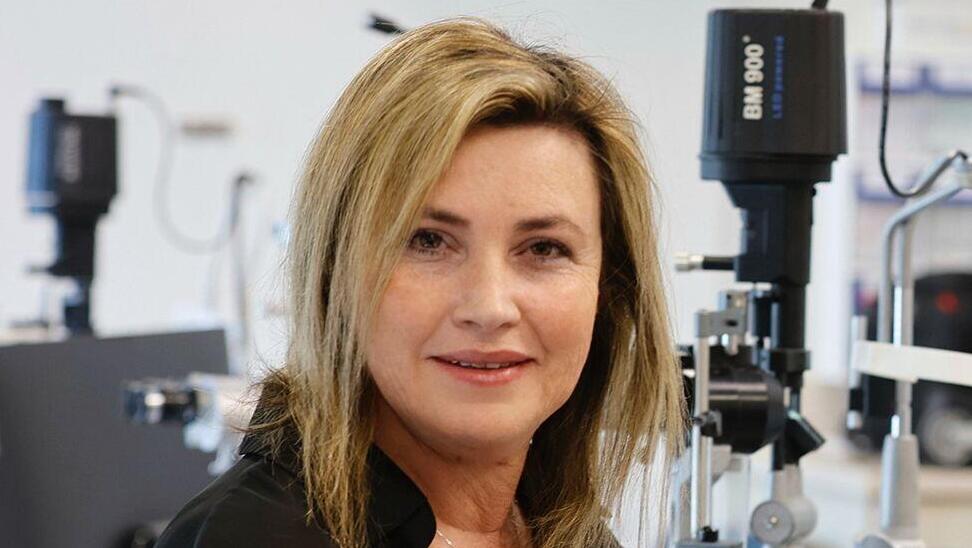
Dr. Shulamit Schwartz
(Photo: Sourasky Medical Center)
Garcia said the vision injury has had a dramatic impact on her daily life. “I work as a private chef specializing in superfoods and healthy food, and you can’t function at 100 percent when you can barely see. It’s very uncomfortable. I’m patient, but someone else might already have lost it.” In the wake of the incident, she sought to send a message to the public. “I wholeheartedly recommend going only to certified clinics, and for any medical problem, first getting professional medical advice. At the end of the day, an acupuncturist is not a doctor. The practitioner I went to didn’t know how to diagnose what happened to me.”
Dr. Schwartz added that “there is a difference between performing acupuncture on the wrist or the leg, for example, and performing acupuncture near the eye socket. In such cases, the practitioner must be certified and skilled, with thorough knowledge of the anatomy of the eyeball and the orbit. Inserting needles into the orbit by people who do not sufficiently understand the anatomy of the orbit and the eyeball can cause damage similar to what our patient experienced.”
Chinese acupuncture is a treatment method from traditional Chinese medicine based on the insertion of very thin needles into specific points on the body, with the aim of balancing the flow of energy, or qi, relieving pain and treating a variety of medical and functional problems.
In recent years, Chinese medicine, and acupuncture in particular, has gained wide popularity, and Israel’s health maintenance organizations offer the service through supplementary insurance plans. Basic studies in Chinese medicine last about four years and include training in acupuncture, hands-on therapies such as shiatsu, herbal medicine, professional ethics and an internship. Despite the field’s popularity, it is not an academic degree recognized by the state. The practice of Chinese medicine in Israel is not properly regulated by law and is not under official government supervision.
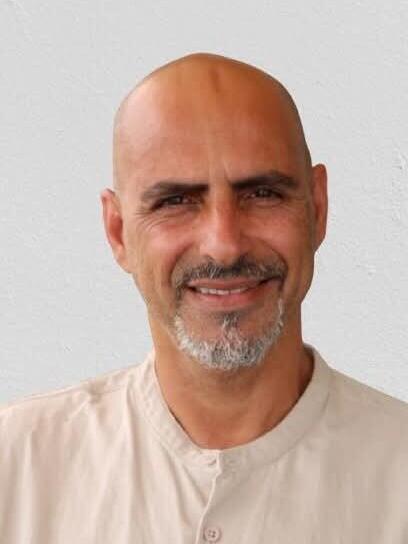 Avi PeledPhoto: Hila Peled
The Israeli Association of Chinese Medicine has been working for years to regulate the field. Avi Peled, a certified practitioner and spokesman for the association, warned that the lack of oversight has led to a troubling phenomenon. Over the years, he said, various entities have taken advantage of the lack of legal regulation to develop accelerated courses for those seeking to practice acupuncture.
“I have about 30 schools on the blacklist. It’s an insane number,” he said. “These are colleges where students study only 200 or 300 hours, compared with 3,800 hours at supervised schools. It’s absurd. These people go out and treat patients with acupuncture and play with human health.”
According to Peled, health maintenance organizations are careful to hire only practitioners who have undergone proper training. He advised patients not to be embarrassed to ask where a practitioner studied. “Once you know where they studied, you can check whether the college is recognized by the association and know whether this is a certified practitioner.” He also recommended relying on recommendations from friends and acquaintances before seeking treatment and choosing a practitioner who is a member of the association. “That way you can be sure you’re in reliable hands.”