

From childhood, Dr. Shiran Sudri followed a path of achievement, checking off every challenging task she took on — and there have been many, across a wide range of fields.
“But there’s one very basic and important thing I still haven’t succeeded at, and that’s finding myself a husband. I devoted myself to work and to my need to advance, excel and devour life, and I put relationships to the side. But now, at 36, my desire and need for a relationship, closeness and a family are so strong that I even applied for ‘Married at First Sight.’”
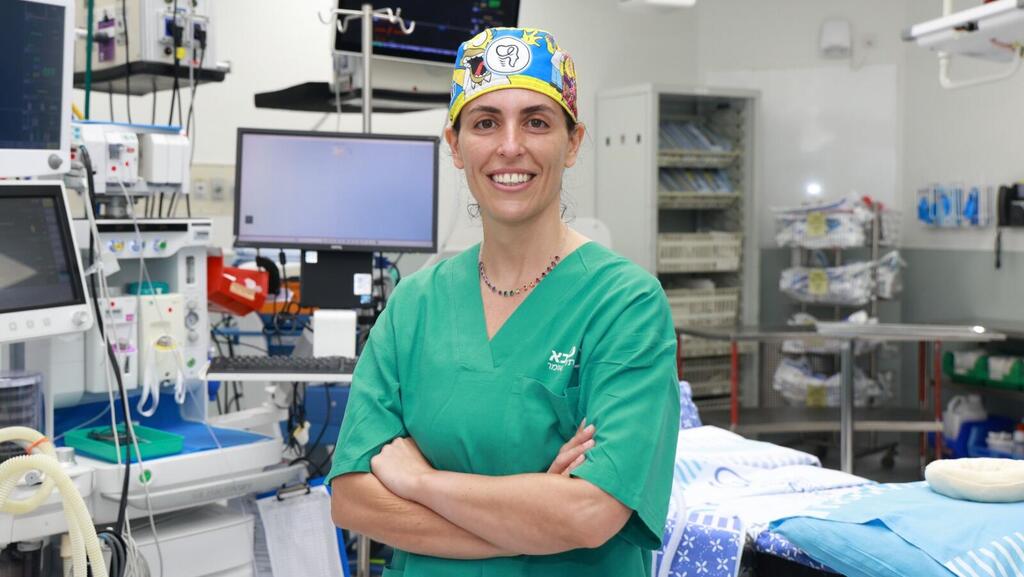
“I’m looking for a partner beside whom I can switch off my internal engines and the mechanisms running through my head 24/7, nonstop. He needs to be grounded. Rooted. Someone who loves the land. I’d be happy with a moshav guy who, in the middle of the night, for example, says to me, ‘Shiran, are you coming? We’re going to milk the cows,’ or something like that. And above all — he has to be a real man,” Sudri says.
Haifa never left me
Until the right candidate arrives and presents his own preferences, here is the bride: Dr. Shiran Sudri, 36, single and a specialist in dentistry and oral and maxillofacial surgery. She works at Sheba Medical Center.
She is the older of two children, with a brother three years her junior, born to young parents of Moroccan descent — something she makes a point of emphasizing. Her father was 24 when she was born and her mother was 22.
“I was born and raised in Haifa, and I’m deeply tied to that city. Even now, after leaving Haifa and living for two years in a great location in Tel Aviv, Haifa never left me.”
Her parents’ young age created a family dynamic that functioned more like a social club — four friends who traveled extensively and shared experiences together, in Israel and around the world.
“In the army, I was assigned to Unit 8200, and when I was discharged I was immediately snapped up for a great high-tech job, which confused me a little when it came to choosing a career. At the time,” she says, “I was debating between studying medicine and going into high-tech. When I chose the second option, I enrolled at the Technion in what was considered a prestigious and demanding program combining electrical engineering and physics.
“When I came home and told my parents I’d been accepted, my mother said to me, ‘All your life you’ve said you wanted to be a doctor — don’t give up on your dream.’ Because the Technion allows students to defer admission for a year, I listened to my mother and enrolled in dentistry at Tel Aviv University because I think it’s a beautiful profession that contains and combines different possibilities.
“For example, I remain a doctor because I treat people. I’m also an engineer, learning and applying new and challenging technologies in oral medicine and early detection. And in the end, I’m also an artist whose goal is to give patients the perfect smile.”
Student by day, party producer by night
For the first time in her life, Sudri found herself alone in the big city and threw herself into everything it had to offer.
“I was a student by day and a publicist and party producer by night. It suited me perfectly because I’m a music fanatic with very broad tastes.”
The Haifa girl who grew up around the waves — she loves the sea and still surfs today — quickly fell in love with nightlife.
“A lot of times I’d tear up the dance floor at clubs until 2 a.m., dancing and having fun, then go back to my apartment, collapse onto the bed and wake up at 5 a.m. to drive to the lab and feed my lab animals. Looking back, I can say with confidence: If I weren’t a doctor, I’d be a DJ.”
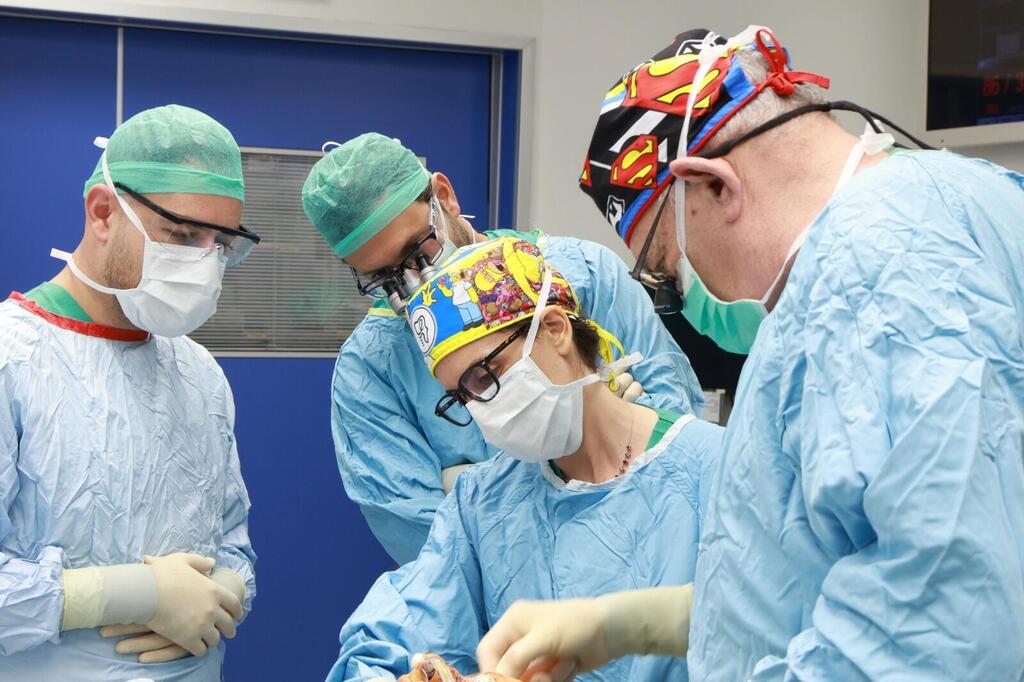
Dr. Shiran Sudri with colleagues in the operating room
(Photo: Sheba Medical Center)
After completing her requirements at the dental school, she enrolled in a master’s degree program in medical sciences at Tel Aviv University. Research she initiated later earned her a place in Forbes Israel’s 2020 list of promising doctors under 30.
“The research that caught the magazine editors’ attention, and led them to include me on the list, was an attempt to develop a new method for detecting tumors in the oral cavity. Oral cancer is considered the sixth most common cancer, and it isn’t found only in older male smokers. In younger generations, we’re also diagnosing it in young men and women who don’t smoke, and even in children. It’s an extremely aggressive cancer, with a five-year survival rate of only 50%.”
The diagnostic method she developed, under the supervision of professors from Bar-Ilan University and Tel Aviv University, is noninvasive, accessible and effective, she says.
“My invention is designed to detect cancerous tumors at an early stage, and it is based on injecting antibody-coated gold nanoparticles that bind directly to tumor cells. The next stage, after the injection, is a simple laser scan that allows us to see where the particles have accumulated — since, as I said, they target cancerous tumors.
“The broader goal is to replace the invasive need for a biopsy. And as long as the results of animal trials continue to show effectiveness, I hope my method will also make it possible to diagnose metastases in the neck.”
Playing in the big leagues
Her internal search engine, permanently set to turbo, kept pushing her to seek out complementary fields and eventually led her to a course in aesthetic medicine.
“There’s a common stigma among doctors that a physician who injects fillers for wrinkles and facial volume is a cosmetician, not a doctor. But that’s a blatant smear. When I was observing procedures in Italy and took part in complex surgeries in which the eye sockets and eyelids were reconstructed or repositioned, I understood why I had also gone into aesthetic medicine for medical purposes.
“And still — what makes someone who injects fillers into healthy people, improving their well-being and self-image, any less of a doctor?”
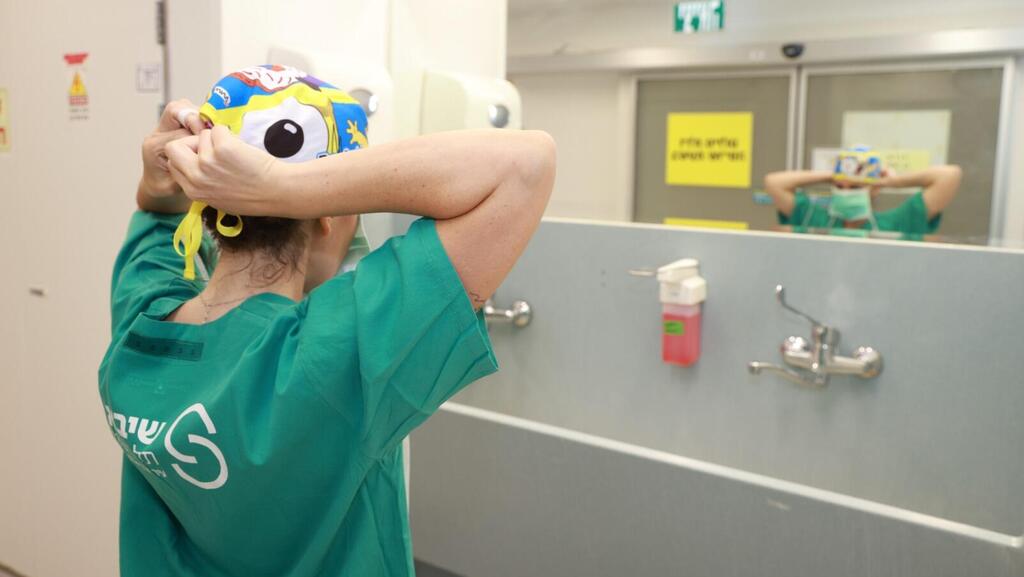
'I absolutely love these surgeries'
(Photo: Sheba Medical Center)
Two years after completing dental school and coming to understand the limits of the profession, Sudri says she developed a thirst for more challenging medicine and moved into oral and maxillofacial surgery.
She completed her residency at Poriya Hospital, now North Medical Center, graduating with distinction.
“The residency there was incredibly difficult and amazing at the same time. When I finished and was looking for a change and a new challenge, I arrived at what, in my eyes, is the number one place — the oral and maxillofacial surgery department at Sheba, which is considered the big leagues.
“It allows me to operate a lot while also taking part in the SPARC program, which encourages entrepreneurship and development among physicians. And as someone who is drawn to the high-tech world, at least for now, I feel I’m fulfilling myself professionally.”
During her work, she was introduced to facial gender-affirming surgery and became fascinated by the surgical approach developed by Dr. Ran Yahalom, former head of Sheba’s Department of Oral and Maxillofacial Surgery.
“I absolutely love these surgeries, which start at the forehead, with reshaping the face, and continue all the way down to the chin. It’s incredibly challenging and fulfilling — but it still doesn’t switch off that internal engine.”