


Nearly two years have passed since 33-year-old Sydney man Alex Boutin died, but for his sister Isabella, his story is far from over.
In interviews in recent days, she has sought to turn her family’s tragedy into a warning, particularly for young people encountering online promises of bigger muscles, faster fat loss and quicker recovery through peptides and other performance-enhancing substances.
Gallery
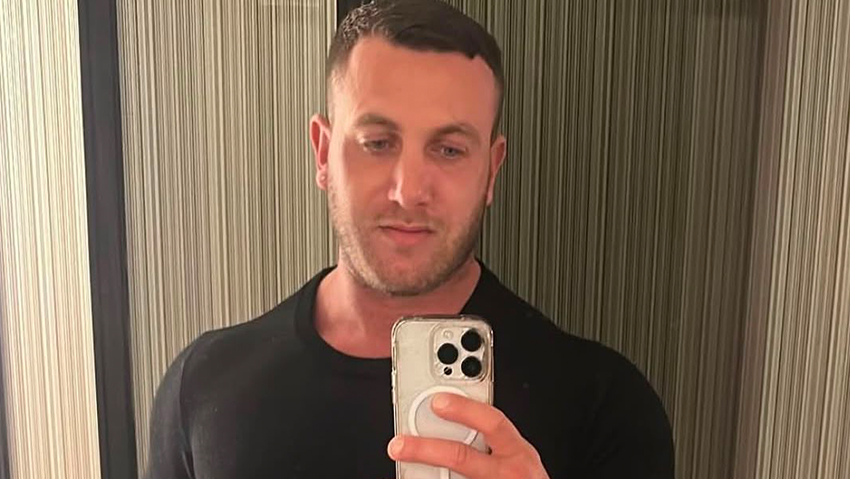
Daniel Boutin died at just 33 as a result of prolonged use of injectable peptides
(Photo: Instagram)
She says the path that eventually led her brother to those products began much earlier, when he was an insecure teenager who entered a gym wanting above all to become bigger.
Boutin was 17 when he began working out. According to his sister, his desire to become larger and more muscular intensified after his girlfriend at the time broke up with him and told him he was “small and a bit skinny.”
At the gym, he met older, more muscular men who suggested steroids as a way to quickly increase his muscle mass.
What began as an attempt to change his body developed into substance use that continued for more than a decade. According to his family, Boutin later added unapproved injectable peptides to the steroids he was already using.
Isabella said she watched her brother change over the years. She remembers the teenager he had been as sweet, vulnerable and insecure. During his years of substance use, she said, aggression, anxiety, depression and dependence also emerged.

Alex Boutin and his sister Isabella
(Photo: Instagram)
On Oct. 16, 2024, Boutin went out to dinner with friends. After returning home, he collapsed and was later found dead. Some media reports described his death as a heart attack, as did his sister. However, according to Australia’s ABC, a post-mortem examination report listed myocarditis (inflammation of the heart muscle) as the cause of death.
Isabella said doctors told the family that her brother’s prolonged drug use had affected his heart. Based on the information made public so far, however, it cannot be determined with certainty that those substances directly caused his death.
Afterward, police found a range of bodybuilding substances at his home. ABC reported that they included products intended to stimulate the body to restore testosterone production after the use of hormonal substances had suppressed it.
Isabella said she learned only a few years before his death that he was also using peptides. When she raised concerns, she said, he reassured her that a friend had recommended them and that they were safe. She had no idea they could be dangerous, she said after his death.
What is really inside the vial?
Peptides are short chains of amino acids, and the term covers an extremely broad range of substances.
Some peptide-based medications are well established and approved for medical use. Regulators’ warnings do not apply to peptides as a single category, but primarily to unapproved products sold outside regulated medical channels.
In recent years, a flourishing online market has developed around such products. On social media and websites, they are sometimes promoted as ways to build muscle, reduce body fat, speed recovery from injuries, improve appearance and even slow aspects of aging.
Australia’s Therapeutic Goods Administration, or TGA, warned in June about the growing availability and promotion of unapproved peptides.
Among the substances it cited were BPC-157 and TB-500, marketed mainly for injury recovery and repair of muscles, tendons and other tissue; GHK-Cu, a copper peptide studied and used mainly in relation to skin regeneration, collagen production and healing; CJC-1295, which is intended to stimulate growth hormone release and is marketed for muscle gain and fat loss; and retatrutide, an experimental drug being developed to treat obesity and promote weight loss.

Injection bypasses the body’s natural defenses against contaminants and toxins. Illustration
(Photo: Shutterstock)
According to the TGA, products that have not been registered and have not undergone its review process have not been properly assessed for safety, quality and effectiveness. In such cases, buyers also cannot be certain that a vial actually contains the substance listed on its label, or that it contains the stated dose.
The TGA has also reported serious adverse effects associated with unapproved products, including liver injury, allergic reactions requiring hospitalization, inflammation and other complications.
The risk becomes especially significant when the products are designed to be injected. With products obtained from unregulated sources, users may have no way of knowing how they were manufactured, whether sterility was maintained or exactly what is inside them.
The U.S. Food and Drug Administration has also taken action against sellers of unapproved peptide drugs. In a warning letter issued in March, the FDA stressed that injectable products raise particular concern because injections bypass some of the body’s usual barriers against contaminants and toxins.
Dr. Timothy Piatkowski, a researcher at the University of Queensland who has studied the market, has warned that even people who knowingly accept the risks may not actually know what they are receiving.
In an interview with Australia’s 7NEWS, he said testing had found striking discrepancies between product labels and their actual contents. "Some of them had nothing in them. Some of them had 190% of the actual dose".
Medical supervision is essential
Access to these substances has also become remarkably easy. Dr. Piatkowski said an advertisement on Instagram or TikTok can lead to a WhatsApp conversation and then to an order that may arrive within 48 hours.
ABC has also reported on bodybuilding communities, appearance-enhancement forums and private Telegram groups where users exchange information about peptides and other substances.

Clinical evidence on peptides remains very limited
(Photo: shutterstock)
Israeli experts have similarly warned about the gap between the growing popularity of peptides and the limited scientific knowledge surrounding some products.
Dr. Liat Barzilay-Yoseph, a specialist in internal medicine and endocrinology who heads the obesity clinic at Meir Medical Center’s Institute of Endocrinology, part of Clalit Health Services, recently told Ynet that while some peptides are established and approved, many others remain insufficiently supported by evidence.
“Alongside the progress, it is important to remember that these treatments may also involve side effects. Their use therefore requires continued research and professional medical supervision,” she said.
Dr. Daniel Hershtain, CEO of Israel’s national anti-doping agency (INADO) and board-certified family medicine physician, addressed two substances that have become popular among fitness enthusiasts.
“Despite the promises attributed to them, the clinical evidence regarding peptides is very limited,” he warned. He said there is still insufficient data on their effectiveness, appropriate dosages, long-term safety and possible side effects.
His message was unequivocal: “First, benefit and safety must be demonstrated, and only then should patients be exposed to treatment.”
‘He felt in control’
For the Boutin family, however, the story is not only about which substances Alex used. His sister believes a deeper struggle over body image lay behind his behavior.
Isabella believes her brother may have experienced an eating disorder or body-image disorder that was never diagnosed. She used the term “megarexia” to describe his condition: When he was large and muscular, she said, he felt in control. During periods when he stopped using substances, he struggled with changes in his body and complained that he felt small. But this is his sister’s description, not a medical diagnosis Boutin received during his lifetime.
Boutin's story comes amid broader concern over pressure on boys and men to achieve larger, more muscular bodies. According to figures from Australia’s Butterfly Foundation cited in Australian media, 84% of boys ages 12 to 18 in its latest survey said they wanted to be more muscular. The foundation estimates that hundreds of thousands of men experience eating disorders.

Steroid users were found to have three times the risk of acute myocardial infarction. Illustration
(Photo: Shutterstock)
The cardiovascular risks associated with anabolic steroids, meanwhile, have been documented for years. A study published last year in the journal Circulation followed 1,189 men for an average of about 11 years after they had been sanctioned under Denmark’s anti-doping program for anabolic steroid use. Researchers compared them with 59,450 men from the general population matched by age and sex.
Steroid users had about three times the risk of acute myocardial infarction, more than twice the risk of arrhythmia, nearly nine times the risk of cardiomyopathy and more than three and a half times the risk of heart failure.
The study was observational, meaning it found an association and did not prove that steroids directly caused each of those outcomes. The findings nevertheless add to existing evidence of cardiovascular risks associated with anabolic steroid use.
Nearly two years after her brother’s death, Isabella is trying to turn the family’s experience into a warning for others. She left a bridal business she had been running in Paris and returned to Australia.
In an interview with People, she said she is working to establish a foundation that would help advance research in the field and hopes to bring Alex’s story into schools and medical centers.
For Isabella, speaking publicly also means revisiting some of the most painful moments of her family’s life. But she hopes her brother’s story will make other young people stop before injecting something bought online or following advice from a friend at the gym. “Sharing my brother’s story is the most painful, yet important, thing I will do. It can "serve as a life-saving shield for someone else,” she told People.