


If you are a parent of children or teenagers, the findings of a new Reichman University study should raise a red flag. The research points to an increase in substance use and potentially addictive behaviors, particularly pornography and gambling for money.
The data show that 19% of high school students, nearly one in five, reported watching pornographic content every day, while 17% of teenagers said they had gambled for money several times over the past year. Among 12th graders, 23.6%, nearly one in four, reported drinking alcohol several times a month and on weekends, up from 8.9% in 2019.
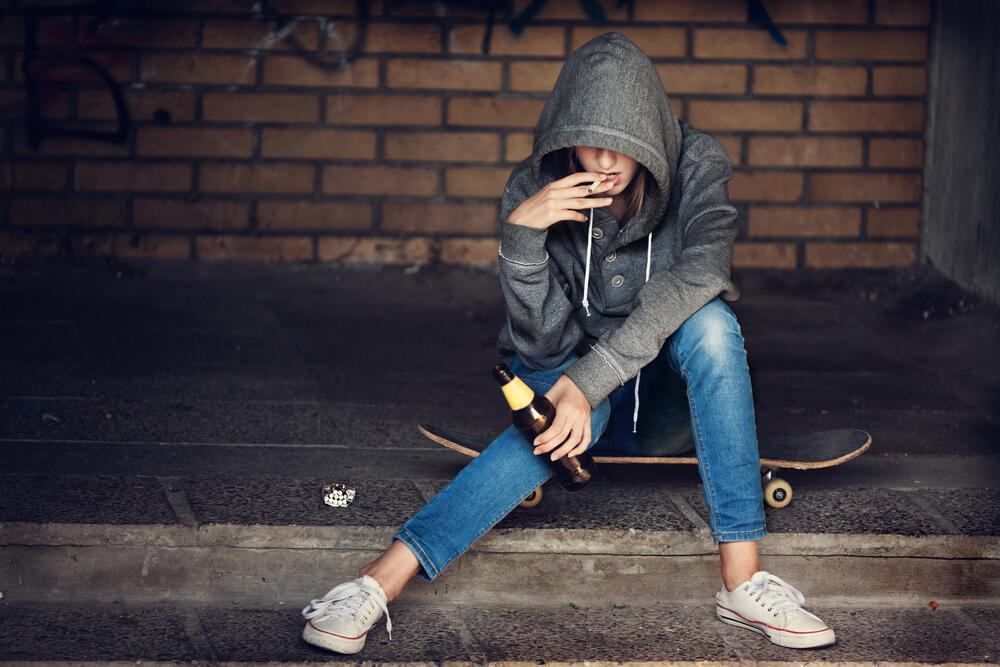
The findings come from a large-scale study led by Prof. Anat Shoshani of Reichman University’s Maytiv Center for the Study of Positive Psychology, in cooperation with ICA, the Israel Center on Addiction and Mental Health, and were released as students returned to school.
The study was conducted in 2026 among 3,878 children and teenagers ages 9 to 18. Its findings reflect the cumulative impact of recent years, including repeated exposure to security threats and war, and are evident in extreme screen use, persistent psychological distress and increased use of alcohol, e-cigarettes and other risky behaviors.
Some of the findings were compared with data collected annually since September 2019, before the COVID-19 pandemic and the wars that followed. Ten percent of teenagers reported smoking conventional cigarettes, up from 7.8% in 2019. Another 12.1% reported using e-cigarettes, while about 9% said they used cannabis on a weekly or monthly basis.
Prof. Shoshani said the increase develops gradually over the course of adolescence, with a sharp rise in nearly every measure of use between seventh and 12th grade. E-cigarettes are sometimes perceived by teenagers as less harmful, she noted, and among 12th graders they are more common than conventional cigarettes.
Prof. Shoshani also pointed to research on dating violence among high school students showing an association between exposure to violent or degrading pornography and the adoption of distorted “sexual scripts,” lower sexual self-esteem and an increased risk both of perpetrating and experiencing sexual and dating violence.
She stressed that the key factor is not simply whether teenagers watch pornography, but the type of content they see. Material that portrays coercion or humiliation as normal is more strongly associated with attitudes that are accepting of sexual coercion than nonviolent sexual content.
“When parental supervision weakened because of lockdowns, reserve duty and evacuations, while access to personal screens increased, the window in which exposure to the most harmful content tends to grow became wider,” she said.
For children and adolescents, she added, online sexual content can become a misleading source of information about relationships, boundaries and consent.
“The main danger is that children will be exposed to content that is inappropriate for their age and internalize problematic messages instead of receiving age-appropriate information about boundaries, respect, consent and relationships,” she said.
Prof. Shoshani said risky behaviors cannot be separated from teenagers’ emotional state. “For some adolescents, alcohol, cannabis, gambling, pornography or intensive screen use are accessible ways to regulate distress, silence thoughts or feel a sense of belonging,” she said. “That is why prevention cannot end with explaining the dangers. It has to provide real alternatives for coping.”
Other findings highlight the psychological toll of the war years. Anxiety symptoms were 48% higher than in 2019, according to the study. Girls reported substantially higher distress than boys, with the impact already visible among elementary school children.
Security threats have become an integral part of daily life for many Israeli children. Ninety-two percent said they had been forced to enter a protected space during attacks, 17% had been evacuated from their homes because of the security situation and 16% reported exposure to property damage. Half said they had a parent serving in the military reserves, while 28% knew someone who had been wounded in the war.
“The more children and adolescents were exposed to events of the war, the more time they spent in front of screens, which for many became both a window to the world and a refuge from it,” Prof. Shoshani said.
“The screen allows them to escape, disconnect, stay connected and reduce boredom and anxiety. But when it becomes the main coping strategy, it can push out sleep, physical activity, meetings with friends and conversations with family, the resources children need to recover.”
Anxiety symptoms remain high
Israeli children and teenagers now spend an average of more than nine hours a day in front of screens. Teenagers check their phones about 100 times a day on average, and one in four checks their phone within five minutes of waking up.
Tracking data since 2019 show that although there has been some improvement from the peak recorded during the war, teenagers’ mental health remains far from pre-COVID levels.
In 2026, depression symptoms were 29% higher than in September 2019, anxiety symptoms were 48% higher and physical symptoms associated with distress, including headaches, stomachaches, weakness and bodily tension, were 61% higher.
Girls reported higher symptoms than boys across all measures of distress examined. Their overall level of distress was about 50% higher than that of boys. Symptoms of depression, anxiety, post-traumatic stress and physical distress were also significantly higher among girls.
Post-traumatic stress symptoms among girls were nearly 60% higher than among boys, and girls also reported spending more time in front of screens.

Prof. Anat Shoshani. “The fact that a child goes back to school, laughs with friends and does homework does not necessarily mean everything is behind them”
(Photo: Gilad Kavalerchik)
Despite the troubling findings, the study also identified some encouraging signs. The proportion of teenagers who met friends at least once a week rose from 49% in 2025 to 69% in 2026. Participation in family meals increased from 54% to 65%, while family conversations rose from 62% to 72%.
Physical activity also increased, with 42% of teenagers reporting that they exercised at least once a week, compared with 30% in 2019. Weekly gaming, meanwhile, fell from 51% to 42%.
But recovery has not been seen across every measure. The proportion of young people reading books at least once a week fell from 55% in 2019 to just 24% in 2026. The findings present a complex picture: signs of recovery and adaptation in some areas, while overall distress among children and teenagers remains higher than before COVID and has worsened on some measures.
“The fact that a child goes back to school, laughs with friends and does homework does not necessarily mean everything is behind them,” Prof. Shoshani said. Children can function while at the same time carrying fear, sadness, worry or a sense of insecurity. The challenge for the education system in the coming year is not only to return children to classrooms, but gradually to restore their sense of security, belonging and control over their lives.”
Inbal Dor kerbel, CEO of ICA, the Israel Center on Addiction and Mental Health, said returning to school offers an important opportunity to restore routine, stability and meaningful relationships. But parents, she said, also have a central role.
“They need to be present, show interest, have open and nonjudgmental conversations and pay attention to changes in habits and behavior,” she said. “A close and secure relationship with parents is one of the most significant sources of resilience at this age.”