

Natural ingredients were used in beauty routines as far back as ancient times. Even today, with store shelves packed with advanced products, many people still swear that simple remedies from the refrigerator or pantry work best. But do they really offer any benefits, or are they myths that have survived far longer than their effects?
Before examining what science says, it is worth understanding why these tricks have become so popular. Anyone who thinks do-it-yourself beauty trends belong only to our grandmothers should take a look at Hailey Bieber’s TikTok account.

Ahead of the latest Met Gala, the superstar and fashion icon shared her at-home preparation routine with millions of followers. It included an ice bath for her face — something virtually anyone can do at home for free.
In a video that went viral, Bieber demonstrated how she uses extreme cold to reduce puffiness and prepare her skin for a fresh, radiant appearance on the red carpet. Her use of the simple home treatment revived debate over beauty remedies found in the kitchen.
Most cosmetic myths are based on explanations that sound logical and are sometimes even rooted in genuine scientific principles. The problem is that there is often a wide gap between the principle and the actual result.
So what works and what does not? To separate fact from rumor, we spoke with Dr. Marina Landau, a dermatologist with Maccabi Healthcare Services.
Toothpaste on pimples
The idea is based on the fact that some toothpastes contain ingredients that dry out oil and moisture, supposedly causing a pimple to shrink quickly.
“If you have a single pimple and no medication nearby, applying a small amount of toothpaste directly to it to speed up the drying process is not a bad idea,” Landau said. “But you need to be careful about sun exposure because toothpaste contains fragrances that can trigger a photoallergic reaction.
“Is it an acne treatment? Absolutely not. Toothpaste does not contain the ingredients specifically intended to treat acne.”
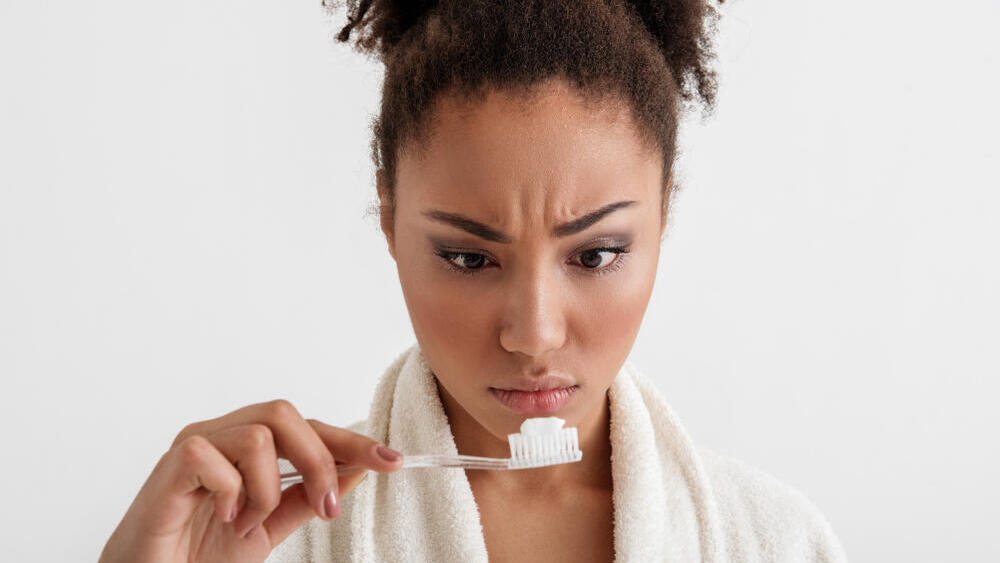
Toothpaste — not just for teeth?
(Photo: Olena Yakobchuk / Shutterstock)
Castor oil for eyebrows
Castor oil is considered rich in fatty acids, and many believe it nourishes hair follicles, strengthens them and encourages thicker eyebrow growth.
“There is no scientific evidence that castor oil promotes hair growth,” Landau said. “No oily substance can stimulate damaged hair follicles. Hair growth is a complex process that depends on receptors and enzymes. Is it harmful? No. Does it grow hair? No.”
Lemon to lighten dark spots
Lemon contains citric acid and vitamin C, leading some people to believe it can lighten pigmentation and sunspots.
“This is the worst thing you can do, and there is no scientific basis for it,” Landau said. “Lemon contains substances that can cause phytophotodermatitis, a reaction that worsens with sun exposure and can actually increase pigmentation.
“Using lemon juice on the hair instead of conditioner may create a pleasant immediate sensation, but over time it can undoubtedly damage the hair.”
Cucumbers on the eyes
The common explanation is that cucumbers contain a high amount of water and, when chilled, temporarily constrict blood vessels around the eyes, potentially reducing puffiness.
“Any type of cooling can slightly reduce swelling around the eyes, whether it is a cucumber or a bag of frozen peas wrapped in a towel,” Landau said. “Cooling constricts blood vessels and reduces fluid leakage.
“The treatment is not especially effective, but it can help a little and, most importantly, it is not harmful. It is important to remember that wetting the skin does not moisturize it. In fact, when we take a hand out of the bath after 10 minutes, it is dried out and shows lines caused by dryness.”
Ice baths for the face
Exposure to cold temporarily constricts blood vessels, leading to claims that it reduces puffiness, closes pores and gives the skin a tighter, more radiant appearance.
“It is like going outside in cold weather,” Landau said. “The skin contracts and then expands, creating a temporary flush. But medically or cosmetically, it has no long-term significance.
“Does it have any beneficial, lasting cosmetic effect beyond the immediate result? The answer is unequivocally no. Excessive exposure to ice can also cause harm, including frostbite or tissue damage. As long as it is done in moderation and feels pleasant, there is no problem.”
Washing hair with apple cider vinegar
The claim is that vinegar helps balance the scalp’s acidity, removes residue from hair products and makes hair appear smoother and shinier.
“Does it clean the scalp better than shampoo? The answer is no,” Landau said. “But it can have a softening effect on the hair, somewhat like conditioner.
“You need to be very careful when applying acidic substances to the scalp so as not to trigger sensitivity reactions, and especially careful to prevent the substance from getting into the eyes.”
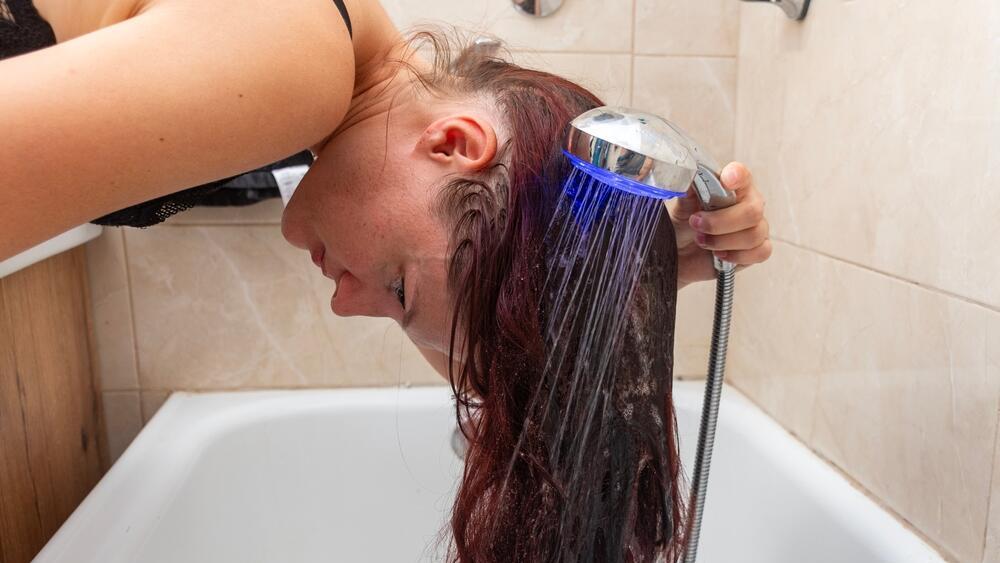
Does vinegar clean the scalp better than shampoo?
(Photo: Shutterstock)
When are home remedies enough?
As these examples show, most cosmetic myths are not particularly effective. So why do they remain so popular?
“Today, social media influencers have no less influence than doctors,” Landau said. “Influencers are not going to talk about medication. They talk about things that attract attention, and unfortunately, those things often have no scientific basis.
“When someone applies yogurt to her face, it looks far better on camera than someone applying a medicated cream. In the past, such remedies were more justified because there were fewer medications and less access to prescriptions and pharmacies. Even today, people in remote areas may go into their gardens and try whatever grows there.
“But this is flourishing again mainly because people are influenced more by online personalities than by science-based information.”
Landau said there are cases in which home remedies can work.
“You do not need to run to a doctor for everything,” she said. “If someone suffers a blow, it makes sense to put ice on the joint to prevent swelling and pain rather than immediately going to an orthopedist.
“However, if the swelling continues and the pain worsens, that is the point when you need to understand that home treatment is not enough and see a doctor for a diagnosis.”
The same principle applies to sunburn, she said.
“Is yogurt more effective than medical creams? Of course not. But the coolness of the yogurt can slightly soothe a mild burn, so I am not categorically opposed to it, as long as it is used in mild cases and for a limited time.
“The most significant danger in using home remedies on the skin and hair is the development of allergic reactions, the worsening of an existing condition and the creation of additional medical problems.”
Landau also warned against even more dangerous trends gaining traction online, particularly homemade sunscreen.
“This is something that must be strongly condemned,” she said. “The filtering ability of these homemade sunscreens was tested, and their SPF was found to be zero.
“Making sunscreen at home gives people a false sense of security when they go out in the sun, even though they actually have no protection. If there are inventions people need to be warned about, this is one of them.”
“Always examine the scientific basis,” Landau said, offering a rule of thumb for anyone considering a traditional home remedy. “Do not act solely according to trends or appearances on social media. Know when to stop and consult a doctor if the condition does not improve or gets worse, to prevent allergic reactions and unnecessary damage to the skin.”