

For decades, Israel's health system benefited from an extraordinary demographic windfall: successive waves of highly trained physicians arriving from the Soviet Union and, later, the former Soviet republics.
Doctors who came during the Soviet immigration wave of the 1970s helped strengthen a young health system. Then came the far larger immigration wave of the 1990s, which brought roughly 10,000 physicians from the former Soviet Union and supplied Israeli hospitals, clinics and specialist services with manpower for an entire generation.
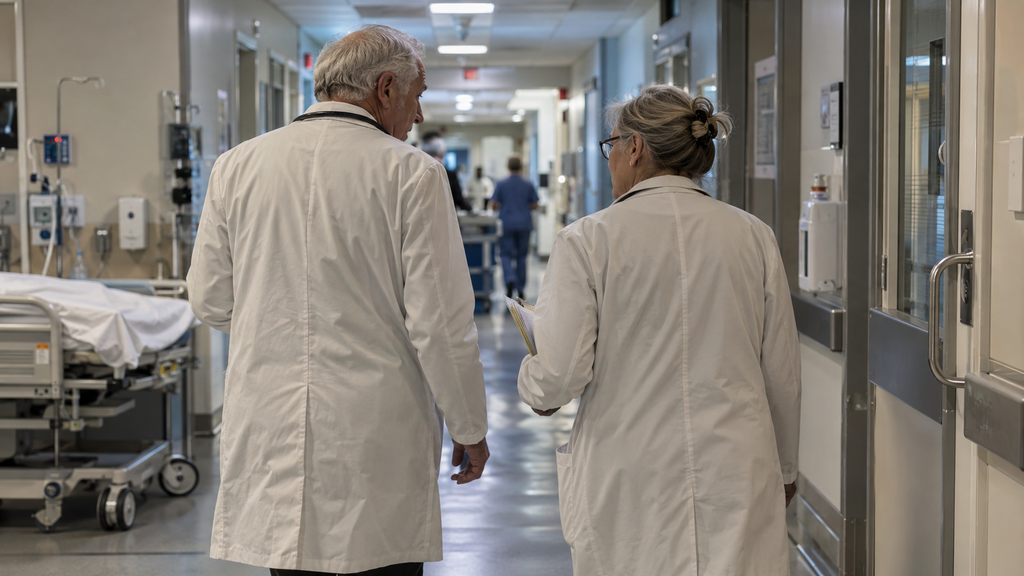
That generation is now aging out of the workforce.
The consequences are becoming increasingly visible. Israel already faces shortages in a range of medical specialties, particularly outside the center of the country, while thousands of veteran doctors have reached or passed retirement age. Many continue working because hospitals and clinics have nobody ready to replace them.
“The immigration from the Soviet Union in the 1990s saved the State of Israel at the time from the collapse of the health system,” said Prof. Zion Hagai, chairman of the Israel Medical Association.
But the temporary solution became part of the system's foundations, and Israel is now confronting what happens when that enormous cohort retires.
Prof. Nadav Davidovitch of Bar-Ilan University, who heads the health policy program at the Taub Center, described the shift as one of the central threats facing the country's medical workforce.
“Israel benefited for three decades from massive immigration of doctors from the former Soviet Union, about 10,000 physicians, and that entire wave is now reaching retirement age,” he said. “Losing that much clinical knowledge and senior experience at once creates a vacuum.”
The figures show how heavily the system still depends on older doctors.
A Finance Ministry report published earlier this month found that 24% of specialist physicians in Israeli hospitals were approaching retirement age in 2024, defined as male physicians over 60 and female physicians over 55.
The proportions are even higher in some specialties: 48% in palliative medicine, 36% in pediatric surgery, 34% in geriatrics and 28% in oncology.
A separate Health Ministry workforce report found that in 2023, roughly a quarter of all physicians in Israel, about 11,800 doctors, were already beyond retirement age. The proportion among specialists was similar.
The result is an increasingly common phenomenon in Israeli medicine: physicians retire officially, but keep working.
Retired, but still treating patients
Prof. Joab Chapman will turn 69 in December. He officially retired about two years ago after a long career as a neurologist, including decades as head of the Neurology Department at Sheba Medical Center near Tel Aviv.
In practice, he never stopped.
Chapman now works half time at Sheba's Neuroimmunology and Multiple Sclerosis Center and serves as chairman of the Israel Neurological Association.
“I want to work,” he told ynet and Yedioth Ahronoth. “It's good because you feel wanted, but it's also not happening by accident, because there is a shortage of doctors in general, and particularly in neurology.”
Israel has about 400 neurologists, he said, with roughly one-third of them over 65.
“I'm very happy they let me stay and contribute, but it's also a little sad that there are no replacements,” Chapman said. “Maybe there will be, but it will take at least five to 10 years before there are enough.”
The growing dependence on doctors like Chapman reflects the wider problem created as Israel's older medical workforce reaches retirement while too few younger physicians are ready to take their place.
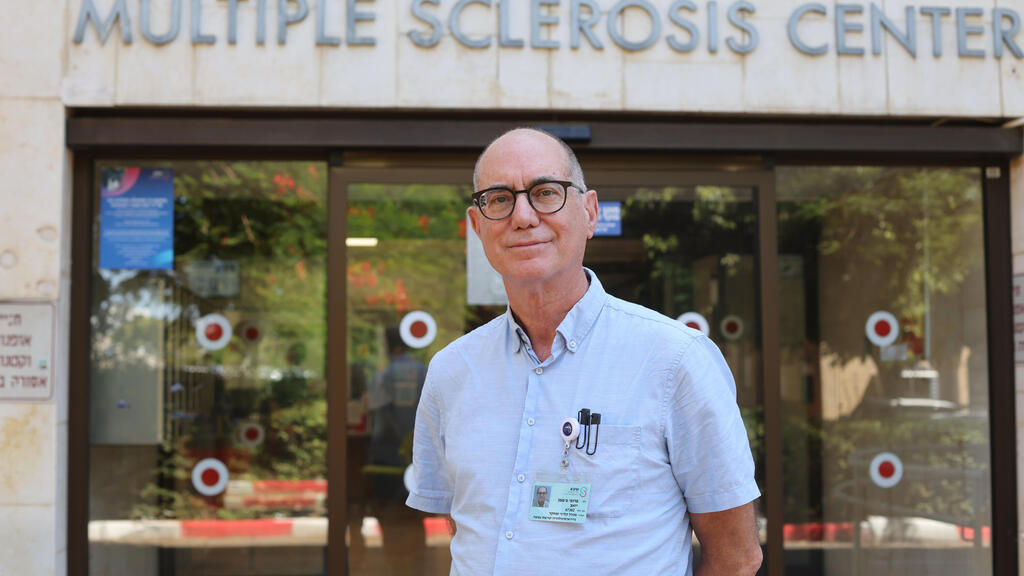
Prof. Joab Chapman
(Photo: Yariv Katz)
Chapman said neurology alone is short several hundred doctors. At the same time, the specialty struggles to attract enough residents, in part because of relatively low pay.
Meanwhile, demand for neurologists is increasing as new treatments become available.
“In recent years, for example, there have been new medications for Alzheimer's disease, but not every patient can receive them,” he said. “It's not only because of the cost. There are not enough specialists who know what is required to conduct the assessment, diagnose the patient and provide follow-up.”
At Sheba, Chapman said, at least two other neurologists his age or older remain at work, even if only part time.
“You simply feel the need because you understand there won't immediately be someone to take over the work,” he said.
For decades, he added, Israel became accustomed to having doctors available.
The influx from the former Soviet Union in the 1990s helped create that perception.
“Today, that is absolutely not the case,” Chapman said.
When one retirement can close a service
The impact is especially severe in small subspecialties where only a handful of senior physicians may provide a particular service.
Chapman cited epilepsy as one example.
Outside central Israel, the problem can become acute.
“There are only a few positions for senior physicians to begin with, and then every person who retires becomes very significant, to the point where the service shuts down,” he said.
Chapman said he had even considered moving to work outside central Israel if Sheba had not continued employing him.
Davidovitch said the retirement wave is likely to strike northern and southern Israel hardest because the physician workforce there is older than the national average.
“The proportion of older physicians in the periphery is even higher than the national average,” he said. “Mass retirement will hit the north and south first and hardest, and deepen inequality in health.”
Family medicine, internal medicine and psychiatry are among the fields in which older physicians make up a particularly large share of the workforce outside central Israel, he said.
Their departure could mean clinic closures and longer waits in the Negev and Galilee, where access to specialists already lags behind central Israel.
The pipeline cannot replace them overnight
The approaching retirement wave is colliding with another problem: replacing a senior doctor takes many years.
Israel has expanded medical-school admissions, but students entering classrooms today will need years of study, internships, residency and, in many cases, subspecialty training before they can replace retiring experts.
The Health Ministry's Yatziv reform has added to the short-term pressure.
The reform stopped recognizing medical schools abroad that do not meet Israeli standards. Davidovitch said the move was necessary to protect the quality of medicine but reduced the supply of new licenses in the short and medium term.

(Photo: shutterstock)
“For years, the focus was on the number of students, without managing the entire training pipeline, clinical training sites, residency positions and retention conditions,” Davidovitch said.
He argues that increasing student numbers alone will not solve the problem.
Israel also needs more clinical training sites in hospitals and community clinics, more residency positions and stronger efforts to bring Israelis studying medicine abroad back to the country after graduation.
It should also find ways to preserve the knowledge of older physicians through flexible employment arrangements, he said, including teaching, mentoring younger doctors, telemedicine and consultation roles.
Expanded responsibilities for advanced-practice nurses, paramedics and clinical pharmacists could also help reduce pressure on physicians.
Geriatrics feels the pressure
Prof. Avraham Weiss, 75, a specialist in internal medicine and geriatrics, is another physician who never really stopped working after reaching retirement age.
For years he served as deputy director of the geriatric department at Beilinson Hospital. About a year and a half ago, he moved to a Clalit Health Services geriatric clinic in the Tel Aviv district.
“I felt that I could still contribute and continue working in a profession that I love very much,” he said. “Of course, there is also a need, and when those two things come together, the result is that you continue.”
From age 67 to 72, Weiss said, he received annual approval to remain at work.
The need is only growing as Israel's population ages.
“The new doctors entering the system are not coming in numbers that meet the need, so there is demand for older and experienced people,” Weiss said.
“Experience has enormous value. When you are facing a patient, there are processes that you already know how to recognize and stages that you can shorten.”
Weiss also treats patients privately.
“There isn't a day when I don't receive requests from people because the appointment in the public clinic is too far away,” he said.
An aging workforce propping up an aging system
For some physicians, continuing to work is driven by more than professional commitment.
Chapman cited an 85-year-old neurologist whose pension is now less than NIS 10,000 a month after earning three or four times that amount while working.
For him, Chapman said, remaining in medicine was also an economic necessity.
But researchers who have studied physicians after retirement say the phenomenon goes much deeper.
A 2019 study by Dr. Shlomit Manor of Western Galilee Academic College and Dr. Roy Holland of Rambam Health Care Campus examined doctors who continued working after retirement in the public and private sectors.
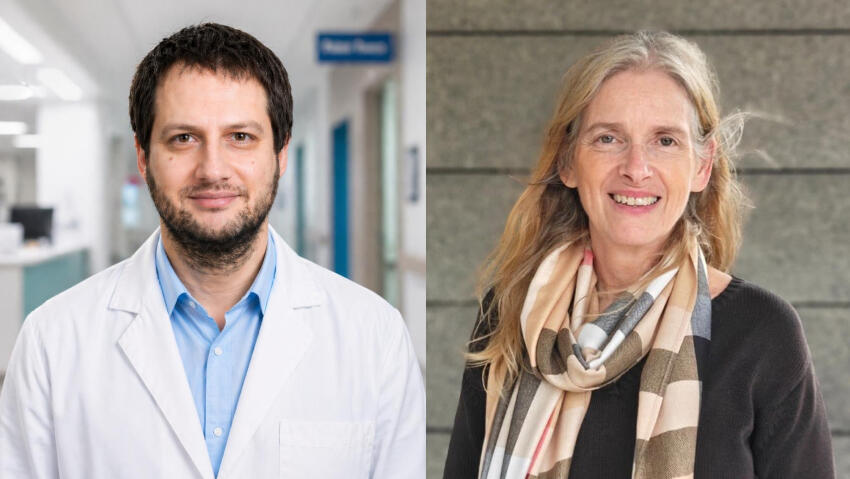
Dr. Roy Holland and Dr, Shlomit Manor
(Photo: Nir Manor)
The study, titled “Retiring Without Retiring,” found that many physicians find it difficult to relinquish not only their work but also the professional identity and status built over decades.
“This is a generation for whom work was everything,” Manor told ynet and Yedioth Ahronoth. “These people worked from morning until night and the hospital was their home.”
One physician interviewed for the research put it more directly: “What am I going to do, start growing onions? I'm a doctor. That's what I know how to do.”
Yet Holland said the health system itself has come to depend on that reluctance to leave.
“The data showed that the system relies on doctors not retiring and continuing to work because of the manpower shortage,” he said.
“Almost 100% of the doctors who reach retirement age continue working in one framework or another. They retire, but a week later you see them in the department or at a health maintenance organization.”
‘Age 67 should not be a barrier’
The Israel Medical Association says forcing doctors out solely because they have reached 67 makes little sense while experienced physicians remain in short supply.
“The shortage of physicians in general, and experienced physicians in particular, is very large in Israel,” Hagai said. “Age should not be a barrier, provided, of course, that the physician is professionally capable and fit to work.”
He said medicine in countries including the United States and Britain also places weight on professional competence rather than age alone.
During subspecialty training in the United States, Hagai recalled working with a doctor who remained active until age 80, operating and teaching residents.
“Anyone who wants to continue and is essential to the system should be allowed to remain at work,” he said.
But keeping veteran physicians cannot become a substitute for creating the next generation, he added.
“A doctor who finishes an internship must not wait for a residency,” Hagai said. “We have to train them immediately.”
That is the central dilemma now confronting Israeli medicine.
The immigration waves that supplied Israel with experienced Soviet and post-Soviet doctors created breathing room for decades. But immigration cannot be planned as a permanent workforce strategy, and training a replacement generation takes years.
Medical schools are already expanding. According to the Health Ministry, the number of medical students is expected to rise from 820 in 2020 to 1,550 in the coming academic year and to 2,000 by the end of the decade.
The ministry said it is also expanding residency training, recruiting immigrant physicians and strengthening the workforce outside central Israel. It expects the number of physicians relative to the population to rise in the coming years even after expected retirements are taken into account.
But health experts warn that the difficult period may arrive before those measures bear fruit.
“This is a crisis we knew was coming,” Davidovitch said. “But now it is meeting a national and security reality in which the health system and its resilience are a first line of defense.”
For decades, physicians who arrived from the Soviet Union and its successor states helped Israel postpone that reckoning.
Now, as the generation that sustained hospitals and clinics retires, the country must find a way to replace not only thousands of doctors, but decades of accumulated experience.