

Clocks will run slightly faster or slower depending on the strength of gravity in their surroundings, which complicates synchronizing our time on Earth, let alone across the vast solar system. As the idea of human settlement on Mars becomes a serious topic of discussion, one of the most intriguing questions is how time is measured on the Red Planet.
Physicists at the U.S. National Institute of Standards and Technology (NIST) have provided the first precise answer to how time passes on Mars. On average, clocks on Mars tick 477 microseconds (millionths of a second) faster per day than those on Earth. However, Mars’ eccentric orbit and the gravitational pull from its neighboring planets can increase or decrease that rate by up to 226 microseconds a day during a Martian year.
These findings, recently published in The Astronomical Journal, build on a 2024 study in which NIST researchers developed a precise timekeeping system for the Moon. “The discovery of how time flows on Mars is a milestone for future space missions,” said physicist Dr. Bijunath Patla of NIST. “Understanding time on our neighboring planet will help synchronize navigation and communication across the solar system.”
Days and years on Mars are longer than those on Earth. A Martian day—or a full rotation on its axis—is 40 minutes longer than an Earth day. It also takes Mars 687 Earth days to complete one orbit around the Sun, compared to Earth’s 365.
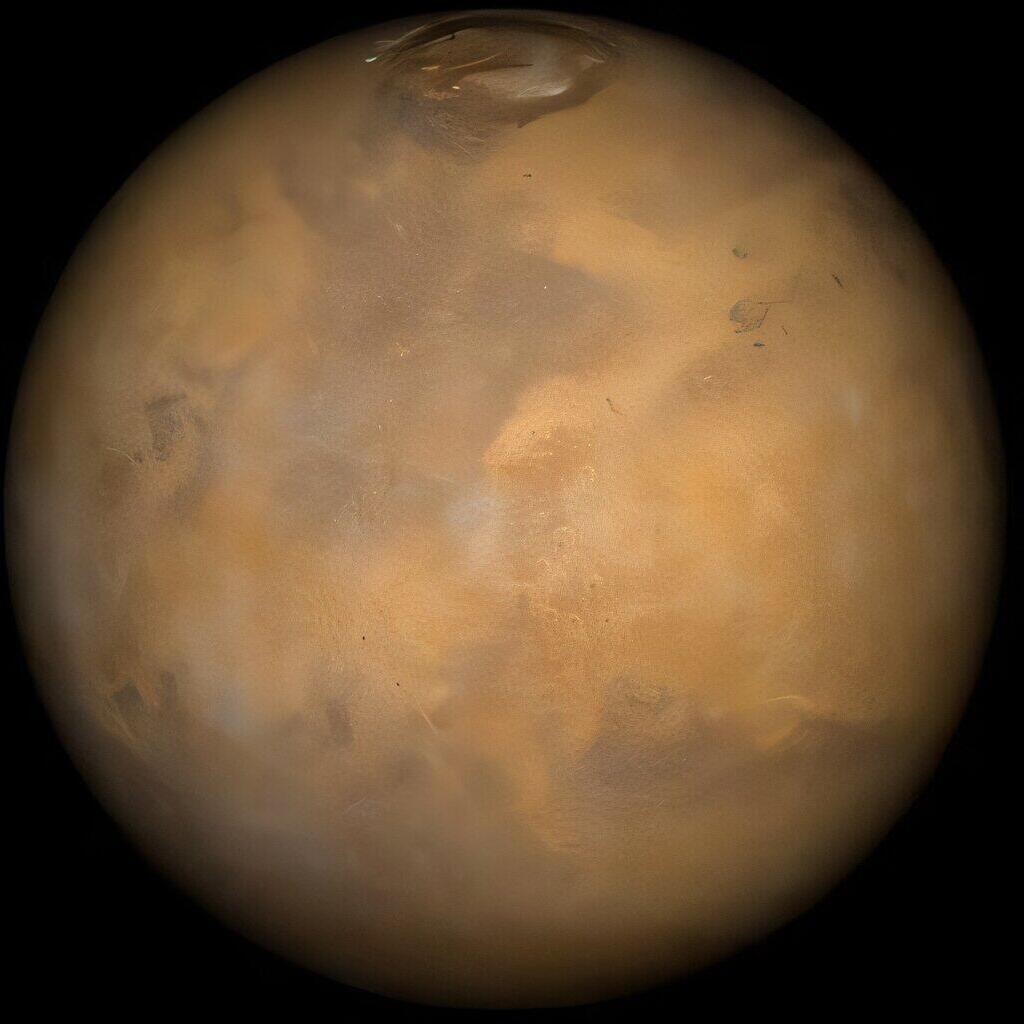
Mars as photographed by Mars Global Surveyor in November 1996
(Photo: NASA/JPL/MSSS)
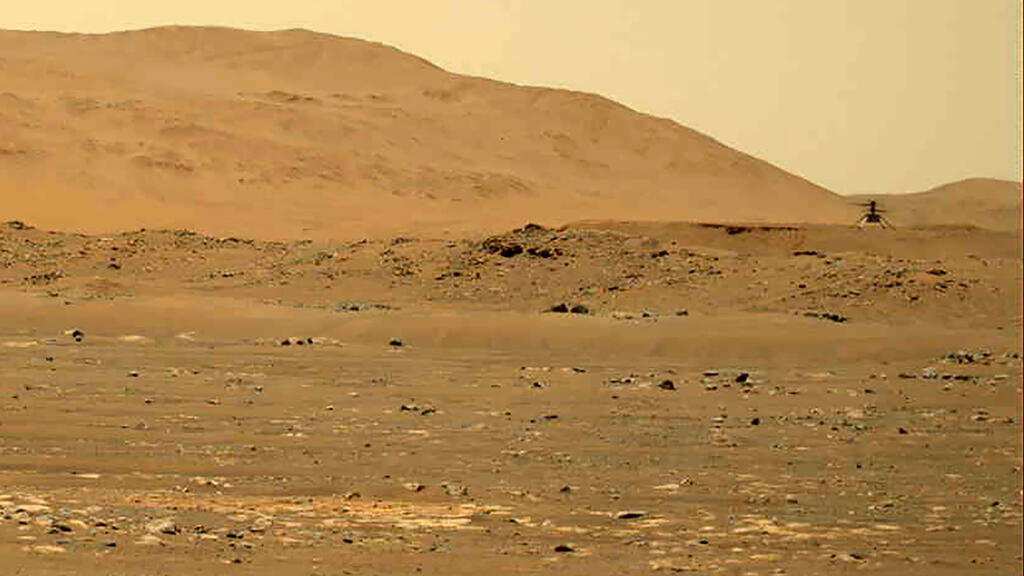
Image taken by NASA's Perseverance rover from the surface of Mars
(Photo: NASA/JPL-Caltech/ASU/MSSS)
If you were to land on Mars with an atomic clock, it would still tick the same way as it would on Earth. But if you compared a clock on Mars to one on Earth, they would no longer be synchronized. The challenge lies in determining how much Martian time diverges from Earth time, similar to calculating the difference between time zones.
Einstein’s theory of relativity states that the strength of gravity affects the passage of time: clocks tick slower in stronger gravitational fields and faster in weaker ones. A planet’s orbital speed also influences whether time passes more quickly or slowly.
The researchers selected a specific reference point on the Martian surface—similar to sea level at Earth’s equator. Thanks to years of data collected from Mars missions, they were able to estimate the gravity on the Martian surface, which is about one-fifth the strength of Earth’s. However, they had to consider more than just gravity.
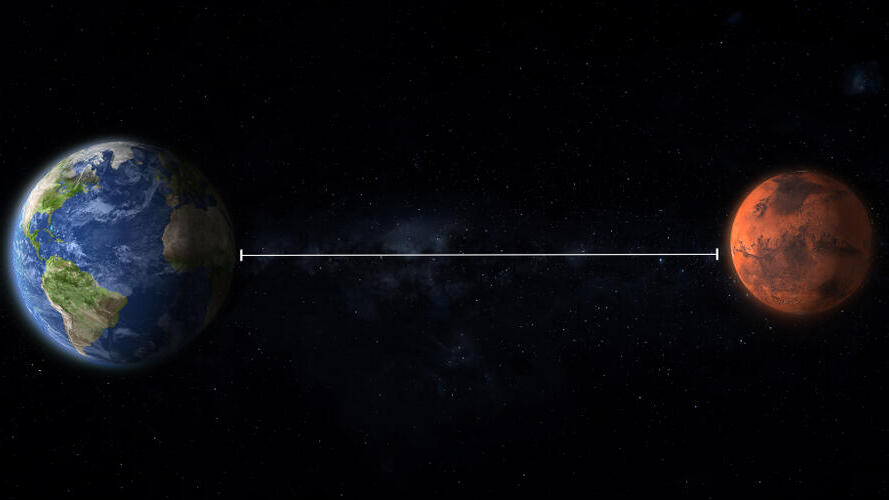
The distance between Earth and Mars
(Illustration: mkarco/Shutterstock)
Our solar system’s massive celestial bodies exert gravitational forces on one another. The Sun alone accounts for more than 99% of the solar system’s mass. Mars’ location—its distance from the Sun and neighboring planets like Earth, the Moon, Jupiter and Saturn—pulls it into a more eccentric and elongated orbit.
While Earth and the Moon have relatively stable orbits (lunar time is consistently 56 microseconds faster than Earth time), the same does not apply to Mars. “Its distance from the Sun and eccentric orbit cause greater time variations,” Patla explained.

Human settlement on Mars
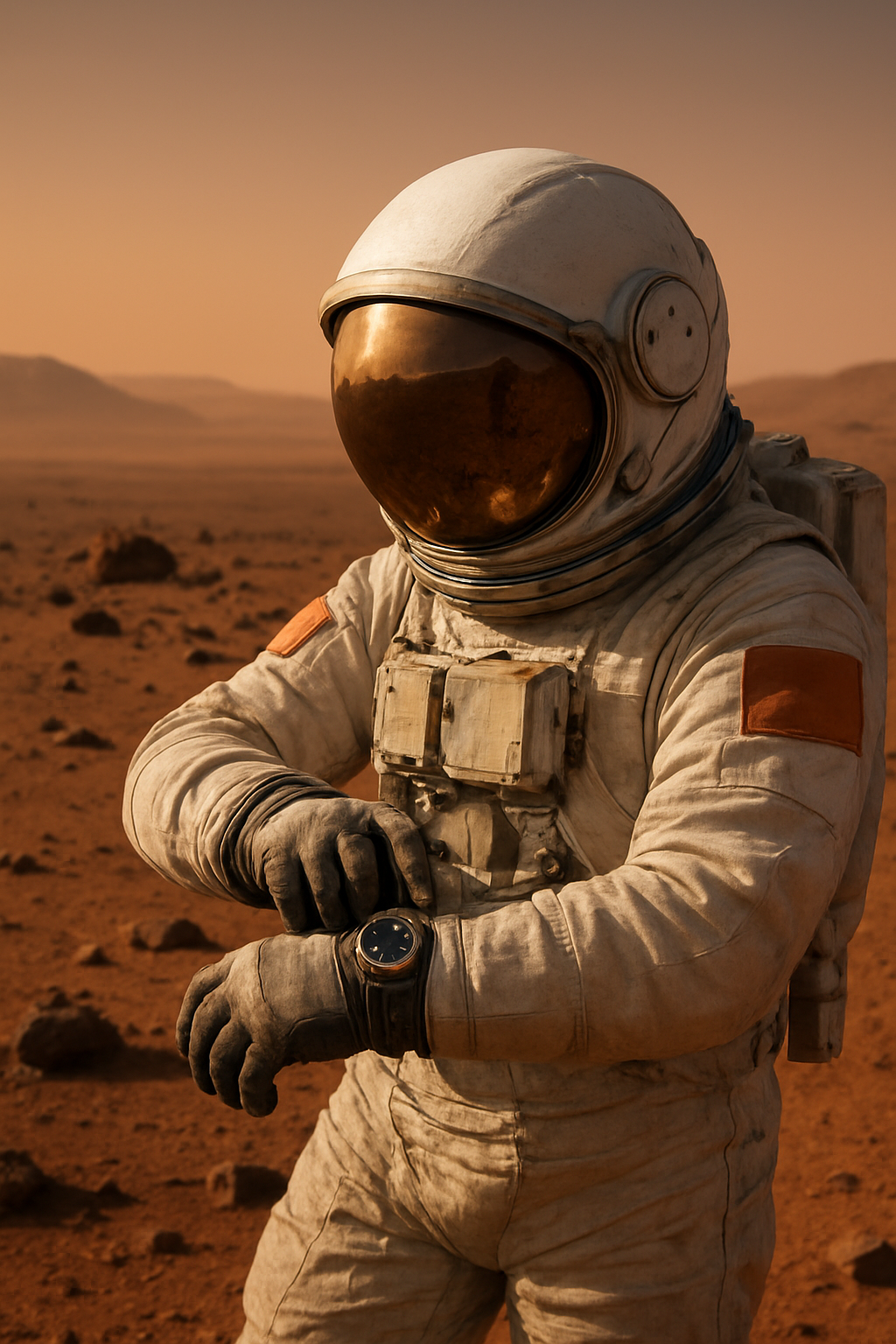
(Illustration: Shutterstock AI)
After factoring in Mars' gravity, its eccentric orbit, and the gravitational influence of the Sun, Earth and the Moon, the researchers reached their conclusion. While 477 microseconds may sound insignificant (roughly a thousandth of the time it takes to blink), accounting for such minute time differences is key to developing advanced communication networks.
Currently, messages between Earth and Mars are delayed anywhere from 4 minutes to 24 minutes (or even more). As scientists plan future Mars missions, understanding how time ticks on the Red Planet will be crucial to better synchronize communications with spacecraft and rovers. Creating a timekeeping framework across planets is an essential step toward building synchronized interplanetary networks over vast distances.