


Teenagers who catch up on sleep lost during the school week may also experience consequences for their mental health. A new systematic review and meta-analysis found an association between greater differences in sleep and wake times on school days and weekends, a phenomenon known as "social jet lag," and higher levels of anxiety symptoms among adolescents.
The study, published in the journal Sleep Medicine Reviews, included 18 studies involving teenagers ages 12 to 18. Twelve of those studies, with a combined 235,526 participants, were included in the meta-analysis. The findings showed that the greater the difference between sleep schedules on school days and weekends, the more anxiety symptoms adolescents tended to report.
Gallery
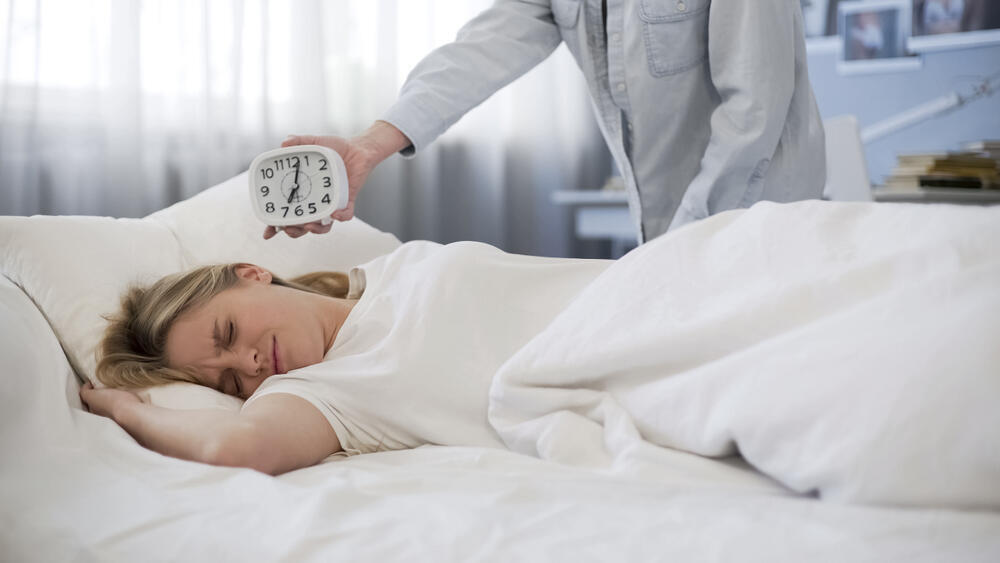
'Social jet lag' is the difference between sleep and wake times on school days and weekends
(Photo: Shutterstock)
When the biological clock clashes with daily life
"Social jet lag" has nothing to do with flying or crossing time zones. It describes a mismatch between a person's biological clock and the daily schedule imposed by school, work and social obligations. For teenagers, this may mean going to bed late, having to wake up early for school, and then going to bed and waking up much later on weekends to catch up on lost sleep.
According to the researchers, adolescence is characterized by a natural delay in the body's biological clock. Teenagers tend to feel sleepy later in the evening and naturally prefer to wake up later in the morning. But early school start times, combined with homework, extracurricular activities, jobs, screen time and social commitments, create a gap between the body's needs and the schedule it is expected to follow.
"During puberty, the body’s internal clock usually shifts back by a few hours, meaning teenagers naturally don’t start feeling sleepy until later and would ideally wake up later too," Sarah Chellappa, a co-author of the study at the University of Southampton, told Euronews. "Teenagers also face demands on their time, from early school starts to socialising online, which can rob them of sleep, especially during the week."
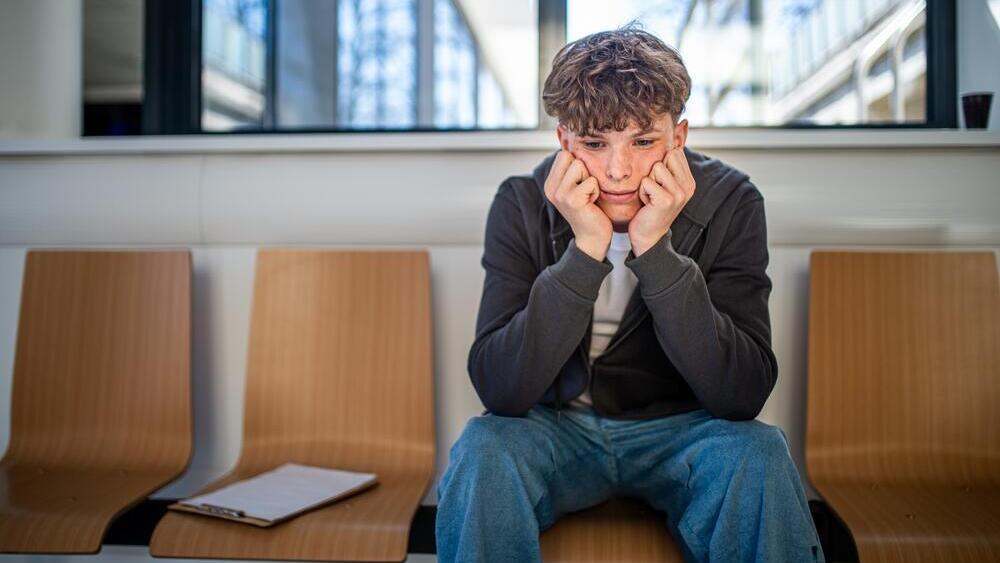
The greater the difference in sleep schedules, the more anxiety symptoms were found among teenagers
(Photo: Shutterstock)
As a result, teenagers effectively live according to two different schedules: one during the school week and another on weekends. During the week, they must wake up at a time that does not necessarily match their biological clock. On weekends, they delay their bedtimes and wake-up times in an attempt to make up for lost sleep. This repeated shift between schedules is at the center of the new study.
It's not just how much sleep, but when
Several studies included in the review supported the possibility that not only sleep duration matters, but also the extent to which sleep timing changes. A large Chinese study involving more than 106,000 teenagers found that a difference of two hours or more between weekday and weekend sleep patterns was associated with a greater likelihood of anxiety symptoms compared with a difference of less than one hour. The association remained statistically significant even after researchers accounted for demographic characteristics, lifestyle factors and sleep patterns.
Another study, conducted in the United States and published in 2019, involved approximately 3,100 teenagers. It found that both shorter sleep duration and greater social jet lag were independently associated with more anxiety symptoms. This suggests that differences in sleep timing may be relevant in their own right, rather than simply indicating that teenagers are not getting enough sleep.
An additional Australian study published in 2015 found that teenagers who slept fewer than eight hours on school nights and more than eight hours on weekends reported more anxiety than those who consistently slept eight to 10 hours each night. By contrast, among teenagers who slept eight to 10 hours during the week, changes in weekend sleep duration were not associated with increased anxiety levels.
These findings paint a complex picture. Sleeping longer on weekends may indicate a substantial shift in sleep timing, but it may also reflect the body's attempt to recover from sleep deprivation accumulated during the week. It is therefore difficult to separate the effects of waking up later from those of an overall lack of sleep.

Early school start times can create a mismatch between teenagers' biological clocks and their daily schedules
(Photo: Shutterstock)
The researchers note that sleeping longer on weekends is not necessarily harmful. When people accumulate a sleep deficit during the week, the body may attempt to repay that "sleep debt." Previous research has suggested that even one night of recovery sleep can improve certain cognitive functions. However, other findings indicate that not all the effects of sleep deprivation are quickly reversed. In an earlier study involving adolescents, subjective sleepiness and sustained attention had not returned to baseline levels even after two nights of recovery sleep.
The link to anxiety remains unclear
Despite the large number of participants, the meta-analysis found only a weak association between social jet lag and anxiety symptoms. The findings were also inconsistent across studies. Some identified a clear association, others found no statistically significant link, and one even reported an association in the opposite direction.
One possible explanation is that the studies did not measure social jet lag in the same way. Some defined it as the difference between the midpoint of sleep on weekdays and weekends. Others relied on differences in bedtime, wake-up time or total sleep duration. Anxiety was also assessed using different questionnaires. Most studies did not examine a medical diagnosis of an anxiety disorder, but rather anxiety symptoms reported by the teenagers themselves.
Most of the studies also measured sleep and anxiety at only one point in time. As a result, the findings cannot establish whether irregular sleep contributes to anxiety symptoms, whether anxiety itself disrupts sleep, or whether the two influence each other.
Teenagers ages 13 to 18 generally need eight to 10 hours of sleep per night
(Photo: Shutterstock)
The researchers are calling for longitudinal studies that follow teenagers over time and combine objective sleep measurements with self-reported data. They also note that most of the research was conducted in high-income countries, meaning caution is needed when applying the findings to other populations and cultures.
A previous meta-analysis that examined social jet lag alongside a broader range of mental health indicators and across different age groups did not find a consistent association with anxiety. The authors of the current study believe their specific focus on anxiety and adolescence may explain why they identified a small but statistically significant association.
'I wouldn't rush to wake a teenager'
So what should parents do on Saturday morning when their teenager is still asleep and noon is approaching? Dr. Ishay Lev, a family medicine specialist with expertise in adolescent sleep disorders at Clalit Health Services in the Jerusalem district, cautions against concluding from the findings that parents should wake their children.
 Dr. Ishay Lev Photo: Courtesy
"I wouldn't rush to wake a sleep-deprived teenager because of this study," he says. "Before asking what time a child wakes up on Saturday, we need to ask how much sleep they're getting during the rest of the week, whether they're sleeping well and what's happening in their lives when they're awake."
According to Lev, the advantage of a meta-analysis is that it brings together findings from multiple studies rather than relying on a single investigation. However, the association identified in the current study was only about 0.06.
"That's a very weak average association," Lev explains. "With an enormous sample, even a tiny association can be statistically significant. That doesn't undermine the study, but it does mean we need to ask whether the finding is meaningful enough to change recommendations for families."
He says it is important to avoid two opposing conclusions that are not supported by the evidence. On the one hand, the study does not prove that social jet lag has no effect on anxiety. On the other, it does not establish that sleeping late on weekends causes anxiety.
"A large number of participants doesn't turn a small association into a large one, and it doesn't turn correlation into causation," he emphasizes.
Same wake-up time, a completely different story
To explain why wake-up time alone does not tell the whole story, Lev suggests considering two teenagers who wake up at exactly the same time on Saturday. The first gets enough sleep during the week and simply goes to bed and wakes up later on weekends. The second sleeps only six hours a night on school days and tries to make up for the deficit on Saturday.
It's not just sleep duration that matters, but also sleep quality and consistent bedtimes and wake-up times
(Photo: Shutterstock)
"They wake up at the same time, but their need for sleep is completely different," he says. "A measure of changes in sleep timing doesn't tell us, on its own, whether a child is catching up on lost sleep or simply shifting their sleep schedule."
According to Lev, the average association found in the study may conceal different groups of teenagers for whom the relationship between sleep patterns and anxiety manifests differently. However, that possibility has not yet been demonstrated.
"I would like to see separate analyses of teenagers with chronic sleep deprivation, those who naturally tend toward later bedtimes, and those who have difficulty falling asleep or experience poor-quality sleep," he says. "Teenagers with attention-deficit/hyperactivity disorder are another group that is important to examine separately."
For a teenager dealing simultaneously with ADHD, sleep difficulties and anxiety, changes in sleep timing may have a different effect. Alternatively, other factors may be associated with both sleep and anxiety.
"We mustn't see an anxious teenager who wakes up late on Saturday and immediately decide that their wake-up time is the problem," Lev says.
He adds that researchers should also examine teenagers with depression, autism or sleep-disordered breathing separately, while taking age, sex and stage of adolescent development into account.
"A weak average association may conceal important differences, but it doesn't prove those differences exist. They need to be investigated directly."
Sleep quality matters just as much
Lev notes that the broader scientific literature also presents an inconsistent picture. Another review, which included young people across a wider age range, found a stronger association between social jet lag and anxiety. However, differences between the studies it examined were enormous, and the certainty of the evidence was rated very low.
A separate review involving more than 416,000 adolescents found that anxiety was more strongly associated with poor sleep quality and sleep disturbances than with sleep duration alone.
"This isn't a direct comparison involving the same children, but it highlights an important principle," he says. "It's not enough to ask when they sleep. We also need to ask how well they sleep."
Lev also emphasizes that 14 of the 18 studies included in the new review were cross-sectional.
"They examined sleep and anxiety at a single point in time, so we can't determine which came first," he says. "It's possible that sleep affects anxiety, that anxiety disrupts sleep, or that both processes occur simultaneously."
According to Lev, the broader research literature contains evidence that improving sleep may reduce anxiety. But that does not mean waking teenagers earlier on weekends will produce the same result.
"Treating a sleep disorder is not the same thing as waking a child an hour earlier on Saturday," he says. "You can't transfer a conclusion from one intervention to another."
Wake them up on Saturday or let them sleep?
According to Lev, the goal is not to choose between getting enough sleep and maintaining a regular sleep schedule, but to achieve both. Teenagers ages 13 to 18 generally need eight to 10 hours of sleep per night. If a teenager is not sleeping enough during the week, waking them early on Saturday as well could leave them with an even greater sleep deficit.
"On the other hand, it's not a good idea to turn the weekend into an entirely different time zone," he says. "It's better to reduce large fluctuations, allow enough time for sleep and, above all, understand why so much catch-up sleep is needed in the first place. This study did not prove that it's better to wake sleep-deprived teenagers than to let them catch up on sleep."
So what is the ideal difference between wake-up times on school days and weekends? According to Lev, the study did not establish a safe threshold that applies to everyone. A difference of about one hour appears in general guidelines, while families can sometimes aim for a compromise of one to two hours, depending on the teenager's sleep deficit and daily functioning.
"But that's not a biological cutoff," he emphasizes. "There's no basis for saying that a two-hour difference is fine, but at two hours and 10 minutes, anxiety begins. The amount of sleep matters just as much as the time on the clock."
What really happens to hormones?
Lev also urges caution when it comes to popular, oversimplified explanations of how changes in sleep schedules affect hormones. With melatonin, he says, it is important to distinguish between the amount of the hormone produced and the timing of its release.
"The timing of melatonin secretion serves as an indicator of the biological clock, and exposure to light and sleeping at later hours can delay that timing," he explains. "That doesn't mean melatonin itself somehow 'breaks down.'"
As for cortisol, sometimes called the "stress hormone," the review provides no basis for concluding that sleeping late on Saturday raises cortisol levels and thereby causes anxiety.
"That's a chain of events the study simply hasn't established," he says.
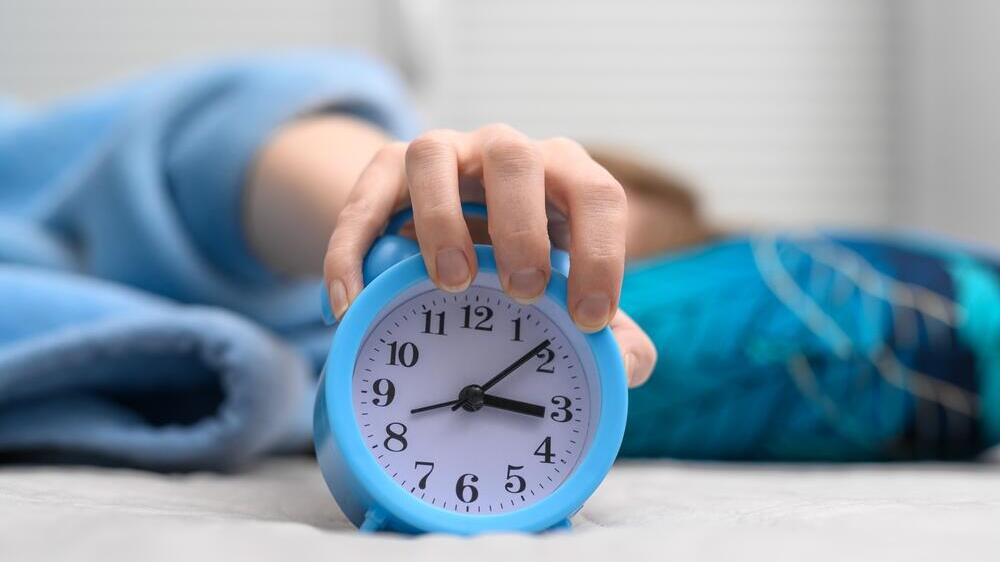
Changes in sleep timing alone do not indicate whether a teenager is catching up on lost sleep or simply shifting their sleep schedule
(Photo: Shutterstock)
According to Lev, one simple change families can make is to agree with their teenager on a reasonable wake-up time that remains relatively close to their weekday routine, while also planning the evening to allow enough time for sleep. He emphasizes that the decision should be made together with the teenager rather than imposed from above.
Families can also reduce exposure to bright light and stimulating activities before bedtime and encourage exposure to daylight after waking up. However, there is no guarantee that these changes will immediately improve anxiety symptoms.
"An alarm clock is not a treatment for anxiety," he emphasizes.
Morning light may help shift the biological clock toward an earlier schedule. In small experimental studies, exposure to bright light at specific times and for defined durations advanced the timing of melatonin secretion. But Lev cautions against concluding that spending a short time in the sun can erase the effects of a late night.
"There are also findings suggesting that evening light exposure and restricted sleep reduce the effects of morning light," he says. "The bottom line is that light can help regulate timing, but it doesn't restore lost hours of sleep."
The responsibility doesn't rest solely with teenagers
The researchers recommend that healthy sleep guidelines for teenagers address not only the number of hours they sleep, but also the regularity of their bedtimes and wake-up times. Parents, educators and health care professionals can help promote healthy sleep habits. At the same time, broader measures, such as starting the school day later, should also be considered.
Hannah Ravenhall, the study's lead researcher, also emphasizes that responsibility should not fall entirely on teenagers.
"It's important to look beyond what individuals can do themselves and recognize that broader social systems may influence sleep," she told Euronews. "That starts with recognizing the biological changes in sleep that occur during adolescence, protecting teenagers' sleep needs and reconsidering secondary school start times to support their well-being."
Ultimately, Lev wants to shift the discussion away from the clock and back to the teenager.
"This study is not a reason to ignore the importance of regular sleep, but it's also not a reason to launch a Saturday morning wake-up campaign," he concludes. "The important question isn't just what time a child wakes up, but whether they're getting enough sleep, whether they're sleeping well and why they need the weekend to recover from the entire week."