

Prof. Ada Yonath, the Israeli scientist whose groundbreaking research into the ribosome earned her the 2009 Nobel Prize in Chemistry and helped transform scientists’ understanding of how antibiotics work, died Monday at the age of 87, the Weizmann Institute of Science announced.
Yonath, a professor in the institute’s Department of Chemical and Structural Biology, was a pioneer in the study of the ribosome, the cellular machinery responsible for producing proteins. Her decades-long scientific career began with fundamental research aimed at deciphering the structure and operation of one of the most complex biological machines found in nature.
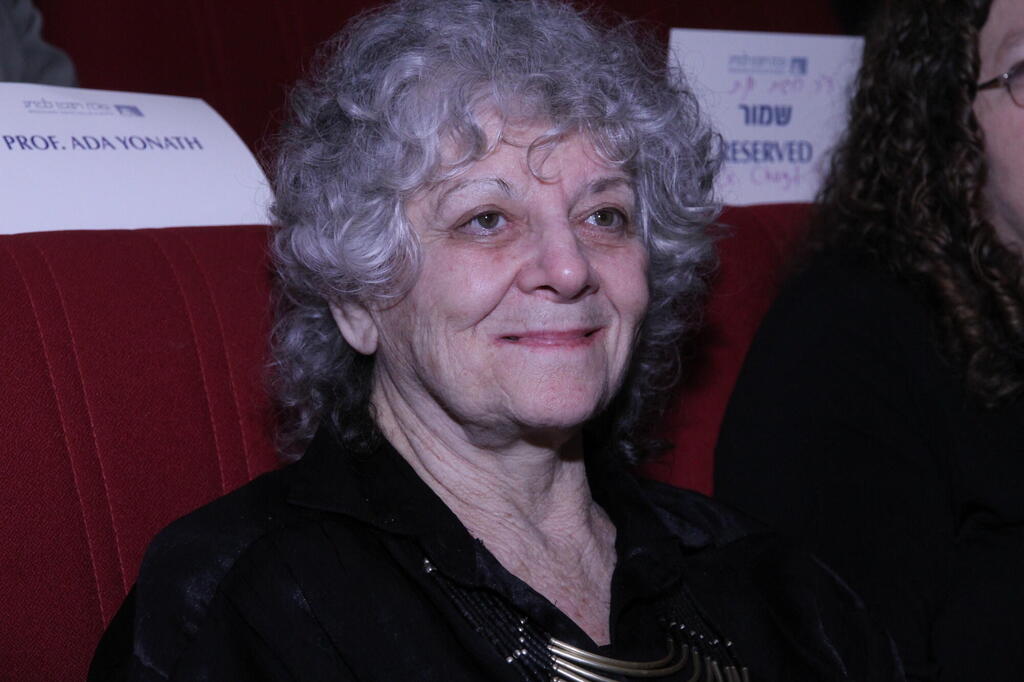
Prof. Ada Yonath
(Photo: Zohar Shachar)
Her work ultimately helped reveal how different antibiotics interact with the ribosome, opening new avenues for the development of antibiotic drugs and efforts to combat antibiotic-resistant bacteria, one of the most pressing medical challenges of the 21st century.
Yonath received the Nobel Prize in Chemistry in 2009 for her research on the structure and function of the ribosome. She was also an Israel Prize laureate and became one of Israel’s most internationally recognized scientists.
Weizmann Institute President Prof. Alon Chen described Yonath as an exceptional scientist whose willingness to pursue a problem that others considered nearly impossible changed an entire field.
“Ada was an extraordinary scientist who was not afraid to choose a path that others thought impossible and pursue it with determination, curiosity and courage for decades,” Chen said.
“Her breakthrough in ribosome research changed our understanding of one of the most fundamental processes of life and opened new possibilities for combating antibiotic resistance.”
Chen said Yonath’s legacy extended well beyond her scientific achievements.
“She showed generations of scientists what can be achieved when you dare to ask big questions and refuse to give up on the persistent search for answers,” he said.
Yonath held the title of Institute Professor, the highest academic rank awarded by the Weizmann Institute to a small group of distinguished scientists. According to Chen, she remained scientifically active until the end of her life.
“She continued researching and publishing, maintained an active laboratory and pursued scientific collaborations right up until her final days,” he said.
Her research helped establish the structural basis for understanding how ribosomes manufacture proteins and how antibiotic drugs can interfere with that process, work that placed her among the leading figures in modern structural biology and chemistry. The Weizmann Institute continues to list research in biomolecular structure and crystallography among the fields closely associated with the work for which Yonath received the Nobel Prize.
For the scientific community she leaves behind, Yonath’s career became an example of how decades of basic research into a seemingly intractable biological problem could ultimately produce discoveries with profound implications for medicine.