

The Health Ministry reported on Friday night a suspected first case of Ebola in Israel. A man who returned to Israel three days ago from the Democratic Republic of Congo developed fever and headache and is currently being treated in isolation at Rambam Medical Center in Haifa. At this stage, this is only a suspected case. Test results are expected within 24 hours.
The patient is being treated in a negative-pressure isolation room in the hospital’s emergency department, designed to ensure complete separation from regular emergency care activity, hospital officials said.
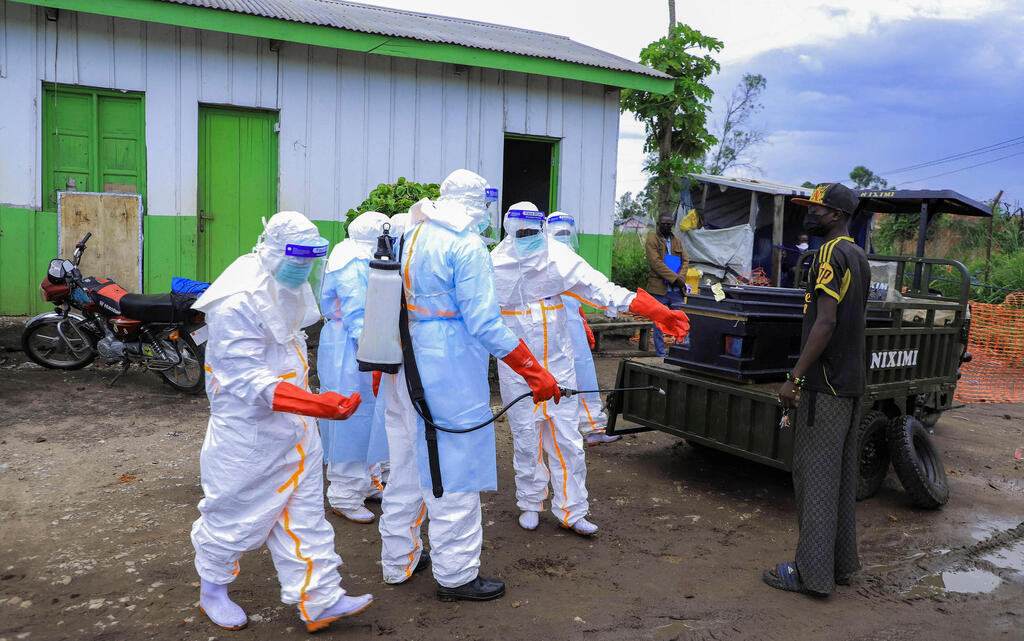
Disinfection operations following Ebola outbreak in the Democratic Republic of the Congo
(Photo: REUTERS / Stringer)
The Health Ministry said the patient was transferred to Rambam, which has been designated as the national center for handling suspected cases of this type, and is being treated in accordance with professional isolation protocols. An epidemiological investigation is also underway to identify individuals who may have been in contact with him. Meanwhile, laboratory testing is being carried out, with results expected within the next day.
The current Ebola outbreak in the Democratic Republic of Congo began in May 2026 in the Ituri region in the northeast of the country and is the 17th outbreak recorded there since the virus was first identified in 1976.
Unlike previous outbreaks, this one involves the Bundibugyo strain, a rarer variant for which there is no approved vaccine or specific treatment, and which has previously shown fatality rates of 30% to 50%.
The World Health Organization declared the outbreak a Public Health Emergency of International Concern (PHEIC) on May 17. So far, Congo’s Health Ministry has reported 837 confirmed cases and 196 deaths, with the vast majority concentrated in the Ituri region. Cases have also been confirmed in Uganda.
The WHO assesses the risk as very high at the national level in Congo, high at the regional level, and low at the global level.
Countries and international organizations, including the United States, United Kingdom and European Union, have allocated hundreds of millions of dollars to help contain the outbreak.
In recent months, since the outbreak in Congo and Uganda began, Israel’s Health Ministry has been closely monitoring developments and maintaining system-wide preparedness.
As part of this effort, professional guidelines were issued to medical teams and relevant hospitals, protective equipment and specialized gear were stocked, early detection mechanisms for travelers returning from affected regions were established, and laboratory diagnostic capacity for the disease was set up.