


Could a difference of a few hours on the clock affect lung cancer treatment outcomes? A new clinical study published in Nature Medicine placed that question at center stage, examining whether the timing of immunotherapy influences patients’ survival chances.
The trial results pointed to a clear advantage for treatment given in the morning, while also raising complex questions about how to interpret and apply the findings in clinical practice.
Gallery
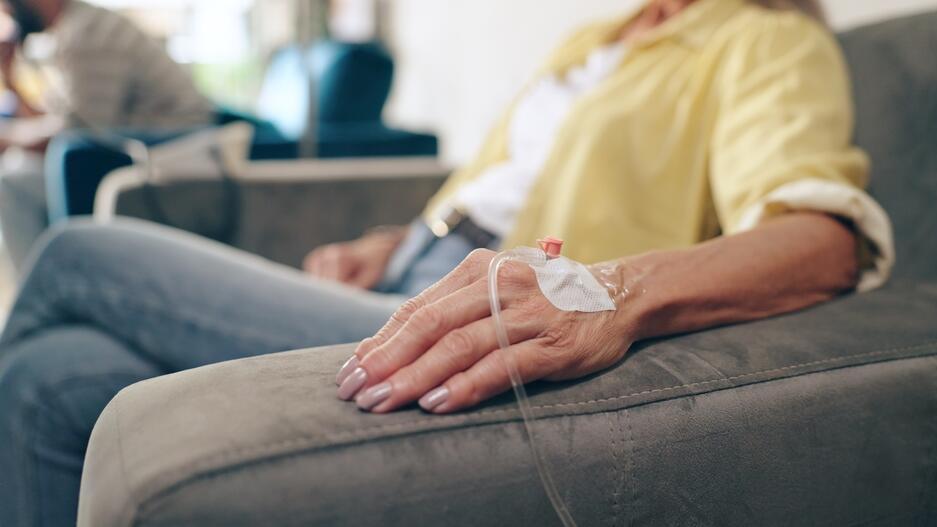
Patients who received immunotherapy and chemotherapy in the morning had progression-free survival of about 11.3 months on average, compared with 5.7 months among those treated in the afternoon
(Photo: Shutterstock)
In recent years, immunotherapy has become one of the most significant breakthroughs in cancer treatment. “This is one of the biggest revolutions of recent years in cancer care in general and lung cancer in particular,” said Prof. Yair Bar, head of the Lung Cancer Unit at Sheba Medical Center’s Cancer Center. “These treatments are included in the national health basket and have been widely available for several years. We are seeing the revolution before our eyes, with patients surviving much longer than in the past.”
According to Bar, the new study focuses on a longstanding question in oncology: whether the timing of treatment has clinical significance. “This is a topic that has been discussed for years. There have already been several retrospective studies that looked back at existing data, comparing patients who received treatment in the morning versus the evening. Those results tended to suggest an advantage for morning treatment.”
However, he noted limitations in such studies. “They were retrospective studies examining existing data. For example, it could be that patients treated in the evening lacked daytime support and could only attend treatment later, a factor we know can significantly affect survival.”
The new study stands out because of its prospective design. Conducted at a hospital in China, it included 210 patients with lung cancer who were randomly assigned to receive treatment either in the morning or in the afternoon.
 Prof. Yair BarPhoto: Sheba Medical Center
“This is the first study to examine treatment timing prospectively, where researchers created the conditions,” Bar said. “Patients were randomized: one received morning treatment, the other in the afternoon, allowing for the most accurate comparison and minimizing confounding factors. It’s also important to note that the study focused on the first four treatment cycles.”
The results showed marked differences between the groups. Patients who received combined immunotherapy and chemotherapy in the morning had progression-free survival of about 11.3 months on average, compared with 5.7 months among those treated in the afternoon.
Overall survival was also significantly higher: approximately 28 months in the morning group versus 16.8 months in the afternoon group. The response rate to treatment was higher as well, about 69.5% among morning patients compared with 56.2% among those treated later in the day.
“These results are very impressive and seemingly show better outcomes when patients receive treatment in the morning,” Bar said. “The researchers argue that immune system activity is heightened in the morning and responds better to immunotherapy.”
Still, he cautioned against drawing sweeping conclusions. Of nearly 440 patients initially considered, only 210 were ultimately included in the study. About 80 declined the proposed treatment time, and details about the others were limited.
“When you see such data, you wonder why those patients were not included,” Bar said. “A large group not entering the study suggests there may be factors we are unaware of that could have influenced the results.”
He also pointed to differences between the groups, including characteristics suggesting less aggressive tumors among some morning patients. Another key question concerns the drug’s mechanism.
“Immunotherapy is administered into the bloodstream and remains at relatively stable levels for weeks,” Bar explained. “Even if a patient received the drug at midnight and its peak effectiveness is in the morning, it would still be present at effective levels the next morning. That is the biggest question surrounding this issue.”
The researchers concluded that the topic warrants further investigation.

(Photo: Shutterstock)
The circadian clock and the immune system
The idea that time of day affects bodily function is not new. Growing research shows that many physiological processes, from hormone secretion to inflammatory responses, vary over a 24-hour cycle. The immune system is no exception.
Prof. Guy Hazan, a senior pediatric pulmonologist at Soroka Medical Center, said these processes are governed by circadian rhythms. “Basic factors such as body temperature and various stimuli are influenced by light and darkness in a 24-hour cycle,” he said. “These are shaped by external factors but also by internal biological clocks that regulate multiple systems in the body.”
Recent findings suggest the picture is more complex. “We are learning that every organ in the body has its own circadian clock, and the immune system has one as well,” Hazan said. “Our response to external triggers changes depending on the time of exposure.”
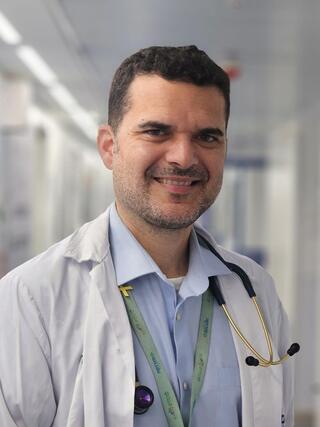 Prof. Guy HazanPhoto: Rachel David
Dr. Shahar Shelly, director of the Neurology Department at Rambam Health Care Campus, explained that the connection lies in the relationship between the brain and the immune system. The hypothalamus acts as a “master clock,” regulating sleep, body temperature, hormone release and other processes over a 24-hour cycle.
Scientists have found that immune cells, particularly T cells responsible for attacking cancer cells, do not function at the same intensity throughout the day. They have peak hours of activity and relative periods of rest.
“If you recruit soldiers when they are alert and ready, their chances of success are higher,” Shelly said. “If you recruit them when they are tired, performance will be lower.”
Hazan cited his own large-scale research involving 2.5 million people, which examined whether the timing of COVID-19 vaccination affected effectiveness. He said those vaccinated in the late morning showed significantly higher effectiveness than those vaccinated in the evening.
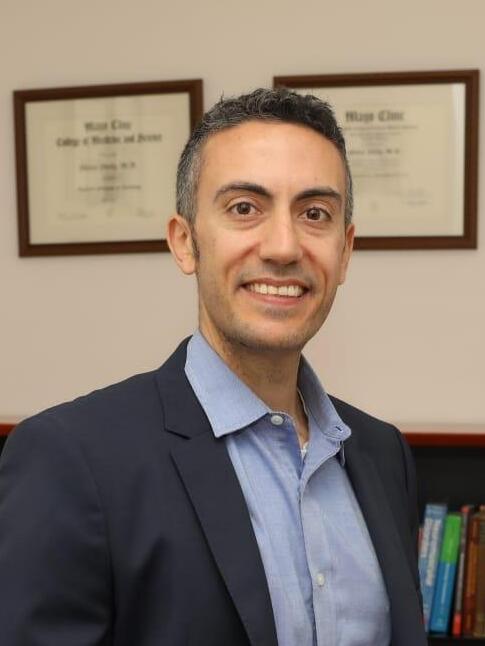 Dr. Shahar ShellyPhoto: Rambam Medical Center
Similar patterns were observed in children receiving varicella vaccines and in oncology patients undergoing CAR-T therapy for lymphoma and leukemia.
“Something in our immune mechanism is influenced by the time of exposure,” Hazan said. “This could apply to viral infections, allergens, vaccines and more.”
Laboratory research has also identified genes in the lungs that are expressed differently at various times of day. Disruption of circadian rhythms, such as among night-shift workers, has been linked to weaker immune responses.
“In U.S. intensive care units, critically ill patients whose circadian rhythms functioned properly had better prognoses than those with disrupted clocks,” Hazan said. “That is why patients are often placed near large windows, to maintain day-night cycles. Even lung function varies during the day, with poorer performance in the early morning hours.”
Despite the growing evidence, the evolutionary explanation remains unclear.
“We still do not have a full explanation,” Hazan said. “But the phenomenon exists. Light and darkness may seem unrelated at first glance, yet they influence many specific processes. It is fascinating.”