

“I had a friend from the army whose father had the same disease. We always talked about how both of us were without a father. When I told her my mother had been diagnosed, she said, ‘I’m sorry. Try to remember your mother as she was, because her condition will deteriorate and she will no longer be the same person.’ And that is exactly what happened. Her condition deteriorated, and she was no longer the woman who raised me. But I always try to close my eyes and tell myself, ‘I know who I will miss in the end,’” says Chanel Bitton, 20, from Ramat Gan.
About a year ago, her mother, Yaarit, was diagnosed with Creutzfeldt-Jakob disease, also sometimes referred to as “mad cow disease,” a rare and incurable illness that causes progressive brain damage. In recent months, her condition has deteriorated, and she is now hospitalized in a hospice in Jerusalem.

“To every child going through this with a parent, or anyone who knows someone dealing with the disease, I want to say: always remember the people they were before, and in general, appreciate your parents and make the most of your time with them, because you never know what will happen,” Chanel tells ynet.
The first signs appeared gradually. “I remember my siblings complaining that Mom was starting to stutter, speak strangely and behave strangely,” she recalls. “One day they called me because they were sure it was a stroke and they drove to the hospital. Only then did we understand it wasn’t.”
At the hospital, Yaarit underwent extensive tests, and about a week later received the diagnosis. “A lot of people called my mother after the diagnosis and cried, but she told them, ‘I’m not dead yet.’ She knew there was no cure, but from the first moment she told us to keep living, to succeed in life and not let the disease stop us from doing anything,” Chanel says.
Chanel’s father and the father of her four siblings died about a decade ago. “The first question all of us asked was, ‘Does this mean Mom won’t be with us now either?’” she says. She had not known the disease before her mother became ill.
“My first thought was, ‘What is this?’ It had a funny name, it wasn’t explained, we thought it was something that passes. I thought it was a disease like diabetes, something you can live with, that there are medications, because today there are medications for everything. I didn’t think it was a terminal illness.”
After two months in the hospital, and because there is no treatment for the disease, Yaarit was discharged home. Later, as her condition worsened, she was transferred to a hospice in Jerusalem. “At first she was okay, but it happens slowly,” Chanel says. “It started with hallucinations, all kinds of sudden violent reactions, a lot of uncontrollable anger. She didn’t understand who we were. A full personality change.”
Over time, she says, her mother also gradually lost the ability to speak. “It started with a slight stutter, which became severe, and then she only made sounds, and then she stopped speaking altogether.”
“At any age, losing a mother is not easy, but our family is strong because we went through many things as children,” Chanel adds. Over the past year, the family has also faced the deterioration of Chanel’s 14-year-old brother, who has special needs and became vegetative after surgery.
In recent days, Chanel’s story was published on social media in a video in which she spoke about her mother’s condition. “Since then, I’ve received so many messages from people whose parents, or someone they know, dealt with the disease,” she says. She believes there is a need to raise awareness of CJD.

‘Losing a mother is never easy, but our family is strong’
(Photo: Courtesy)
The protein that 'eats the brain'
“Mad cow disease” is the popular nickname associated with Creutzfeldt-Jakob disease, or CJD, a group of rare diseases caused by a defective prion protein that accumulates in the brain and causes progressive brain damage. The disease entered public awareness in the 1980s and 1990s following an outbreak of a variant of the disease in Britain, after people ate beef from cattle carrying the disease. About 200 such cases were documented worldwide, most of them in Britain.
Prof. Eyal Leshem, an infectious disease specialist at Sheba Medical Center, explains that not all cases of Creutzfeldt-Jakob disease are linked to eating infected beef. “Most patients in the world develop the disease spontaneously, usually between the ages of 50 and 70, following a random change in the prion protein,” he tells ynet.
The overall incidence of the disease is about one to two cases per million people per year, meaning Israel would be expected to see about 10 to 20 new cases each year.
According to Leshem, Israel has never documented a case caused by eating infected beef. He also notes that about 10% of all cases are hereditary, caused by a genetic mutation. One mutation has been described as more frequent among Jews of Libyan origin, though even there it remains a very rare disease. Today, he says, it is still not known what first triggers the spread of the defective protein or what risk factors cause the disease to appear.
 Prof. Eyal LeshemPhoto: Courtesy
Leshem says CJD is a severe disease that causes significant brain damage. “The disease is caused by the accumulation of prion protein in the brain, which in popular language ‘eats the brain.’ The accumulation of this protein causes the gradual destruction of brain tissue over months or years,” he explains.
The symptoms, he says, include “severe cognitive decline, memory impairment, difficulty walking and involuntary movements, vision disturbances, and eventually deterioration into a nursing condition and death.”
He stresses that the disease is incurable. “This is a very sad disease because unfortunately there is no specific treatment that stops the deterioration. After diagnosis, treatment focuses on support and easing suffering, and these patients deteriorate until they die.”
Diagnosis is based on a combination of clinical symptoms and specialized laboratory tests. “When significant neurological symptoms appear, such as personality changes, memory decline, tremor and movement disorders, special imaging tests are usually performed, as well as specific testing of spinal fluid, which helps confirm the diagnosis,” Leshem says.
Dr. Nurit Omer, deputy director of the neurology department and director of the Huntington’s and Creutzfeldt-Jakob disease clinic in the neurological division at Ichilov, described the hospital’s center.
“The neurological division at Ichilov Medical Center serves as a national center of excellence and a central referral point for the diagnosis and treatment of rapid and complex degenerative brain diseases, particularly Creutzfeldt-Jakob disease,” she says.
The CJD center, she says, brings together clinical experience, advanced research knowledge and advanced diagnostic technologies, including dedicated MRI imaging protocols and new molecular laboratory tests of spinal fluid. It is also the only center in Israel conducting clinical studies in the field.
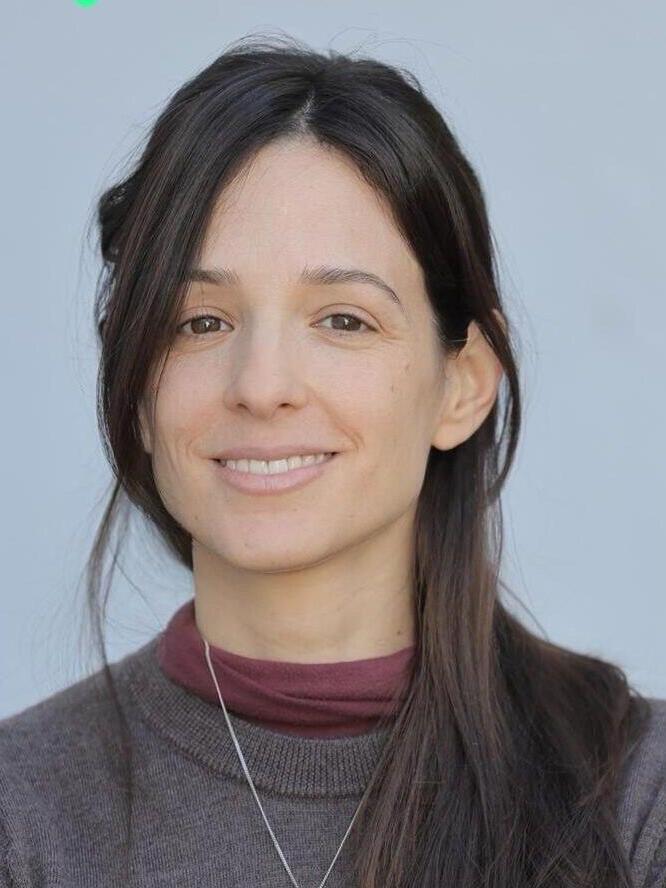 Dr. Nurit OmerPhoto: Oz Shechter
Omer explains that “Creutzfeldt-Jakob is considered one of the deadliest and rarest diseases in the world, with patients dying within several months.”
The first experimental treatment in the world, developed in the United States, began for the first time in 2023 at Ichilov, and the second stage of the experimental treatment has been taking place in recent months at Ichilov as the only national center, she says.
Omer also stresses that the name “mad cow disease” is incorrect when referring to the human disease. “The name ‘mad cow disease’ is wrong and does not refer to the disease in humans, but to an epidemic that spread among cattle in the 1990s,” she says.
“In Israel, there is a high number of genetic patients, and therefore the incidence in Israel is much higher than what is seen in other places in the world. It is important to emphasize that this is not an infectious disease, but a degenerative neurological disease, and daily contact with patients with the disease is not contagious.”