

As Israeli Air Force pilots carry out long-range missions amid the war with Iran, a longstanding medical challenge in military aviation is returning to the spotlight: how to maintain alertness, sharp decision-making and fast reaction times after many hours without sleep.
In the world of combat aviation, fatigue is not merely a matter of comfort. It is a critical safety issue. Fighter pilots operating complex systems at high speed must maintain full concentration even when their bodies are signaling exhaustion.
Gallery
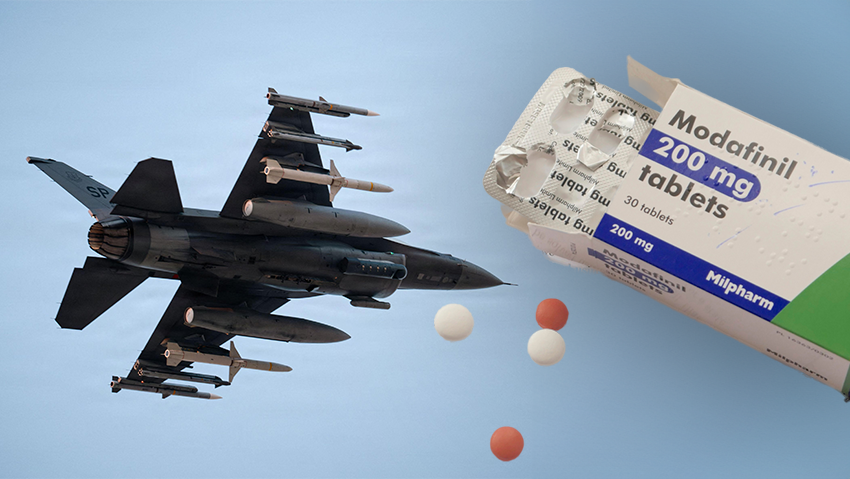
Modafinil, a wakefulness-promoting drug, and a U.S. Air Force F-15 fighter jet
(Photo: Shutterstock, AFP / US AIR FORCE / US CENTRAL COMMAND PUBLIC AFFAIRS)
In recent years, Western air forces have increasingly turned to modafinil, a medication that promotes wakefulness, as a tool to help pilots remain alert during extreme operational conditions.
The silent threat in the cockpit: fatigue
Dr. Osnat Raziel, a surgeon and director of the multidisciplinary center at Assia Medical in Tel Aviv, previously served as a physician at the Israeli Air Force flight school and taught aviation medicine.
“Fatigue is one of the most significant factors affecting cognitive performance,” Raziel said. She has also served as a flight physician during rescue missions with the Israeli Air Force’s elite Unit 669 and holds a civilian pilot license.
“After about 18 to 24 hours without sleep, there is a significant decline in concentration, reaction time, working memory and decision-making ability,” she explained. “Research in sleep physiology shows that the effects can resemble those of moderate blood-alcohol levels.”
Dr. Uri Elkan, an ear, nose and throat specialist and sleep physician at Beilinson Hospital, said fatigue in aviation goes beyond simple drowsiness.
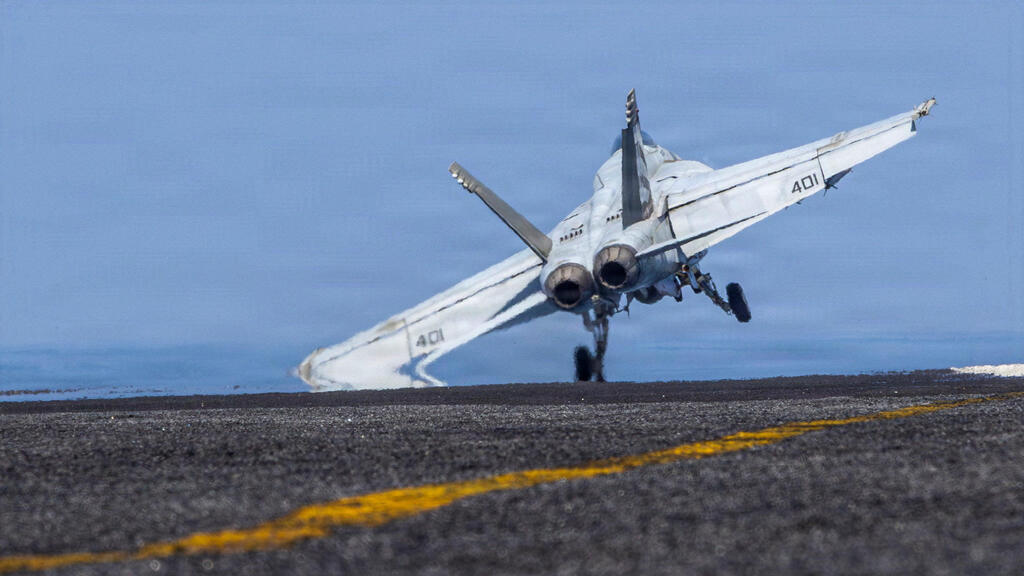
Takeoff from the USS Abraham Lincoln aircraft carrier. How can pilots stay focused even after a full day without sleep?
(Photo: US Navy/ Reuters)
“A tired pilot tends to focus on a single instrument or target and may fail to scan the environment or monitor other systems,” he said. “Fatigue also affects risk assessment. Sleep deprivation impairs the prefrontal cortex, which can lead to underestimating danger and taking greater risks.”
He also warned of a particularly dangerous phenomenon known as microsleep, brief involuntary lapses in consciousness lasting only seconds.
“In critical stages of flight, even a few seconds can be catastrophic,” Elkan said.
From ‘go pills’ to modafinil
Historically, some air forces addressed fatigue with stimulant drugs from the amphetamine family, commonly referred to as “go pills.”
“Those were widely used in the past,” Raziel said. “But in recent decades many Western air forces have shifted to modafinil.”
 Dr. Osnat RazielPhoto: Talo Loren
Modafinil was originally developed to treat sleep disorders characterized by excessive daytime sleepiness, including narcolepsy, shift-work sleep disorder and sleepiness associated with sleep apnea.
The medication promotes wakefulness and improves concentration and functioning during the day.
Neurochemically, modafinil affects several systems in the brain, including dopamine, norepinephrine and histamine, all of which play key roles in alertness and attention.
“Unlike traditional stimulants such as amphetamines, modafinil generally has a better safety profile and causes fewer rebound crashes after its effects wear off,” Raziel said.
Elkan added that the drug works essentially in the opposite way of sleeping pills.
“It helps people stay focused for longer periods,” he said. “But it still has side effects. It can cause increased blood pressure and a faster heart rate, similar to high doses of caffeine.”
What research shows
Studies conducted for the U.S. Air Force have shown that modafinil can help preserve cognitive performance even after more than 24 hours without sleep.
“In fighter pilot simulation studies, abilities such as decision-making, reaction time and accuracy in complex tasks were maintained significantly better with modafinil compared to a placebo,” Raziel said.
 Dr. Uri ElkanPhoto: Shir Hasin
A report submitted last year by the U.S. Congressional Research Service documented that the U.S. military uses a two-pronged strategy to address pilot fatigue: behavioral measures and limited pharmacological assistance.
U.S. Air Force policy allows the use of modafinil as a non-amphetamine stimulant, alongside dextroamphetamine, which the Food and Drug Administration classifies as having a high potential for abuse.
All branches of the U.S. military restrict such medications to specific operational circumstances. Their use is voluntary and requires authorization from aviation physicians as well as approval through military command channels.
No substitute for sleep
Despite its advantages, doctors emphasize that modafinil is not a replacement for rest.
“Even in the most advanced militaries, it is used only in extreme operational circumstances,” Raziel said.
“The foundation of flight safety still relies on proper mission planning, adequate rest before long flights and decision-support systems. Pharmacological tools are used under strict medical supervision and in carefully controlled doses.”
The body’s internal clock
Elkan also noted that human biology itself creates predictable dips in alertness.
“Humans are essentially programmed to experience two natural drops in alertness during the day,” he said. “One in the early afternoon and another in the late evening.”
This internal clock continues to influence performance regardless of how much sleep a person has had.
“The body doesn’t easily override that rhythm,” he explained. “Even in situations like jet lag, the body continues operating according to its internal clock.”
Looking ahead
Researchers are also studying newer medications designed to combat fatigue.
One example is solriamfetol, marketed as Sunosi, which was approved by the FDA in 2019 and works by inhibiting the reuptake of dopamine and norepinephrine.
Another drug, pitolisant (Wakix), works differently by increasing levels of histamine in the brain, a neurotransmitter linked to natural wakefulness.
However, these medications are newer, more expensive and less studied in operational environments.
For now, experts say modern fatigue management for pilots relies on a combination of tools: careful scheduling, monitoring systems that detect fatigue in real time, strategic naps and, in extreme circumstances, medications such as modafinil.
“In the near future,” Raziel said, “biometric systems in aircraft may be able to detect drops in pilot alertness in real time and recommend tailored responses.”
Such developments would make aviation medicine an increasingly central component of modern air power, ensuring pilots remain capable of operating safely even during the longest and most demanding missions.
This article does not constitute medical advice. Modafinil and similar medications require a prescription and medical supervision.