

A man in his 20s from northern Israel has returned from a cosmetic limb-lengthening procedure performed in Turkey with severe post-operative complications involving the femoral diaphysis.
He was admitted to Rambam Health Care Campus in Haifa with advanced infection and structural failure and has since been discharged to outpatient rehabilitation. Based on current clinical assessment, there is a high probability he will experience permanent functional impairment.
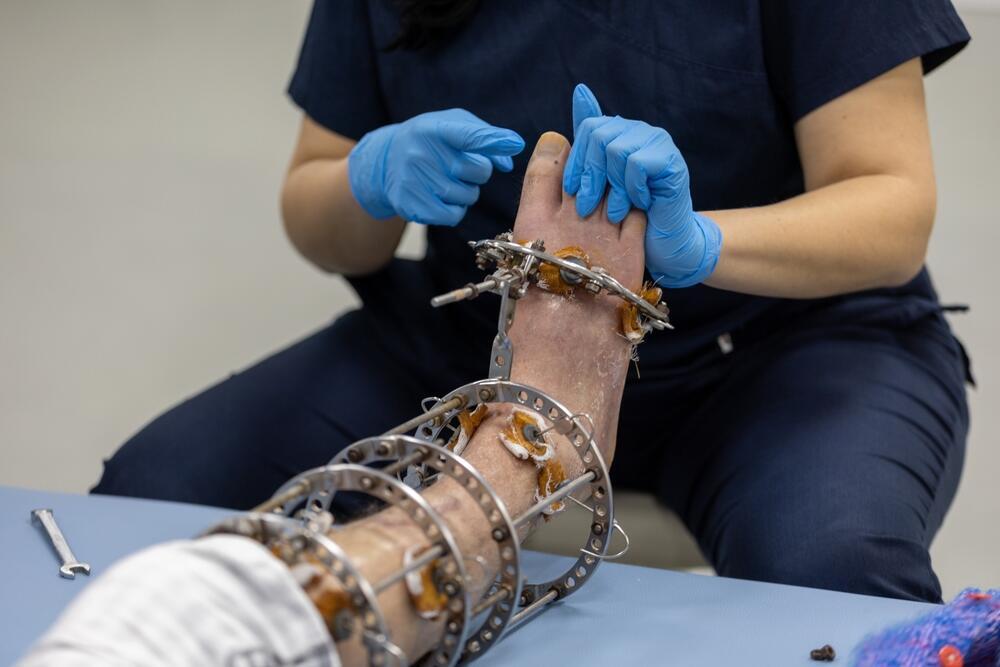
Historically, limb-lengthening procedures were reserved for reconstructive purposes—such as correcting significant limb-length discrepancies, treating congenital skeletal dysplasias like achondroplasia or managing growth disturbances following complex fractures. However, there has been a notable uptick in demand for cosmetic stature lengthening among otherwise healthy young adults, driven primarily by aesthetic motivations.
According to Prof. Mark Eidelman, director of Pediatric Orthopedics at Rambam and a leading authority in limb reconstruction, this is not an isolated case. “We’re seeing increasing numbers of patients returning from overseas surgeries with poorly executed techniques, minimal post-operative care and often without even basic infection control protocols in place,” Eidelman said.
Get the Ynetnews app on your smartphone: Google Play: https://bit.ly/4eJ37pE | Apple App Store: https://bit.ly/3ZL7iNv
In a standard lengthening procedure, the osteotomy is followed by gradual distraction, typically using an external fixator composed of rings and transcutaneous pins that anchor into the cortices. The distraction rate is usually one millimeter per day, split into four increments. However, over the last 15 years, newer internal fixation methods have emerged, particularly the use of motorized or magnetically-driven telescopic intramedullary nails, which eliminate the need for transmuscular pins and significantly reduce infection rates and patient discomfort.
In this particular case, the patient underwent a hybrid procedure involving both internal nailing and external fixation. Upon his return, he presented with deep soft tissue infections at all pin insertion sites, inability to achieve knee extension and radiographic evidence of nonunion. “This is a catastrophic outcome,” Eidelman noted. “He pursued a procedure for a couple of inches of height and now faces lifelong disability. Worse still, the fixation hardware appears to have been reused, which raises serious concerns about sterility and structural integrity.”
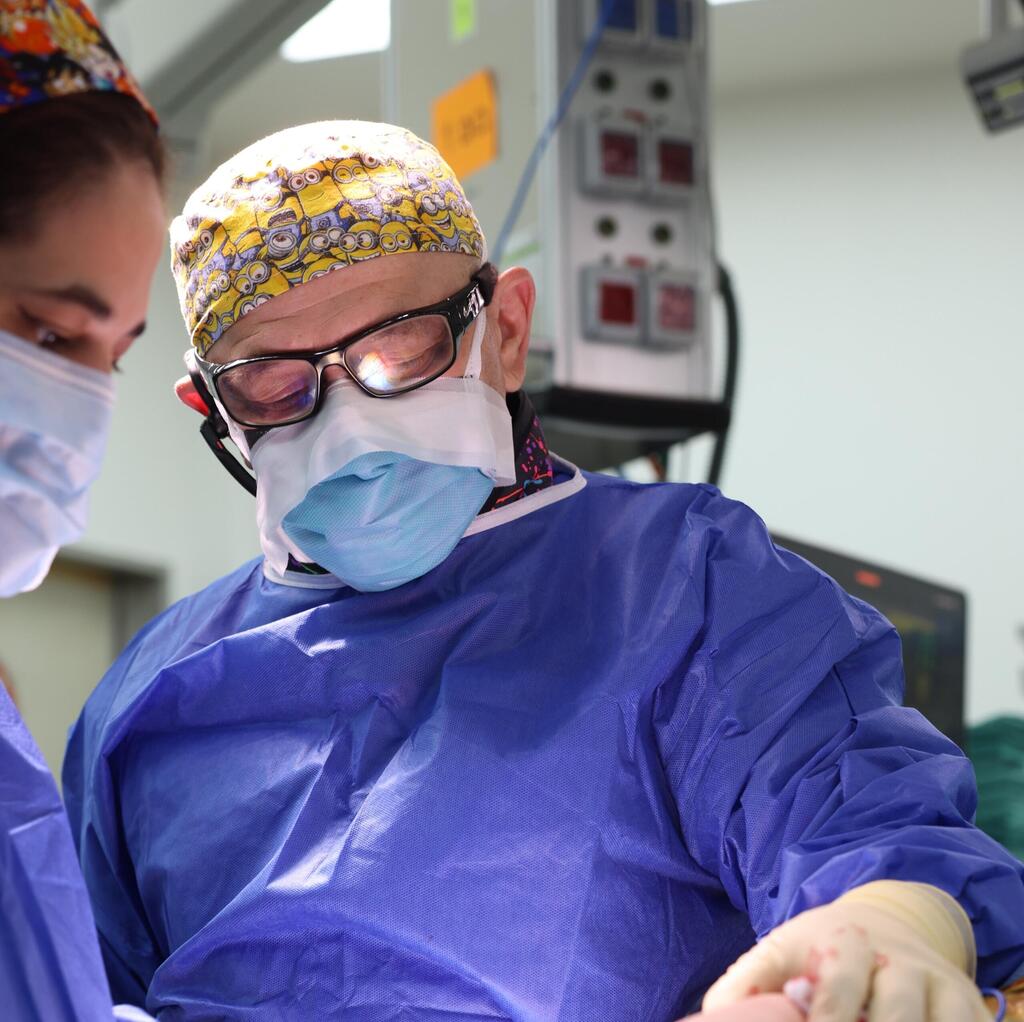
Prof. Mark Eidelman
(Photo: Rambam Health Care Campus)
Prof. Eidelman stressed that rehabilitation is an integral part of any lengthening protocol, essential for maintaining joint range of motion, muscle function and overall biomechanical integrity. “In this instance, there was no documented post-op physiotherapy, no infection management and no structured follow-up. This created a perfect storm for irreversible damage.”
He concluded with a strong recommendation: “While patients have the autonomy to undergo elective procedures, surgeries of this complexity demand a multidisciplinary environment with orthopedic subspecialists, sterile operating conditions, post-op physiotherapy and infectious disease oversight. Without those, consequences can be dire, not only for the patient, but for the national health system that must absorb the long-term cost of care.”