


For many new immigrants, choosing where to live in Israel comes down to jobs, schools and rent. Healthcare rarely makes the list. But it should. Because in Israel, universal healthcare does not mean you can walk into any clinic anywhere. Your access to doctors, specialists and even urgent care often depends on two things: where you live and which health fund, kupat holim (HMO), you choose. And that choice often happens within hours of landing.
Healthcare in Israel for olim


At Ben Gurion Airport, new immigrants are asked to join one of Israel’s four health funds as part of the absorption process. It feels administrative, quick and easily reversible. It is not quite that simple. Each fund runs its own network of clinics, doctors, pharmacies and service agreements. While switching is possible, it is limited to specific windows during the year, and most newcomers are not eager to navigate bureaucracy again so soon after arriving. The result is immediate and practical: your healthcare experience in Israel is local, and it is tied to your fund.

Israel’s healthcare system guarantees coverage, but it is not interchangeable. You are generally treated within your fund’s network, which means your nearby clinic, your child’s pediatrician, your access to specialists and even where you go in an emergency are shaped by how your fund operates in your area. In central Israel, that often means multiple clinics within walking distance, shorter waiting times and several hospitals within a short drive. Move further out, and the system still works, but differently.
Take two cities as an example. In Netivot, residents have access to community clinics, labs, pediatric care and even urgent care centers. But for more advanced services, many rely on Beersheba, which often means longer travel times and fewer immediate options. In Afula, the picture shifts. The city is home to HaEmek Medical Center and serves as a regional healthcare hub. Residents benefit not only from community clinics but also from direct access to a full-service hospital and a broader range of specialists within the city itself. Both cities offer healthcare. The experience of accessing it, however, is not the same.
For new immigrants, the smarter question is not just where you can afford to live, but how your location, and your health fund, will shape your everyday access to care.
All four health funds in Israel provide the same basic basket of services required by law. The difference lies in how those services are distributed on the ground. Clalit, the country’s largest health fund, operates roughly 1,500 clinics and 14 hospitals across Israel, serving around 4.8 million members. Its system is built as a nationwide network, with services spread from the Galilee to Eilat. Other funds, including Maccabi, Meuhedet and Leumit, also operate extensive networks, but rely more heavily on contracted hospitals and tend to have a stronger concentration of services in central Israel.
For new immigrants, the distinction becomes more noticeable outside the center. A broader physical footprint can mean more nearby clinics in smaller cities, a greater likelihood of finding in-network services close to home and less need to travel between cities for routine care. It does not erase the gap between center and periphery, but it can reduce how much that gap is felt in everyday life.
Healthcare is not just about emergencies. It is about daily convenience. How far is your nearest clinic? How long does it take to see a specialist? Is there urgent care open at night? Do you need to travel to another city for imaging or tests? These are the questions that shape everyday life, especially for families with young children, pregnant women or elderly parents. In Israel, the answers are shaped by a combination of your address and your health fund.
'How far is your nearest clinic?'
(Photo: Screenprint)
Before choosing where to live, and before selecting a kupat holim at the airport, it is worth doing a basic check. How many clinics operate in your area? Is there access to pediatrics and family medicine nearby? Are women’s health services available locally? Where is the nearest urgent care center? How far is the closest hospital? Are specialists available in your city or only in a larger regional center? Most health funds provide online service locators, and using them can offer a far clearer picture of what daily healthcare will actually look like.
Israel guarantees healthcare coverage, but it does not guarantee equal convenience. For new immigrants, the smarter question is not just where you can afford to live, but how your location, and your health fund, will shape your everyday access to care. Because in Israel, location is not just about real estate. It is also about healthcare.
What new immigrants need to know before choosing a health fund
Can I go to any clinic in Israel?
No. You are generally treated within your kupat holim’s network of clinics and providers. That is why your fund’s presence in your area matters.
Is healthcare quality the same everywhere?
The basic coverage is the same by law. The difference is access, availability and convenience, especially outside central Israel.
Which fund has the widest nationwide coverage?
Clalit has the largest physical network, with around 1,500 clinics and 14 hospitals across the country. This often means broader geographic coverage, particularly in smaller cities and peripheral areas.
What should I check before deciding where to live?
Look at clinic availability, distance to hospitals, access to specialists, urgent care options and pharmacy coverage in your area. Do not assume every service is nearby.
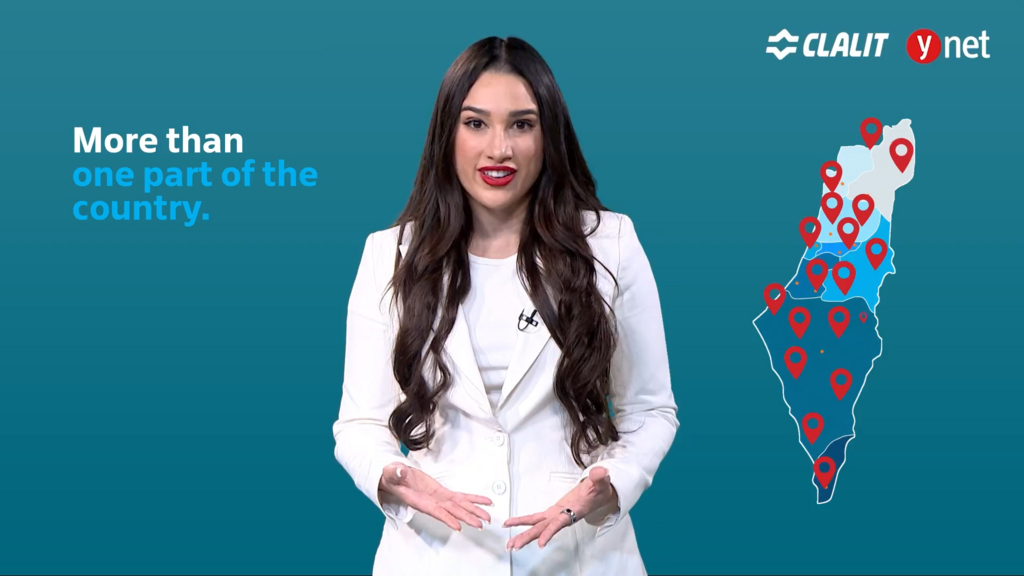
'Clalit has the largest physical network, with around 1,500 clinics and 14 hospitals across the country'
(Photo: Screenshot)
What if I chose the wrong health fund?
It happens. Many immigrants make a quick decision at the airport and only later realize their fund is not well represented in their area or that access is less convenient than expected. You can switch health funds, but not instantly. Changes are allowed only at specific times during the year, usually every few months, and the process can take time to go into effect. That means you may need to work within your existing system for a period before the switch takes place.
What can you do if you are not satisfied?
Start by checking what is available within your current fund. In many cases, services exist but are located in nearby cities or require a different clinic selection. If access is still difficult, consider planning a switch during the next available window. Before switching, compare service maps carefully to avoid repeating the same mistake.
What if this feels too confusing?
You are not alone. Many new immigrants are unfamiliar with how the system works and only learn through experience. There are simple ways to make it easier:
- Use your health fund’s website to search for services near your home.
- Ask other immigrants in your city about their experience
- Speak to absorption counselors or community organizations
- Visit clinics in your area before committing long term
- The key is to treat the decision as part of your relocation planning, not as a form you fill out at the airport.
Bottom line
Choosing a health fund in Israel is not just about coverage, it is about geography. Where you live determines what is nearby, and your health fund determines what you can access. Together, they shape something every immigrant quickly comes to value: how easy it is to get care when you actually need it.
In cooperation with Clalit Healthcare services
First published: 11:49, 05.06.26